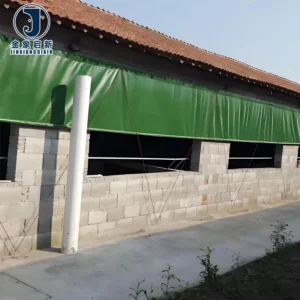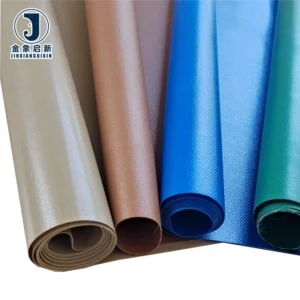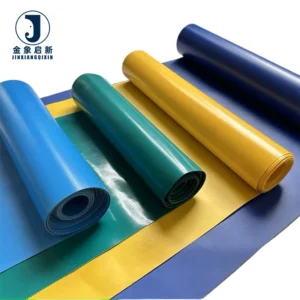
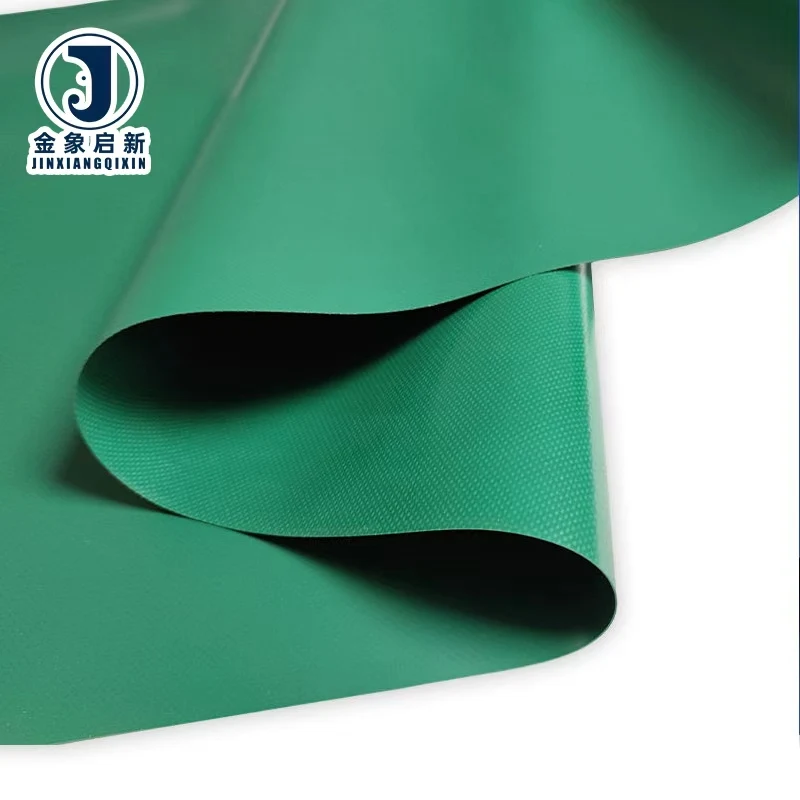
Coating Process Control — verified GSM and adhesion data mapped to each roll, so technical buyers can specify laminated PVC tarpaulin fabric by measurable properties rather than supplier claims.
Technical Specifications
| Parameter | Value |
|---|---|
| Product Type | PVC Coated Tarpaulin Roll |
| Material | PVC + High-strength polyester mesh fabric |
| Coating Method | Laminated technology & Hot-melt coating technology |
| Weight (GSM) | 350gsm / 420gsm / 500gsm / 550gsm / 600gsm / 750gsm |
| Total Thickness | 0.32mm / 0.35mm / 0.4mm / 0.45mm / 0.5mm / 0.65mm |
| Roll Width | 2m / 2.1m |
| Roll Length | 75m (for 2m width) / 50m (for 2.1m width) |
| Color Options | Blue / Red / Yellow / Light blue / Grey (Customized) |
| Key Features | Waterproof, Cold crack resistance, Anti-mildew, Color fastness, Outstanding tearing strength for welding |
| Special Treatments | Flame retardant, Anti-static, Anti-cold (grades available — confirm the grade required for your market) |
Application Suitability
| Application | Exposure & Requirement |
|---|---|
| Truck awning fabrication | Repeated flex at fold lines, road debris abrasion, prolonged UV exposure, weld seam integrity |
| Tent and inflatable structure covers | Tensioned panels, wind load cycling, heat-welded seams, batch colour consistency across panels |
| Construction scaffolding enclosure | Wind-driven rain, site dust, scaffolding tube abrasion, flame retardant compliance on site |
| Marine and offshore maintenance covers | Salt spray, constant moisture, deck abrasion, anti-mildew requirement |
| Plant and refinery equipment wraps | Chemical splash, thermal cycling, possible anti-static zone classification |
Why GSM Alone Does Not Define Coated Fabric Performance
GSM tells you what the roll weighs — not what it will survive.
When a PVC coated tarpaulin roll arrives lighter than the quotation stated, the problem is rarely just missing material. The base fabric denier, weave density, and coating adhesion together determine how the material behaves under tension and at weld seams. A roll that meets GSM on the scale but uses a loosely woven base will tear at the first flex point, while a tightly woven lighter-grade fabric can outperform it in real fabrication. Technical buyers need the full material breakdown — base fabric specification, coating weight, and adhesion data — not a single headline number. [NEED_CITE: tensile and tear test methods for coated fabrics per ISO 1421]
Base Fabric and Coating Interaction
The high-strength polyester mesh base fabric in this laminated PVC tarpaulin fabric provides the structural backbone, while the PVC coating applied through hot-melt or laminated technology locks around each yarn intersection. This coating-to-yarn bond determines whether the material delaminates under repeated flexing or holds through years of tension. Hot-melt coating penetrates the mesh more deeply than simple surface lamination, producing higher adhesion strength that matters when fabricators heat-weld panels together. Every PVC coated tarpaulin roll in this range uses this construction to maintain weld integrity across the available GSM grades.
Thickness and Weight as Specification Tools
Thickness values from 0.32mm to 0.65mm correspond to the 350gsm through 750gsm range, giving technical buyers a dual axis for specification. Heavier grades carry more PVC mass per square metre, which improves puncture resistance and extends the interval before coating wear-through occurs on abrasive surfaces. Lighter grades reduce roll weight and cost per linear metre, making them practical for applications where the fabric is tensioned but not subject to direct mechanical contact. [NEED_CITE: relationship between coating weight and abrasion resistance in PVC coated polyester fabrics]
What the GSM-to-Thickness Relationship Reveals
A 500gsm roll at 0.4mm thickness indicates a specific ratio of coating mass to base fabric density. If a competing roll claims the same GSM but measures thinner, the base fabric is likely carrying a higher proportion of the total weight, which changes tear propagation behaviour. The hot-melt coating technology used here ensures consistent penetration through the mesh, so the stated thickness reflects actual cross-section rather than surface buildup. Fabricators working with heat welding benefit from this consistency because the weld temperature and dwell time can be set once and repeated across rolls from the same batch.
The Cost of Specifying on Weight Without Verification
A batch of rolls that arrives below stated GSM forces the fabricator into a difficult position — accept the material and risk field failures, or reject it and delay the project by weeks. Colour variation between rolls in a single shipment creates visible panel mismatches once installed side by side, requiring partial rework. Welded seams that fail before the fabric body indicate poor coating adhesion, which is invisible until the first load cycle puts stress on the joint. These failures trace back to insufficient incoming material verification. [NEED_CITE: coating adhesion failure modes in PVC tarpaulin fabrication]
Why Technical Buyers Source This Range
Deep process control over coating weight and adhesion means every roll ships with documented GSM and thickness data, not just a label claim. Three full production lines with dedicated QA/QC at each stage ensure batch-to-batch colour consistency across the Blue, Red, Yellow, Light blue, and Grey options. A 10-person R&D team develops samples within days when custom colours or widths are needed. The hot-melt and laminated coating technologies are matched to the polyester mesh grade so that weld parameters remain stable from roll to roll. Pre-shipment inspection covers every roll before dispatch, with results recorded and available to the buyer.
Documentation & Verification
- Material specification sheet stating actual GSM, base fabric construction, and coating weight per roll
- Test reports for flame retardant and anti-static treatments provided when applicable to the order
- Pre-shipment inspection record confirming roll dimensions, colour reference, and surface condition
- Roll packing list detailing width, length, and quantity for incoming goods verification
- ISO and CE certificates available as part of the dispatch documentation package
Fabrication, Handling & Storage
- Heat-weld at temperatures matched to the specific GSM and 0.32mm–0.65mm thickness grade
- Store rolls upright on pallets to prevent flat-spot deformation on the outer coating layers
- Allow cold-stored rolls to acclimatise before unrolling to protect cold crack resistance properties
- Use the 2m or 2.1m width to plan panel layouts that minimise offcuts and weld seams
- Clean with mild detergent only — solvent-based cleaners may degrade the PVC coating surface
What to Include in Your Enquiry
Provide the target GSM and thickness alongside your end-use application so the correct coating method — laminated or hot-melt — can be confirmed. Specify whether flame retardant or anti-static certification is required for your project site, along with the applicable standard. Include your preferred roll width, colour reference, and estimated annual volume to receive accurate lead times and batch scheduling.
Frequently Asked Questions
Q: How is GSM verified and what documentation accompanies each roll for incoming inspection?
A: Each PVC coated tarpaulin roll ships with a material specification sheet stating the actual measured GSM, base fabric type, and coating weight. A pre-shipment inspection record and roll packing list are included so your receiving team can cross-check weight and dimensions against the order without delay.
Q: What flame retardant grades are available and which test standards do they meet?
A: Flame retardant treatment is available across this PVC coated tarpaulin roll range. The specific grade and test standard depend on the end-use market and site requirements — confirm the classification your project needs, and the matching treatment and test report will be arranged before production.
Q: How is colour consistency controlled across multiple rolls in one shipment?
A: Colour reference is documented at the sample approval stage and monitored through production using in-process QA checks. Every roll is inspected before dispatch against the approved reference, so fabricators installing panels side by side receive consistent colour within a single batch.
Q: What welding parameters are recommended for seams on different GSM and thickness grades?
A: Welding temperature and dwell time vary with the 0.32mm to 0.65mm thickness range. The hot-melt coating technology provides consistent melt behaviour across the grade, so once parameters are set on a test piece from your roll batch, they can be repeated reliably through the full production run.
Q: What base fabric construction sits behind each GSM grade?
A: The high-strength polyester mesh base fabric density is matched to the target GSM so that tensile and tear performance scale with weight. Request the material specification sheet for the exact base fabric construction behind your chosen grade to support your own engineering calculations.