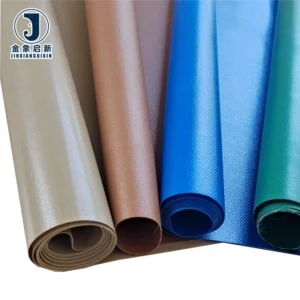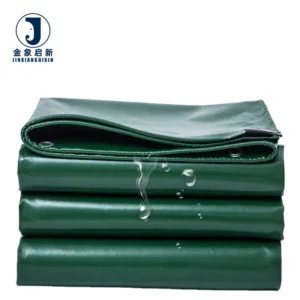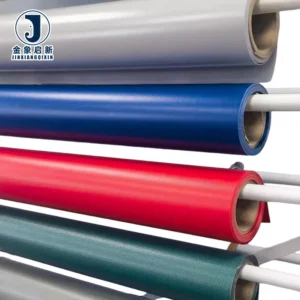
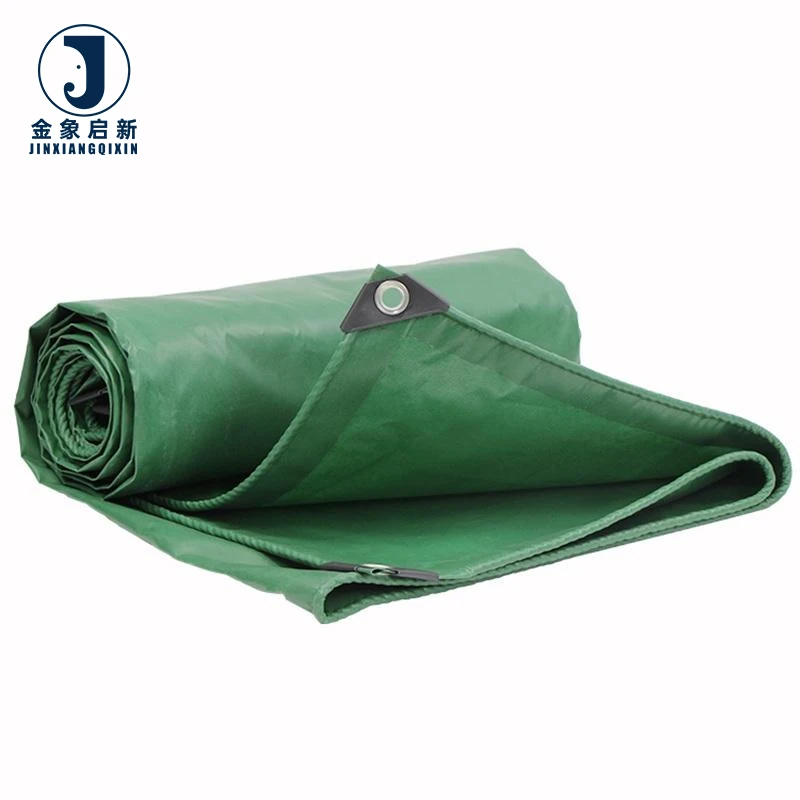
Deep Process Control Over Coating Weight — every roll of Laminated PVC Tarpaulin Roll – Technical Grade is verified against stated GSM before dispatch, ensuring the material on your cutting table matches the specification sheet.
Technical Specifications
| Parameter | Value |
|---|---|
| Product Type | PVC Coated Tarpaulin |
| Base Fabric | PVC + High-strength polyester mesh fabric |
| Coating Method | Laminated technology & Hot-melt Coating technology |
| Weight Options | 350gsm / 420gsm / 500gsm / 550gsm / 600gsm / 750gsm |
| Thickness Range | 0.32mm / 0.35mm / 0.4mm / 0.45mm / 0.5mm / 0.65mm |
| Available Widths | 2m / 2.1m |
| Roll Length | 75m (for 2m width) / 50m (for 2.1m width) |
| Surface Finish | Glossy Surface or Matt Surface |
| Colour Options | Blue / Red / Yellow / Light blue / Grey (Customized) |
| Waterproof Rating | Double-sided 100% Waterproof |
| Cold Crack Resistance | Available — confirm the temperature rating required for your climate |
| Anti-Mildew Treatment | Available — test basis not stated in source |
| Anti-Static Treatment | Available — test basis not stated in source |
| UV Resistance | Available in UV-resistant grades — confirm the grade required for your market |
| Key Features | Cold crack resistance, anti-mildew, anti-static, sunproof treatments available across the range |
Application Suitability
| Application | Exposure & Requirement |
|---|---|
| Truck awning and side curtain | Constant flexing at load points, road debris abrasion, prolonged UV exposure — requires high adhesion strength at weld seams |
| Cargo ship tarpaulin | Saltwater spray, wind-driven rain, mechanical stress from lashing — demands fully waterproof coated construction with strong tear resistance |
| Tent and awning fabric | Repeated assembly and dismantling, sun exposure, wind load — calls for dimensional stability and consistent colour across panels |
| Fish tank and pool liner | Permanent water immersion, hydrostatic pressure, potential puncture from substrate — requires reliable waterproof integrity and seam performance |
Why Stated GSM Without Thickness Data Misleads Technical Buyers
A single GSM figure tells you what the roll weighs, not how the coating is distributed or how the base fabric will perform under load.
When a PVC coated tarpaulin roll GSM coating method specification arrives without a mapped thickness value, you cannot reconcile the quoted weight with the material on your inspection table. A 550gsm roll coated with laminated technology behaves differently at the weld line than a 550gsm roll produced with hot-melt coating, even though the weight reads the same. Technical buyers who specify on tensile and tear properties need both the weight and the measured thickness to verify the coating-to-substrate ratio. [NEED_CITE: tensile and tear test methods for coated fabrics per ISO 1421] Without this data, incoming inspection becomes guesswork, and rolls that pass the weight check can still underperform in fabrication or field service.
Coating Technology and Its Effect on Weld Performance
The choice between laminated and hot-melt coating technology directly shapes how this PVC tarpaulin behaves during fabrication. Laminated construction bonds the PVC film to the polyester mesh under heat and pressure, producing a uniform coating layer with consistent thickness across the roll width. Hot-melt coating applies liquid PVC directly onto the base fabric, allowing the coating to penetrate the mesh interstices. For fabricators welding panels together at stress points, the coating method determines the heat input required and the resulting peel strength of the joint. Understanding which PVC coated tarpaulin roll GSM coating method is applied to your order prevents failed seams during fabrication.
Base Fabric Denier and Dimensional Stability Under Load
The high-strength polyester mesh fabric serves as the structural backbone of this coated material. The denier and weave density of this base fabric determine how the roll resists stretching under tension and how tears propagate once initiated. A tightly woven mesh limits elongation when the tarpaulin is subjected to wind load or lashing forces, keeping the fabric dimensionally stable across large panel sizes. When you compare two rolls at the same GSM, the one with a denser base fabric will typically show higher tear resistance because the yarn structure arrests crack propagation more effectively. [NEED_CITE: relationship between base fabric weave density and tear propagation in coated textiles]
Reading the GSM-to-Thickness Map for Specification Accuracy
This product family maps six distinct weight grades to their corresponding thickness measurements: 350gsm at 0.32mm, 420gsm at 0.35mm, 500gsm at 0.4mm, 550gsm at 0.45mm, 600gsm at 0.5mm, and 750gsm at 0.65mm. This explicit mapping allows you to verify that the coating weight quoted on the specification sheet matches the physical caliper reading at incoming inspection. The gap between weight and thickness reveals the coating density — a roll that measures thicker than expected at its stated GSM may contain more air or filler, which affects long-term durability and weld consistency. Technical buyers use this correlation to confirm that the PVC coated tarpaulin roll GSM coating method data is internally consistent before approving the batch for production.
The Hidden Cost of Specifying on Weight Alone
Selecting a roll based solely on GSM without verifying coating method, base fabric density, and adhesion strength leads to failures that appear only after the tarpaulin is in service. Welded seams may separate before the fabric body shows wear, particularly at the flex points where a truck side curtain bends repeatedly during opening and closing. Batch-to-batch inconsistency in coating weight means the second shipment may weld at a different temperature than the first, forcing fabricators to re-calibrate their equipment mid-production. [NEED_CITE: common weld failure modes in PVC coated polyester fabrics] Colour variation between rolls in the same order becomes visible once panels are installed side by side, triggering rejection and rework. These costs accumulate silently when the incoming inspection checklist omits thickness verification and coating adhesion testing.
What Verification Looks Like at the Production Level
Every roll in this range passes through dedicated QA/QC checkpoints at each production stage, with 100% inspection before shipment. The three full production lines and 36 sets of professional equipment support bulk capacity without sacrificing process control over coating weight and adhesion. A 10-person R&D team handles material selection, sample development, and custom specification requests, ensuring that the PVC tarpaulin you receive matches the technical data sheet. Sample development within days allows you to test weld parameters, colour accuracy, and surface finish before committing to a full production run. Pre-shipment inspection records document GSM verification, colour consistency, and coating integrity for every roll in the order. [NEED_CITE: ISO quality management requirements for coated fabric manufacturing]
Documentation & Verification
- Material specification sheet stating exact GSM, base fabric composition, coating method, and colour reference for each roll
- Pre-shipment inspection record confirming measured thickness and weight against the quoted PVC coated tarpaulin roll GSM coating method data
- Test reports for UV-resistant and flame-retardant grades supplied where applicable to the ordered specification
- Roll packing list with batch traceability for colour and weight consistency verification
- Certificate of origin and customs documentation prepared for international shipment
Fabrication, Handling & Storage
- Hot-air welding temperature must be calibrated to the specific coating method — laminated and hot-melt surfaces respond differently to heat input
- Store rolls upright on end cores to prevent flat spots that distort the polyester mesh and affect panel flatness during cutting
- Glossy surface rolls require solvent-free cleaning agents to avoid dulling the finish during post-installation maintenance
- Allow cold-stored rolls to acclimatise before unrolling to prevent cracking in cold crack resistant grades below stated temperature thresholds
- Plan panel layout to minimise transverse welds across the 2m or 2.1m width, placing seams away from high-flex zones on truck curtains
- Reinforce tie-down points with additional fabric patches bonded using the same hot-melt or laminated technology as the base roll
Requesting a Technical Quotation
To receive an accurate specification and lead time, provide the intended application, the environmental exposure conditions your tarpaulin will face, and the target market compliance requirements for fire or UV performance. Specify the preferred width, roll length, and whether you require the full PVC coated tarpaulin roll GSM coating method range or a single grade. Confirm whether glossy or matte finish is required, along with colour references and whether sample approval is needed before bulk production.
Frequently Asked Questions
Q: How is GSM verified before shipment, and can I receive a weight test result per roll?
A: Every roll undergoes 100% pre-shipment inspection with dedicated QA/QC at each production stage. The inspection record documents the measured weight against the stated GSM. You receive a verification document with your shipment confirming that each roll meets the quoted specification, allowing you to reconcile incoming material with your purchase order.
Q: What is the practical difference between laminated and hot-melt coating for weld strength?
A: Laminated coating bonds a pre-formed PVC film to the polyester mesh, producing a uniform surface that welds consistently at standard temperatures. Hot-melt coating penetrates the mesh interstices, creating a stronger mechanical bond but requiring adjusted heat input during fabrication. Request a sample of each coating method to test weld parameters on your equipment before ordering.
Q: Do you supply independent test reports for UV resistance and flame-retardant claims?
A: Test reports are provided for UV-resistant and flame-retardant grades where applicable. Specify the standard required by your market — such as a particular fire classification — and the documentation team will confirm whether a test report covering that standard is available for the grade you select.
Q: Can I expect consistent colour across multiple rolls within a single order?
A: Production runs are monitored for colour consistency across rolls in the same batch. The pre-shipment inspection record documents colour verification. For large orders spanning multiple production runs, request that all rolls be produced in a single batch or provide a signed colour sample as the approval reference to minimise variation.
Q: How do I choose between 2m and 2.1m roll widths for my panel layout?
A: The 2m width ships in 75m rolls and the 2.1m width in 50m rolls. Select the width that minimises transverse welds in your finished panel size. Fewer welds reduce fabrication time and eliminate potential failure points at flex zones. Provide your finished panel dimensions for a layout recommendation.