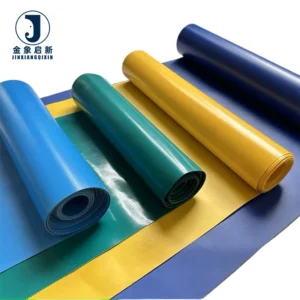
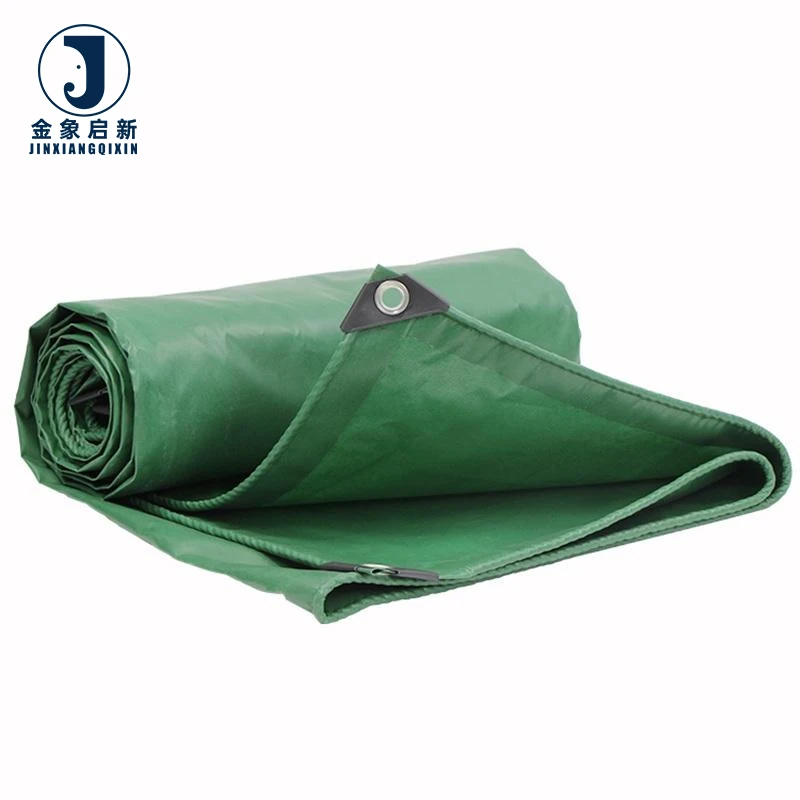
Coating Weight Precision — every roll undergoes in-process GSM verification and pre-shipment inspection to ensure the laminated PVC tarpaulin roll stock you approve on sample matches what arrives on the container.
Technical Specifications
| Parameter | Value |
|---|---|
| Product Type | PVC Coated Tarpaulin Roll |
| Base Fabric | High-strength polyester mesh |
| Coating Material | PVC |
| Coating Method | Laminated technology & Hot-melt Coating technology |
| Weight (GSM) | 350gsm, 420g, 500gsm, 550gsm, 600gsm, 750gsm (multiple grades available — confirm the grade for your application) |
| Total Thickness | 0.32mm, 0.35mm, 0.4mm, 0.45mm, 0.5mm, 0.65mm |
| Surface Finish | Glossy Surface or Matt Surface |
| Color | Blue / Red / Yellow / Light Blue / Grey (Customized) |
| Roll Width | 2m / 2.1m |
| Roll Length | 75m (for 2m width) / 50m (for 2.1m width) |
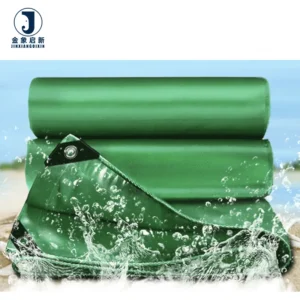
| Waterproof | Double-sided 100% Waterproof |
| Anti-Mildew | Yes |
| UV Treatment | Sunproof treatment applied (test basis not stated in source) |
| Flame Retardant | Available in flame retardant grades — confirm the grade required for your market |
| Cold Crack Resistance | Yes (temperature range not stated in source) |
| Anti-Static | Anti-Static treatment available (resistance level not stated in source) |
| Tensile Strength | High tension strength (test standard not stated in source) |
| Tear Strength | High tear strength, outstanding tearing strength for welding (test standard not stated in source) |
| Adhesion Strength | Good flexibility and adhesion strength |
| Color Fastness | Best color fastness (grade not stated in source) |
| Printing Option | Customized printing available |
| Certifications | ISO, CE |
Application Suitability
| Application | Exposure & Requirement |
|---|---|
| Tent and awning fabrication | Roll-fed cut-and-sew production demanding batch-to-batch colour consistency and reliable hot-air weld adhesion across long production runs |
| Truck side curtain and trailer cover material | Continuous flex cycles, road debris abrasion, and prolonged UV exposure requiring strong base fabric adhesion at welded seams |
| Fish tank and pool liner | Permanent water immersion, hydrostatic pressure, and chemical contact from water treatments requiring fully waterproof double-sided coating |
| Cargo ship tarpaulin | Salt spray, heavy wind loading, and dynamic cargo movement demanding high tensile strength and reinforced weld integrity |
Why the Coating Method Behind Your PVC Tarpaulin Roll Determines Weld Line Survival
Hot-melt coating and lamination behave differently under flex stress — choosing the wrong method for your fabrication process is a common source of seam failure.
Technical buyers sourcing PVC coated tarpaulin roll stock often focus on GSM and thickness while overlooking the coating method. A laminated roll and a hot-melt coated roll at the same 550gsm weight can perform very differently when subjected to high-frequency welding. The adhesive bond between the PVC coating and the polyester mesh base fabric responds to heat and pressure in distinct ways [NEED_CITE: coating adhesion behaviour under thermal welding per ISO 1421]. Fabricators who specify solely on weight frequently encounter weld lines that separate before the fabric body reaches its tensile limit — a failure mode that traces directly to coating method selection rather than material deficiency.
How Base Fabric Construction Governs Coated Performance
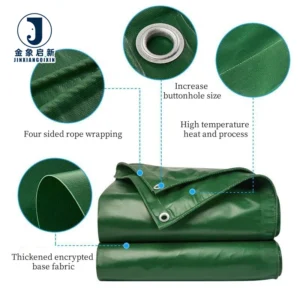
The polyester mesh base fabric carries the structural load in any PVC coated tarpaulin roll, while the coating provides waterproofing and surface protection. Denier and weave density of the base fabric determine how tensile and tear forces distribute across the material before the coating even enters the equation. For high-flex applications such as truck side curtains, a tighter weave with higher denier yarns resists tear propagation at stress concentration points — particularly at welded seams and eyelet reinforcements where loads transfer from fabric to hardware.
Coating Weight Verification and GSM Integrity
GSM stated on the quotation must be verifiable on the roll that arrives at your warehouse. In-process coating weight control during production ensures that the PVC coated tarpaulin roll meets the specified grade across its full width and length, not just at the sample cut. Roll-to-roll consistency depends on disciplined coating application and continuous thickness monitoring. Buyers who have received underweight rolls often discover the discrepancy only after cutting into production, when the material handles differently from the approved sample and weld parameters no longer produce reliable seams [NEED_CITE: pre-shipment inspection protocols for coated fabric rolls].
Reading GSM, Thickness, and Coating Method Together
A 350gsm roll at 0.32mm thickness suits light-duty tent and awning applications where flexibility and ease of handling during fabrication take priority. Moving to 550gsm at 0.45mm or 600gsm at 0.5mm shifts the balance toward higher tensile capacity and greater resistance to puncture — essential for truck covers and cargo tarps subject to dynamic loading. The coating method interacts with these weight grades differently: hot-melt coating typically produces a stronger molecular bond with the polyester mesh, improving peel strength at welded seams, while laminated technology offers cost efficiency for applications where weld seam stress remains moderate. Surface finish selection between glossy and matt also influences fabrication — glossy surfaces accept customised printing with sharper resolution, while matt surfaces reduce glare during installation and handling. The available roll widths of 2m and 2.1m, with corresponding lengths of 75m and 50m, determine cutting layout efficiency and the number of transverse weld seams required for large-format covers.
What Batch Inconsistency Costs Beyond the Roll Price
Colour variation between rolls in the same order becomes immediately visible once the material is installed side by side on a truck fleet or a large tent structure. When GSM drifts from the quoted value across a production batch, fabricators must adjust welding parameters roll by roll — a process that introduces inconsistency into finished products and increases rejection rates. Flame retardant or UV treatment claimed without a supporting test report creates compliance risk at the point of installation, particularly where local building codes or mining regulations demand documented certification [NEED_CITE: fire classification standards for temporary structures and membrane materials].
Why Procurement Verification Matters Here
Material specification sheets issued per order state the exact GSM, base fabric construction, coating method, and colour reference — providing traceability from sample approval through to container loading. The 10-person R&D team handles custom GSM requirements, colour matching, and treatment specifications during sample development, typically producing samples within days for evaluation before bulk commitment. Dedicated QA/QC operates at every production stage, with 100% inspection before shipment generating a pre-shipment inspection record that ships with the documentation package. Three full production lines and 36 sets of professional equipment support bulk volume with maintained consistency, while nearly 30 years of coated fabric specialisation underpins process control over coating weight and adhesion behaviour.
Documentation & Verification
- Material specification sheet stating exact GSM, coating method, and base fabric construction per roll order
- Test reports for UV and flame retardant grades provided where applicable — request before production confirmation
- Pre-shipment inspection record documenting coating weight verification and visual quality check before dispatch
- Roll packing list with individual roll identification for traceability through your fabrication process
- Certificate of origin and customs documentation included with each container shipment
Fabrication, Handling & Storage
- Hot-air welding parameters vary between hot-melt and laminated grades — test weld each GSM before production runs
- Glossy surface rolls accept customised printing with higher resolution than matt surface equivalents
- Store rolls horizontally on padded racks to prevent permanent creasing in the 0.65mm heavy grades
- Allow cold-stored rolls to reach ambient temperature before unrolling to avoid coating crack in cold-crack resistant grades
- Plan cutting layouts around 2m and 2.1m widths to minimise transverse weld seams on large-format covers
Preparing Your Material Specification
Provide your target GSM, preferred coating method, and the specific environmental conditions the finished product will face — including UV exposure duration, welding method, and any local fire classification requirements. Confirm whether you need rolls only or require customised printing and colour matching to a Pantone or RAL reference. Sample development is available within days for material verification before you commit to bulk volume.
Frequently Asked Questions
Q: How is GSM verified across every roll in my order?
A: Each PVC coated tarpaulin roll undergoes in-process coating weight control during production, followed by 100% pre-shipment inspection. A pre-shipment inspection record documents the verified GSM and is included with your shipping documentation. You can request coating weight verification data specific to your production batch before dispatch.
Q: Laminated vs hot-melt coating — which suits my welding process?
A: Hot-melt coating generally produces stronger peel adhesion at welded seams, making it preferable for high-frequency and hot-air welding on high-flex applications. Laminated coating suits moderate-stress fabrication where cost efficiency is a priority. We recommend testing both methods on sample material matched to your specific welding equipment and parameters.
Q: How do you maintain colour consistency across multiple rolls?
A: Colour reference is locked on the material specification sheet at sample approval stage. Production runs maintain this reference through controlled pigment dosing and in-process visual comparison. The pre-shipment inspection includes a side-by-side colour check across rolls within the same batch to detect any visible variation before container loading.
Q: What test standards support UV and flame retardant claims?
A: UV and flame retardant treatments are available in specific grades — the applicable test standard depends on the grade selected for your market. We provide test reports for the specific grades ordered. Request documentation during sampling so you can verify compliance with your local regulatory requirements before confirming bulk production.
Q: Can I specify custom roll dimensions and colours?
A: Standard roll widths are 2m and 2.1m with lengths of 75m and 50m respectively. Custom colours, printing, and treatment grades are available with sample development completed within days. Minimum order quantities vary by customisation level — confirm your requirements during inquiry for lead time and volume guidance.