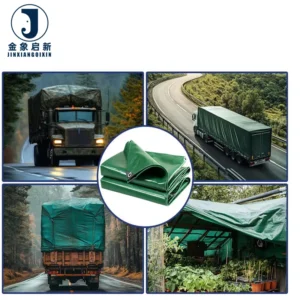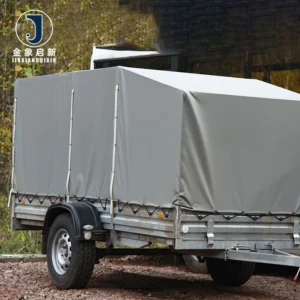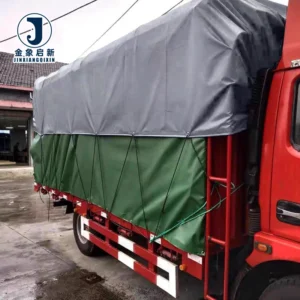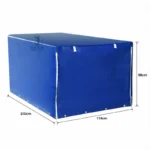
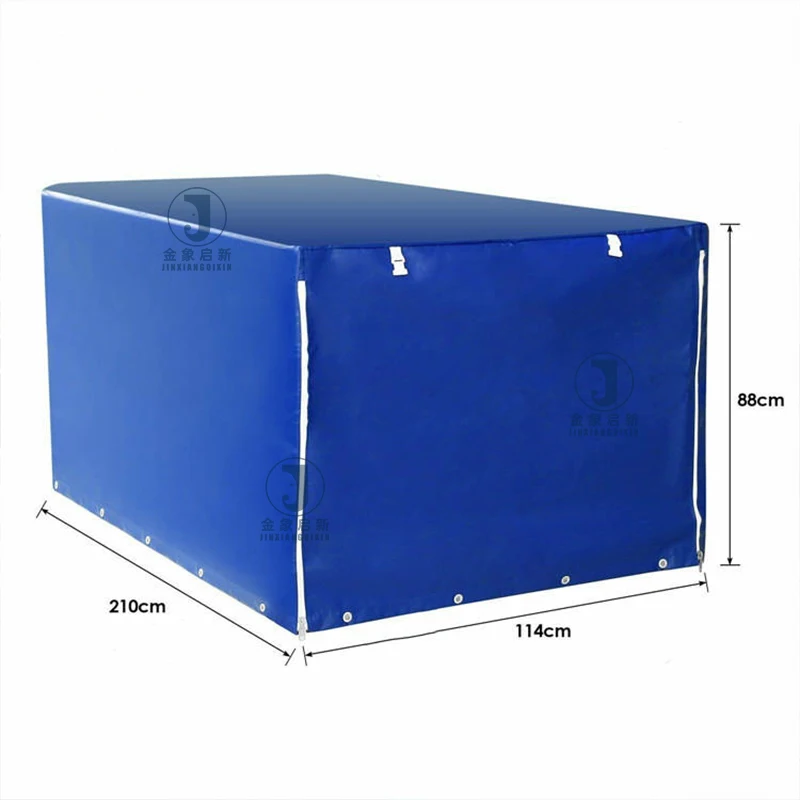
Coating Weight Control — Every roll of PVC coated tarpaulin is verified against its stated GSM before dispatch, with a material specification sheet provided so you can confirm coating weight and adhesion on arrival.
Technical Specifications
| Parameter | Value |
|---|---|
| Product Type | PVC Tarpaulin Truck Cover |
| Material | PVC + High-strength polyester mesh fabric |
| Coating Method | Laminated technology & Hot-melt coating technology |
| Weight Options | 350gsm / 420gsm / 500gsm / 550gsm / 600gsm / 750gsm |
| Thickness Options | 0.32mm / 0.35mm / 0.4mm / 0.45mm / 0.5mm / 0.65mm |
| Color Options | Blue / Red / Yellow / Light blue / Grey (Customized) |
| Surface Finish | Smooth, leather-like texture |
| Key Features | Waterproof, sunproof, cold crack resistance, anti-mildew, anti-static treatment |
| Flame Retardancy | Flame-retardant type customizable (confirm the grade required for your market) |
| UV Treatment | UV treated material (test basis not stated — request specific standard) |
| Service Life | Suited to extended outdoor exposure |
| Repairability | Repairable by hot air welding |
| Certification | ISO, CE |
Application Suitability
| Application | Exposure & Requirement |
|---|---|
| Truck and trailer side curtain | Constant flexing at load points, road abrasion, prolonged UV exposure, rain ingress prevention |
| Open trailer cargo cover | Tie-down strap tension at eyelets, wind flap fatigue, full weather exposure |
| Cargo ship cover | Salt spray, heavy precipitation, prolonged sun exposure, large span coverage |
| Tent and awning structural fabric | Wind load tension, UV degradation, requirement for clean weld seams |
| Pond and reservoir liner | Permanent water contact, soil chemistry, puncture risk from substrate |
Why Stated GSM Does Not Guarantee Tensile Performance
A heavier coating does not compensate for a weak base fabric.
Technical buyers often specify PVC coated tarpaulin by GSM alone, assuming a higher number delivers proportionally higher strength. In reality, tensile and tear performance depends on the denier of the polyester yarns and the weave density of the base mesh, not just the weight of PVC applied over it. A 750gsm fabric with a low-denier base can tear more easily than a 550gsm fabric built on a high-tenacity yarn structure. [NEED_CITE: tensile and tear test methods for coated fabrics per ISO 1421]
When PVC coated tarpaulin material coating technology is evaluated only by weight, fabricators end up with material that welds well but fails under load at the flex points where truck side curtains and trailer covers experience the most stress.
Base Fabric Architecture and Load Behaviour
The high-strength polyester mesh fabric used in this PVC coated tarpaulin material provides the structural backbone. The yarn denier and the warp-weft density determine how load is distributed across the fabric plane. Higher denier yarns resist individual strand breakage, while tighter weave patterns limit tear propagation once a cut initiates. For truck and trailer cover applications, this means the fabric can absorb strap tension and wind flap cycles without progressive failure.
Coating Method and Weld Seam Integrity
Laminated and hot-melt coating technologies produce different adhesion profiles between the PVC layer and the polyester base. Hot-melt coating penetrates the mesh interstices more deeply, creating a mechanical bond that resists delamination during hot air welding. Laminated coating produces a smoother surface finish. For fabricators building side curtains and trailer covers, PVC coated tarpaulin material coating technology selection affects the temperature window and dwell time needed to achieve a weld that outlasts the fabric itself.
Weight-to-Thickness Mapping for Specification
Each GSM option corresponds to a specific total thickness — from 0.32mm at 350gsm to 0.65mm at 750gsm. This relationship matters because thickness influences both flexibility and abrasion resistance. A thinner, lighter grade drapes more easily for complex trailer geometries, while a heavier grade resists puncture and edge wear during daily loading operations. Specifying by both GSM and thickness ensures the material matches the mechanical demands of the route. [NEED_CITE: relationship between PVC coating thickness and abrasion resistance in transport fabric applications]
The Cost of Specifying on Weight Alone
When a buyer selects PVC coated tarpaulin based only on the lowest GSM that meets a minimum weight threshold, the consequences surface after installation. Welded seams on under-engineered base fabric separate at the hem line where the cover flexes most during transit. Eyelets pull through thin coatings because the base mesh cannot distribute the point load. Batch-to-batch colour shifts become visible when replacement panels are installed alongside originals on the same vehicle. [NEED_CITE: common failure modes in PVC coated transport covers related to base fabric specification]
Why This Source Supports Technical Specification
Three full production lines with 36 sets of professional equipment allow consistent coating weight across bulk orders, meaning roll-to-roll GSM variation is controlled rather than left to chance. A 10-person R&D team handles material selection and sample development, so custom GSM, width and colour requirements are developed within days rather than weeks. Dedicated QA/QC at every production stage with 100% inspection before shipment means each roll is weighed and verified. Full process control over coating adhesion ensures weld seam performance matches the fabric grade specified. Samples are provided for custom requirements so fabricators can test weld parameters before committing to production volume.
Documentation & Verification
- Material specification sheet stating exact GSM, base fabric type and coating weight for incoming inspection
- Test report for UV treatment and flame-retardant grades where applicable — confirm specific standard required
- Pre-shipment inspection record with roll-by-roll weight verification against quoted values
- Roll packing list with batch reference for traceability across multiple rolls in one order
- Certificate of origin and customs documentation for cross-border shipment
Fabrication, Handling & Storage
- Hot air welding parameters should be tested on sample material before production, as coating method affects dwell time
- Eyelet placement must account for base fabric weave direction to distribute point load across multiple yarn paths
- Rolls should be stored upright on end caps to prevent flat spots that create permanent creases in the coating
- Cold crack resistance allows handling in low temperatures, but allow material to reach workshop temperature before welding
- Clean with mild detergent only — solvent-based cleaners can degrade the PVC surface and compromise re-weldability
- Offcut material is repairable by hot air welding, matching the original coating method for consistent bond strength
What We Need to Quote Accurately
To specify the correct grade for your application, provide the vehicle type and route exposure conditions, the required GSM and thickness, and whether the cover will be fabricated in-house or supplied as a finished product. If your market requires flame-retardant or anti-static certification, state the applicable standard so the correct treatment grade is selected. Colour and width requirements should include target quantities so roll-to-roll consistency can be confirmed before production.
Frequently Asked Questions
Q: How is GSM verified on arrival and what documentation supports the quoted weight?
A: Each shipment includes a material specification sheet stating the exact GSM, base fabric type and coating weight for your incoming inspection. The pre-shipment inspection record contains roll-by-roll weight verification data. You can cross-check these documents against physical samples using a standard GSM cutter and precision scale at your receiving dock.
Q: What is the relationship between GSM, base fabric denier and tensile strength?
A: GSM measures total weight of fabric and coating combined, while tensile and tear strength depend primarily on the polyester base yarn denier and weave density. A higher GSM with a low-denier base will not outperform a lower GSM on a high-tenacity mesh. Request the base fabric specification alongside the GSM to evaluate true mechanical performance.
Q: Laminated vs hot-melt coating — which method suits my welding and fabrication process?
A: Hot-melt coating penetrates deeper into the mesh structure, creating stronger adhesion that typically performs better during hot air welding. Laminated coating produces a smoother surface and is often preferred where surface appearance is critical. We recommend testing weld parameters on sample material of both types to confirm which suits your fabrication setup.
Q: How is batch-to-batch colour consistency controlled across rolls in the same order?
A: Colour consistency is maintained through controlled pigment dosing during the coating process and verified during pre-shipment inspection. For orders spanning multiple rolls, request a colour reference sample against which incoming rolls can be compared side by side before installation on the same vehicle or structure.
Q: What UV treatment test basis is available and how does it relate to service life?
A: UV treatment is applied during coating, but the specific test standard and exposure rating vary by grade. Request the applicable UV test report for the grade you are ordering and compare it against the solar exposure and expected replacement cycle for your climate zone and route conditions.