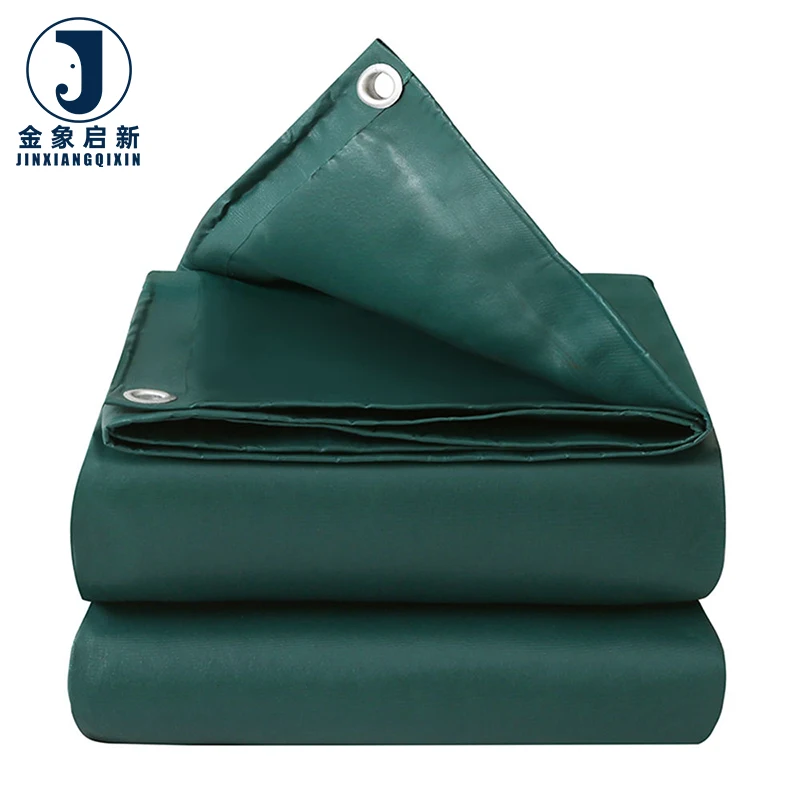
Coating Weight Mastery — In-process GSM measurement at every production stage ensures the PVC coated blackout tarpaulin fabric laminated grade you order matches the roll you receive.
Technical Specifications
| Parameter | Value |
|---|---|
| Product Type | PVC Coated Tarpaulin / Blackout Tarpaulin |
| Material | PVC + High-strength polyester mesh fabric |
| Coating Technology | Laminated technology & Hot-melt coating technology |
| Base Fabric | High tenacity polyester yarns |
| Weight Options | 350gsm, 420gsm, 500gsm, 550gsm, 600gsm, 750gsm |
| Thickness Options | 0.32mm, 0.35mm, 0.4mm, 0.45mm, 0.5mm, 0.65mm |
| Roll Size | 2m width × 75m length / 2.1m width × 50m length |
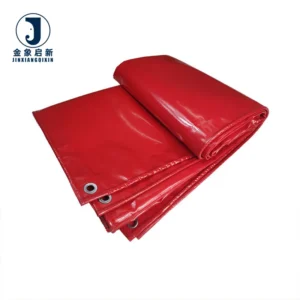
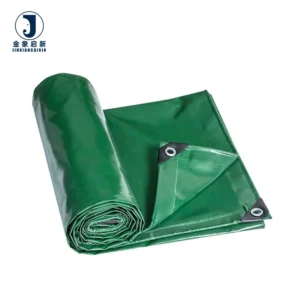
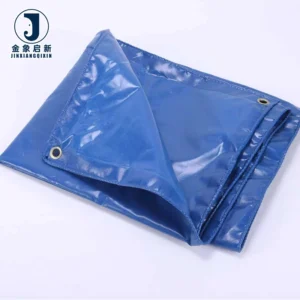
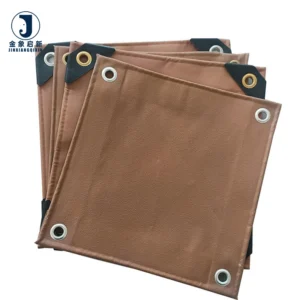
| Color Options | Blue, Red, Yellow, Light blue, Grey (custom colors available) |
| Key Features | Waterproof, UV resistant, cold crack resistant, anti-mildew, anti-static, outstanding tearing strength for welding, high color fastness |
| Special Treatments | Flame retardant, anti-static, anti-cold, anti-mildew, 3P (specific grades available on request) |
| Standards | ISO, CE |
Application Suitability
| Application | Exposure & Requirement |
|---|---|
| Tent and awning covers | Continuous UV exposure, repeated folding and unfolding, weld seam integrity |
| Truck awning and side curtains | Road debris abrasion, high-speed wind flex, color consistency across panels |
| Construction and scaffolding enclosure | Weather exposure, dust and moisture containment, flame retardant compliance on site |
| Inflatable and membrane structures | Air pressure tension, seam peel resistance, consistent coating weight for uniform stress |
| Cargo ship and marine covers | Salt spray, prolonged moisture, UV degradation, fabric mildew risk |
| Temporary industrial tarp covers | Equipment protection, chemical dust, puncture from sharp edges |
Why Stated GSM Without Verification Leaves Fabricators Exposed
Coating weight must be measured on the production line and re-verified before dispatch — a certificate alone does not guarantee the roll in your warehouse matches the spec sheet.
Technical buyers sourcing PVC coated blackout tarpaulin often specify a GSM value based on structural calculations for tensile load and weld seam allowances. When the delivered roll is lighter than agreed, the shortfall is rarely visible until the fabricated cover fails under load or the weld line peels before the base fabric does. This gap between quoted and actual coating weight is one of the most common reasons fabricators face rework claims from their own customers [NEED_CITE: common causes of coated fabric field failures].
Hot-Melt Coating vs. Laminated Construction: What Each Means for Your Fabrication Line
The hot-melt coating process drives liquid PVC directly into the interstices of the high-tenacity polyester mesh, creating a mechanical bond that resists delamination under repeated flexing. This method suits PVC coated blackout tarpaulin applications where the finished product will be folded, rolled, or subjected to cyclic wind loading — such as truck awnings and retractable tent covers.
Laminated technology bonds pre-formed PVC films to the base fabric under heat and pressure, producing a uniform surface that supports high-quality printing and consistent color across large panels. Fabricators choosing this grade for membrane structures or architectural covers benefit from the smooth finish and predictable heat-seam behavior. Both methods are available across the full GSM range from 350gsm to 750gsm, allowing selection based on end-use rather than process limitation.
How Coating Adhesion Determines Weld Performance in the Field
Weld strength on PVC coated fabric is only as reliable as the bond between the coating and the base yarns. When adhesion is weak, the heat from welding separates the PVC layer from the polyester mesh at the seam edge, creating a failure point that propagates under tension. This PVC coated blackout tarpaulin range uses high-tenacity polyester yarns with controlled coating penetration, so the weld zone maintains tearing strength comparable to the body fabric [NEED_CITE: tensile and tear test methods for coated fabrics per ISO 1421].
Reading the Weight-to-Thickness Relationship
Each GSM option corresponds to a specific total thickness: 350gsm at 0.32mm, 420gsm at 0.35mm, 500gsm at 0.4mm, 550gsm at 0.45mm, 600gsm at 0.5mm, and 750gsm at 0.65mm. This proportional relationship exists because the PVC coating mass contributes directly to both weight and caliper. A higher GSM delivers more coating material around each yarn intersection, improving abrasion resistance and puncture tolerance. However, selecting the heaviest option for every project adds unnecessary weight and cost — tent manufacturers typically specify in the 500gsm to 600gsm range for the balance between handleability and durability, while 750gsm serves heavy-duty industrial enclosure and cargo ship covers where puncture and tear risks dominate. The base fabric denier and weave density also contribute to tensile and tear performance, meaning two fabrics at the same GSM can behave differently if their base construction varies.
When Specifying Errors Show Up After Fabrication
A roll that arrives below the stated GSM will weld at lower temperatures than expected, and the operator may not adjust the heat-seam settings until multiple panels have already been joined with insufficient penetration. Color variation between rolls in the same order becomes visible only when panels are installed side by side on a tent or truck curtain, forcing the fabricator to replace sections at their own cost. Flame retardant or anti-static treatments specified for site compliance may be claimed on the quotation without a supporting test report, leaving the fabricated product unable to pass the end-user’s inspection [NEED_CITE: fire classification standards for temporary building enclosures].
What Distinguishes This Supply Source
Coating weight is monitored in real time during production, with dedicated QA/QC checkpoints at each stage ensuring roll-to-roll GSM consistency across your order.
Three full production lines and 36 sets of professional equipment support bulk volume with reliable scheduling, reducing the risk of delayed container shipments.
A 10-person R&D team handles custom color matching, width specification, and sample development, delivering trial rolls within days rather than weeks.
100% pre-shipment inspection verifies coating weight, color reference, and surface quality before any roll leaves the facility.
ISO and CE certifications underpin the quality management system, with full documentation packages accompanying every dispatch.
Documentation & Verification
- Material spec sheet stating GSM, base fabric type, coating method, and color reference per roll
- UV and flame retardant test reports provided where applicable treatments are specified
- Pre-shipment inspection record confirming verified coating weight against quoted GSM
- Roll packing list with individual roll IDs for traceability across your inventory
- ISO and CE certificates included with each shipment documentation package
- Certificate of origin and customs support documents for international clearance
Fabrication, Handling & Storage
- Set heat-seam temperature according to the specific GSM and coating method — hot-melt and laminated grades respond differently
- Allow rolls to acclimate to workshop temperature before unrolling to prevent cold crack damage on stiff material
- Store rolls upright on pallets to avoid flat spots that create permanent creases in 0.5mm and thicker grades
- Use compatible PVC-based cleaners only, as solvent-based products may degrade the coating surface finish
- Plan cutting layout around the 2m or 2.1m roll width to minimize off-cuts and cross-panel weld seams
What to Include in Your Inquiry
Specify the end-use application and the environmental conditions the fabricated product will face — including UV exposure duration, temperature range, and any flexing or tension cycles. State the GSM range and thickness you are evaluating, along with the roll width that fits your cutting table. If your market requires flame retardant or anti-static compliance, identify the specific standard your end-user’s inspection body references so the correct treatment grade can be confirmed before production.
Frequently Asked Questions
Q: How is GSM verified, and what documentation accompanies each roll shipment?
A: Coating weight is measured in-process during production and again during the 100% pre-shipment inspection. Each dispatch includes a material specification sheet stating the verified GSM, base fabric construction, coating method, and color reference. The pre-shipment inspection record confirms that every roll meets the quoted weight before packing.
Q: What flame retardant grades are available, and which test standards do they meet?
A: Flame retardant treatment is available as a special option for this PVC coated blackout tarpaulin range. The specific grade depends on the target market’s fire safety requirements. Provide the standard your end-user references — such as DIN 4102, NFPA 701, or local building codes — so the appropriate grade can be confirmed with supporting test documentation.
Q: How does hot-melt coating compare to laminated technology for weld performance?
A: Hot-melt coating penetrates the polyester mesh interstices, creating strong mechanical adhesion that supports weld integrity under cyclic flexing. Laminated technology produces a smoother surface suited to printing and consistent visual appearance. Both methods deliver reliable heat-seam performance when welding parameters are matched to the specific coating construction.
Q: How is color consistency maintained across multiple rolls in a single order?
A: Color formulation is controlled against a reference standard, and in-process inspection checks each roll before it joins the order batch. The pre-shipment inspection verifies visual consistency across all rolls. For projects where panels install side by side, request the inspection record confirming uniform color reference across your complete roll quantity.
Q: What is the relationship between GSM weight and tensile or tear strength?
A: Higher GSM means more PVC coating mass surrounding each yarn intersection, which improves puncture tolerance and abrasion resistance. The base fabric denier and weave density contribute independently to tensile and tear values. Specify both the GSM and the base fabric construction together rather than relying on weight alone to predict mechanical performance.