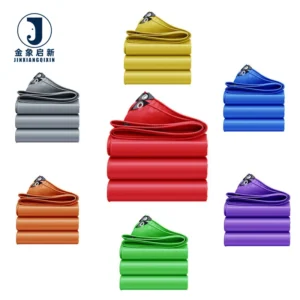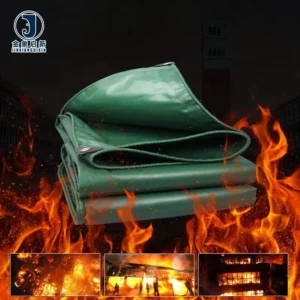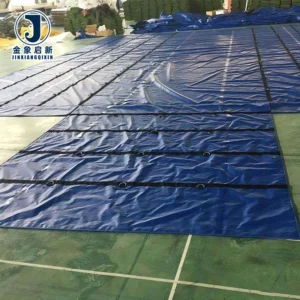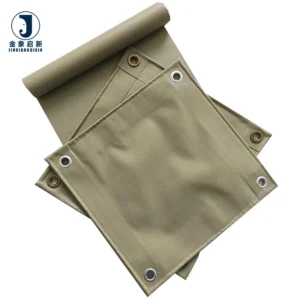
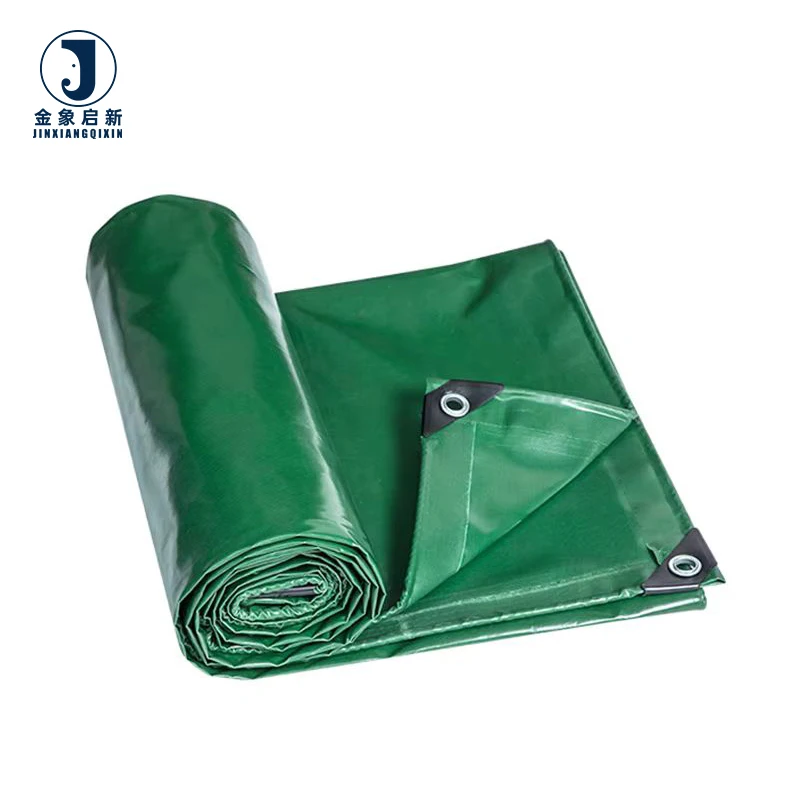
Precision-Coated Weight Control — Every roll of this PVC coated tarpaulin is backed by a material specification sheet that documents coating weight, base fabric denier, and verified GSM before it leaves our facility.
Technical Specifications
| Parameter | Value |
|---|---|
| Product Type | PVC Coated Tarpaulin |
| Material | PVC Vinyl Coating on Woven Fabric |
| Weight | At least 450 gsm |
| Waterproofing | Fully waterproof construction for rain, snow, and weather exposure |
| Custom Dimensions | Available in custom width and length |
| Edge Finishing | Eyelets and reinforced hems available |
| Flame Retardant Grade | Grade not stated — confirm the grade required for your market |
| Anti-UV Treatment | Test basis not stated — available in UV-treated grades on request |
| Tensile Strength | Standard not stated — verify against application load requirements |
| Tear Strength | Standard not stated — verify against mechanical stress exposure |
Application Suitability
| Application | Exposure & Requirement |
|---|---|
| Truck and trailer covers | Constant road vibration, flexing at load points, rain and wind exposure |
| Industrial equipment covers | Outdoor weathering, dust ingress prevention, repeated handling and folding |
| Temporary structure covers | Wind load, UV exposure, waterproofing for contents protection |
| Agricultural stock covers | Moisture barrier, sun exposure, mechanical stress from securing straps |
| Pond and reservoir liners | Permanent water contact, substrate puncture risk, soil chemistry exposure |
Why GSM Alone Does Not Tell You How Strong the Fabric Is
The gram weight printed on a quotation means nothing if the coating method and base fabric density are not documented alongside it.
Technical buyers have received rolls that feel lighter than the quoted PVC coated fabric 450 gsm, only to find the coating thickness was uneven or the base fabric was woven at a lower denier count than expected. A 450 gsm roll with a heavy coating over a sparse weave behaves very differently under tension than one with a lighter coating over a dense substrate. The distinction matters when that fabric is welded into a truck cover that flexes hundreds of times on the road [NEED_CITE: tensile and tear test methods for coated fabrics per ISO 1421]. Without a specification sheet that breaks down coating weight and base fabric construction separately, the stated GSM is a single number masking two critical variables.
Coating Adhesion and Substrate Bond Integrity
The PVC vinyl coating on this woven fabric is applied to achieve consistent adhesion across the full roll width. When a technical buyer evaluates PVC coated fabric 450 gsm for fabrication into welded panels or sewn assemblies, the coating-to-substrate bond determines whether the layers delaminate under flex stress. Poor adhesion shows up first at weld lines and hem folds, where the coating is subjected to concentrated thermal and mechanical load during fabrication.
Base Fabric Weave and Tear Propagation Resistance
The woven base fabric provides the structural backbone that governs how tears initiate and propagate under load. A tighter weave with higher denier yarns resists tear spread, meaning a puncture or cut is less likely to run across the panel. For industrial covering applications where the fabric is tensioned over sharp-edged equipment or subjected to wind-driven flapping, the weave density directly influences service behaviour. This relationship between denier, weave count, and tear performance is what separates a fabric that holds up from one that fails at the first stress concentration [NEED_CITE: coated fabric tear propagation testing methods].
Waterproofing Performance at Seams and Flex Points
The waterproof construction of this PVC vinyl coated fabric extends beyond the face of the material to how it performs at fabricated joints. Welded seams on PVC-coated woven fabrics must achieve bond strength that matches or exceeds the coating’s own integrity. When a truck cover flexes at a load-bearing point, the seam experiences both peel and shear forces simultaneously. If the weld temperature or dwell time was not matched to the coating thickness, the seam becomes the first failure point rather than the fabric itself.
Weight Verification and Coating Thickness Consistency
A stated weight of at least 450 gsm provides a baseline for technical buyers comparing material options across suppliers. However, consistency across the roll width and from roll to roll within the same order is what determines whether every panel in a fabrication run behaves identically. Variations in coating weight across a single roll can lead to inconsistent weld behaviour, where one section bonds cleanly and another requires parameter adjustment on the production floor.
The Hidden Cost of Specifying on GSM Without Supporting Data
When a procurement decision rests on a single GSM figure without verified coating weight or base fabric denier, the downstream costs appear during fabrication and field use. Rolls that arrive lighter than quoted force fabricators to adjust weld parameters mid-production, creating inconsistency across finished panels. Coating that was applied unevenly leads to colour variation visible once panels are installed side by side on a truck or structure [NEED_CITE: roll-to-roll colour consistency standards in coated fabric production]. Flame retardant or UV treatments claimed on the quotation but unsupported by test documentation create compliance risk when the finished installation faces inspection. These are not supplier disputes that get resolved with a credit note — they are project delays, rework costs, and warranty claims that trace back to an incomplete material specification.
Why Source This PVC Coated Fabric Here
Three full production lines and 36 sets of professional equipment support bulk roll output with consistent coating application across the PVC coated fabric 450 gsm range. A 10-person R&D team handles material selection, sample development, and specification matching for custom requirements — meaning the sample you approve is the specification that enters production. Dedicated QA/QC runs at every production stage with 100% pre-shipment inspection, so coating weight, colour, and dimensional accuracy are verified roll by roll before dispatch. The material specification sheet supplied with each order states GSM, base fabric denier, coating weight, and colour reference as documented values, not marketing claims. Samples are developed within days for custom requirements, allowing technical buyers to test weld behaviour and coating adhesion before committing to a container load.
Documentation & Verification
- Material specification sheet stating GSM, base fabric denier, and PVC coating weight per roll
- Test reports for UV and flame-retardant grades provided where applicable to the order
- ISO and CE certification documentation included with every shipment
- Pre-shipment inspection record verifying coating consistency and dimensional accuracy
- Colour reference documented to ensure roll-to-roll match within each production batch
- Certificate of origin and customs documentation supplied for international dispatch
Fabrication, Handling & Storage
- Weld temperature must be matched to the PVC vinyl coating thickness for consistent seam strength
- Eyelet placement should account for woven fabric grain direction to distribute load evenly
- Store rolls upright on cores to prevent creasing across the 450 gsm coated surface
- Allow rolls to reach ambient temperature before unrolling to avoid coating cracking in cold conditions
- Use PVC-compatible cleaning agents to avoid softening or dissolving the vinyl coating surface
- Plan panel cutting layout to minimise waste given the ordered custom width and roll length
What We Need to Move Your Enquiry Forward
Provide the end-use application and the specific exposure conditions the fabric will face, including whether it will be welded, sewn, or mechanically fastened. Specify any fire safety classification or UV performance standard your market requires so we can confirm available treatment grades with supporting test documentation. Indicate your required roll width, target colour or colour reference, and estimated annual volume so we can align production scheduling and provide a realistic lead time.
Frequently Asked Questions
Q: How is the 450 gsm weight verified before the rolls ship?
A: Each roll undergoes weight verification against the stated GSM during our 100% pre-shipment inspection. The material specification sheet supplied with your order documents the measured coating weight, base fabric denier, and total GSM so the fabric you receive matches the specification you approved at sample stage.
Q: What is the relationship between GSM and tensile or tear strength?
A: GSM reflects total weight but does not independently determine strength. The base fabric denier, weave density, and coating adhesion together govern tensile and tear performance. We provide the base fabric and coating breakdown on the specification sheet so you can evaluate structural performance beyond a single weight figure.
Q: Which coating methods are used and how do they affect welding?
A: The PVC vinyl coating is applied to the woven substrate using processes selected for consistent adhesion and coating thickness. Weld parameters must be matched to the specific coating weight and method. We recommend running weld tests on the sample before full production to confirm optimal temperature and dwell settings.
Q: Can you provide test reports for UV or flame-retardant treatment?
A: Where UV or flame-retardant treatment is specified for your order, test reports are provided documenting the grade and test basis. Confirm the specific classification or standard your project requires so we can match the correct treatment level and supply the corresponding documentation.
Q: How do you ensure colour consistency across multiple rolls in one order?
A: All rolls within a single production run are manufactured against a documented colour reference. Our in-process QA checks colour consistency at multiple points during production, and the pre-shipment inspection record verifies that roll-to-roll variation remains within acceptable tolerance before dispatch.