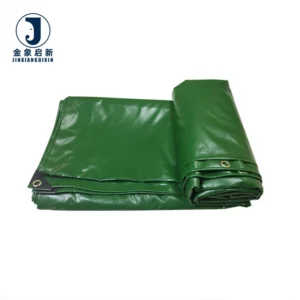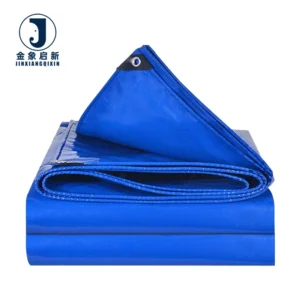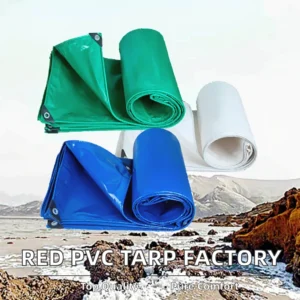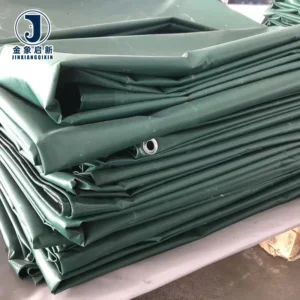
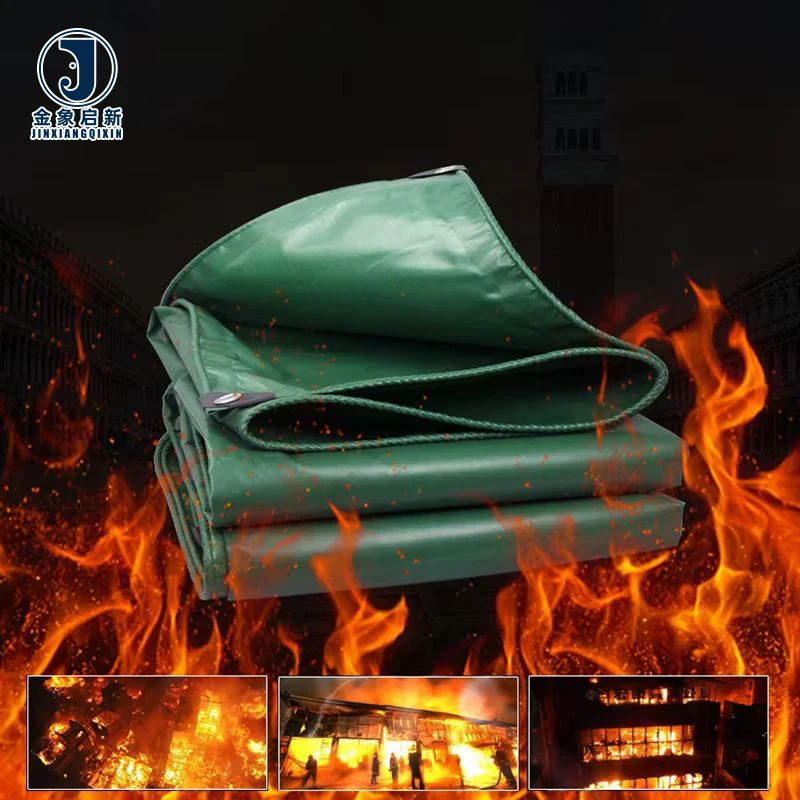
Deep Process Control — Every roll of PVC coated tarpaulin is verified for GSM and adhesion before leaving the factory, matching the exact weight and finish stated on your quotation.
Technical Specifications
| Parameter | Value |
|---|---|
| Product Type | PVC Coated Tarpaulin |
| Base Fabric | Polyester |
| Base Fabric Denier | 500D-500D |
| Coating Material | PVC (double-sided) |
| GSM Range | 450-900 g/m² (confirm the grade for your application) |
| Flame Retardant | Available in flame retardant grades — confirm the grade required for your market |
| UV Treatment | Anti-UV available — confirm test basis required for your project |
| Waterproofing | Fully waterproof coated construction |
| Surface Texture | Smooth, soft surface with leather-like texture |
| Repairability | Repairable by hot air welding |
| Printing | Custom brand printing available |
| Color | Custom colors available |
| Key Features | Water resistant, flame retardant available, anti-UV available, abrasion resistant |
Application Suitability
| Application | Exposure & Requirement |
|---|---|
| Truck and trailer cover | Continuous UV exposure, road spray, mechanical flexing at load points, wind abrasion during transit |
| Construction equipment cover | Outdoor weathering, dust and debris abrasion, prolonged sun exposure on job sites |
| Awning and tent fabrication | Tension stress at seams, UV degradation risk, repeated folding and deployment, rain load |
| Machine and wood cover | Moisture ingress prevention, surface scratch prevention, UV discoloration control |
Why the Stated GSM Does Not Guarantee Fabric Strength
A 650 g/m² PVC coated tarpaulin with weak adhesion between coating and base fabric will delaminate long before a lighter but well-bonded alternative fails. Technical buyers who select material solely on weight often encounter premature peeling at welded seams or base fabric exposure once the coating lifts. The relationship between coating weight, base fabric denier, and adhesion strength determines real-world durability far more than a single GSM figure [NEED_CITE: tensile and tear test methods for coated fabrics per ISO 1421].
I have seen heavy-grade coated rolls fail at the weld line while lighter rolls with superior bonding remained intact through multiple seasons. The polyester base yarn at 500D-500D contributes to tear propagation resistance, but only when the PVC coating penetrates and encapsulates the weave correctly. Request the adhesion peel test value alongside the GSM certificate to compare materials on equal terms.
How Coating Method Affects Weld Performance
Double-sided PVC coating on this PVC coated tarpaulin seals the polyester weave from both faces, preventing moisture channels that single-side coated alternatives leave open. For fabricators who hot-weld panels into truck covers or awnings, consistent coating thickness on both sides ensures the weld seam fuses uniformly without one side melting faster than the other. Uneven coating causes the weld to fail at flex points where the load shifts during transit.
Adhesion and Its Role in Long-Term Durability
When the PVC coating bonds tightly to the 500D-500D polyester base, the composite fabric behaves as a single structural layer rather than two separate materials sliding against each other [NEED_CITE: peel strength test standards for coated textiles]. Poor adhesion manifests as blistering in high-temperature storage or delamination at eyelet reinforcement zones. For technical buyers specifying PVC coated tarpaulin for OEM production, verifying peel strength per roll eliminates surprises during fabrication and end-use.
Reading the Specification Sheet Beyond the GSM Number
The GSM range of 450-900 g/m² covers multiple grades within this product family, and selecting the correct weight depends on your mechanical stress profile. A lighter grade suits temporary awning applications where weight savings matter, while heavier grades handle the constant abrasion of truck side curtains dragged against loads. The 500D-500D denier provides the structural skeleton, but the coating weight added to each face determines stiffness, hand feel, and weld temperature window. Always confirm the specific grade rather than assuming the midpoint of the range applies to your order. Surface texture on this material reads as a smooth, leather-like finish, which influences how printed branding adheres during custom labeling runs.
The Cost of Specifying the Wrong Coating Grade
Fabricators who order PVC coated tarpaulin without specifying the exact GSM grade often receive material at the lower end of the product family range, leading to truck covers that crack at fold lines within months. Weld seams on underweight rolls separate under tension because insufficient coating material exists to form a proper fusion joint [NEED_CITE: welding parameters for PVC coated polyester fabrics]. Batch-to-batch color variation compounds the problem when panels from different rolls sit side by side on a finished trailer, forcing the converter to reject entire shipments. Requesting a pre-shipment sample from the specific production run eliminates both weight and color discrepancies.
Sourcing PVC Coated Fabric with Verified Properties
Three full production lines support consistent coating weight control across large orders, reducing roll-to-roll GSM variation that causes converters to recalibrate weld settings mid-job. The 10-person R&D team develops custom samples within days, allowing technical buyers to test adhesion, color, and flame retardant response before committing to bulk. Every roll undergoes 100% pre-shipment inspection with documented QA records, so you receive the exact material parameters stated on your quotation. Custom width and color runs carry practical minimums that accommodate mid-volume fabricators without forcing container-load commitments. Hot air welding compatibility is validated on each production grade, ensuring your fabrication team can set temperature and dwell time with confidence.
Documentation & Verification
- Material specification sheet stating exact GSM, 500D-500D base fabric denier, and PVC coating type
- UV and flame retardant test reports provided for the specific grade ordered
- Weight verification per roll against the stated GSM before dispatch
- Pre-shipment inspection record documenting coating adhesion and surface quality
- ISO and CE certificates available on request for customs and project compliance
- Certificate of origin and roll packing list included with every shipment
Fabrication, Handling & Storage
- Hot air welding temperature must match the specific GSM grade ordered — confirm settings with a test strip before full production
- Store PVC coated tarpaulin rolls horizontally on padded supports to prevent permanent creasing in the leather-like surface
- Clean the smooth PVC surface with mild detergent only; solvent-based cleaners damage the coating and reduce UV protection
- Cut panels with the coating face up to achieve clean edges that weld consistently without fiber pull-out
- Allow rolls to acclimate to workshop temperature before unrolling to prevent coating micro-cracking in cold conditions
Request a Technical Specification Match
To receive an accurate material recommendation, provide your end-use application, the specific GSM grade you require within the 450-900 g/m² family, and any flame retardant or anti-UV test standards your market demands. If you need custom width, color, or printed branding, state your annual volume so we can confirm minimums and lead times. Requesting a physical sample before bulk commitment allows your fabrication team to validate weld parameters and confirm surface finish.
Frequently Asked Questions
Q: How is GSM verified before shipment?
A: Every roll is weighed and measured to confirm the stated 450-900 g/m² grade matches the order specification. A pre-shipment inspection record documents the actual weight per square meter for each roll, so fabricators receive material that matches their weld settings and structural calculations without mid-production surprises.
Q: What flame retardant test standards are available?
A: Flame retardant treatment is available across the product family, but the specific grade must be confirmed for your market and application. Request the applicable test standard when inquiring, and we will provide the corresponding test report for the grade you specify on your order.
Q: How does double-sided PVC coating affect welding?
A: Double-sided coating ensures both faces melt uniformly during hot air welding, producing consistent seam strength across the joint. This prevents the asymmetric weld failures common with single-side coated fabrics where one face bonds while the other remains unsealed at the flex point.
Q: What base fabric denier is used and why does it matter?
A: The 500D-500D polyester base provides a balanced weave that resists tear propagation in both warp and weft directions. This denier suits truck covers and awning applications where the fabric experiences multi-directional stress from wind loading and mechanical tie-down tension.