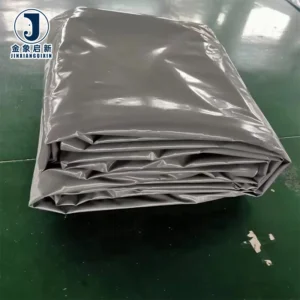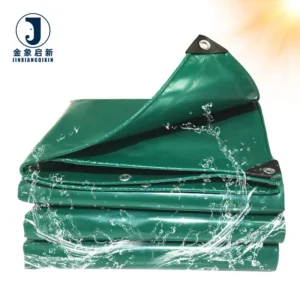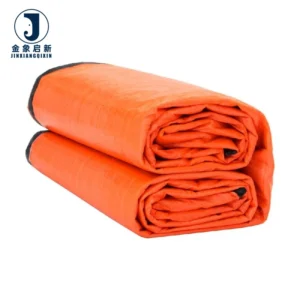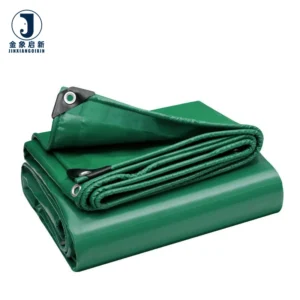
Process-Controlled Coating Weight — Every roll of PVC coated tarpaulin fabric gsm polyester base is verified against the quoted specification at the coating head, not just at the packing stage.
Technical Specifications
| Parameter | Value |
|---|---|
| Product Type | PVC Coated Fabric |
| Base Material | Polyester Base Fabric + Double-Sided PVC Coating |
| Yarn Count | 500D-500D |
| Weight Range | 450–900 g/m² |
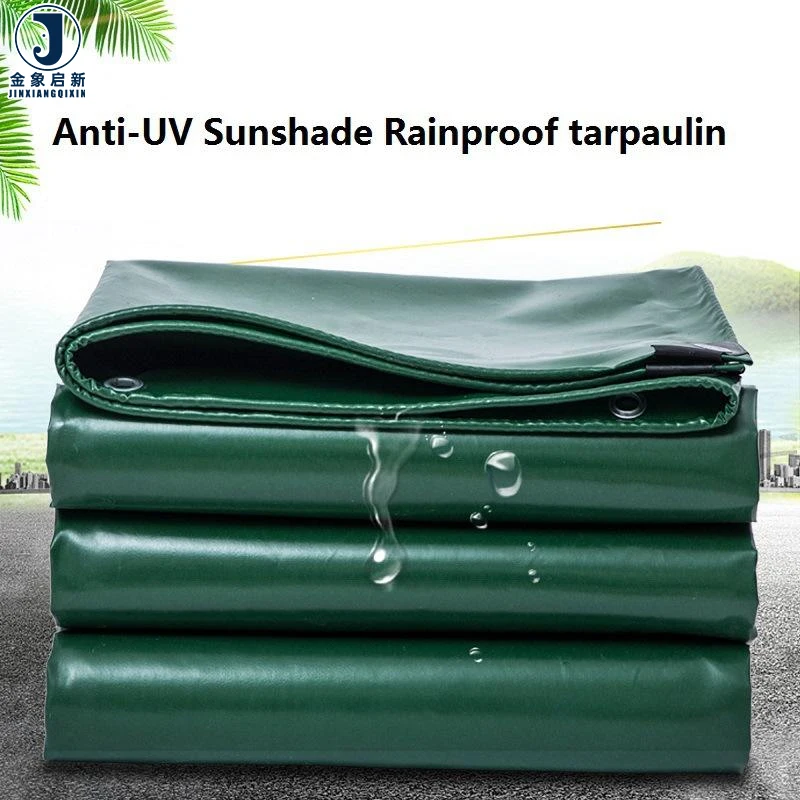
| Surface Texture | Smooth, leather-like finish |
| Key Features | Waterproof, Anti-UV treatment, Flame retardant type customizable, Abrasion resistant |
| Repairability | Hot air weldable |
| Customisation Options | Colour, printing, size |
| Standards | ISO, CE certified facility |
Application Suitability
| Application | Exposure & Requirement |
|---|---|
| Truck & Trailer Side Curtains | Constant flexing at highway speed, road spray abrasion, solar UV load, batch colour match across adjacent panels |
| Tent & Awning Structures | Continuous outdoor weathering, wind-load tension at seam lines, requirement for clean hot-air welded joins |
| Machine & Equipment Covers | Contact with oils and coolants, repeated drape and removal, puncture resistance at sharp corners |
| Inflatable & Membrane Structures | Air-holding integrity, coating adhesion under internal pressure, weld seam strength equal to parent fabric |
Why a Datasheet Claim Without a Test Report Is a Procurement Risk
When sourcing PVC coated tarpaulin fabric gsm polyester base material, the line on the quotation that reads "flame retardant" or "anti-UV" means very little until a test method and a grade are attached to it. A material buyer who accepts a claim without documentation assumes liability the moment a site inspector asks for the certificate.
Insist on a test report tied to a recognised standard before the purchase order is signed, not after the container arrives.
I have seen project specifications rejected at handover because the flame-retardant grade supplied did not match the one the local authority required — the fabric was treated, but the paperwork trail was missing [NEED_CITE: fire classification standards for temporary structures and building enclosures]. Similarly, anti-UV stabilisers compounded into the coating behave differently from surface-applied sprays, and only a controlled weathering test confirms which method was used. The cost of replacing installed fabric on a truck fleet or a temporary warehouse is a multiple of the material savings that drove the original sourcing decision.
Coating Architecture and Substrate Bond
The 500D-500D polyester yarn forms a high-density woven grid that carries the tensile and tear load, while the PVC coating on both faces provides waterproof integrity and surface durability. The bond between the coating and the base fabric — known as adhesion strength — determines whether the material delaminates under flex or holds together through years of drape-and-fold cycles. On PVC coated tarpaulin fabric gsm polyester base construction, the double-sided coating is applied under controlled tension so that penetration into the weave is even, reducing the risk of localised peel at fold lines.
Weld Behaviour at Flex and Load Points
Fabricators working with this material typically join panels by hot-air welding rather than stitching. A correctly welded seam fuses the PVC layers across both sides of the join, producing a bond whose strength approaches that of the parent fabric. Stitched seams, by contrast, introduce needle holes that interrupt the coating continuity and create stress-concentration points where tear can initiate. For truck curtains and inflatable structures that flex under load, welded construction keeps the seam integrity aligned with the fabric’s own tensile capacity [NEED_CITE: hot-air welding parameters and seam peel strength for PVC coated polyester].
Reading the Specification Sheet Beyond the GSM Number
The weight in grams per square metre is a useful shorthand, but it does not operate in isolation. A 650 g/m² fabric built on a 500D-500D base will exhibit different tensile and tear figures from a 650 g/m² fabric on a lighter denier, because the base yarn thickness and weave density share the mechanical load with the coating mass. The coating method — whether knife-over-roll, dip, or calender — influences how much PVC sits on the surface versus how much penetrates the weave, and this directly affects peel strength, hand feel, and hot-air welding behaviour. Surface finish also matters: a smooth leather-like texture sheds water and dirt more readily than a matte surface and accepts printed branding with sharper edge definition. For buyers comparing PVC coated tarpaulin fabric gsm polyester base options, the yarn count and coating process together explain why two fabrics at the same GSM can perform very differently in the field.
The Cost of a Specification Mismatch Downstream
Ordering a flame-retardant grade that does not align with the destination market’s compliance framework can halt a construction project at the inspection stage, leaving the contractor to source replacement material on an emergency timeline. A colour specified verbally rather than by RAL or Pantone reference can produce rolls that look acceptable individually but show visible variation once installed side by side on a trailer fleet. Welding parameters set for one coating formulation may not transfer to another, causing seam failure at the exact point the load flexes most — and this failure mode often appears only after the finished product has entered service [NEED_CITE: tensile and tear test methods for coated fabrics per ISO 1421].
Why Technical Buyers Source This Range Here
Three dedicated production lines and 36 sets of coating and finishing equipment allow bulk roll output without sacrificing the coating-weight consistency that technical specifications demand. A 10-person R&D team develops custom colour matches, printing layouts, and sample swatches within days rather than weeks, so fabricators can confirm material behaviour before committing to a full production run. Quality control checks run at every stage — base fabric inspection, coating weight verification, colour comparison, and a 100-percent pre-shipment roll audit — rather than relying on a single end-of-line sample. The facility holds ISO and CE certification, which means the documentation chain from raw yarn to packed roll is traceable. Custom widths and lengths are run on the same lines as stock grades, so lead-time and minimum-order discipline apply equally to bespoke and standard specifications.
Documentation & Verification
- Material specification sheet stating GSM, 500D-500D base denier, coating weight, and colour reference code
- Test report for flame-retardant grade — confirm the standard required for your destination market
- UV-resistance test data showing stabiliser type and exposure basis for outdoor service life projection
- Pre-shipment inspection record confirming coating adhesion and weight per roll against the quoted specification
- ISO and CE certificates issued to the manufacturing facility available with the shipping documentation set
Fabrication, Handling & Storage
- Hot-air weld temperature and speed must be calibrated to the PVC coating formulation on the 500D base for full-seam fusion.
- Store rolls upright on pallets in a shaded area to prevent flat-spot creasing across the coating surface.
- Unroll and allow the fabric to relax at ambient temperature before cutting, especially after cold-weather transit.
- Use PVC-compatible cleaning agents only; solvent-based degreasers can soften the coating and reduce abrasion resistance.
- Plan cutting layouts to minimise off-cuts and place welded seams away from the highest-flex zones of the finished cover.
- Field repairs on punctures or seam lifts are feasible with a portable hot-air gun and matching PVC patch material.
What to Include with Your Enquiry
Provide the end-use application and the exposure conditions the fabric will face — continuous outdoor UV, chemical contact, flex cycling, or a combination. State the flame-retardant or fire-safety standard your destination market mandates so the correct treatment grade can be confirmed before sampling. Specify the roll width and colour reference you need, along with whether you require finished cut-and-welded panels or bulk roll stock for your own fabrication line.
Frequently Asked Questions
Q: How is the GSM I ordered verified before shipment?
A: Every roll is weighed and measured against the specification sheet during the pre-shipment inspection. A sample swatch cut from the production run can be sent for your own cross-check before the container is sealed.
Q: Which flame-retardant grades can you supply, and what documentation comes with them?
A: Flame-retardant treatment is formulated to the grade your market requires. Confirm the applicable standard — such as DIN 4102, NFPA 701, or M2 — and a corresponding test report will accompany the shipment documentation.
Q: How do you keep colour consistent across multiple rolls in one order?
A: Colour is locked to a RAL or Pantone reference on the specification sheet. A batch colour comparison is performed before dispatch, and rolls destined for side-by-side installation are grouped from the same production run.
Q: What welding method do you recommend, and what seam strength should I expect?
A: Hot-air welding is the recommended join method for this PVC coated polyester fabric. A welded seam sample is available for you to test under your own equipment parameters before full roll production begins.
Q: Can I receive a material sample before placing a bulk order?
A: Sample swatches reflecting your specified GSM, colour, and treatment requirements are developed within days. This allows you to verify coating adhesion, weld behaviour, and hand feel before committing to production volume.