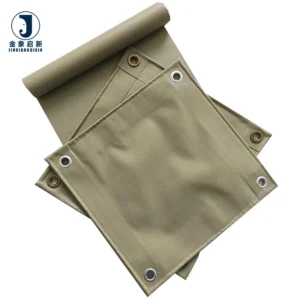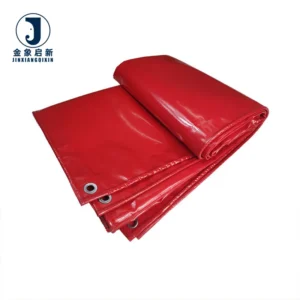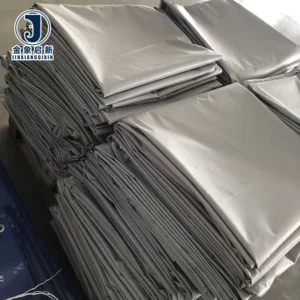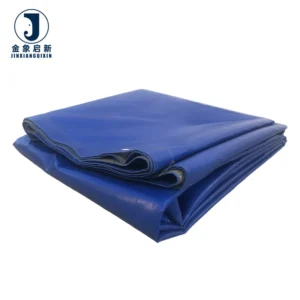
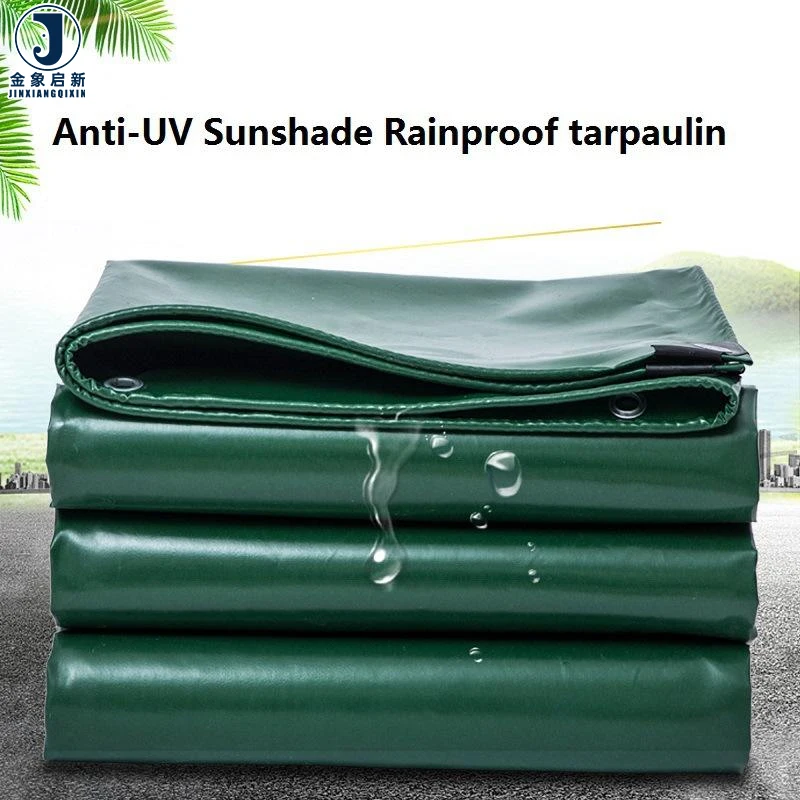
Coating Weight Control — every roll of PVC coated polyester fabric is verified against the stated GSM before dispatch, eliminating weight shortfalls that compromise tensile and weld performance in the field.
Technical Specifications
| Parameter | Value |
|---|---|
| Product Type | PVC Coated Tarpaulin Fabric |
| Material Composition | Polyester Base Fabric + Double-Sided PVC Coating |
| Yarn Count | 500D × 500D |
| Thickness Range | 450–900 g/m² |
| Surface Characteristics | Smooth, soft surface with leather-like texture |
| Waterproof Performance | Fully waterproof coated construction |
| Abrasion Resistance | Very strong |
| UV Resistance | Available in UV-stabilised grades — confirm the test basis required for your market |
| Flame Retardancy | Available in flame retardant grades — confirm the grade required for your market |
| Service Life | Suited to extended outdoor exposure |
| Repairability | Repairable by hot air welding |
| Package | Roll packing, bale packing, carton |
| Certifications | ISO, CE |
Application Suitability
| Application | Exposure & Requirement |
|---|---|
| Truck and trailer side curtains | Constant flexing at tie-down points, road debris abrasion, prolonged UV exposure |
| Machine and equipment covers | Waterproof sealing, dust ingress prevention, welded seam integrity |
| Wood and timber covers | Moisture barrier, wind uplift resistance, repeated handling |
| Awning structures | Tensile load under wind, colour fastness under direct sunlight, surface cleanability |
| Tent fabrication | Flame retardant compliance for public venues, seam strength under structural tension |
What "Flame Retardant" Means Without a Grade Behind It
A flame retardant claim without a cited standard leaves you exposed at inspection — specify the grade your market requires and demand a test report before production starts.
Technical buyers sourcing PVC coated polyester fabric often receive quotations stating "flame retardant" with no reference to DIN 4102, NFPA 701, M2 or any other classification. When the material arrives on site, the safety officer asks for documentation and the conversation stalls. We have seen entire container loads held at customs or rejected at venue inspection because the supplier could not produce a certificate matching the regulatory requirement [NEED_CITE: DIN 4102 fire classification for building materials]. The fix is not more expensive fabric — it is a clear specification at inquiry stage, matched to a verified test report issued against the production batch.
Base Fabric Denier and Weave as the Structural Foundation
The 500D × 500D polyester base fabric provides the tensile backbone of this PVC coated polyester fabric. Yarn denier and weave density together determine how load distributes across the material when a truck side curtain flexes in crosswind or an awning panel bears snow load. A balanced weave in both warp and weft directions prevents bias stretching, which is the primary cause of panel distortion after installation.
Double-Sided Coating and GSM Consistency Across Rolls
Double-sided PVC coating encapsulates the polyester scrim, bonding to the yarn intersections and sealing the fabric against water penetration. The coating weight directly influences GSM, and GSM in turn affects both tear resistance and hot-air weldability. When roll-to-roll GSM drifts outside the stated range, weld parameters that worked on the first roll may delaminate on the second [NEED_CITE: tensile and tear test methods for coated fabrics per ISO 1421]. Consistent coating weight across a batch is therefore not a cosmetic concern — it is a fabrication requirement.
Specifying Thickness: Why GSM Alone Misleads
GSM combines base fabric weight and coating weight into a single number, but two fabrics at the same GSM can perform very differently. A heavier base fabric with a thinner coating will resist tearing better than a lighter base with a thick coating at identical GSM. The 450–900 g/m² range available in this product family covers applications from light awning panels to heavy-duty truck curtain side panels. Selecting within that range requires understanding the load profile of the end use, not just choosing the highest number. A technical buyer evaluating PVC coated polyester fabric should request the base fabric weight and coating weight as separate line items on the specification sheet to make an informed comparison. The relationship between denier, weave density and coating adhesion determines whether a seam holds under repeated flex cycles or fails prematurely at the weld line.
The Hidden Cost of Specification Drift
When a buyer accepts a quotation based on GSM alone without verifying base fabric denier or coating adhesion, the consequences surface months later. A truck curtain that delaminates at the weld line after a season of flexing cannot be repaired in the field without visible patch marks. Flame retardant grades that lack a matching test report cause project delays when the fire marshal refuses to sign off [NEED_CITE: NFPA 701 standard for flame propagation of textiles]. Colour variation between rolls in the same order becomes visible once panels are installed side by side on a large awning, forcing selective replacement and wasted material. Each of these failures traces back to a specification gap at the inquiry stage, not to a manufacturing defect.
Why Source This Fabric Here
Three full production lines and 36 sets of professional equipment support bulk roll output with consistent coating application, reducing the GSM drift that causes weld failures in the field.
A 10-person R&D team develops samples within days for custom colour, width and printing requirements, allowing fabricators to validate material behaviour before committing to a container order.
Dedicated QA/QC at every production stage means coating adhesion and colour consistency are checked during the run, not only at final inspection when rework is costly.
ISO and CE certified processes ensure that flame retardant and UV treatment claims are backed by traceable test documentation matching the dispatch batch.
Nearly 30 years of focused coated fabric production provides the process control needed to deliver PVC coated polyester fabric with reliable roll-to-roll uniformity across repeat orders.
Documentation & Verification
- Material specification sheet stating GSM, base fabric denier and coating weight per roll
- Flame retardant test report citing the applicable standard for each treated batch
- UV stability test documentation matched to the grade specified at inquiry
- Pre-shipment inspection record confirming coating adhesion and colour consistency
- Roll packing list with individual roll weights and dimensions
- Certificate of origin and customs documentation for cross-border shipment
Fabrication, Handling & Storage
- Hot air welding at temperatures matched to the double-sided PVC coating thickness for seam integrity
- Store rolls upright on pallets to prevent flat-spot deformation of the leather-like surface
- Allow cold-stored rolls to reach ambient temperature before unrolling to avoid coating micro-cracking
- Use rotary blade cutters on the 500D base fabric to prevent frayed edges at panel seams
- Clean the smooth PVC surface with mild detergent only; solvent cleaners degrade coating adhesion
- Field repairs by hot air welding restore waterproof continuity without visible patch ridges
Preparing Your Inquiry
Specify the end-use application, exposure conditions and any fire classification your project requires so that the correct grade is quoted from the start. Confirm the target width, colour reference and whether you need roll stock or finished cut sizes with hemming and eyelets. If batch colour consistency is critical for a large awning or tent installation, request a production sample before the full order enters the coating line.
Frequently Asked Questions
Q: How do I specify the correct flame retardant standard for my market?
A: Identify the fire classification required by your local building or transport authority — common references include DIN 4102, NFPA 701 and M2. State this standard in your inquiry so the matching treatment is applied during production. A test report citing the specified standard will accompany dispatch, allowing you to present documentation at site inspection without delay.
Q: What test basis supports UV resistance claims for this PVC coated polyester fabric?
A: UV stabilisation is available as a treatment option applied during the coating stage. The test method and exposure duration vary by target market and end-use. Request the specific test report at inquiry to confirm that the UV grade matches your outdoor exposure requirements, rather than relying on a generic statement without documented evidence.
Q: How is colour consistency controlled across multiple rolls in one order?
A: All rolls within a single production batch are coated from the same compounded PVC mixture under continuous colour monitoring. A pre-shipment inspection samples rolls at intervals to verify colour uniformity against the approved reference. For projects where panels will be installed side by side, request the inspection record before dispatch to confirm batch consistency.
Q: What are the hot air welding parameters for fabricating this fabric?
A: Welding temperature and speed depend on the specific GSM and coating thickness within the available range. Excessive heat degrades the PVC layer while insufficient heat causes delamination under load. We provide recommended weld parameters matched to your selected grade along with the material specification sheet, and samples can be produced for your fabrication team to validate settings before bulk production.