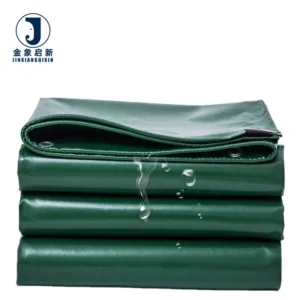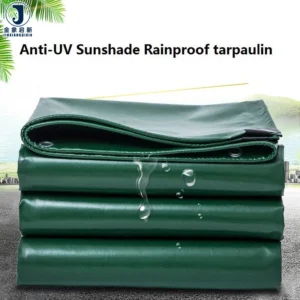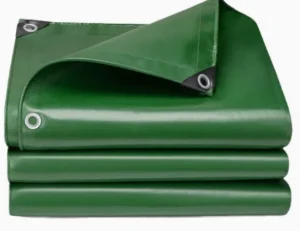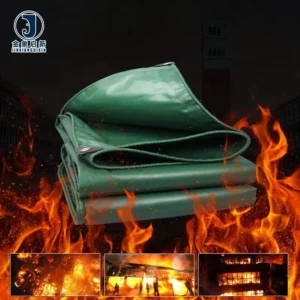
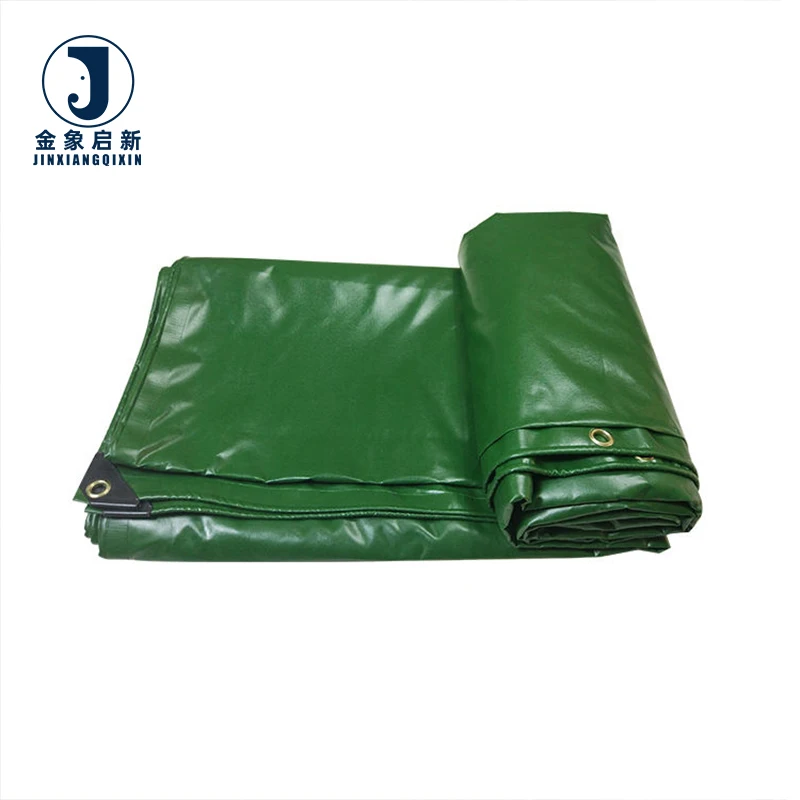
Hot-melt coating precision — Every roll of PVC Coated Fabric 500gsm is coated under controlled temperature and pressure profiles to achieve uniform adhesion between the PVC layer and the high-strength polyester mesh base, verified by in-process QA at every stage and 100% pre-shipment inspection before dispatch.
Technical Specifications
| Parameter | Value |
|---|---|
| Product Type | PVC Coated Tarpaulin |
| Specification | 500gsm |
| Material | PVC + High-strength polyester mesh fabric |
| Weight | 500gsm |
| Total Thickness | 0.4mm |
| Coating Method | Laminated technology & Hot-melt Coating technology |
| Roll Size | 2m × 75m / 2.1m × 50m |
| Color Options | Blue, Red, Yellow, Light blue, Grey (custom colors available upon request) |
| Waterproof | Yes |
| Anti-Mildew | Yes |
| Cold Crack Resistance | Yes |
| Anti-Static | Anti-Static treatment (standard not stated — confirm required standard) |
| UV Treatment | UV Stable (test basis not stated — confirm test requirement) |
| Flame Retardant | Available upon request (grade not stated — confirm the grade required for your market) |
| Tear Resistance | High Tear Resistance (test standard not stated — confirm test requirement) |
| Finish Product Size | Custom cut sizes or sold by roll inventory |
| Printing Option | Special Printed Paint — Long Print Life |
| Standards | ISO 14001, ISO 45001, CE, RoHS |
Application Suitability
| Application | Exposure & Requirement |
|---|---|
| Truck awning and side curtain | Constant flexing at weld seams, road debris abrasion, sustained UV exposure, rain and spray ingress |
| Dump truck cover | Heavy load contact, repeated folding and unfolding, abrasion from aggregate and bulk material |
| Cargo ship cover | Salt-laden atmosphere, prolonged UV and moisture exposure, wind-driven tension on tie-down points |
| Tent and temporary shelter | Erected and struck repeatedly, UV and rain exposure, wind load on seams and panels |
| Fish tank and pool liner | Permanent water immersion, hydrostatic pressure, chemical exposure from water treatment agents |
| Emergency rain shelter | Rapid deployment, exposure to downpour and standing water, short-to-medium term outdoor service |
| Outdoor equipment cover | UV and weather cycling, dust and moisture ingress prevention, occasional contact and handling |
Why 500gsm PVC Coated Fabric Demands More Than a Weight Claim
A stated GSM is only meaningful when the coating weight is verified roll by roll against the material specification sheet.
Buyers regularly receive PVC coated fabric where the invoice reads one weight and the scale reads another. The shortfall may be invisible during a quick visual check at the loading dock but surfaces months later when the coating delaminates under flex load or the weld seam separates before the fabric itself tears. This PVC Coated Fabric 500gsm is produced with dedicated QA/QC at every stage of the coating line — from base fabric inspection through hot-melt application to finished roll weighing — and every shipment includes a pre-shipment inspection record so the weight you ordered is the weight that arrives. [NEED_CITE: coated fabric weight verification methods per ISO 1421 test procedures]
Hot-Melt Coating Adhesion and Base Fabric Integration
The hot-melt coating process applied to this PVC Coated Fabric 500gsm forces the PVC compound into the weave structure of the high-strength polyester mesh under heat and pressure, creating a mechanical bond that resists delamination during repeated flexing and welding. Unlike simple laminated constructions where the coating sits on the surface, hot-melt penetration anchors the coating within the interstices of the mesh, which is critical for fabricators who heat-weld seams and need the joint to outperform the base fabric in tear tests.
Roll-to-Roll Coating Consistency Across the Production Run
Maintaining a uniform coating weight across the full width and length of each roll requires continuous monitoring of coating head temperature, roller pressure, and line speed. Any drift in these parameters produces thick and thin zones that become visible when two rolls are laid side by side on a truck body or tent frame. The production line controlling this 500gsm grade runs with in-process quality checks at defined intervals, and rolls that fall outside the coating weight tolerance are diverted before reaching the packing stage. [NEED_CITE: coating weight uniformity impact on weld performance in PVC-coated polyester]
Reading the Specification Sheet Beyond the GSM Number
The 500gsm weight is a composite figure that includes both the polyester base fabric and the PVC coating applied to each face. A heavier coating on a lighter base fabric may achieve the same GSM as a lighter coating on a denser mesh, but the two constructions behave very differently under tensile load and at the weld line. The high-strength polyester mesh used here provides the structural skeleton, while the hot-melt PVC coating delivers waterproofing, UV stability, and the surface properties needed for welding and printing. Total thickness of 0.4mm positions this grade in the mid-weight range, balancing flexibility for fabrication against the mechanical protection needed for transport and outdoor cover applications.
The laminated technology option available within this product family uses a different bonding mechanism where pre-formed PVC films are heat-pressed to the base fabric, offering cost efficiency for applications where the extreme adhesion of hot-melt is not required. Specifying the correct coating method depends on whether the end use involves structural welding, repeated folding, or simply static coverage.
The Cost of Specifying Coated Fabric on Weight Alone
When a buyer selects a PVC coated fabric based solely on a GSM figure without verifying coating adhesion or base fabric denier, the result is often a material that passes the receiving inspection but fails in the field. Weld seams on truck side curtains split after a season of flexing. Coating layers peel back from the mesh at cut edges. Color shifts from roll to roll force fabricators to reject panels mid-production. These failures are not defects in the traditional sense — they are the predictable outcome of a specification that did not capture the properties that actually determine service performance. [NEED_CITE: field failure analysis of coated fabric weld seam delamination]
What This Production Line Controls
Three full production lines with 36 sets of professional equipment allow this facility to hold coating parameters steady across large orders of this 500gsm grade, so batch consistency is maintained whether you are buying five rolls or fifty. The 10-person R&D team handles material selection and sample development for custom widths, colors, and treatment grades — samples are developed within days so you can test weld parameters and color match before committing to a full production run. Dedicated QA/QC checkpoints at every production stage, from base fabric receipt through coating, winding, and packing, catch deviations before they reach the shipping container. ISO 14001, ISO 45001, CE, and RoHS certifications document the management systems behind the product. Rolls are inspected 100% before shipment, with inspection records included in the dispatch documentation.
Documentation & Verification
- Material specification sheet confirming 500gsm weight, base fabric type, and coating method for every order
- Test report for UV stability and flame retardant grades supplied where applicable to the specified treatment
- Pre-shipment inspection record with roll-by-roll weight verification before dispatch
- ISO 14001, ISO 45001, CE, and RoHS certificates included in shipping documentation
- Certificate of origin and customs support documents for international shipment
- Roll packing list detailing roll count, dimensions, and net weight per container load
Fabrication, Handling & Storage
- Heat-weld seams using temperature and dwell time settings matched to the hot-melt coating for optimal adhesion on this 0.4mm grade
- Store rolls upright on pallets in a dry, shaded area to prevent flat-spotting and surface marking of the PVC coating
- Allow cold-stored rolls of this 500gsm fabric to acclimatize to workshop temperature before unrolling to avoid coating crack
- Use a sharp blade or rotary cutter on the polyester mesh base to prevent frayed edges that weaken weld joints
- Clean the PVC surface with mild detergent only — solvent-based cleaners may soften the coating and affect print adhesion
- Plan cutting layout across the 2m or 2.1m roll width to minimize off-cuts and reduce the number of welded panel joints
Request a Material Recommendation for Your Application
To specify the correct grade and treatment package, provide the end-use application, the environmental exposure conditions your covers or structures will face, and any fire-retardant or anti-static standards required by your local regulations. Indicate whether you need roll stock in standard widths or custom cut-to-size finished panels, along with estimated annual volume and any color or printing requirements. Requesting a sample roll or swatch before placing a bulk order allows you to validate weld parameters and color consistency against your production setup.
Frequently Asked Questions
Q: How is the 500gsm weight verified before shipment?
A: Each roll is weighed during the pre-shipment inspection, and the measured value is recorded against the material specification sheet. A copy of the inspection record, showing roll-by-roll weight data, is included in the dispatch documentation so you can cross-check on arrival.
Q: Can flame retardant certification be provided for my market?
A: Flame retardant treatment is available upon request for this PVC coated fabric. Specify the standard required in your market — such as B1 per DIN 4102 or another local building or transport code — and the appropriate test report will be supplied with the batch.
Q: How do you maintain color consistency across multiple rolls in one order?
A: All rolls in a single production run are coated from the same PVC compound batch using matched pigment formulations. In-process color checks are performed at defined intervals on the coating line, and rolls showing visible deviation are separated before packing.
Q: What is the difference between hot-melt and laminated coating for welding performance?
A: Hot-melt coating penetrates the polyester mesh weave under heat and pressure, creating a deeper mechanical bond that generally supports stronger weld seams. Laminated coating bonds a pre-formed film to the fabric surface and may suit applications where welding is not the primary joining method.
Q: Can I get a sample before committing to a full roll order?
A: Yes. Provide your target GSM, color, width, and any treatment requirements. The R&D team develops a sample within days, allowing you to test weld parameters, verify color, and confirm the material meets your specification before authorizing bulk production.