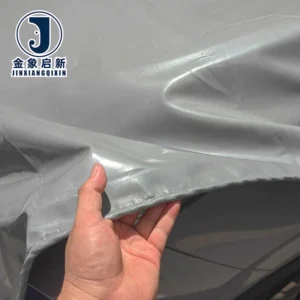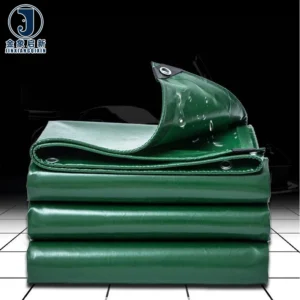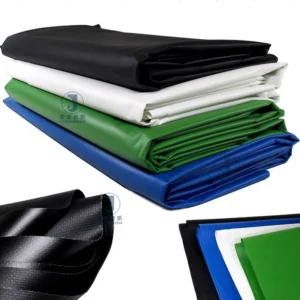
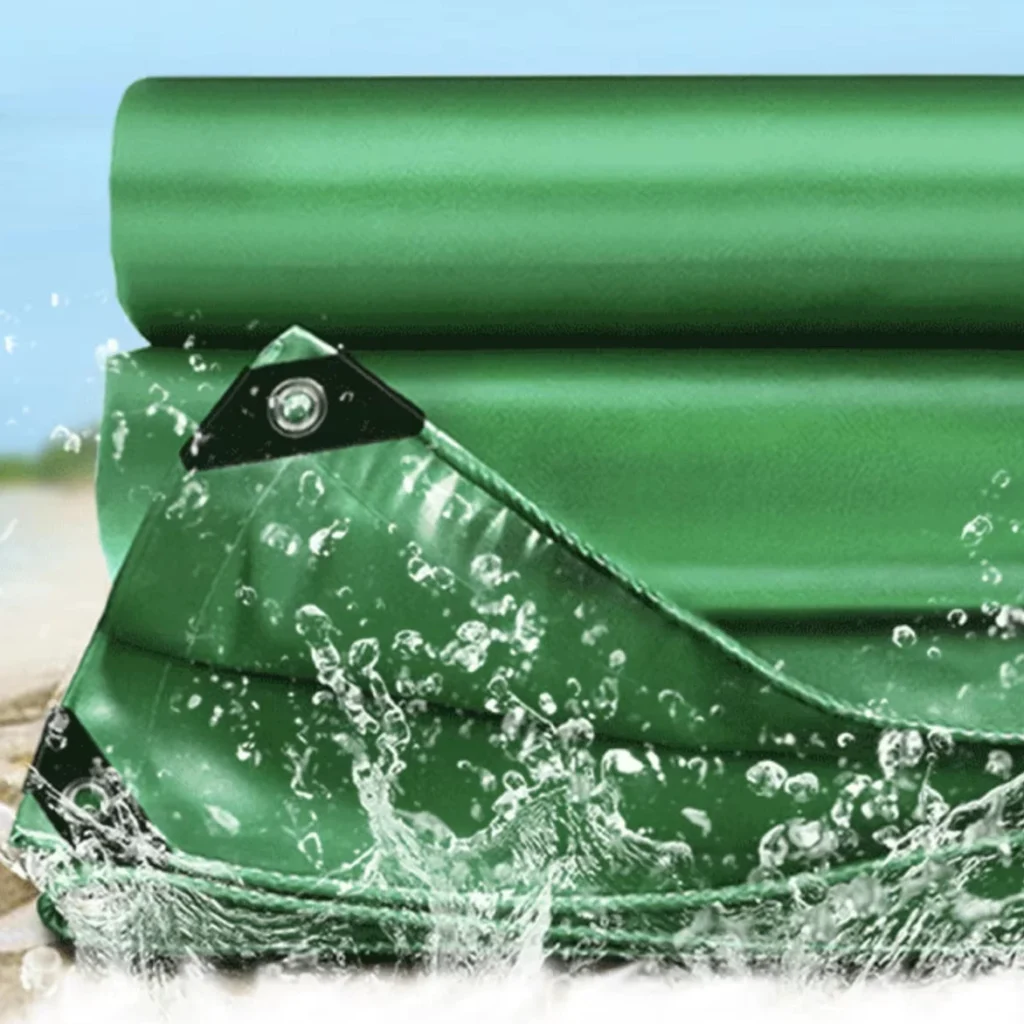
Coating Weight Control — Every 400g PVC coated tarpaulin roll is checked against the specification sheet at the coating stage so the weight you approve at sampling matches what arrives on your dock.
Technical Specifications
| Parameter | Value |
|---|---|
| Product Type | PVC Coated Tarpaulin Roll |
| Weight | 400 gsm |
| Total Thickness | 0.3mm |
| Base Fabric Denier | 500D × 500D |
| Base Fabric Material | Polyester |
| Coating Material | PVC |
| Surface | Double-Sided PVC Coating |
| Key Features | Water Resistant, Waterproof, Flame Retardant (grade not stated in source), Anti-UV (test basis not stated in source) |
| Color | Blackout |
| Applications | Truck cover, car cover, trailer cover, machine cover, wood cover, awning, tent |
| Packaging Options | Roll packing, bale packing, carton |
| Standards | ISO, CE (certificate numbers not stated) |
Application Suitability
| Application | Exposure & Requirement |
|---|---|
| Truck and trailer covers | Road abrasion, constant flexing at load points, weather exposure |
| Car covers | UV exposure, dust and moisture ingress, surface contact abrasion |
| Machine and wood covers | Prolonged outdoor storage, moisture resistance, puncture from sharp edges |
| Awning fabric | Tensioned installation, UV exposure, wind load and cyclic flexing |
| Tent fabric | Fold-and-pack cycles, ground moisture, seasonal UV exposure |
Why 400 gsm PVC Coated Tarpaulin Is Not Just About Weight on Paper
Coating adhesion and base fabric denier matter as much as GSM when you need the roll to survive fabrication and field use.
A buyer once received a batch of lightweight tarpaulin that measured correct on the scale but delaminated at the weld line within weeks. The base fabric denier was too low for the coating weight ratio. With this 500D × 500D polyester base, the PVC coated tarpaulin 400 gsm construction balances tensile backbone with coating thickness so that welds hold at the flex points where loads move most [NEED_CITE: tensile and tear test methods for coated fabrics per ISO 1421]. When the specification sheet says 400 gsm, the QA process checks coating weight at the line — not just total roll weight after winding.
Base Fabric Denier as the Structural Backbone
The 500D × 500D polyester yarn count provides a balanced weave that distributes tensile load evenly across warp and weft. For technical buyers evaluating PVC coated tarpaulin fabric for fabrication, denier directly influences how the material behaves under heat welding — a finer yarn may melt faster at the weld zone, while this construction maintains fibre integrity through standard hot-air seam temperatures. The double-sided PVC coating bonds into the weave structure rather than sitting on the surface, giving the material its handling stiffness and seam-holding capability.
Coating Thickness and Surface Behaviour at 0.3 mm
At 0.3 mm total thickness, the double-sided PVC coating produces a flexible yet dimensionally stable sheet suited to roll-formed awning frames and folded tent panels. The coating process controls adhesion between the PVC layer and the polyester base — a parameter that determines whether the material will peel at fold lines or withstand repeated pack-and-deploy cycles. Blackout colour variants block light transmission entirely, which matters for tent and awning applications where shade performance is specified [NEED_CITE: light transmission testing for coated fabric in awning applications]. Flame-retardant and anti-UV treatments are available in grades to be confirmed against your market requirements.
How GSM, Denier and Coating Method Interact
Total fabric weight of 400 gsm is a function of both the base fabric density and the applied PVC coating mass. A heavier base fabric with a thinner coat may deliver the same GSM as a lighter base with a thicker coat — but their tear propagation and weld behaviour differ substantially. The 500D × 500D weave at this GSM gives fabricators a material that cuts cleanly, feeds through automated welding tables without excessive stretch, and holds eyelet reinforcement at the hem without localised tearing. The double-sided coating method ensures both faces contribute to abrasion resistance, which is relevant when the fabric contacts cargo edges or frame hardware.
What Happens When Coating Adhesion Fails at the Weld
A common failure on lighter-grade PVC coated materials is seam separation at the point where the installed fabric flexes under load. When coating adhesion to the base fabric is insufficient, the weld bond breaks before the fabric itself tears — leaving a gap at the most stressed junction. This is why the PVC coating process and in-process adhesion checks matter: the 0.3 mm coating on this 500D × 500D base is monitored for peel strength during production [NEED_CITE: peel strength testing for PVC coated polyester fabric]. Rolls that do not meet the adhesion threshold are flagged before packing.
How the QA Process Works Before Your Rolls Ship
This facility runs three full production lines with 36 sets of professional equipment dedicated to coated fabric. A 10-person R&D team handles sample development and custom specification matching before bulk runs begin. Each 400 gsm roll passes through in-process QA checks at the coating stage, with a 100 percent pre-shipment inspection verifying GSM, colour consistency and surface finish. Custom widths and colours are developed with approved samples so that batch-to-roll variation is caught before dispatch. The documentation package includes a pre-shipment inspection record and roll packing list that trace each roll back to its production batch.
Documentation & Verification
- Material specification sheet stating 400 gsm, 500D × 500D base and PVC coating type per roll
- Test report for flame-retardant and anti-UV grades shipped with applicable rolls
- ISO and CE certificates included in the documentation package
- Pre-shipment inspection record confirming GSM and visual quality before dispatch
- Roll packing list with batch reference for colour and specification traceability
Fabrication, Handling & Storage
- Hot-air weld temperature should be tuned to the 0.3 mm PVC coating thickness to avoid base fabric damage
- Store rolls vertically on pallets to prevent compression marks on the double-sided PVC surface
- Allow blackout rolls to acclimatise before unrolling in cold conditions to avoid coating crease damage
- Use wide-base eyelet washers at hems to distribute load across the 500D × 500D weave structure
- Clean with mild detergent only — solvents can soften the PVC coating and reduce weld integrity
- Cut with rotary or straight-knife tools; the polyester base frays less than woven PE at cut edges
What to Include with Your Enquiry
To confirm the right specification, share your end-use application and the environmental exposure the fabric will face. Specify your target market so that flame-retardant and anti-UV grades can be matched to local compliance standards. Provide required roll widths, annual volume estimates, and whether you need the material supplied as roll stock or in pre-cut panels. If colour matching to a Pantone or RAL reference is required, request a sample approval stage before the production run begins.
Frequently Asked Questions
Q: How is the 400 gsm weight verified before my rolls ship?
A: The QA process checks coating weight at the production line rather than only measuring finished roll weight. A pre-shipment inspection record is generated for each order, documenting the actual GSM measured against the specification sheet. This record ships with your documentation package so you can verify weight on arrival.
Q: Which flame-retardant grades are available on this 500D × 500D base?
A: Flame-retardant treatment is available in grades that depend on your market requirements — common standards include B1 per DIN 4102, M2, or NFPA 701. Specify the grade needed for your end-use application at the enquiry stage so the correct treatment is applied and the matching test report ships with your rolls.
Q: What is the UV treatment test basis for this PVC coated tarpaulin?
A: Anti-UV treatment can be specified for outdoor exposure conditions relevant to awning, tent and transport cover applications. The test basis and exposure rating should be confirmed against your regional climate and expected service environment. Request the applicable test report when placing your order.
Q: How does PVC coating adhesion perform at welded seams?
A: On this 500D × 500D polyester base, the double-sided PVC coating is monitored for peel strength during production so that weld bonds hold at flex points under load. In-process adhesion checks ensure the coating-to-fabric bond meets threshold values before rolls are packed. Welding parameters should be adjusted to the 0.3 mm coating thickness.
Q: What is the minimum order for custom width or colour on this construction?
A: Custom widths and colours are available with a sample approval stage before bulk production. Minimum order quantities depend on the specific width and colour requested. Submit your required dimensions, colour reference and estimated annual volume to receive a quotation with lead time and minimum stated.