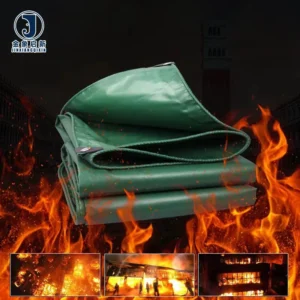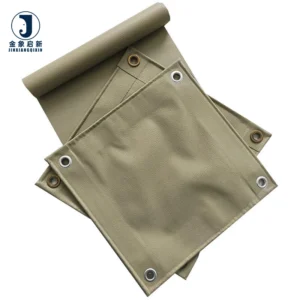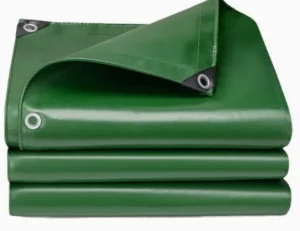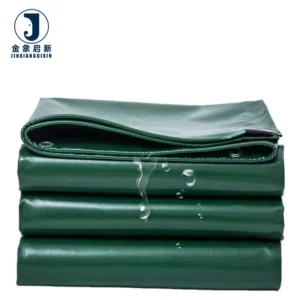
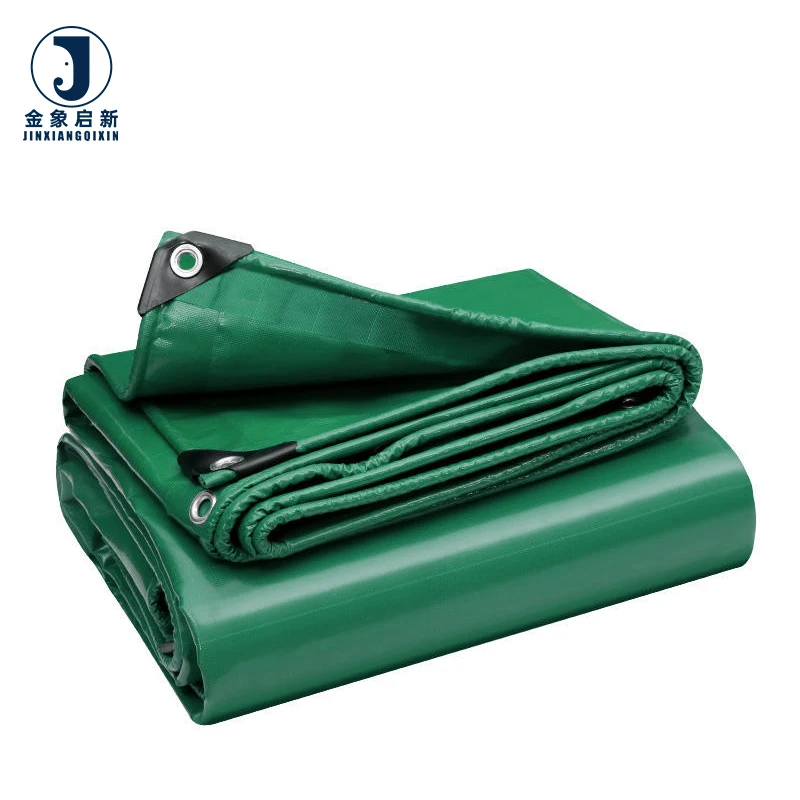
Process Control Over Coating Weight and Adhesion — verified through 100% pre-shipment inspection across three full production lines and 36 sets of professional equipment dedicated to coated fabric.
Technical Specifications
| Parameter | Value |
|---|---|
| Product Type | PVC Coated Tarpaulin |
| Coating Material | PVC (vinyl) |
| Weight (GSM) | 250gsm–1500gsm (confirm the grade for this item) |
| Base Fabric Denier | 200DX300D, 500DX500D, 840DX840D, 1000DX1000D |
| Surface Finish | Glossy or matte |
| Color Options | Blue, yellow, black, green, white, etc. |
| UV Treatment | Customized (test basis not stated in source) |
| Flame Retardant Grade | FR treated (grade not stated in source) |
| Anti-Mildew | Anti-fungal treated |
| Waterproof Rating | Water-proof, rain-resistant |
| Temperature Range | -15°C to 70°C |
| Size Options | 3x4m, 6x8m, 8x10m, 10x12m or custom made |
| Environment | Eco-friendly |
| OEM/ODM | Available |
| Certifications | ISO, CE |
Application Suitability
| Application | Exposure & Requirement |
|---|---|
| Dump trailer cover | Constant flexing at load points, road debris abrasion, UV exposure, repeated tie-down stress |
| Firewood roof cover | Prolonged rain and snow contact, weight of stacked timber, seasonal UV cycling |
| Boat cover | Salt spray, standing water, tight folding around hull contours, UV from reflected water |
| Pool cover | Continuous water contact, chlorine or saltwater chemistry, wind lift at edges |
| Camping and patio shelter | Direct sun exposure, folding and transport, occasional heavy rain and wind load |
| Construction site equipment cover | Dust and chemical exposure, abrasion from machinery, outdoor weathering across seasons |
Why Coating Weight Alone Misleads Buyers on PVC Coated Tarpaulin
A quoted GSM tells you nothing about adhesion strength, base fabric integrity, or how the fabric behaves under load.
Buyers regularly receive rolls where the scale reading matches the quotation but the material feels wrong in hand. The coating may be thin over a heavier base scrim, or the adhesion between PVC and yarn may be insufficient — problems that only surface after weeks of flexing, UV cycling, and thermal expansion. When PVC coated tarpaulin material specification is taken at face value without verifying how coating weight relates to tensile behaviour, the result is early seam failure and premature replacement [NEED_CITE: tensile and tear test methods for coated fabrics per ISO 1421].
Base Fabric Denier and Its Effect on Mechanical Performance
The denier construction of the base fabric — from 200DX300D up to 1000DX1000D — directly determines how the material responds to tensile and tear loads. A higher denier means thicker yarns in the warp and weft, producing a base scrim that resists puncture and limits tear propagation once a cut starts. For dump trailer covers that flex repeatedly at the hinge points, a heavier denier prevents small abrasions from becoming full-thickness tears. The PVC coated tarpaulin material specification must pair denier with GSM to give a complete picture of strength.
Coating Adhesion and Surface Finish Selection
Coating weight across the 250gsm–1500gsm range affects both the physical barrier properties and how the material behaves during fabrication. A heavier coating fills the weave more completely, reducing porosity and improving waterproof performance, but it also adds stiffness that may complicate folding and installation on complex shapes. The choice between glossy and matte finish influences heat welding behaviour: glossy surfaces typically require different temperature profiles during hot-air welding compared to matte surfaces, and the bond strength at the weld line depends on how well the coating formulation responds to thermal activation [NEED_CITE: hot-air welding parameters for PVC coated fabrics].
Reading the Specification Sheet with a Critical Eye
Three parameters must be evaluated together rather than in isolation. First, the base fabric denier determines the structural skeleton — a 1000DX1000D scrim provides a fundamentally different load-bearing capacity than a 200DX300D construction, regardless of how much PVC is applied on top. Second, the coating weight (GSM) represents the combined mass of base fabric plus coating, so a 650 GSM material built on a heavy denier base will have proportionally less coating thickness than the same GSM on a lighter base — this affects abrasion resistance and surface durability. Third, the coating method, whether knife-coated or laminated, governs the bond strength between PVC and yarn: knife coating forces PVC into the weave structure for superior adhesion, while lamination can delaminate under repeated flexing. The temperature range of -15°C to 70°C reflects the PVC formulation’s stability window — beyond these boundaries, the plasticiser migration rate changes, leading to embrittlement in cold or softening in heat. Available in flame retardant grades — confirm the grade required for your market, as different jurisdictions reference different test standards [NEED_CITE: DIN 4102 fire classification for building materials]. UV treatment is available on a customized basis — request the specific test standard and result that applies to your end-use environment.
The Real Cost of Specification Mismatch at the Weld Line
When coating weight is lighter than quoted or the adhesion between PVC and base fabric is marginal, the first failure point is almost always the welded seam — not the fabric itself. Heat welding relies on melting the PVC coating to fuse two panels together; if the coating is too thin or poorly bonded, the weld peels apart under the same flexing load the fabric body would withstand. For dump trailer covers and truck side curtains, this means the load is suddenly exposed at the most stressed point in the assembly. Batch-to-batch colour variation compounds the problem: when replacement panels are welded alongside original sections, a visible colour mismatch signals inconsistent coating formulation across production runs [NEED_CITE: colour consistency standards for coated fabric batches].
What This Facility Controls That Others Do Not
Three full production lines and 36 sets of professional equipment dedicated to coated fabric mean that coating weight, adhesion, and surface quality are managed in-house at every stage rather than outsourced. The 10-person R&D team handles material selection and sample development, producing custom samples within days so that denier, GSM, and treatment options can be physically evaluated before committing to a production order. A dedicated QA/QC team performs 100% inspection before shipment, checking coating weight per roll against the quoted GSM so that the PVC coated tarpaulin material specification on paper matches the material that arrives on site. Colour consistency across rolls in the same order is verified during production, preventing the visible mismatch that forces rework after installation.
Documentation & Verification
- Material specification sheet stating exact GSM, base fabric denier, and coating formulation per roll
- UV and flame retardant test reports provided with stated standard and grade where applicable
- Pre-shipment inspection record confirming coating weight verification against quotation
- ISO and CE certificates available for compliance documentation
- Roll packing list with batch traceability and certificate of origin for customs clearance
Fabrication, Handling & Storage
- Hot-air welding temperature must match the selected glossy or matte finish for consistent seam adhesion
- Store rolls vertically on pallets to prevent flat-spot creasing across the coating surface
- Unroll at ambient temperature above -15°C to avoid cracking the PVC coating during handling
- Cut with sharp blades to prevent fraying the base fabric denier structure at edges
- Clean with mild detergent only — solvent-based cleaners degrade the PVC plasticiser layer
- Allow adequate overlap at weld seams proportional to the coating thickness and expected flex load
Requesting a Technical Quote
To receive an accurate specification recommendation, provide the intended application, expected mechanical loads, and environmental exposure conditions. State your target market’s fire safety or compliance requirements so the correct treatment grade can be confirmed. Specify whether you need rolls in stock widths or custom-cut panels with finished edges, and indicate your colour reference and annual volume for production planning.
Frequently Asked Questions
Q: How can I verify the actual GSM of PVC coated tarpaulin material specification on arrival?
A: Cut a measured sample from the roll edge, weigh it on a calibrated scale, and compare against the stated GSM on the material specification sheet. The pre-shipment inspection record provided with your order documents the coating weight verified per roll before dispatch, giving you a baseline for comparison.
Q: What is the relationship between base fabric denier and tensile or tear strength?
A: Higher denier yarns in the base fabric provide greater resistance to both tensile pulling and tear propagation. A 1000DX1000D construction will substantially outperform a 200DX300D base under the same coating weight, because the thicker yarns absorb more energy before breaking and limit how far a cut can spread through the weave.
Q: How do glossy and matte finishes affect heat welding performance?
A: The surface finish changes the thermal profile needed during hot-air welding. Glossy coatings may require slightly different temperature settings than matte surfaces to achieve consistent bond strength. Request a welding parameter recommendation matched to your selected finish before beginning fabrication.
Q: What UV and flame retardant test standards apply to this material?
A: UV treatment and flame retardant grades are available on a customized basis. Confirm the specific test standard required for your market — such as DIN 4102 for European building applications or other regional standards — so that the correct grade is specified and documented with a test report.
Q: How do I select the right denier and GSM combination for my fabrication process?
A: Match the base fabric denier to the mechanical loads your end product will face, and select the GSM based on the required coating thickness for waterproofing and abrasion resistance. Request physical samples in multiple constructions to evaluate handling, welding behaviour, and finished appearance before placing a production order.