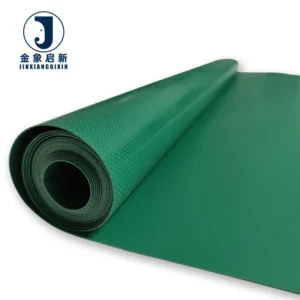
Verified Coating Weight — Every roll of PVC coated tarpaulin base fabric denier coating weight GSM is verified against the stated specification before dispatch, eliminating the gap between quotation and incoming inspection.
Technical Specifications
| Parameter | Value |
|---|---|
| Product Type | PVC Coated Tarpaulin Roll |
| Coating Material | PVC |
| Weight (GSM) | 500 to 800 grammes per square meter (confirm grade for this item) |
| Waterproof Rating | Anti-permeable ≥20KPa |
| Flame Retardant Grade | ≤10 seconds (grade and test basis not stated in source) |
| Low-Temperature Flexibility | Will not fracture at -30°C |
| Anti-Corrosion | Acid, alkali and brine corrosion resistant |
| Anti-Mildew | Stated (test basis not stated in source) |
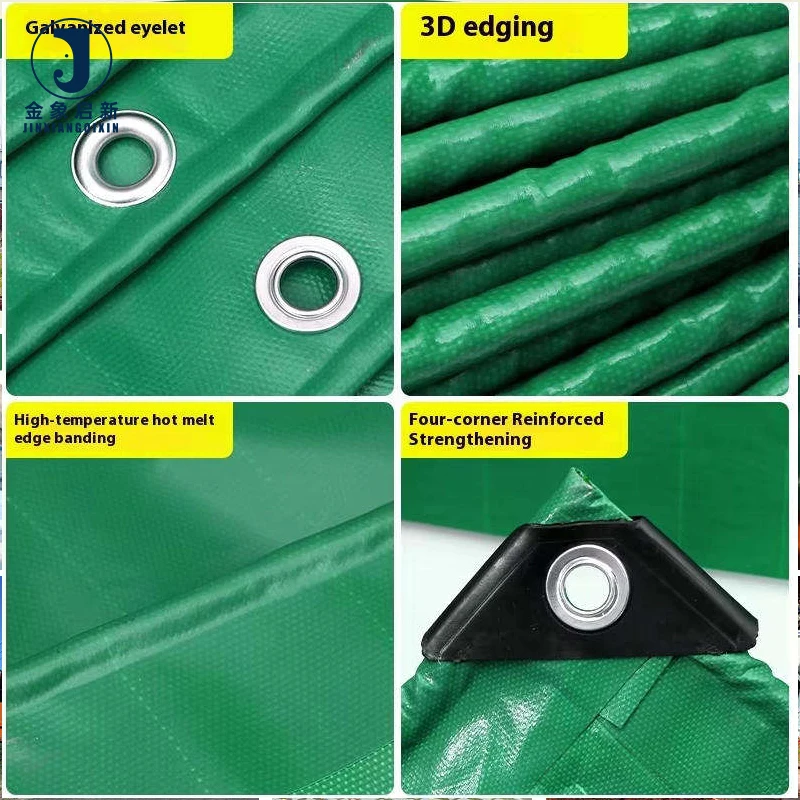
| Seam Construction | Heat combined with high-frequency welding |
| Water Absorption | Near-zero absorption, rapid drying after rain |
| Tensile Strength | High tensile strength (standard not stated in source) |
| Certifications | ISO, CE |
Application Suitability
| Application | Exposure & Requirement |
|---|---|
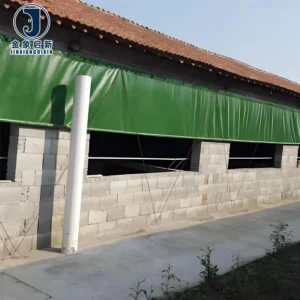
| Truck side curtain fabrication | Constant flexing at load points, road abrasion, wind load, high-frequency welding along seams |
| Industrial outdoor covers | Continuous weather exposure, UV radiation, chemical splash resistance for acid and alkali environments |
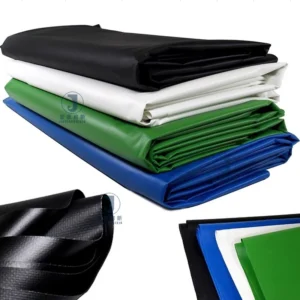
| Tent and awning roll stock | Batch consistency across multiple rolls, clean cutting and welding behaviour, colour uniformity |
| Transport and logistics covers | Waterproof integrity under road spray, tie-down tension at reinforced edges, low-temperature flexibility |
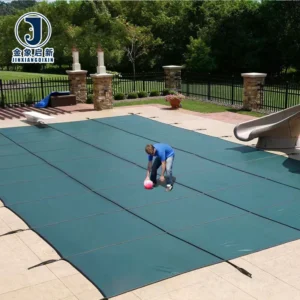
| Pond and reservoir lining (industrial) | Permanent water contact, puncture resistance, chemical stability in soil and water conditions |
Why Coating Adhesion Matters More Than GSM Alone
The bond between the base fabric and the PVC coating determines whether a roll survives fabrication or delaminates under tension.
Technical buyers specifying PVC coated tarpaulin base fabric denier coating weight GSM often focus on the weight figure as the primary indicator of durability. Yet a heavier roll with poor adhesion will fail at the weld line long before a lighter roll with deep coating penetration shows any sign of separation. The real question is not just how much coating is applied, but how thoroughly it penetrates the weave structure of the base fabric. [NEED_CITE: peel strength testing for PVC coated fabrics per ISO 2411]
When coating weight is stated on the quotation but the adhesion is weak, fabricators discover the problem only after high-frequency welding. The heat activates the PVC layer, and if the bond to the base yarn is shallow, the seam peels away under the slightest flex. This is a material construction issue, not a welding parameter issue, and it cannot be corrected on the shop floor.
Coating Method and Penetration Depth
The PVC coating is applied to a woven polyester base fabric using a process that ensures the compound penetrates into the interstices of the weave rather than sitting as a surface film. This penetration is what gives the material its peel strength and determines how well it behaves during high-frequency welding. The PVC coated tarpaulin base fabric denier coating weight GSM range from 500 to 800 grammes per square meter reflects different coating thicknesses applied over structurally distinct base fabrics, each matched to specific tensile and tear requirements.
Base Fabric Architecture and Its Role in Tensile Performance
The denier of the yarn and the density of the warp and weft threads define the structural skeleton of the fabric. A higher denier yarn provides greater individual thread strength, while a denser weave distributes load across more intersection points. The relationship between these two variables and the final tensile and tear performance is not linear. A 500 GSM roll with a dense, high-denier base can outperform a heavier roll built on a loose, low-denier weave when measured for tear propagation resistance. [NEED_CITE: tensile and tear test methods for coated fabrics per ISO 1421]
Decoding the Specification Sheet for Fabricators
The waterproof rating of anti-permeable ≥20KPa indicates that the coating layer forms a continuous barrier without pinholes or thin spots across the full roll width. This is a function of coating uniformity, which is maintained through process control during application. The low-temperature flexibility specification, confirming no fracture at -30°C, reflects the plasticiser formulation within the PVC compound. Plasticiser migration over time is what causes stiffening and cracking in cold conditions, so this data point speaks to both the initial formulation and the expected stability of the compound.
The corrosion resistance to acid, alkali and brine environments is relevant for industrial covers exposed to chemical splash or marine atmospheres. The high-frequency heat welding seam construction ensures that fabricated joints maintain waterproof integrity at the same level as the body of the fabric, provided the coating adhesion is sufficient to withstand the thermal cycle of welding. [NEED_CITE: high-frequency welding parameters for PVC coated polyester fabrics]
The Cost of Specifying on Weight Without Verifying Construction
When a roll arrives lighter than the quoted GSM, the immediate consequence is a material that does not meet the structural requirement of the application. But the hidden cost is larger: fabricators who have already cut, welded, and installed the material face rework that exceeds the cost of the roll itself. Colour variation between rolls in the same order becomes visible only after installation, when adjacent panels show different tones under natural light. Welded seams that fail before the fabric body does indicate that the coating adhesion was never matched to the flex requirements of the end use. [NEED_CITE: failure analysis methodology for coated fabric weld seams]
What Process Control Looks Like at the Roll Level
Material selection begins with the R&D team matching the base fabric denier and weave to the target GSM and end-use requirement. Across three production lines and 36 sets of professional equipment, coating weight is monitored at intervals to ensure the stated PVC coated tarpaulin base fabric denier coating weight GSM is maintained from the core to the outer wrap of each roll. Dedicated quality inspection occurs at every stage, with 100% pre-shipment inspection confirming weight, colour consistency, and coating adhesion before any roll is packed.
Samples are developed within days when custom widths, colours, or treatment grades are required, allowing fabricators to run welding trials on actual production material before committing to a full order. This eliminates the gap between sample approval and bulk delivery that causes so many disputes in coated fabric procurement.
Documentation & Verification
- Material specification sheet stating GSM, base fabric denier, and coating compound details per roll
- Flame retardant test report provided where applicable, with grade and standard confirmed at quotation
- ISO and CE certificates available for compliance documentation in destination markets
- Pre-shipment inspection record confirming weight verification and roll-to-roll colour consistency
- Roll packing list with individual roll weights for incoming inspection cross-check
Fabrication, Handling & Storage
- High-frequency welding on 500 to 800 GSM grades requires matching dwell time to coating thickness for full seam fusion
- Store rolls upright on end caps to prevent flat-spot deformation across the PVC coating surface
- Allow cold-stored rolls to acclimatise before unrolling to avoid stress cracking at low temperatures
- Cut with rotary or hot-knife tools to seal edges and prevent fraying of the base fabric weave
- Clean with mild detergent only; solvents can attack the plasticiser in the PVC coating layer
How to Structure Your Enquiry
To receive an accurate material recommendation, specify the end-use application, the environmental exposure conditions including temperature range and chemical contact, and the required roll width and length. Confirm whether flame retardant certification is needed for your destination market and which standard applies. Indicate your annual volume and whether you require colour matching across multiple production batches.
Frequently Asked Questions
Q: How is the GSM of each roll verified before shipment?
A: Every roll is weighed and measured during the pre-shipment inspection, and the results are recorded against the stated specification. A material specification sheet accompanies each order, detailing the GSM, base fabric denier, and coating type. Incoming inspection on your side should include a spot-check cut from the roll end to confirm weight per square metre matches the documentation provided.
Q: Can flame retardant grades be supplied with valid test certificates?
A: Flame retardant grades are available with the material capable of achieving self-extinguishing performance within the stated threshold. The specific grade and test standard are confirmed at the quotation stage to match your destination market requirements. Request the applicable test report when placing your enquiry so the correct compound is selected for your order.
Q: Why do welded seams sometimes fail before the fabric body?
A: Seam failure ahead of fabric failure typically indicates insufficient coating adhesion rather than a welding machine fault. The high-frequency welding process activates the PVC coating layer, and if the bond between coating and base fabric is shallow, the seam will peel under flex. Coating penetration depth during manufacture is the controlling variable, and it must be matched to the flex demands of the finished product.
Q: How is colour consistency maintained across multiple rolls in one order?
A: Colour is matched using reference standards during compound mixing, and batch consistency is verified during the pre-shipment inspection. Rolls from the same production run are allocated to a single order to eliminate visible variation when installed side by side. For orders spanning multiple runs, a colour comparison check is performed before dispatch to confirm acceptable uniformity.