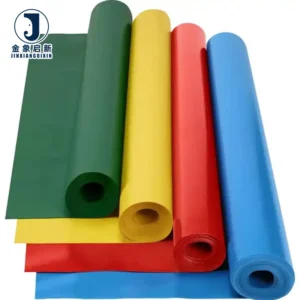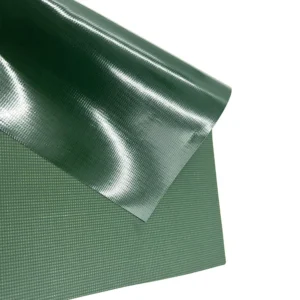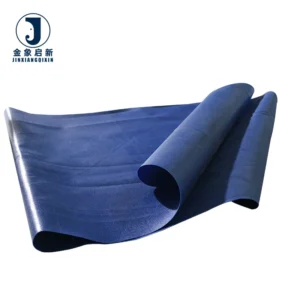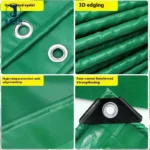
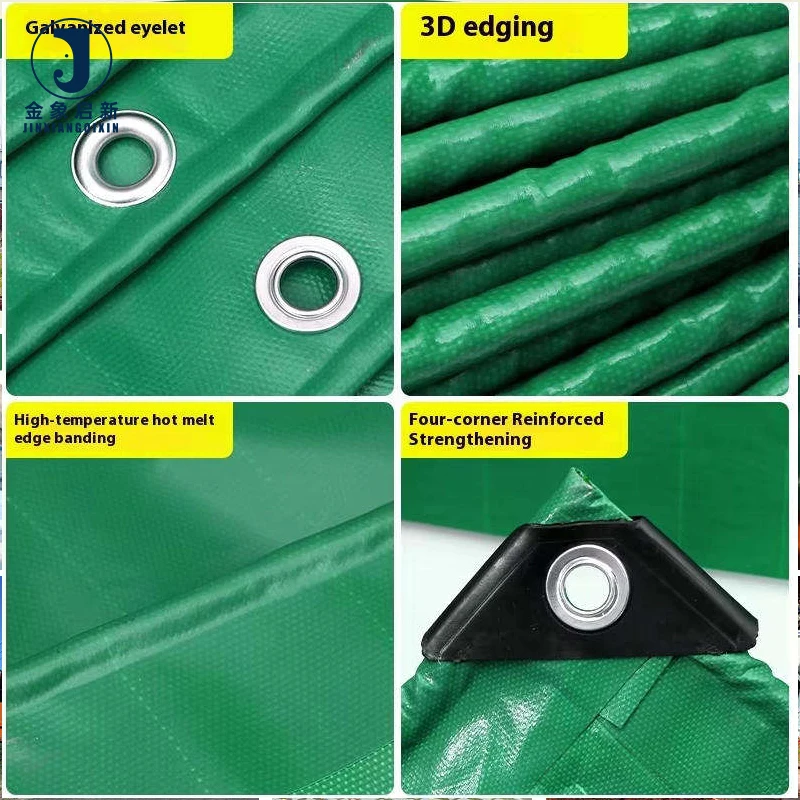
Deep Coating Adhesion Control — Our high-frequency heat bonding process fuses the PVC coating to the base fabric under tightly managed temperature and pressure, ensuring consistent peel strength across every roll that leaves the factory.
Technical Specifications
| Parameter | Value |
|---|---|
| Product Type | PVC Coated Tarpaulin Roll |
| Weight (GSM) | 500 to 800 g/m² (confirm the grade required for your application) |
| Coating Material | PVC |
| Coating Method | High-frequency heat combined |
| Waterproof Rating | Anti-permeable ≥20 KPa |
| Flame Retardant Grade | Flame retardant ≤10 seconds (grade not stated — confirm the standard required for your market) |
| Low-Temperature Flexibility | -30 °C (non-fracture under plier test) |
| Corrosion Resistance | Acid, alkali and brine resistant |
| Mildew Resistance | Proven mildew-proofing properties |
| Water Absorption | Negligible; fast drying after rainfall |
| Tensile Strength | High tensile strength (test basis not stated in source — request test report per ISO 1421) |
| Seam Construction | High-frequency heat welded |
Application Suitability
| Application | Exposure & Requirement |
|---|---|
| Truck and trailer side curtains | Constant flexing at load points, road debris abrasion, weather and UV exposure |
| Construction site equipment covers | Outdoor weathering, dust ingress, mechanical handling and UV exposure |
| Tent and awning fabrication | High-frequency welding compatibility, colour consistency across panels, wind load tension |
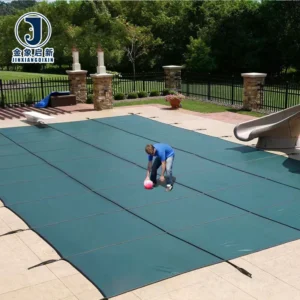
| Agricultural and aquaculture pond liners | Permanent water contact, soil chemistry, puncture risk, algae and mildew |
| Inflatable structure membrane | Air retention, seam integrity under internal pressure, UV exposure |
| Industrial ventilation ducting | Airflow resistance, potential flame-retardant and anti-static compliance requirements |
Why GSM Alone Does Not Tell You How Strong the Fabric Is
Coating weight, base fabric denier and weave density together determine real-world tear and tensile performance.
Technical buyers reviewing PVC coated tarpaulin gsm coating technology specifications often assume a higher GSM automatically means a stronger fabric. In practice, a roll with a heavy coating but a low-denier base fabric can tear more easily than a lighter-coated roll built on a dense woven base [NEED_CITE: tensile and tear test methods for coated fabrics per ISO 1421]. The coating adds weight and waterproofing but contributes little to structural tear resistance if the underlying yarn cannot hold. Specifying by GSM without reviewing the base fabric construction leads to material that passes the scale test but fails at the weld line or under wind load.
Coating Method and Its Effect on Fabric Integrity
The high-frequency heat combined coating method used in this PVC coated tarpaulin roll drives the PVC compound into the base fabric under controlled heat and pressure. This process determines how well the coating bonds to the yarn and directly affects peel strength — the force required to separate the coating from the base. Poor adhesion shows up first at welded seams, where the coating delaminates before the fabric itself reaches its tear point. Consistent heat profile across the full production width is what separates a roll that welds cleanly from one that bubbles or peels at the joint.
How Base Fabric and Coating Weight Interact
The base fabric weave and denier set the structural baseline: tear strength, tensile strength and dimensional stability all originate from the yarn. The PVC coating weight then determines surface properties — waterproofing, chemical resistance, UV stabiliser carrier volume and the material available for a reliable high-frequency weld [NEED_CITE: relationship between coating thickness and weld peel strength in PVC fabrics]. A 500 GSM roll on a high-density base may outperform an 800 GSM roll on a loose weave when it comes to real-world tear resistance. Buyers evaluating PVC coated tarpaulin gsm coating technology need both figures to make an informed comparison.
Reading the Specification Sheet Beyond GSM
Four parameters from this product’s specification deserve close attention during material selection. The waterproof rating of anti-permeable ≥20 KPa indicates the coating resists water penetration under sustained pressure, relevant for pond liners and long-duration outdoor covers. The low-temperature flexibility at -30 °C without fracture matters for cold-climate logistics and winter construction covers, where stiff fabric cracks at fold lines. The acid, alkali and brine corrosion resistance extends service life in agricultural, marine and chemical storage environments. Finally, the mildew-proofing treatment prevents fungal growth on stored rolls and installed covers in humid climates — a factor that directly affects visual appearance and fabric degradation over time.
The Hidden Cost of Specifying the Wrong Grade
When the coating weight on the quotation does not match the roll that arrives, the consequences compound through the supply chain. A lighter-than-specified coating reduces weld seam peel strength, meaning fabricated truck covers fail at the seams rather than the fabric body [NEED_CITE: weld seam failure as primary failure mode in fabricated PVC tarpaulins]. Flame retardant grades claimed without a supporting test report can halt a construction project at the site inspection stage, requiring full material replacement. Colour variation between rolls in the same container forces fabricators to sort and match panels manually, adding labour cost and delaying shipment. These failures are preventable with verified documentation at the point of dispatch.
Why Technical Buyers Source This Material Here
Deep process control over coating weight and adhesion means the GSM on the specification sheet is the GSM in the roll, verified at every production stage rather than sampled selectively. Three full production lines and 36 sets of professional equipment support consistent output across bulk container orders with matched colour and weight. A dedicated 10-person R&D team handles material selection, sample development and custom sizing — essential when a fabricator needs to test weld parameters before committing to a production run. Every roll undergoes dedicated QA/QC inspection with a 100% pre-shipment check, closing the gap between what was specified and what arrives at the receiving dock. Samples are developed within days for custom requirements, allowing buyers to confirm coating feel, weld behaviour and colour before placing volume orders.
Documentation & Verification
- Material specification sheet stating exact GSM, base fabric type and coating method for each roll
- Test report for flame-retardant grades where applicable, with test standard and grade clearly stated
- Pre-shipment inspection record confirming verified coating weight per roll against the order specification
- Roll packing list with batch and roll traceability for colour and GSM consistency verification on arrival
- ISO and CE certificates supporting material compliance for import and project specification
Fabrication, Handling & Storage
- High-frequency welding parameters must be adjusted to match the specific PVC coating weight and thickness of each roll grade
- Store rolls vertically in a dry, ventilated area to prevent permanent creasing across the coated surface
- Allow cold-stored rolls to acclimatise to ambient temperature before unrolling to avoid cracking at the -30 °C flexibility limit
- Use compatible PVC-based repair patches and solvent cement matching the high-frequency heat combined coating chemistry
- Plan cutting layout to minimise offcuts, especially on narrower roll widths where edge waste accumulates quickly
- Clean fabricated panels with mild detergent; avoid solvent-based cleaners that attack the PVC coating surface
Requesting a Technical Quotation
Provide the application environment, exposure conditions and any flame-retardant or anti-static standards required by your market so we can confirm the correct grade. Specify your required GSM range, roll width, colour reference and whether you need raw roll stock or pre-cut panels. Let us know your annual volume and whether you require samples for weld parameter testing before committing to production.
Frequently Asked Questions
Q: How is GSM verified per roll and what documentation accompanies shipment?
A: Each roll is weighed and measured to confirm the GSM matches the material specification sheet before dispatch. A pre-shipment inspection record documents the verified coating weight per roll, and a roll packing list provides batch traceability so you can cross-check GSM and colour consistency on arrival at your facility.
Q: What base fabric denier and weave options are available and how do they affect performance?
A: Base fabric denier and weave density directly determine tensile and tear strength baseline. Higher denier yarns and tighter weaves resist tear propagation under load. Request the base fabric specification alongside the PVC coated tarpaulin gsm coating technology data to evaluate structural performance for your fabrication process.
Q: Which flame retardant test standard applies and what certificate is supplied?
A: Flame retardant performance is available in grades with extinguishing time ≤10 seconds. The applicable test standard depends on your market — DIN 4102, NFPA 701 or local building codes. Confirm the specific standard required for your project and we will supply the matching test report and certificate with shipment.
Q: How is batch-to-batch colour and coating weight consistency controlled across a container order?
A: Production runs are managed with controlled coating formulation and in-process QA checks at every stage. Rolls within the same order are matched against a single colour reference and GSM target. The pre-shipment inspection and roll packing list allow you to verify consistency roll by roll upon receipt.