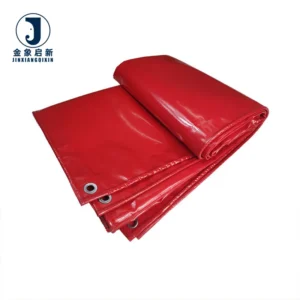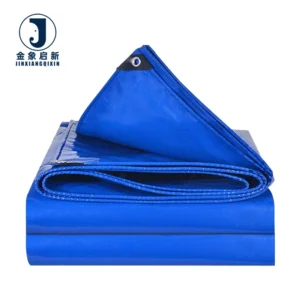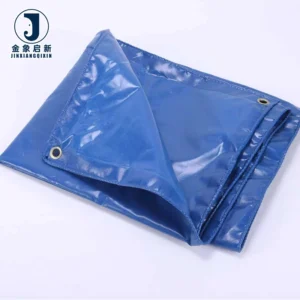
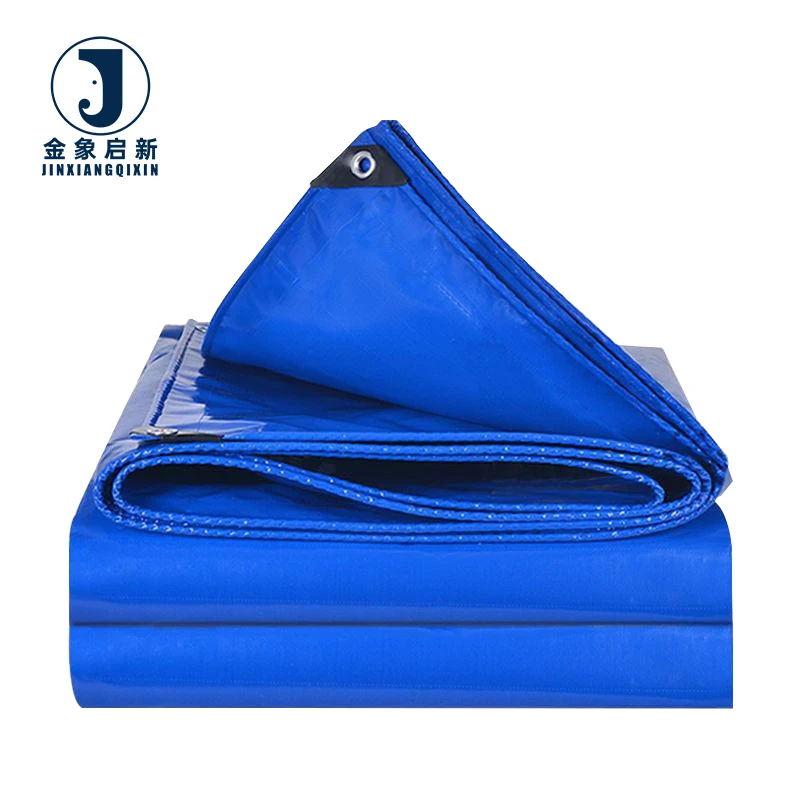
Proven Process Control — Every roll of PVC coated tarpaulin produced on our lines is verified against the stated GSM, base fabric and coating weight before dispatch, giving technical buyers reliable data for truck cargo cover specification.
Technical Specifications
| Parameter | Value |
|---|---|
| Product Type | PVC Coated Tarpaulin |
| Coating Material | PVC |
| Weight Options | 700 gsm / 850 gsm / 900 gsm |
| Base Fabric | High-tenacity polyester woven substrate |
| Waterproof | Yes — fully coated construction |
| Flame Retardant | Available in flame retardant grades — confirm the grade required for your market |
| Anti-Static | Available in anti-static grades — confirm the standard required for your application |
| Anti-Cold Treatment | Available for low-temperature flexibility |
| Anti-Mildew Treatment | Available for humid storage and transport environments |
| Weather Resistance | Rated for extended outdoor exposure |
| Surface Finish | Options depend on grade — specify glossy or matte per project |
| Custom Sizing | Available in custom width and cut-to-length formats |
Application Suitability
| Application | Exposure & Requirement |
|---|---|
| Truck and trailer side curtains | Constant flexing at load points, road abrasion, UV exposure, wind-driven rain |
| Flatbed cargo covers | Tie-down stress at eyelets, direct sunlight, mechanical contact with load edges |
| Transport fleet tarpaulins | Daily deployment and folding, fuel and exhaust residue, temperature swings |
| Outdoor equipment protection | Prolonged stationary UV exposure, moisture ingress risk, wind uplift force |
| Inflatable and membrane structure panels | Sustained tension, weather cycling, weld seam integrity under load |
Why a Material Specification Sheet Matters More Than the Quoted GSM
Every roll we ship carries documentation stating exact GSM, base fabric denier and coating weight — so you verify before fabrication, not after the cover fails.
Technical buyers sourcing PVC coated tarpaulin for truck cargo covers often receive material that measures lighter on the scale than the quotation stated. The shortfall comes from reduced coating weight, a thinner base fabric, or both. Without a material specification sheet tied to the purchase order, there is no contractual basis to reject the delivery. [NEED_CITE: standard test methods for coated fabric mass per unit area per ISO 3801]
Worse, the deficit tends to appear at the weld line first. When the coating is thinner than expected, heat welding parameters that worked on the sample will burn through or produce a weak bond on production material. Seams split at the flex points under load before the fabric body shows any sign of wear.
Coating Weight and Its Role in Weld Seam Integrity
The durability of a truck cargo cover depends as much on the seam as on the PVC coated tarpaulin itself. Coating weight determines the material available to fuse during hot-air or wedge welding. When the coating is insufficient, the weld zone becomes the weakest link — the fabric may retain adequate tensile properties, but the joined panel fails under repeated flexing. We control coating application at every pass to ensure the stated weight is present across the full width and along the entire roll length.
Base Fabric Denier and Weave Density Under Load
The polyester substrate underneath the PVC coating carries the structural load. Denier and weave density govern how the fabric distributes point stress from tie-down straps and sharp-edged cargo. A tighter weave limits tear propagation: once a puncture starts, the yarn count in each direction determines whether the tear stays local or runs to the next panel. Specifying the base fabric alongside the PVC coated fabric truck cover order prevents surprises when the material is cut and fabricated. [NEED_CITE: tensile and tear test methods for coated fabrics per ISO 1421]
Reading GSM in Context With Coating and Substrate
A higher GSM reading alone does not guarantee better performance in truck cargo cover service. The same total weight can be achieved by adding filler to the PVC compound rather than increasing the base fabric density. The result feels heavy on the scale but tears more easily because the structural yarns carry less of the load. The meaningful specification combines GSM with base fabric denier, weave count, and coating method — all documented on the material sheet we provide. This is why buyers who specify PVC Coated Tarpaulin gsm must also confirm the substrate construction underneath the coating.
The Hidden Cost of Specifying on Price Per Square Metre Alone
When the selection criterion is lowest cost per square metre, suppliers have every incentive to reduce coating weight or substitute a lighter base fabric while keeping the quoted GSM figure unchanged. The cover arrives looking correct and passes a quick scale check. Failure appears weeks into service: weld lines separate at the flex zones, the fabric abrades through at tie-down contact points, or the colour shifts between panels cut from different rolls in the same shipment. Re-fabricating a full set of truck covers costs far more than specifying verified material properties from the start. [NEED_CITE: common failure modes in PVC coated tarpaulin truck covers]
Why Fabrication-Ready PVC Coated Fabric Matters
Our production lines are configured for consistent coating weight across the full roll width, which directly affects how the material behaves during your fabrication process. When coating thickness varies from edge to centre, the same welding temperature produces a strong bond in one zone and a weak one in another.
We run dedicated QA checks at every production stage, not only at final inspection. Coating adhesion, colour match and dimensional tolerance are monitored in-process so that the PVC coated tarpaulin you receive behaves predictably on your welding table.
The ten-person R&D team handles material selection, custom sizing and sample development for specific truck and trailer models. If you need a particular width to minimise offcut waste on a standard trailer dimension, we develop the specification before production starts.
Samples are produced within days for custom requirements — allowing your fabrication team to test weld parameters and eyelet reinforcement methods before committing to a full production order.
Documentation & Verification
- Material specification sheet stating GSM, base fabric denier and coating weight per roll
- Flame retardant test report where applicable — matched to your market compliance requirement
- ISO and CE certificates supplied with customs documentation for export shipments
- Pre-shipment inspection record confirming weight and dimensional check before dispatch
- Roll packing list with individual roll identifiers for traceability on arrival
Fabrication, Handling & Storage
- Hot-air weld temperature should be calibrated to the specific PVC coating weight on each roll before production starts
- Reinforce eyelet zones with additional PVC patches at tie-down points where strap load concentrates on the 700–900 gsm material
- Store rolls upright on end caps to prevent flat-spot creases that affect coating adhesion during welding
- Allow cold-stored rolls to reach ambient temperature before unrolling to avoid cracking the PVC coating surface
- Cut panels from the same roll where colour match across adjacent truck cover sections is visually critical
- Use PVC-compatible repair adhesive for field patching rather than solvent-based products that attack the coating
What We Need to Quote Accurately
Share the trailer or cargo bed dimensions, the type of load you are covering, and the environmental conditions the cover will face — including expected UV exposure duration and any fire safety requirements at the destination. Let us know whether you need rolls in a specific width for your fabrication line or cut-to-size finished covers with reinforcement details. If your market mandates a particular flame retardant or anti-static standard, provide the reference so we match the treatment grade and supply supporting test documentation.
Frequently Asked Questions
Q: How does GSM relate to the tensile and tear performance of a truck cover?
A: GSM measures total weight per square metre of the PVC coated tarpaulin, combining base fabric and coating. Tensile and tear strength depend primarily on the base fabric denier and weave density, not on coating weight alone. A material specification sheet listing all three values gives a reliable basis for comparing options.
Q: What test documentation supports flame retardant claims?
A: We supply test reports for flame retardant grades where applicable, referencing the standard used. The specific grade required varies by market and application — confirm the fire classification your site or jurisdiction mandates before ordering so we match the treatment accordingly.
Q: Why do welded seams sometimes fail before the fabric body does?
A: Weld seam strength depends on coating weight and adhesion to the base fabric. If the coating is too thin or poorly bonded, the heat-affected zone becomes the weakest point under flexing. Consistent coating application across the roll width ensures uniform weld performance throughout fabrication.
Q: Can colour be matched consistently across multiple rolls in one order?
A: Colour consistency depends on coating batch control and raw material traceability. We monitor colour match in-process across all rolls in a single production run. For large truck fleet orders, specifying the colour reference at inquiry stage allows us to plan coating batches to minimise visible variation between installed panels.
Q: How should I specify coating weight for a truck cargo cover application?
A: Start with the mechanical demands — load weight, tie-down strap contact pressure, and flexing frequency. Heavier-duty applications typically require higher GSM grades with a denser base fabric. Provide your operating conditions and we recommend the coating weight and substrate combination, documented on the material specification sheet for your approval.