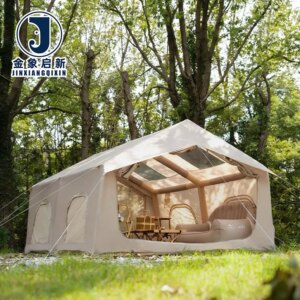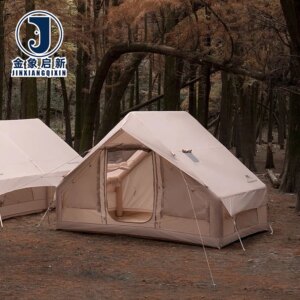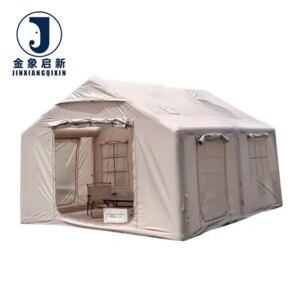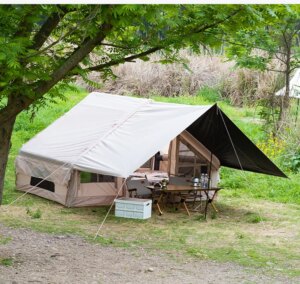
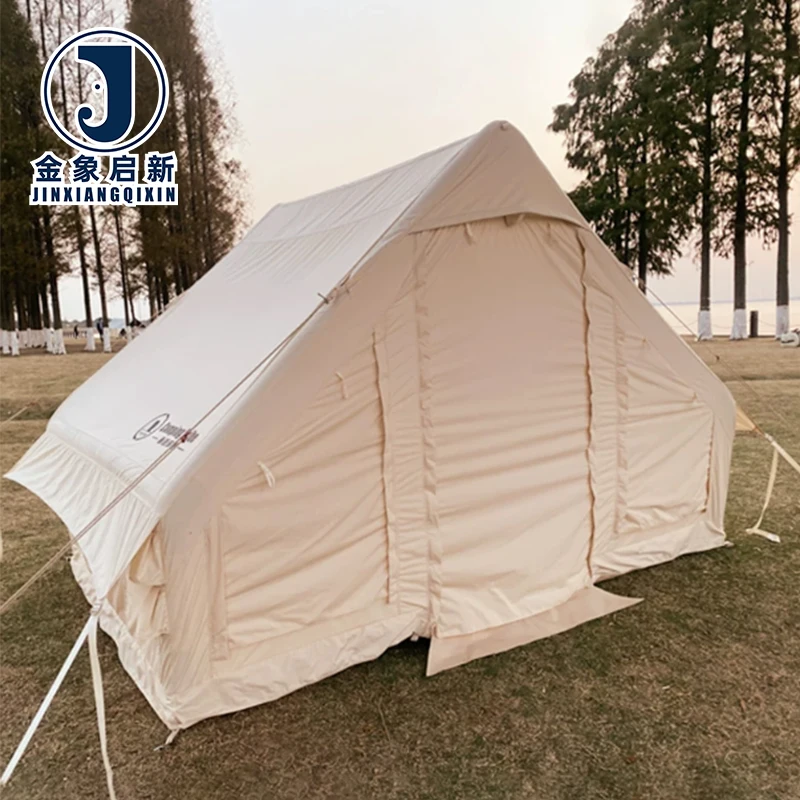
Deep Process Control — Nearly 30 years focused on PVC coated fabric, ensuring that what is specified for coating weight and adhesion is what you receive in every roll of PVC Inflatable Tent Material.
Technical Specifications
| Parameter | Value |
|---|---|
| Product Type | Inflatable Tent |
| Core Material | PVC Tarpaulin |
| Key Performance | Waterproof, UV-Resistant (test basis not stated), Tear-Resistant |
| Capacity | 2-8 Person |
| Opening Mechanism | Quick Automatic Opening |
| Season Rating | 4-Season |
| Construction | Single-layer |
| Customization | OEM & ODM, Sample Customization, Pattern Printing |
| Compliance | ISO9001, ISO14001, ISO45001, CE |
Application Suitability
| Application | Exposure & Requirement |
|---|---|
| Commercial Campsites | Frequent deployment cycles, varied weather, and demand for batch consistency. |
| Temporary Event Shelters | Rapid installation, wind load stress, and high UV exposure. |
| Industrial Site Accommodation | Long-term durability, structural reliability, and compliance documentation. |
| Outdoor Exhibition Areas | High foot traffic, branding requirements, and seasonal temperature shifts. |
| Emergency Response Scenarios | Rapid inflation, extreme weather resistance, and verifiable material grades. |
Why "Waterproof" Claims Fail Without Lab Validation
We provide a quality inspection report with every batch, detailing waterproof ratings and tensile strength.
Buyers often receive inflatable tents that claim water resistance but fail during the first heavy rainstorm. This usually stems from micro-pores in the coating or seam failures that were never pressure-tested during production. Without verifiable data, procurement teams are left guessing whether the PVC Inflatable Tent Material will hold up against sustained hydrostatic pressure [NEED_CITE: hydrostatic head testing standards for coated fabrics].
Coating Adhesion and Inflation Stress
When an inflatable tent is pressurized, the internal air pressure creates constant tension on the fabric. If the PVC coating adhesion to the base fabric is weak, the layers can delaminate at the seams. Our PVC Inflatable Tent Material is engineered with precise coating weight control to maintain structural integrity under continuous inflation cycles. This ensures that the material does not separate at high-stress flex points.
Thermal Stability Across Seasons
A 4-season inflatable tent must perform in both summer heat and winter freezing conditions. Low temperatures can cause standard PVC to become brittle, while high heat can soften the coating. The PVC Inflatable Tent Material we supply is formulated to maintain flexibility and tear resistance across a wide thermal range [NEED_CITE: low-temperature flexibility test methods for PVC tarpaulins]. This prevents cracking during winter deployment and sagging in peak summer heat.
The Relationship Between GSM and Tensile Strength
Specifying a higher GSM does not automatically guarantee a stronger tent. The base fabric denier and weave density play a more critical role in determining tensile and tear strength. A heavy coating on a low-density base fabric will add weight but may not prevent tear propagation under inflation stress. Technical buyers must evaluate the entire composite structure rather than relying on GSM alone when sourcing fabric for inflatable applications.
The Hidden Cost of Inconsistent Roll Batching
Color variation between rolls can be a disaster for a commercial camping ground installing multiple units side-by-side. Inconsistent coating thickness can also lead to different inflation behaviors, where one tent holds pressure while another sags. We control our batch consistency through dedicated QA/QC at every production stage, ensuring that the material behavior and visual appearance remain uniform across the entire order [NEED_CITE: color fastness and batch consistency in industrial textiles].
Why Fabric Sourcing Matters for Tent Manufacturers
- Material Selection Support: Our 10-person R&D team assists in selecting the right base fabric and coating combination for your specific inflatable design.
- Bulk Capacity: With three full production lines, we support volume orders while maintaining strict control over coating weight.
- Custom Sizing: We provide custom width and length options to minimize waste during the cutting and pattern-making process.
- Verification: Every shipment is backed by ISO and CE certifications and pre-shipment inspection records.
- Sample Development: We offer rapid sample development so you can test the inflation behavior and weld strength before committing to mass production.
Documentation & Verification
- Material specification sheet stating GSM, base fabric denier, and coating type for the inflatable tent.
- Quality inspection report including waterproof rating and tensile strength data per batch.
- ISO and CE certificates confirming management systems and product compliance.
- Pre-shipment inspection record verifying roll-to-roll consistency before dispatch.
Fabrication, Handling & Storage
- Use high-frequency welding for single-layer PVC seams to ensure air-tight integrity under pressure.
- Store rolls horizontally in a climate-controlled environment to prevent permanent creasing of the coating.
- Allow material to acclimatize to room temperature before unrolling to avoid cracking in cold conditions.
- Calibrate heat-sealing temperature based on the specific coating weight to avoid burning or weak bonds.
- Use mild, non-abrasive cleaners to maintain the surface finish without degrading the waterproof layer.
How to Specify Your Material Requirements
To ensure we provide the right PVC Inflatable Tent Material for your production, please specify your target inflation pressure, expected deployment temperatures, and any specific fire-retardant grades required by your market. Let us know if you need custom widths to optimize your cutting layout or if you require pattern printing for branding. Providing these details allows us to recommend the exact base fabric and coating combination for your inflatable tent models.
Frequently Asked Questions
Q: What test reports verify the UV and waterproof claims for your inflatable tent fabric?
A: We provide a quality inspection report with every shipment that includes data on waterproof ratings and tensile strength. For UV resistance, we can supply test results based on the specific grade requested. Technical buyers should confirm the exact testing standards required for their target market so we can align our documentation and validation process accordingly.
Q: Can you provide samples with custom thickness or treatments for testing?
A: Yes, our 10-person R&D team can develop samples with specific coating weights, thicknesses, or treatments. This allows manufacturers to test inflation behavior, weld strength, and flexibility before mass production. We typically require a few days to produce custom samples that match your exact technical specifications and performance requirements.
Q: How do you ensure color consistency across multiple rolls for large camping projects?
A: We maintain strict process control over our coating and pigment mixing stages. Dedicated QA/QC checks are performed at every production stage, and we conduct 100% pre-shipment inspections to verify roll-to-roll consistency. This prevents visible color variation when multiple inflatable tents are installed side-by-side at commercial sites.
Q: What is the lead time for custom widths or pattern printing on the fabric?
A: Lead times for custom specifications typically involve multi-week production schedules to accommodate custom width slitting and any required pattern printing. We recommend confirming your size and branding requirements early in the sales process so we can reserve production line capacity and ensure on-time delivery for your manufacturing schedule.