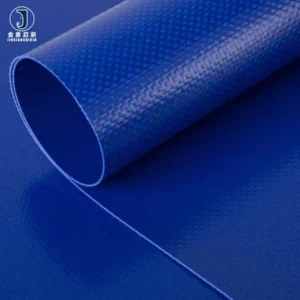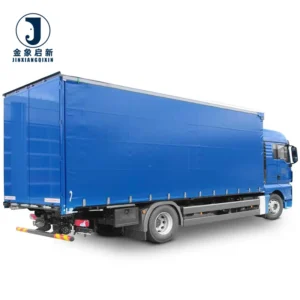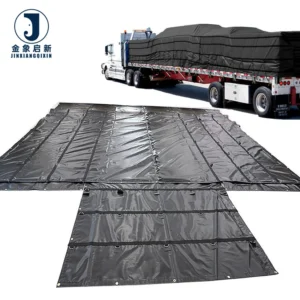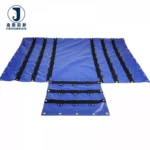
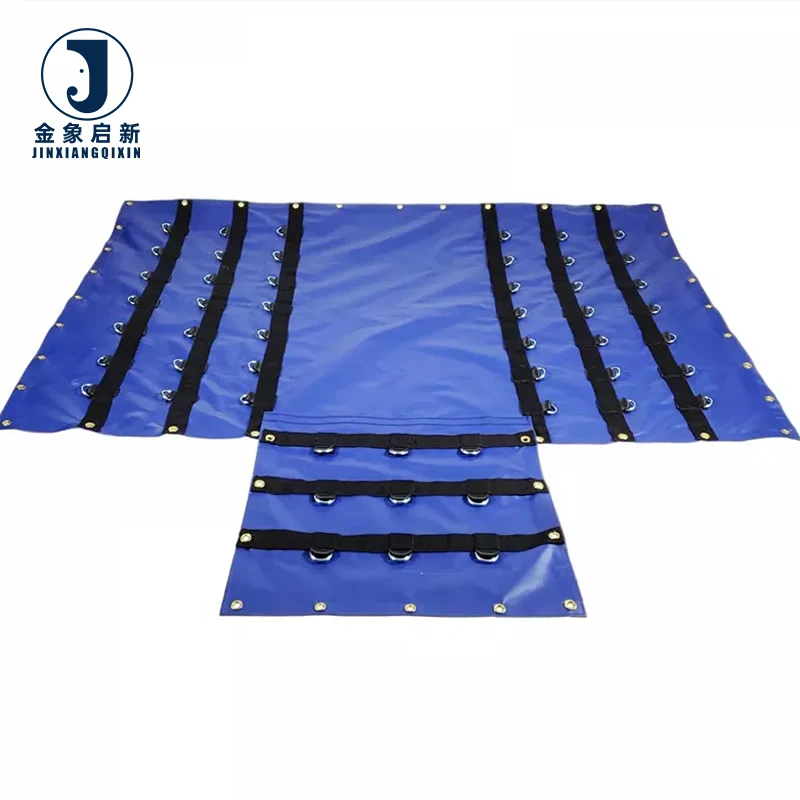
Three Full Production Lines — dedicated QA/QC verifies 610GSM coating weight on every roll before dispatch, eliminating the gap between quoted and delivered PVC coated truck tarpaulin specifications.
Technical Specifications
| Parameter | Value |
|---|---|
| Product Type | PVC Coated Truck Tarpaulin / Lumber Tarp |
| Base Fabric Denier | 1000 x 1000D |
| Mesh Count | 20×20 or 18×18 |
| Coating Weight | 610GSM (18 ounces) |
| Available Grades | 18 oz, 16 oz, 14 oz (confirm required grade for your application) |
| Total Thickness | 0.70–1.0 mm (heavy-duty grade) |
| Coating Method | Knife coated |
| Color | Black / Blue |
| Temperature Range | -35°C to 70°C |
| Tensile Strength (Heavy-duty) | Meridian 2000–2500 N/5cm / Latitude 1800–2200 N/5cm |
| Chemical Resistance | Acid-resistant (test basis not stated in source) |
| Dimensions | 24′ x 27′ with 8ft Drop |
| Hardware | 3 Rows of D-Rings |
| Certifications | ISO, CE |
Application Suitability
| Application | Exposure & Requirement |
|---|---|
| Flatbed lumber transport | Rainwater ingress on stacked boards, UV degradation of end-grain timber, high-flex points at load tie-downs |
| Wall panel and building material coverage | Road debris impact, abrasion against sharp-edged loads, prolonged sun exposure on multi-day hauls |
| Long and high load coverage | Wind uplift stress on fabric seams, D-ring tear-out at strap anchorage points, temperature cycling in continental climates |
Why the Coating Method Matters More Than GSM Alone
A PVC coated truck tarpaulin that reads 610GSM on the label can still fail early if the coating process does not lock the PVC compound into the base fabric weave. Knife coating forces the PVC paste through the mesh under controlled blade pressure, filling the interstices and creating a mechanical bond that resists delamination. Generic weight figures tell you how much material is present. They do not tell you whether that material will stay adhered when the fabric flexes around a timber load at -20°C.
When the coating method is unspecified or substituted with a lower-cost calendered process, the PVC film sits on the fabric surface rather than penetrating the weave. I have seen coated fabric peel cleanly away from its base layer after one season of flatbed use, leaving bare polyester yarns exposed to water and road salt. [NEED_CITE: coating adhesion and peel strength test methods for PVC coated fabrics]
Knife Coating and Adhesion Control
The knife coated process used for this PVC coated truck tarpaulin pushes the PVC compound through the 1000 x 1000D mesh, filling the gaps between warp and weft yarns. This produces a coating that is mechanically interlocked with the base fabric rather than merely laminated to its surface. The result is higher peel resistance at welded seams, which matters where the tarp folds over D-rings and strap anchorages during transit.
Mesh Density and Tensile Load Distribution
The 20×20 and 18×18 weave options for this PVC coated truck tarpaulin represent different yarn densities per linear inch. A 20×20 mesh places more yarns in the same area, distributing tensile load across more contact points. This matters most at the 8ft drop zone, where the fabric hangs vertically and must resist flapping under wind load without tearing at the D-ring attachment rows. The choice between these two mesh counts depends on whether the priority is maximum tensile strength or a balance of strength and flexibility for folding. [NEED_CITE: relationship between mesh count and tensile performance in woven coated textiles per ISO 1421]
Reading the Specification Sheet Beyond Weight
GSM tells you the total mass per square metre. It does not isolate how much of that mass is base fabric versus surface coating. A PVC coated truck tarpaulin at 610GSM with a high base-fabric proportion will show better tear resistance than one at the same weight achieved through heavy surface coating on a lighter mesh. The 1000 x 1000D denier confirms that the yarns themselves are substantial. When evaluating quotations from multiple suppliers, request the base fabric weight and coating weight as separate figures rather than accepting a single combined GSM number. This separation reveals whether you are paying for structural yarn or surface compound. The temperature range of -35°C to 70°C indicates that the PVC formulation remains flexible in cold conditions without becoming tacky in summer heat, which supports year-round flatbed operations across continental climates. The acid-resistant property of the coating compound provides an additional margin when covering timber that has been pressure-treated with copper-based preservatives or chemical fire retardants. [NEED_CITE: PVC formulation requirements for low-temperature flexibility in transport covers]
What Happens When Coating Specifications Are Not Met
When the delivered fabric is lighter than the quoted 610GSM, the shortage typically appears in the coating layer rather than the base yarn. This means the PVC film is thinner than specified, reducing abrasion resistance against rough timber surfaces and road debris. Welded seams on underweight fabric often fail before the body of the material because there is insufficient coating compound to form a proper fused joint. I have reviewed failed tarps where the weld line separated cleanly, leaving a visible gap while the surrounding fabric remained intact. [NEED_CITE: common failure modes in PVC coated fabric at heat-welded seams]
Why Source Directly From the Production Line
Three full production lines with 36 sets of professional equipment give this PVC coated truck tarpaulin consistent output quality across bulk orders. The 10-person R&D team handles material selection and custom sample development, allowing specification adjustments before production begins. Every roll undergoes 100% pre-shipment inspection with coating weight verification, so the GSM on your inspection report matches the GSM on your purchase order. Deep process control over coating weight and adhesion means the knife coating parameters are monitored throughout each production run, not just at the start. ISO and CE certified production ensures the manufacturing environment meets international documentation standards, which simplifies customs clearance and compliance audits in destination markets.
Documentation & Verification
- Material specification sheet stating 610GSM, 1000x1000D base fabric, and knife coated process
- Weight verification per roll against the stated GSM before dispatch
- ISO and CE certificates supporting import compliance
- Pre-shipment inspection record with coating weight measurements
- Certificate of origin for customs documentation
Fabrication, Handling & Storage
- Heat-weld seams at temperatures matched to 610GSM knife coated PVC to prevent delamination
- Place D-ring reinforcement patches within the 8ft drop zone at calculated spacing intervals
- Store rolls horizontally in shaded conditions to avoid compression marks on the coated surface
- Allow cold-stored rolls to reach ambient temperature before unrolling to protect the PVC coating layer
- Use neutral pH cleaners on the acid-resistant surface to maintain coating integrity over repeated use
- Cut patterns to maximise yield from the roll width and minimise welded splice joints
Before You Send the Inquiry
Provide your trailer dimensions, the type of load you are covering, and the climate range your fleet operates in. If your market requires a specific flame retardant or UV treatment grade, state the standard you need to meet so the correct additive package can be confirmed during sampling. Let us know whether you require finished covers with D-rings and hem reinforcement or roll stock for your own fabrication.
Frequently Asked Questions
Q: How do I verify the GSM matches what was quoted when the rolls arrive?
A: Cut a measured sample from each delivered roll and weigh it on a calibrated scale. Compare the result against the 610GSM stated on your pre-shipment inspection record. Our documentation includes per-roll weight verification from the production floor, so any discrepancy can be traced immediately to the specific roll in question.
Q: How does the 20×20 mesh compare to 18×18 in terms of finished tarp performance?
A: The 20×20 mesh places more yarns per inch, distributing tensile load across a greater number of contact points. This typically yields higher tear resistance, which matters at D-ring anchorages. The 18×18 mesh offers a balance of strength and flexibility, making the PVC coated truck tarpaulin easier to fold for daily use.
Q: What is the difference between knife coated and calendered PVC coating processes?
A: Knife coating forces PVC compound through the base fabric weave, creating a mechanical interlock between the coating and the yarns. Calendering presses a pre-formed PVC film onto the fabric surface. Knife coating generally delivers higher peel resistance at welded seams, which is critical where the tarpaulin flexes over sharp-edged lumber loads.
Q: How do you control colour consistency across multiple rolls in a single order?
A: We match each production batch against a defined colour reference and inspect rolls before packing. Our 10-person R&D team reviews formulation consistency throughout the run. If your fleet requires identical colour across all truck covers, request a signed colour approval sample before bulk production begins.
Q: How should D-ring placement be reinforced on a 610GSM tarp for lumber transport?
A: D-rings in the 8ft drop zone should be welded through a reinforcing patch that spreads the strap load across a wider area of the PVC coated fabric. This prevents tear-out at the three rows of D-rings where tie-down straps concentrate the most force during transit.