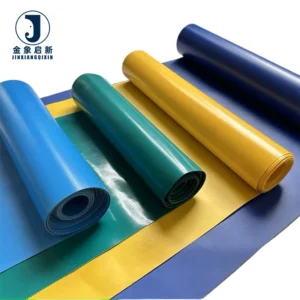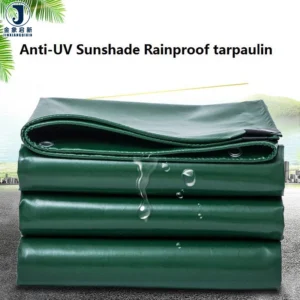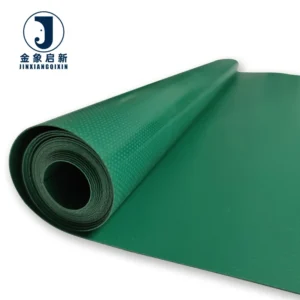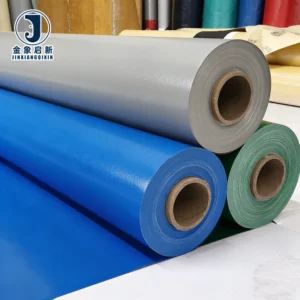
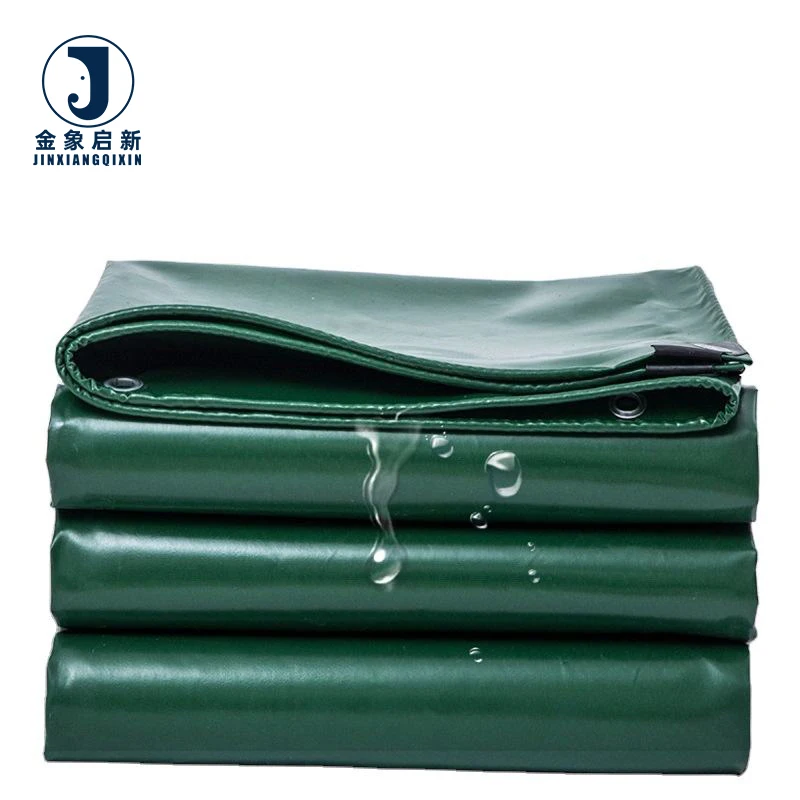
Proven Coating Control — Hot-melt and laminated coating lines deliver uniform PVC adhesion across 620gsm rolls, with GSM traceable to tensile and tear data before shipment.
Technical Specifications
| Parameter | Value |
|---|---|
| Product Type | PVC Coated Tarpaulin Roll |
| Base Fabric | High-strength polyester mesh |
| Coating Technology | Laminated & Hot-melt coating |
| Weight | 620gsm |
| Total Thickness | Corresponding grade thickness |
| Surface Finish | Glossy or Matte (available options) |
| Waterproofing | Double-sided 100% waterproof construction |
| Roll Size Options | 2m × 75m or 2.1m × 50m |
| Cold Crack Resistance | Stated (test basis not stated) |
| Anti-Mildew | Stated (test basis not stated) |
| Anti-Static | Stated (surface resistance not stated) |
| UV Treatment | Sunproof stated (test basis not stated) |
| Flame Retardant | Available in flame retardant grades — confirm the grade required for your market |
| Customization | Width, length, colour, printing available on request |
Application Suitability
| Application | Exposure & Requirement |
|---|---|
| Truck side curtains and trailer covers | Constant flexing at tie-down points, road abrasion, weather exposure requiring high tear strength at welded seams |
| Tent and awning fabric | Wind load tension, UV exposure, repeated fold/unfold cycles demanding coating adhesion durability |
| Fish pond and reservoir liners | Permanent water immersion, soil chemistry contact, puncture risk from substrate requiring 100% waterproof integrity |
| Construction and scaffolding enclosure | Debris impact, wind pressure, site dust exposure needing reinforced tear resistance |
| Marine and offshore covers | Salt spray, humidity, heavy weather demanding anti-mildew and waterproof coating stability |
| Equipment and cargo covers | Outdoor storage exposure, handling abrasion, requiring consistent GSM across large panel cuts |
Why GSM Alone Does Not Tell You How Strong This Fabric Really Is
A 620gsm reading on a quotation means little if the coating-to-base-fabric ratio shifts between rolls. True strength comes from verified adhesion between the PVC coating and the polyester mesh base — not the number on the label.
Buyers sourcing PVC coated tarpaulin material coating technology often receive rolls that weigh the right amount in total but fail at the weld line because the base fabric denier is lighter than specified. The coating compensates for weight while the structural strength drops. This is why material engineers check tensile and tear test reports rather than trusting GSM alone. [NEED_CITE: tensile and tear test methods for coated fabrics per ISO 1421]
Coating Weight and Adhesion Integrity
The hot-melt coating process used in this PVC coated tarpaulin material coating technology produces a bonded layer that resists delamination under flex stress. Laminated technology adds a further bonding stage where the PVC film is fused to the polyester mesh under heat and pressure, improving peel strength at the interface. Both methods directly affect how the material behaves when welded into truck curtains or tent panels — poor adhesion causes the coating to lift away from the base fabric at seam lines.
Base Fabric Density and Tear Propagation
The high-strength polyester mesh base determines how a puncture or cut propagates across the fabric surface. Higher denier yarns and tighter weave density restrict tear spread, which matters for applications where a single impact point should not compromise an entire panel. GSM measures total weight including coating, so two rolls at the same GSM can have very different tear behaviour depending on what proportion of that weight is PVC versus polyester. [NEED_CITE: relationship between base fabric denier and tear strength in coated textiles]
Reading the Specification Sheet Correctly
At 620gsm, this grade sits in the heavy-duty range suitable for fabricators producing welded structures and transport covers. The total thickness corresponds to this weight class, and the double-sided waterproof construction ensures that neither face absorbs moisture under prolonged exposure. Surface finish options — glossy or matte — affect cleaning behaviour and print adhesion rather than structural performance. The roll formats of 2m × 75m and 2.1m × 50m influence cutting layout efficiency, with wider rolls reducing the number of horizontal welds needed for large panels. Anti-mildew and cold crack treatments extend service capability in humid or low-temperature environments, though verification against specific test standards should be requested for your compliance requirements.
The Hidden Cost of Specification Mismatches
When a roll arrives lighter than quoted, the immediate consequence is a warranty claim. But the delayed cost is worse — fabricated products fail in the field months later because the fabric was cut and welded based on assumed strength values that the delivered material does not meet. Weld seams pull apart at lower loads, and panels tear from edge stress points that a correctly specified base fabric would have resisted. Fabricators who skip incoming inspection absorb this liability directly. [NEED_CITE: weld seam failure analysis in PVC coated polyester tarpaulins]
Why Fabricators Source This Grade Here
Three full production lines with dedicated hot-melt and laminated coating capability maintain consistent PVC adhesion across the full roll length. The 10-person R&D team develops samples within days when custom widths or colours are required, avoiding multi-week delays on specification changes. QA inspection covers every production stage, with 100% pre-shipment checking that catches GSM deviation before rolls are packed. Material specification sheets accompany each dispatch, stating the base fabric type, coating method, and verified weight. Nearly three decades of coated fabric production have refined the process control that keeps batch-to-batch colour consistent when multiple rolls ship in a single container.
Documentation & Verification
- Material specification sheet listing base fabric denier, coating method, and verified 620gsm weight
- GSM cut-sample weight verification per roll matched against the quotation value before dispatch
- UV and flame retardant test reports supplied where the specified grade requires them
- Roll packing list with individual roll weights and dimensions for container load calculation
- Pre-shipment inspection record confirming visual and dimensional checks completed
- Certificate of origin and customs documentation prepared for international shipment
Fabrication, Handling & Storage
- Hot-melt coated PVC bonds well under standard RF and hot-air welding parameters for tent and awning seams
- Matte surface finish requires adjusted print adhesion promoters compared to glossy variants
- Store 620gsm rolls upright on core supports to prevent flat-spot deformation at the base layer
- Allow cold-stored rolls to reach ambient temperature before unrolling to avoid coating crack at low flex
- Weld temperature and dwell time should be set to match the laminated coating thickness at this GSM grade
- Cutting layout should account for 2m or 2.1m roll width to minimise offcut waste on large panels
What We Need to Quote Accurately
Tell us the end-use application and the environmental exposure your finished product will face — whether that involves permanent water contact, flex cycles, or outdoor weathering. Specify the fire classification or compliance standard your market requires so we can confirm whether a flame retardant grade is needed. Let us know your preferred roll width, colour, and whether you need printed branding or plain stock.
Frequently Asked Questions
Q: How is GSM verified before my rolls ship?
A: Cut samples are taken from production rolls and weighed against the stated 620gsm specification. Results are recorded on the pre-shipment inspection report. If deviation falls outside tolerance, the roll is flagged before packing. You receive the verification record with your dispatch documentation.
Q: Can I request a flame retardant grade for this weight?
A: Flame retardant treatment is available across our PVC coated tarpaulin range, but the specific grade depends on your market requirements. Confirm whether your application requires DIN 4102, NFPA 701, or another classification, and we will match the appropriate formulation and supply the corresponding test report.
Q: How do I control batch colour consistency across multiple rolls?
A: Rolls within a single production run are manufactured from the same coating batch, which maintains colour uniformity. If your order spans multiple production runs, we flag this during quotation so you can decide whether to consolidate or accept batch separation. Pre-shipment colour checks compare rolls side by side.
Q: What welding parameters suit the laminated coating on this grade?
A: Hot-air welding temperature and speed should be calibrated to the coating thickness at 620gsm. Laminated coating typically requires slightly different dwell settings than hot-melt coated variants. We recommend running test welds on sample pieces before committing to full production panels.
Q: Can I order custom widths or colours at this GSM?
A: Custom widths beyond the standard 2m and 2.1m roll formats are available, along with custom colour matching. Lead times depend on the production schedule and minimum run quantities. Share your width, length, and colour requirements for a specific quotation with confirmed delivery timing.