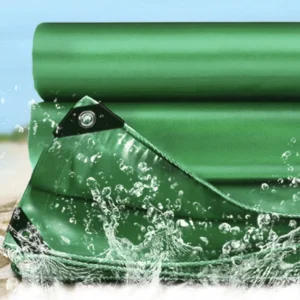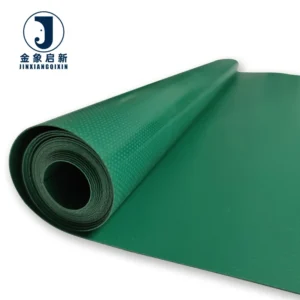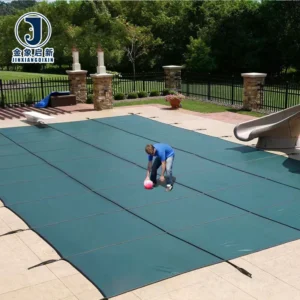
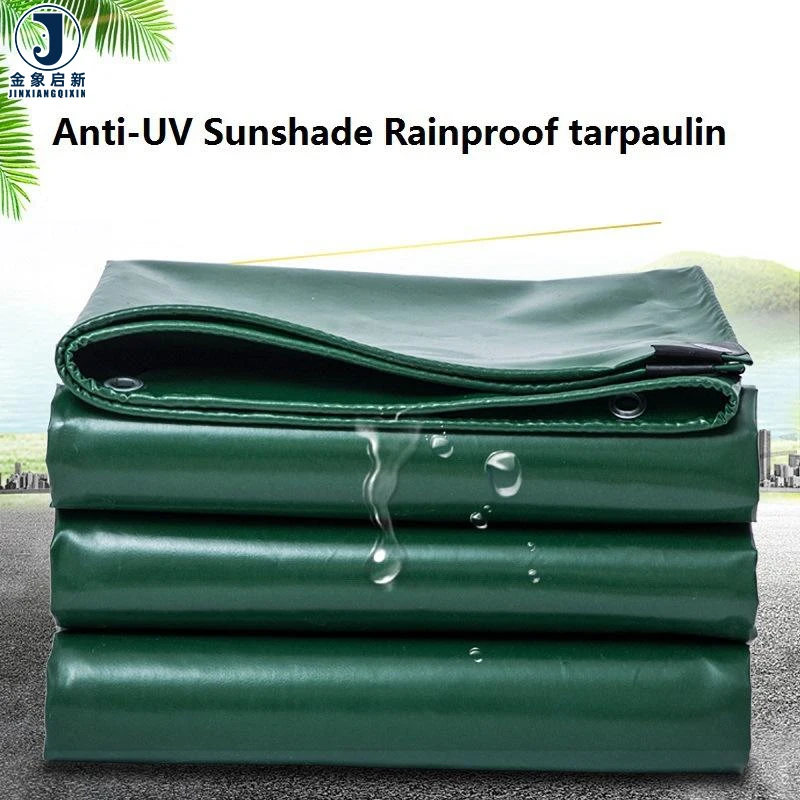
Coating adhesion control — hot-melt and laminated coating processes produce consistent PVC-to-polyester bond strength verified at every production stage, so welded seams hold where fabricated structures flex most.
Technical Specifications
| Parameter | Value |
|---|---|
| Product Type | PVC Tarpaulin Roll |
| Material | PVC coated high-strength polyester mesh fabric |
| Coating Method | Laminated technology & Hot-melt coating technology |
| Weight (GSM) | 350gsm / 420gsm / 500gsm / 550gsm / 600gsm / 750gsm (confirm grade for your application) |
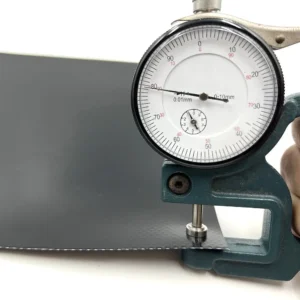
| Total Thickness | 0.32mm / 0.35mm / 0.4mm / 0.45mm / 0.5mm / 0.65mm |
| Roll Size | 2m × 75m / 2.1m × 50m |
| Available Colours | Blue / Red / Yellow / Light blue / Grey (customised on request) |
| Key Features | Waterproof, cold crack resistance, anti-mildew, UV treatment available (test basis not stated — confirm standard for your market), flame retardant available (grade not stated — confirm grade required), anti-static available (standard not stated) |
| Standards | ISO, CE certified production |
Application Suitability
| Application | Exposure & Requirement |
|---|---|
| Truck awning and side curtain fabrication | Repeated flexing at weld lines, road abrasion, weather exposure — demands high adhesion strength between coating and base fabric |
| Tent and inflatable structure manufacturing | Tensioned panels under wind load, seam integrity at high-frequency welded joints — requires consistent GSM and tearing strength across the roll |
| Construction and scaffolding enclosure | UV exposure, wind-driven rain, mechanical contact with steel scaffolding — calls for cold crack resistance and surface durability |
| Agricultural and aquaculture covers | Continuous moisture contact, biological growth risk — needs anti-mildew treatment and waterproof coating integrity |
| Industrial equipment and temporary covers | Abrasion from contact with metal surfaces, outdoor storage — requires adequate thickness and puncture resistance |
Why Coating Weight and Base Fabric Denier Determine Weld Integrity More Than GSM Alone
A roll that reads 550gsm on the label but delivers uneven coating adhesion will fail at the weld line before the fabric body tears.
Technical buyers and fabricators routinely specify PVC coated tarpaulin by GSM, yet the weight figure alone reveals nothing about how the PVC layer bonds to the polyester mesh underneath. When a hot-air or high-frequency weld is applied, the seam strength depends entirely on coating-to-substrate adhesion and the tear resistance of the base fabric at the flex zone. A lighter-coated roll with poor lamination will delaminate at the seam while the body remains intact. [NEED_CITE: tensile and tear test methods for coated fabrics per ISO 1421] This is why PVC coated tarpaulin base fabric denier coating weight GSM must be evaluated together, not in isolation, before committing to a production run.
How Laminated and Hot-Melt Coating Affect Fabricator Decisions
The PVC coated tarpaulin range is produced using both laminated and hot-melt coating technology, and the choice between them directly influences how the material behaves during fabrication. Laminated construction bonds a pre-formed PVC film to the polyester mesh under heat and pressure, producing a uniform coating thickness that suits applications demanding consistent surface appearance. Hot-melt coating forces liquid PVC into the mesh weave, creating a mechanical lock between coating and yarn that can improve peel strength at welded seams.
Coating Adhesion and Seam Performance Under Repeated Flex Load
Fabricators welding truck side curtains or inflatable structures know that seam failure rarely happens in static conditions — it occurs where the joined panel flexes under load. The hot-melt coating process drives PVC into the interstices of the polyester mesh, so when a high-frequency weld fuses two layers together, the bond penetrates beyond the surface film into the yarn structure itself. This matters when a tensioned membrane or a loaded truck cover experiences repeated stress cycles at the joint. [NEED_CITE: peel strength testing for coated fabric welds] Selecting the correct coating method for your joining process — hot-air versus high-frequency — is as critical as selecting the correct GSM.
Reading GSM, Thickness and Denier as a System
GSM and thickness figures (ranging from 350gsm at 0.32mm through 750gsm at 0.65mm) describe the total mass and caliper of the composite material, but they do not independently predict tearing strength. A roll with high GSM achieved through heavy coating but a low-denier base yarn will resist puncture yet tear easily once a cut is initiated. Conversely, a tighter polyester mesh with moderate coating weight delivers superior tear propagation resistance — essential for fabricators cutting panels and welding seams near edges. The base fabric denier and weave density determine how the material behaves after the first yarn breaks. Coating method then determines whether that tear stays contained or propagates along the PVC-to-mesh interface. Width and roll length (2m × 75m or 2.1m × 50m) further influence panel layout efficiency and the number of welded seams per fabricated product.
What Happens When Roll Specifications Do Not Match the Quotation
Fabricators and importers have experienced the same pattern: the PVC coated tarpaulin roll arrives, the GSM is measured, and the material reads lighter than agreed. Beyond the weight discrepancy, coating adhesion may vary across the roll width, producing inconsistent weld quality from one panel to the next. Colour variation between rolls in the same shipment becomes visible once installed side by side on a truck curtain or tensioned structure. Flame retardant or anti-static treatment is listed on the quotation but no test report accompanies the delivery, leaving the buyer unable to satisfy site compliance requirements. [NEED_CITE: DIN 4102 fire classification for building materials] These are not cosmetic issues — they translate into rejected shipments, re-fabrication costs and project delays.
Why Fabricators Source PVC Coated Tarpaulin Roll Stock From This Production Line
Three full production lines with 36 sets of professional equipment support bulk roll output with consistent coating weight control across every production run. The 10-person R&D team handles material specification development, custom width requests and sample preparation so that fabricators can validate welding parameters before committing to a full order.
Dedicated QA and QC checkpoints at every production stage, with 100% inspection before shipment, mean that GSM, colour and coating adhesion are verified per roll — not sampled from a single point on the line. Custom width, colour and treatment combinations are developed as samples within days, allowing buyers to confirm material behaviour against their specific fabrication process. ISO and CE certified production provides the documentation foundation that importers need for customs clearance and market compliance.
Documentation & Verification
- Material specification sheet stating confirmed GSM, base fabric denier, coating method and weight per roll
- Pre-shipment inspection record verifying GSM and colour consistency across every roll in the order
- UV and flame retardant test reports supplied with documentation when special treatment grades are specified
- Roll packing list with individual roll weights and dimensions for receiving verification
- Certificate of origin and customs documentation supporting international shipment clearance
Fabrication, Handling & Storage
- Set high-frequency weld parameters based on coating method — hot-melt coated rolls may require different dwell times than laminated grades
- Store rolls upright on end cores to prevent flat-spot creasing that transfers into fabricated panels
- Allow cold-stored rolls to reach workshop temperature before unrolling to avoid coating crack at low-GSM grades
- Plan panel cutting layout around 2m or 2.1m roll width to minimise welded seams on large fabricated covers
- Use compatible PVC-based repair patches and solvent cement matching the coating chemistry for on-site seam repair
- Handle rolls with fabric slings rather than metal hooks to avoid puncture damage to the outer wrap layers
Specifying the Right Roll for Your Fabrication Line
To receive a material recommendation that matches your welding equipment and end-use exposure, share your joining method (high-frequency, hot-air or sewing), the mechanical loads the finished product will face, and any flame retardant or anti-static grades required by your target market. Confirm whether you need standard roll widths or custom sizing, and indicate your annual volume so that production scheduling and batch colour consistency can be planned accordingly. Requesting a sample roll before full production allows you to validate weld strength and colour match on your own equipment.
Frequently Asked Questions
Q: How is GSM verified on each roll before shipment?
A: Every roll undergoes 100% inspection against the quoted specification before dispatch. GSM is measured and recorded on the pre-shipment inspection report, so the material you receive matches what was confirmed on the quotation. The inspection record ships with the order documentation.
Q: Which flame retardant grades are available and do test reports accompany them?
A: Flame retardant treatment is available as a special option — confirm the specific grade required for your market (such as B1, M2 or NFPA 701) at inquiry stage. Test reports from accredited laboratories are supplied with the shipment documentation when a graded treatment is specified.
Q: Will all rolls in my order match in colour when installed side by side?
A: Rolls within the same production run are manufactured against a single colour reference documented in the material specification sheet. Batch colour consistency is verified during the 100% pre-shipment inspection, and the colour reference is recorded for re-order matching.
Q: What is the lead time for custom width or colour orders?
A: Custom specifications require sample development and approval before full production. Sample rolls are typically prepared within days of specification confirmation. Production lead time for custom widths and colours is communicated at quotation stage based on order volume and current line scheduling.
Q: Which coating method suits high-frequency welding versus hot-air joining?
A: Hot-melt coating penetrates the polyester mesh structure, which can produce stronger fusion at high-frequency welded seams. Laminated coating provides uniform surface thickness suited to hot-air joining where surface melt consistency matters. Request samples of both methods to test on your equipment.