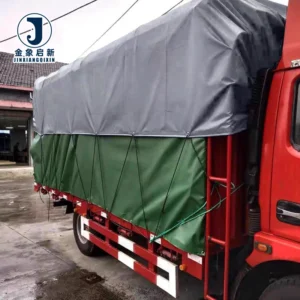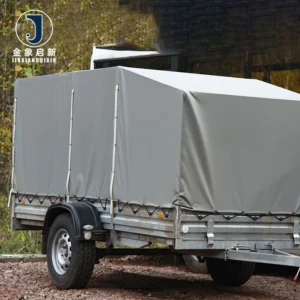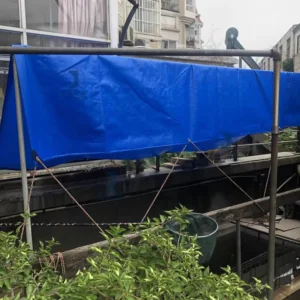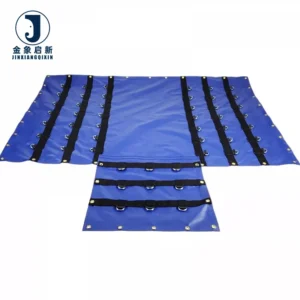
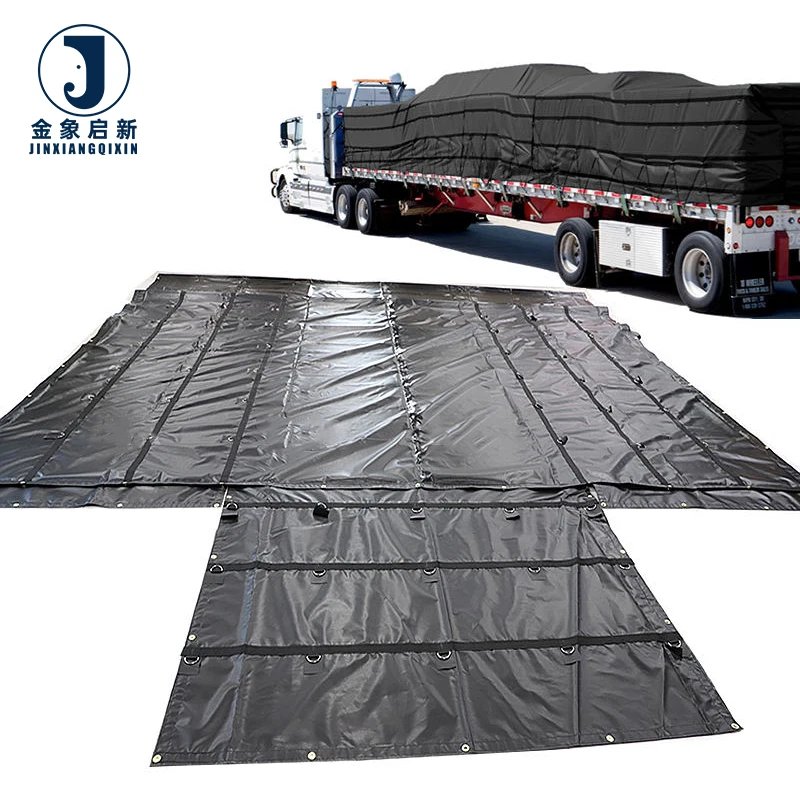
Process-Controlled Coating — coating weight verified per roll against specification before dispatch, ensuring the GSM on the quote matches the fabric on the dock.
Technical Specifications
| Parameter | Value |
|---|---|
| Product Type | PVC Truck Cover |
| Coating Material | Vinyl (PVC) |
| Base Fabric | RipSTOP Weave |
| Weight Options | 14oz, 18oz |
| Waterproof | Yes |
| Anti-Mildew | Yes |
| Abrasion-Resistant | Yes |
| Anti-Pull | Yes |
| Drop Length | 8′ Drops |
| Piece Configuration | 1PC / 2PC / 3PC |
| Flame Retardant Grade | Available — confirm the grade required for your market |
| UV Treatment | Available — confirm the test basis and standard required |
| Customizable Density | Yes |
Application Suitability
| Application | Exposure & Requirement |
|---|---|
| Flatbed semi-truck cargo covering | Daily deployment and retraction, constant flexing at tie-down points, road debris impact |
| Lumber and building material transport | Sharp-edge cargo contact, abrasion from rough timber surfaces, repeated friction under strap tension |
| Heavy-duty freight protection | Extended weather exposure, rain and road spray, wide temperature swings across regional routes |
| Fleet tarp replacement programmes | Consistent GSM across multiple covers, model-specific sizing for mixed trailer fleets |
Why the Coating Weight on Your Truck Cover Dictates Seam Life More Than Fabric Strength
The PVC coating carries the weld; the base fabric carries the load. When coating weight drifts below spec, the weld fails before the RipSTOP base ever reaches its tensile limit.
Buyers regularly receive PVC truck covers where the quoted GSM does not survive a simple scale check on arrival. The cover looks right, feels right, but the material is lighter than agreed — and that shortfall shows up first at the heat-welded seams where load flex concentrates stress every time the trailer rounds a corner or the tarp is pulled tight. A cover that passes a tensile test in the lab can still fail in the field if the coating adhesion is inconsistent across the panel [NEED_CITE: tensile and tear test methods for coated fabrics per ISO 1421]. This is not a material failure. It is a process control failure, and it is preventable.
How RipSTOP Weave Contains Tear Propagation Under Load
The RipSTOP base fabric used in this PVC coated truck tarpaulin embeds heavier reinforcement yarns at regular intervals across the weave. When a puncture or cut occurs — from a sharp lumber edge or road debris — the tear is arrested at the next reinforcement cross, preventing it from running across the full panel. This weave structure matters most at the flex zones near tie-down straps, where daily tension and release cycle the fabric through thousands of stress events over the cover’s service life.
Coating Adhesion and Its Role in Welded Seam Integrity
The PVC vinyl coating is applied to both faces of the RipSTOP base, and the adhesion between coating and fabric determines how much stress a heat-welded seam can absorb before delaminating. When coating weight varies across a panel — thicker in the centre, thinner at the edges — the weld temperature that seals one section properly will under-weld or over-weld another. Consistent coating application across the full roll width is what allows fabricators to set weld parameters once and trust the result panel after panel [NEED_CITE: coating adhesion test methods for PVC tarpaulin].
Reading the Specification Sheet Beyond the GSM Number
GSM tells you how much material is present per square metre, but it does not tell you how that weight is distributed between base fabric and coating. A 14oz PVC truck cover can achieve its weight through a heavier base fabric with a thinner coating, or a lighter base with a thicker coat — and each combination behaves differently under load. The base fabric denier and weave density govern tensile and tear strength, while the coating weight governs waterproof integrity, abrasion resistance at strap contact points, and the quality of the heat-welded seam. Specifying by GSM alone leaves too many variables uncontrolled. Buyers should request a material specification sheet that states base fabric denier, weave density, and coating weight separately, so that the performance they are paying for is the performance they receive [NEED_CITE: relationship between base fabric denier and tensile strength in coated fabrics].
The Hidden Cost of Underspecified Coating Weight
When a PVC truck cover arrives lighter than quoted, the immediate cost is a failed pre-shipment inspection and a delayed load. The longer cost is less visible: a cover that delaminates at the weld within m*rps on a cycle they did not budget for. Inconsistent coating weight across rolls in the same order also produces visible colour variation once covers are installed side by side on adjacent trailers — a cosmetic problem that signals deeper process inconsistency to any buyer who knows what to look for [NEED_CITE: colour consistency standards across production batches for coated fabrics].
Why Technical Buyers Source This PVC Truck Cover Here
Coating weight verification is conducted per roll, not sampled per batch, so the GSM stated on the quotation is the GSM confirmed before dispatch. Three full production lines and 36 sets of professional equipment support bulk orders with consistent coating application across the entire run. A 10-person R&D team develops samples within days for custom sizing, drop configurations, and density adjustments matched to specific trailer models. Every production stage includes dedicated QA/QC, with 100% inspection before shipment covering coating adhesion, seam integrity, and dimensional accuracy. Material specification sheets, test reports, and pre-shipment inspection records are provided as standard documentation, not as exceptions requiring negotiation.
Documentation & Verification
- Material specification sheet stating exact GSM, base fabric denier, and coating weight per grade
- Test reports for UV resistance and flame retardant grades, stating the applicable standard
- Pre-shipment inspection record confirming coating adhesion and heat-welded seam integrity
- Roll-by-roll weight verification against the quoted specification before dispatch
- ISO and CE certificates supporting consistent coating process control
- Certificate of origin and customs documentation for export shipments
Fabrication, Handling & Storage
- Heat-weld parameters must be calibrated to the specific 14oz or 18oz coating weight to avoid delamination at seams
- RipSTOP base fabric allows clean cutting without fraying; use rotary blades for straight panel edges
- Store rolls vertically on end-caps to prevent flat spots that show as visible creases in the finished cover
- Avoid dragging the PVC coated surface across concrete during deployment to preserve abrasion-resistant treatment
- Clean with mild detergent and soft brush; solvent-based cleaners can degrade the vinyl coating surface
- Repair minor punctures with PVC-compatible adhesive patches applied to clean, dry coating surfaces
What to Include in Your Inquiry
Provide your trailer model or exact flatbed dimensions so covers can be sized to fitment rather than generic templates. State the coating weight and any flame retardant or anti-UV grade required by your operating region or fleet compliance standard. Confirm whether you need finished 1PC, 2PC, or 3PC configurations with 8′ drops, or roll stock for your own cut-and-sew operation.
Frequently Asked Questions
Q: How do I verify the coating weight matches the quotation when the PVC truck cover arrives?
A: Request a pre-shipment inspection record that documents roll-by-roll weight verification. On receipt, cut a measured sample from the roll or finished panel and weigh it on a calibrated scale. Compare the result to the GSM stated on your material specification sheet. Any significant deviation should be flagged before the cover enters service, as lighter material will compromise weld strength and abrasion resistance at flex points.
Q: What is the difference between RipSTOP and standard woven base fabric in a truck tarpaulin?
A: RipSTOP fabric embeds heavier reinforcement yarns at regular intervals, creating a grid that arrests tear propagation. Standard woven fabric allows a tear to run unchecked once initiated. For flatbed and lumber transport where cargo edges and strap friction create puncture risk, RipSTOP limits damage to a small zone rather than a full panel failure, extending service life between replacements.
Q: Are flame retardant grades available for this PVC truck cover, and what standards apply?
A: Flame retardant grades are available — confirm the specific grade and test standard required for your market or fleet compliance programme. Common standards include NFPA 701 and regional building material fire classifications. Request a test report that states the grade achieved and the testing laboratory, so you can present documented compliance at site inspection.
Q: How do heat-welded seams compare to stitched seams under load flex on a flatbed cover?
A: Heat-welded seams fuse the PVC coating layers into a continuous bond, creating a waterproof join that flexes with the fabric. Stitched seams introduce needle holes that compromise waterproof integrity and create stress concentration points where thread can abrade and fail. For truck covers subjected to daily tension and retraction, welded seams maintain integrity longer provided the coating weight is consistent across the weld zone.