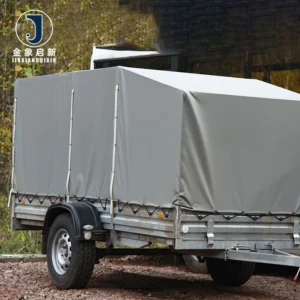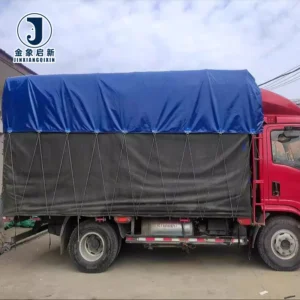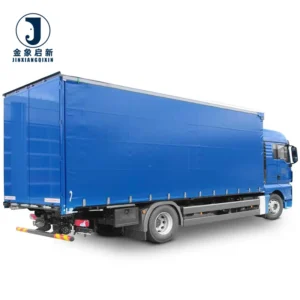
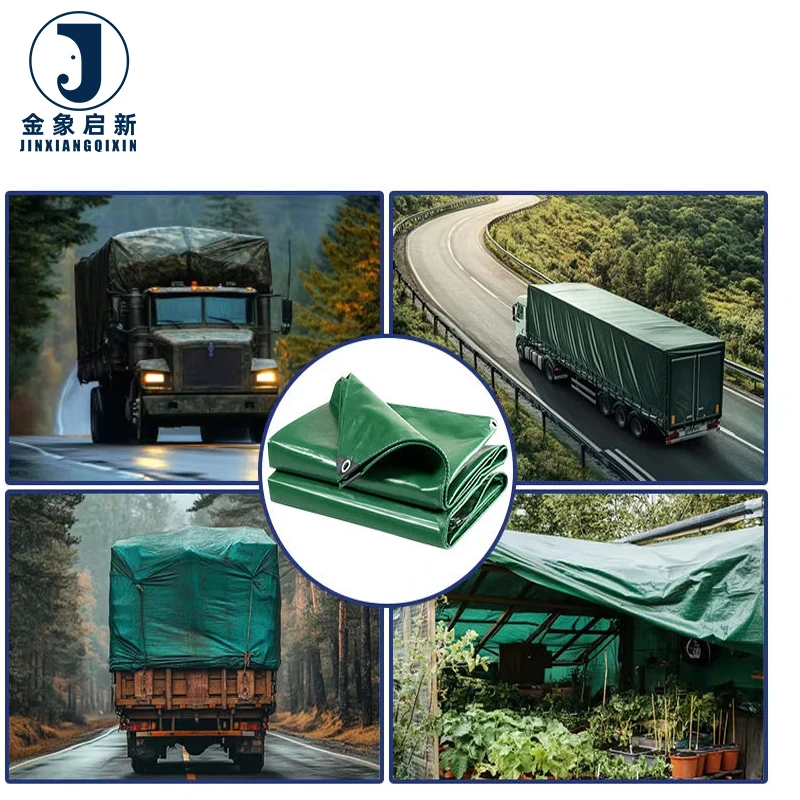
Precision coating control — Our dipping and coating process on 100% PES base fabric ensures uniform PVC adhesion across the full roll width, verified at every production stage before dispatch.
Technical Specifications
| Parameter | Value |
|---|---|
| Product Type | PVC Truck Cover |
| Coating Material | PVC (vinyl-coated polyester mesh via dipping coating process) |
| Base Fabric | 100% PES (polyester), knitting and plain weave options |
| Weight (GSM) | 50gr/m² ~ 220gr/m² available — confirm grade for application |
| Thickness | 0.2-0.4mm / 8 mil-16 mil / Custom |
| Waterproof | Yes |
| UV Treatment | Available (test basis not stated — request report) |
| Mildew Resistance | Mildew proof (grade not stated — confirm for your market) |
| Anti-Aging | Claimed (test basis not stated — request report) |
| Roll Width Options | 6ft, 8ft, 10ft, 12ft / 2m, 4m, 6m |
| Roll Length Options | 100 yards, 100 meters, or custom |
| Hem Reinforcement | PP rope in hem on all four edges |
| Eyelet Options | Galvanized, every 3ft or 1 meter interval |
| Corner Reinforcement | Reinforced plastic corners |
| Color Options | Blue, Blue/Orange, Green, Grey, Black, Clear, Grey/Green, Orange, or custom |
| Custom Printing | Accepted |
| Standards | ISO, CE |
Application Suitability
| Application | Exposure & Requirement |
|---|---|
| Flatbed trailer load covering | Highway-speed wind flex, rain and road spray, UV exposure over long-haul routes |
| Lumber tarp configuration | Sharp timber edges causing abrasion, heavy tie-down loads at eyelet points, repeated folding |
| Steel and coil tarp | High point-load stress at metal contact zones, puncture risk, moisture ingress prevention |
| Snow tarp for stockpiles | Prolonged wet contact, freeze-thaw cycling, weight accumulation from snow load |
| Side curtain fabric for new trailer builds | Constant vertical flex, UV and weather exposure, colour matching across full curtain set |
Why a Generic PVC Truck Cover Tarpaulin Manufacturer Quote Can Cost You More Than the Fabric
A truck tarp specified only by weight per square metre leaves every other failure point unaddressed.
When fleet operators receive a shipment and the material feels lighter than expected, the issue is rarely a simple measurement error. The coating weight, base fabric denier, and adhesion between layers all determine whether the fabric survives a season of highway flexing or fails at the first stress point [NEED_CITE: tensile and tear test methods for coated fabrics per ISO 1421]. A PVC truck cover tarpaulin manufacturer who quotes GSM without documenting base fabric construction and coating adhesion leaves buyers exposed to premature seam and surface failure that no amount of re-tensioning can fix.
Matching Base Fabric Weave to the Load Profile
The 100% PES base fabric is available in both knitting and plain weave construction, and the choice between them affects how the PVC truck cover tarpaulin responds to different stress patterns. Knitting construction provides multi-directional give, which suits applications where the cover must conform to irregular cargo shapes without concentrating stress at fold lines. Plain weave delivers higher dimensional stability, making it the preferred option for flatbed covers that face consistent tie-down tension across a uniform surface. Selecting the correct weave at the specification stage prevents the fabric from either stretching out of shape or cracking under repeated flex cycles.
Coating Adhesion at Flex Points and Weld Lines
The dipping coating process embeds PVC into the polyester mesh rather than simply laying it on the surface, which directly affects how the material behaves where it bends and where seams are joined. When a truck cover flexes at highway speed, the coating must stay bonded to the base yarns at every bend radius. Poor adhesion shows up as delamination along hem lines and weld seams — the fabric itself may still be intact, but the cover is compromised [NEED_CITE: adhesion peel strength testing for PVC-coated polyester fabrics]. Specifying adhesion requirements alongside GSM ensures the PVC truck cover tarpaulin performs as a single integrated structure rather than as separate layers moving independently.
Reading the GSM Range Against Your Actual Cargo
The available weight range spans from 50gr/m² to 220gr/m², but treating this as a single product line obscures the real decision a buyer must make. Lower grades suit temporary weather protection for short-distance hauls where weight savings matter more than abrasion resistance. Higher grades within this range serve long-haul flatbed routes where the cover faces sustained UV exposure, road debris impact, and repeated tie-down cycles. The base fabric denier and weave density must increase proportionally with coating weight — otherwise the heavier coating simply adds stiffness without improving tear resistance [NEED_CITE: relationship between base fabric denier and tear propagation in coated textiles]. Requesting a material specification sheet that lists all three parameters together prevents ordering a cover that is heavy but structurally mismatched.
The Hidden Cost of Unverified Treatment Claims
Mildew-resistant and anti-aging treatments are specified in the product data, but without a test report confirming the grade, there is no way to verify that the treatment will perform under actual operating conditions. A fleet storing covers in humid staging areas between hauls needs documented mildew resistance — not a label claim. Similarly, UV treatment without a stated test basis means the buyer cannot confirm whether the protection level matches the solar exposure of the intended route [NEED_CITE: UV degradation test standards for PVC-coated fabrics in transport applications]. When a truck cover arrives with visible mildew after two months of use, the cost includes not just the replacement tarp but the cargo damage claim that could have been prevented with verified treatment documentation.
Why Procurement Verification Matters for Fleet-Scale Orders
Every capability described here is supported by process controls that are documented and available for review. The 10-person R&D team handles material selection and sample development, producing physical samples within days so buyers can confirm weight, colour, and weave before committing to production. Three full production lines with 36 sets of equipment provide the capacity to deliver fleet-scale orders on schedule. A dedicated QA/QC protocol inspects every roll before shipment, catching GSM deviations and coating inconsistencies before they reach the buyer. The pre-shipment inspection record accompanies every dispatch, providing a documented verification that what was quoted is what was delivered.
Documentation & Verification
- Material specification sheet stating GSM, base fabric denier, weave type, and coating method per roll
- Pre-shipment weight verification record confirming GSM matches quoted value before dispatch
- UV and mildew treatment test reports where applicable — request for your specified grade
- ISO and CE certificates included with shipment documentation
- Roll packing list with individual roll weights and dimensions for receiving verification
Fabrication, Handling & Storage
- Heat-weld seams using temperature and speed settings matched to the 0.2-0.4mm thickness range to avoid coating burn-through
- Install galvanized eyelets at 3ft or 1m intervals through the PP-rope reinforced hem to distribute tie-down load evenly
- Store rolls upright on end caps in a dry environment to prevent permanent creasing in the PVC coating layer
- Allow cold-stored rolls to reach ambient temperature before unrolling to prevent coating crack at low temperatures
- Clean with mild detergent only — solvent-based cleaners can degrade the mildew-resistant surface treatment
- Plan cutting layout to maximise yield from standard 2m, 4m, or 6m roll widths and minimise offcuts
How to Scope Your PVC Truck Cover Tarps Requirement
To specify the right material, provide the trailer model or exact cover dimensions, the cargo type and typical haul conditions, and the climate exposure range your fleet operates in. If your operation requires fire-retardant or specific UV performance grades, state the standard your market demands so the correct treatment can be sourced and documented. Indicate whether you need finished tarps with hem, eyelets, and corner reinforcement, or roll stock for in-house fabrication, along with any colour or printed branding requirements. Requesting a physical sample before production confirms the weight, weave, and finish match your application.
Frequently Asked Questions
Q: How is truck cover sizing matched to specific trailer models rather than generic dimensions?
A: We work from the trailer model designation or buyer-supplied dimensional drawings to cut and finish each cover. The pattern accounts for tie-down clearance, flap overlap, and hardware positioning specific to that trailer. This eliminates the slack and wind-flap problems that generic-sized tarps create at highway speed.
Q: How do you verify GSM on arrival matches the quotation?
A: A pre-shipment weight verification record is generated for each roll, documenting the measured GSM against the quoted specification. This record accompanies the packing list so receiving inspection can confirm the material matches the order before the covers enter service.
Q: What eyelet spacing and hem reinforcement options are available for high-stress tie-down points?
A: Standard configuration uses galvanized eyelets at 3ft or 1m intervals through a PP-rope reinforced hem on all four edges. For high-stress applications, we can adjust spacing or add reinforced plastic corners at load-bearing points to prevent tear propagation at the tie-down anchor.
Q: How is colour consistency maintained across multiple covers in the same fleet order?
A: All rolls for a single fleet order are produced from the same coating batch with a shared colour reference. The pre-shipment inspection includes a visual colour check across rolls, and buyers can request sample approval before full production to confirm the match.
Q: What UV and mildew treatment documentation is supplied with the shipment?
A: Where UV or mildew treatment is specified, test reports are provided documenting the treatment grade applied. Buyers should state the performance standard required for their market at the inquiry stage so the correct treatment and corresponding documentation are included.