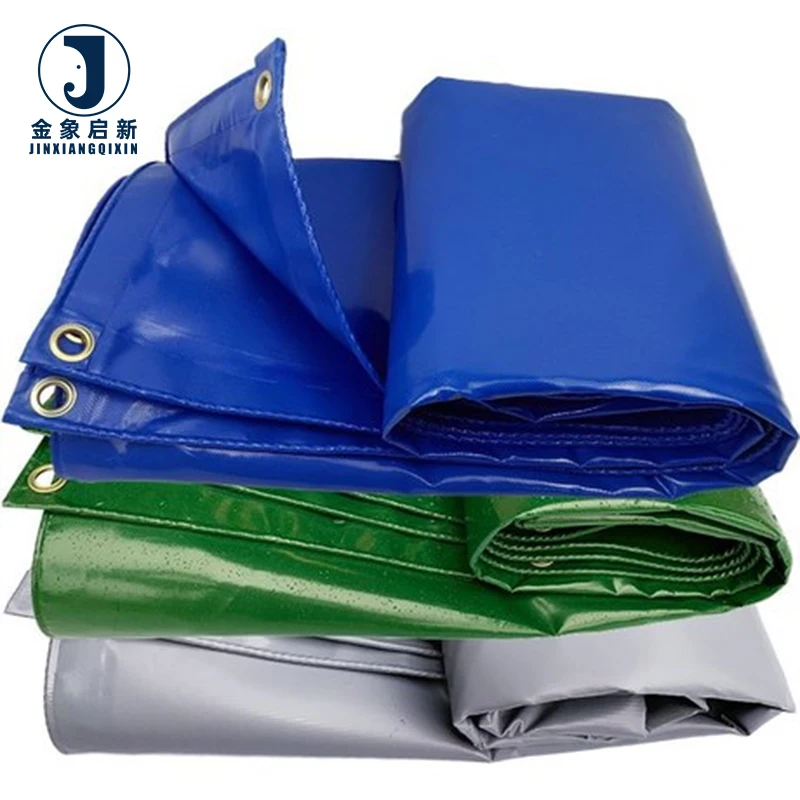
Verified Process Control — nearly 30 years of deep process control over PVC coating weight and adhesion on polyester base fabric, validated by 100% pre-shipment inspection on every roll.
Technical Specifications
| Parameter | Value |
|---|---|
| Product Type | PVC Coated Tarpaulin |
| Base Fabric | 500D-500D Polyester |
| Coating Material | PVC (double-sided) |
| Thickness Measurement | 450-900 g/㎡ |
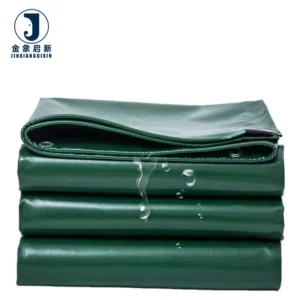
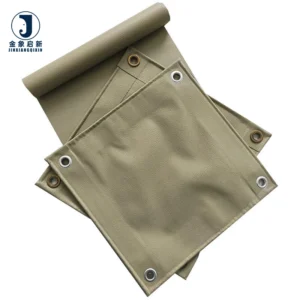
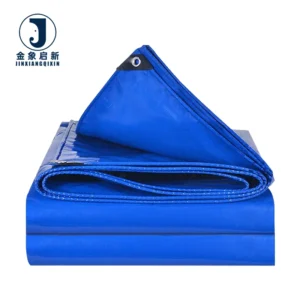
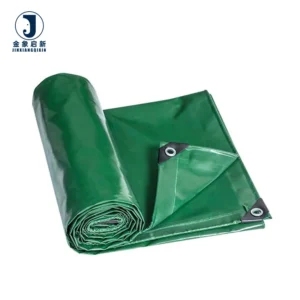
| Surface Characteristics | Smooth and soft surface with a leather-like texture |
| Waterproof Performance | Excellent, with overall coating sealing |
| Abrasion Resistance | Very strong |
| Flame Retardant Grade | (grade not stated in source) |
| UV Treatment | (test basis not stated in source) |
| Service Life | 3-5 years |
| Repairability | Repairable by hot air welding |
| Finish Options | Roll packing, bale packing, carton |
| Standards | ISO, CE |
Application Suitability
| Application | Exposure & Requirement |
|---|---|
| Truck / Trailer Side Curtains | Constant flexing at tie-down points, road abrasion, prolonged UV exposure, and wind-driven rain. |
| Industrial Machinery Covers | Outdoor storage exposure, protection against dust and moisture, resistance to puncture from sharp corners. |
| Awning & Tent Fabrication | Tension loading on frames, solar heat gain, requirement for clean hot-air welded seams. |
| Timber & Lumber Protection | Long-term weathering, resistance to sap and resin transfer, heavy stacking loads. |
Why GSM Alone Does Not Tell You How Strong the Fabric Is
A quoted GSM figure without a verified base fabric denier and coating adhesion test leaves the actual tensile and tear strength unconfirmed.
Technical buyers often receive PVC coated fabric base fabric denier coating weight tensile tear strength data that looks correct on paper but fails under load. A heavy coating weight can mask a loose weave in the base fabric, meaning the material feels substantial but tears easily once a nick propagates through the warp or weft yarns. Conversely, a tightly woven 500D-500D polyester base provides the structural skeleton that determines how the fabric handles flex-point stress on a moving truck load or a tensioned awning frame. [NEED_CITE: tensile and tear test methods for coated fabrics per ISO 1421]
Coating Adhesion and Base Fabric Integrity
When a PVC coated fabric is specified for transport covers, the bond between the coating and the polyester base fabric dictates whether the material delaminates under repeated flexing. Our 500D-500D double-sided PVC coating process is monitored for adhesion strength at every production stage, ensuring the smooth, leather-like surface remains intact even when the fabric is folded and unfolded daily on trailer beds. The coating weight range of 450-900 g/㎡ is controlled to maintain consistent hand feel and weldability across the entire roll.
Seam Behaviour Under Thermal Welding
The hot-air weldability of this PVC coated tarpaulin allows fabricators to create seams that match or exceed the base fabric strength. Unlike stitched seams that introduce needle holes and potential leak paths, thermal welding fuses the PVC layers into a continuous membrane. This is critical for truck side curtains where water ingress through stitch lines causes cargo damage. The 10-person R&D team can adjust welding parameters and recommend seam overlap widths based on the specific GSM grade selected from the 450-900 g/㎡ range. [NEED_CITE: hot air welding parameters for PVC coated polyester fabrics]
Reading the Specification Sheet Correctly
A material specification sheet that lists only the total GSM without breaking down the base fabric denier and coating weight leaves too much to interpretation. The 500D-500D polyester yarn count provides the tensile backbone, while the PVC coating mass determines abrasion resistance and waterproof sealing. When evaluating PVC coated fabric base fabric denier coating weight tensile tear strength, buyers should request the base fabric weight separate from the coating weight to understand how the material will perform under mechanical stress versus environmental exposure.
The Hidden Cost of Specifying on Total Weight Only
When a buyer specifies a PVC coated tarpaulin by total GSM alone, the supplier can meet the target by increasing the coating thickness while reducing the base fabric density. The result is a material that passes the scale test but fails prematurely at flex points where the coating cracks and separates from an under-spec base cloth. This failure mode is common on truck covers that experience daily rolling and unrolling, and on awning fabrics that endure constant wind-induced vibration. The repair cost and downtime far exceed the initial material savings. [NEED_CITE: delamination failure modes in PVC coated fabrics under cyclic flex loading]
Material Expertise Backed by Process Depth
This PVC coated fabric is produced on one of three full production lines supported by 36 sets of professional coating and finishing equipment. The 10-person R&D team handles material selection and sample development, allowing technical buyers to evaluate the exact 500D-500D grade needed before committing to bulk. Dedicated QA/QC at every stage, including 100% pre-shipment inspection, ensures roll-to-roll colour and weight consistency. Samples for custom width, colour, or flame-retardant grades are developed within days, reducing the evaluation cycle for new projects.
Documentation & Verification
- Material specification sheet stating GSM, 500D-500D base fabric, and double-sided PVC coating type.
- Test reports for UV and flame-retardant grades supplied where applicable to verify claimed performance.
- Pre-shipment inspection record confirming weight and colour consistency across all rolls in the order.
- Roll packing list detailing net weight, gross weight, and dimensions for container loading calculations.
- Certificate of origin and customs documentation to support international shipment clearance.
Fabrication, Handling & Storage
- Hot-air welding temperature and speed must be matched to the specific GSM grade within the 450-900 g/㎡ range to avoid burning the PVC or leaving cold seams.
- Store rolls upright on end caps in a dry, shaded area to prevent flat spots and permanent creasing on the smooth leather-like surface.
- When cutting the 500D-500D polyester base, use a straight blade or oscillating knife to avoid fraying the warp and weft yarns at the cut edge.
- For field repairs, clean the PVC surface with a mild solvent before applying hot-air welded patches to ensure adhesion to the coating.
- Avoid dragging rolls on abrasive surfaces during loading to prevent scuffing the double-sided PVC coating before fabrication begins.
Project Specification Guidance
To receive an accurate quotation and sample, provide the specific application environment including UV exposure duration and any fire classification required by your local building code or transport regulation. Specify the required roll width and whether you need the fabric in stock GSM grades or a custom weight within the 450-900 g/㎡ range. Indicate if you require the PVC coated fabric in roll form for your own fabrication line, or if you need pre-cut panels with heat-sealed hems and eyelets.
Frequently Asked Questions
Q: How is the flame-retardant grade verified and which test standards are available?
A: The material is available in flame retardant grades; confirm the specific grade required for your market. Where applicable, test reports are provided tied to recognized standards. Request the material specification sheet and corresponding test documentation during the sampling phase to verify compliance before bulk production begins.
Q: What is the test basis for anti-UV treatment and expected outdoor service life?
A: The fabric is treated for UV resistance; the specific test basis is confirmed per grade. The expected service life is 3-5 years under normal outdoor exposure conditions. Request the UV test report that corresponds to your target market’s climate classification to ensure the selected grade meets your durability requirements.
Q: How does base fabric denier relate to tensile and tear strength in this PVC coated fabric?
A: The 500D-500D polyester base fabric provides the structural skeleton that determines tensile and tear performance. The PVC coating adds abrasion resistance and waterproofing but does not compensate for a weak base cloth. The combination of yarn count and weave density dictates how the fabric handles mechanical stress and flex-point loading.
Q: What are the hot-air welding and seam behaviour characteristics of this material?
A: The double-sided PVC coating over the 500D-500D base fabric allows for strong, flexible hot-air welded seams that match the base material strength. Welding parameters must be adjusted to the specific GSM grade to avoid coating damage. Welded seams eliminate needle holes and provide continuous waterproof sealing for transport and awning applications.
Q: How is GSM verified on arrival and what documentation accompanies each shipment?
A: Each shipment includes a material specification sheet stating the agreed GSM and a pre-shipment inspection record. Buyers can verify the weight per roll against the stated specification upon arrival. The 100% inspection process ensures that the coating weight and base fabric denier match the quotation before dispatch.