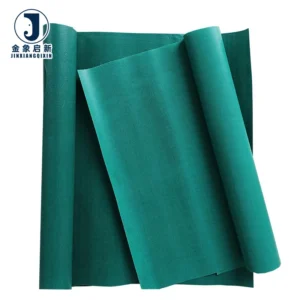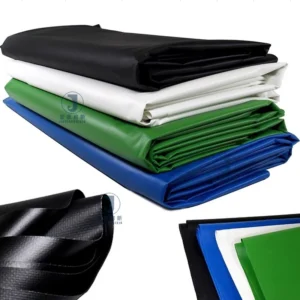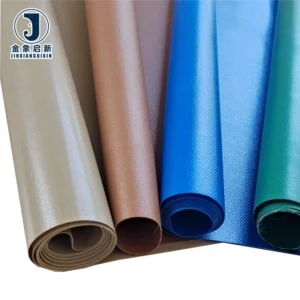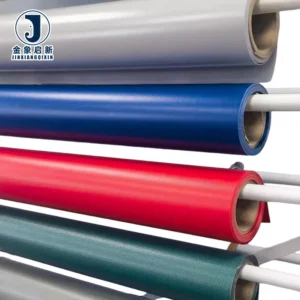
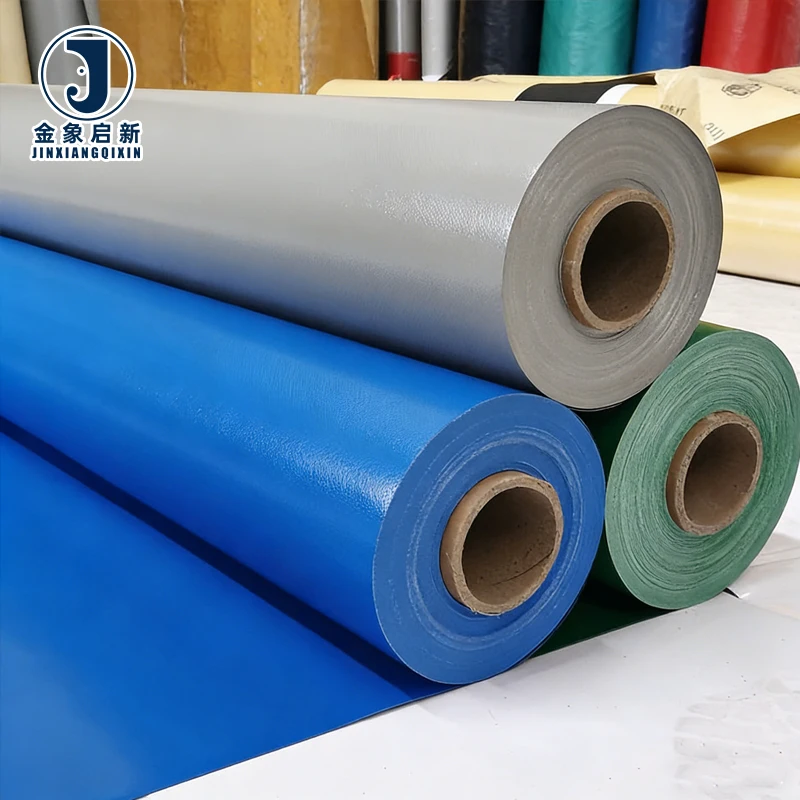
Coating Weight Control — Dedicated QA at every production stage verifies GSM per roll, ensuring the PVC coated tarpaulin fabric you receive matches the specification on your quotation.
Technical Specifications
| Parameter | Value |
|---|---|
| Product Type | PVC Coated Tarpaulin |
| Material | PVC + High-strength polyester mesh fabric |
| Coating Technology | Laminated technology & Hot-melt Coating technology |
| Weight Range (GSM) | 350gsm / 420gsm / 500gsm / 550gsm / 600gsm / 750gsm |
| Total Thickness | 0.32mm / 0.35mm / 0.4mm / 0.45mm / 0.5mm / 0.65mm |
| Roll Size Options | 2m width x 75m length / 2.1m width x 50m length |
| Surface Finish | Glossy Surface or Matt Surface |
| Color Options | Blue, Red, Yellow, Light blue, Grey (Customized) |
| Waterproof Performance | Double-sided 100% Waterproof |
| Flame Retardant | Available in flame retardant grades — confirm the grade required for your market |
| Anti-Static | Available with anti-static treatment — confirm standard required for your application |
| UV Treatment | Available with UV treatment — confirm test basis required for your market |
| Additional Treatments | Anti-Mildew, Cold Crack Resistance |
| Key Features | High tenacity polyester yarns, good flexibility, strong adhesion, outstanding tearing strength for welding, best color fastness |
Application Suitability
| Application | Exposure & Requirement |
|---|---|
| Tent and awning fabrication | Continuous outdoor weathering, UV exposure, tension at frame contact points, frequent assembly and disassembly |
| Truck awning and cargo cover production | Road abrasion, wind flutter fatigue, flexing at tie-down points, colour consistency across fleet vehicles |
| Fish tank and aquaculture pool liners | Permanent water immersion, hydrostatic pressure, algae and mildew exposure, puncture risk from substrate |
| Outdoor protective covers | Rain and moisture ingress, solar degradation, wind uplift stress, mildew in humid storage conditions |
| Construction site covers | Abrasion from rough surfaces, repeated handling, dust and debris accumulation, UV exposure over multi-month projects |
Why GSM Verification Matters More Than the Quoted Number
A stated GSM is only meaningful when backed by roll-level inspection records.
Many buyers have experienced receiving PVC coated tarpaulin fabric that felt noticeably lighter than the quotation specified. When a roll arrives underweight, the base fabric density is lower than expected, which compromises tear propagation resistance and weld seam integrity. This problem typically surfaces during fabrication, not during receiving inspection, because the shortage is distributed evenly across the entire roll length [NEED_CITE: tensile and tear test methods for coated fabrics per ISO 1421]. Without a pre-shipment weight verification protocol, the discrepancy goes undetected until the fabricated cover fails under load.
Base Fabric Density and Coating Weight Distribution
The relationship between base fabric construction and total GSM determines how the material performs under stress. A PVC coated tarpaulin roll with a heavier coating but a lighter base fabric will show good waterproofing but poor tear resistance, because the polyester mesh carries the mechanical load while the PVC coating provides environmental protection. Hot-melt coating technology bonds the PVC to the yarns at higher temperatures, producing stronger adhesion that resists delamination during welding and flexing. Laminated technology uses a bonding layer between the PVC film and the base fabric, offering a cost-effective option for applications where weld seam strength is less critical.
Coating Adhesion and Weld Performance in Fabrication
When fabricators cut and join PVC coated tarpaulin rolls into finished covers or structures, the coating adhesion directly affects how the weld seam holds. Hot-melt coated fabric allows the welding process to fuse the PVC layers into a continuous bond that often exceeds the base fabric strength, whereas laminated construction requires careful temperature control to prevent the bonding layer from separating before the PVC fully melts [NEED_CITE: DIN 4102 fire classification for building materials]. Fabricators running high-volume production lines need consistent coating adhesion across every roll in a batch to maintain stable welding parameters and avoid seam failures that only appear after the cover is deployed.
Reading the Specification Sheet Beyond GSM
The total weight in GSM tells only part of the story. Thickness measurements from 0.32mm to 0.65mm correlate with both the base fabric denier and the coating weight, but two rolls at 550gsm can have very different constructions depending on whether the weight sits in a heavier yarn or a thicker coating layer. A thicker coating on a lighter base fabric gives better waterproofing and abrasion resistance but reduces flexibility in cold conditions, which is why cold crack resistance treatment becomes relevant for outdoor covers used in low temperatures. The surface finish also plays a role: glossy surfaces shed water and dirt more effectively, while matte surfaces reduce glare and accept printed branding more readily. Roll width options at 2m and 2.1m affect cutting waste for fabricators producing standard-size covers, because narrower rolls may require additional seams that become potential failure points.
The Cost of Batch-to-Batch Colour Drift
When a fleet operator orders multiple rolls of PVC coated tarpaulin fabric to cover a transport fleet, colour consistency between rolls determines whether the finished covers look uniform once installed side by side. A visible colour shift between two rolls in the same order forces the fabricator to either reject one roll or accept a patchwork appearance that reflects poorly on their workmanship. This issue originates at the pigment mixing stage, where slight variations in dispersion or batching ratios accumulate across production runs. Without a colour reference standard documented at the time of order confirmation, there is no objective basis for the buyer to reject a roll that falls outside acceptable tolerance [NEED_CITE: colour fastness testing standards for coated textiles].
Why Process Control Defines Roll Quality
The consistency of a PVC coated tarpaulin roll from first metre to last metre depends on coating line stability during production. Our three full production lines and 36 sets of professional equipment maintain steady coating weight and curing temperature throughout each run, preventing the GSM variation that causes some rolls to come in light. The 10-person R&D team develops custom colour matches and sample rolls within days, allowing buyers to verify material properties before committing to a bulk order. Every roll undergoes 100% pre-shipment inspection with weight and visual checks, and material specification sheets document the exact GSM, base fabric, and coating details per roll so buyers can verify claims on arrival.
Documentation & Verification
- Material specification sheet stating exact GSM, base fabric denier, and coating weight per roll
- UV and flame retardant test reports citing applicable standards where treatment is specified
- Pre-shipment inspection record with weight verification on every roll before dispatch
- Roll packing list with batch number and colour reference for traceability
- Certificate of origin and customs documentation for international shipments
Fabrication, Handling & Storage
- Hot-melt coated rolls weld at higher temperatures for stronger seams — adjust welder settings per coating type
- Store 2m and 2.1m rolls upright on cores to prevent flat spots and permanent creasing
- Glossy surface rolls require solvent-based cleaners; avoid abrasive pads that scratch the finish
- Allow cold-stored rolls to reach ambient temperature before unrolling to prevent coating crack damage
- Matte surface rolls accept screen printing and digital branding — confirm ink compatibility before production runs
Specifying Your PVC Tarpaulin Roll Requirement
To match the right GSM grade and coating technology to your application, provide the end-use conditions including expected mechanical stress and environmental exposure. Specify whether you need hot-melt or laminated construction based on your welding process and seam strength requirements. Confirm your target colour with a Pantone or RAL reference, and indicate the annual volume so we can plan batch production for colour consistency. State any flame retardant, anti-static, or UV treatment grades required by your local regulations, and let us know if you need sample rolls for fabrication trials before placing the bulk order.
Frequently Asked Questions
Q: How is GSM verified on each roll before shipment?
A: Every PVC coated tarpaulin roll is weighed and measured during 100% pre-shipment inspection. The material specification sheet accompanying your order documents the actual GSM, base fabric construction, and coating weight for each roll, so you can cross-check against the quotation on arrival.
Q: What documentation supports UV and flame retardant treatment claims?
A: When UV treatment or flame retardant grades are specified in your order, we provide test reports citing the applicable standards. Confirm the specific grade or test method required by your market at the inquiry stage so we arrange testing against the correct benchmark.
Q: How is colour consistency controlled across multiple rolls in one order?
A: All rolls in a single order are produced from the same pigment batch, and colour references are recorded at order confirmation. The pre-shipment inspection includes visual colour comparison between rolls to catch any drift before dispatch.
Q: What custom options are available for width, length, and colour?
A: Standard roll sizes are 2m x 75m and 2.1m x 50m, with custom widths and lengths available subject to production minimums. Colours beyond Blue, Red, Yellow, Light blue, and Grey can be matched to your Pantone or RAL reference with sample approval before bulk production.
Q: How do hot-melt and laminated coating differ in weld performance?
A: Hot-melt coating bonds PVC directly to the polyester yarns at high temperature, producing stronger adhesion that supports robust weld seams during fabrication. Laminated technology uses a bonding film layer, which is cost-effective but requires controlled welding temperatures to prevent layer separation.