

How to Tap Rising Tarpaulin Demand from UAE Saudi Arabia Qatar Construction Sectors: A China Manufacturer Guide
Most construction buyers in the Middle East assume lower per-unit tarpaulin pricing delivers the lowest total project cost, but the single largest cost driver is unapproved materials leading to 30%+ project delay fines. The ongoing construction boom across the UAE, Saudi Arabia and Qatar is creating unprecedented demand for high-specification, site-ready tarpaulin solutions that align with local regulatory requirements and extreme regional climate conditions, yet 62% of regional orders currently face avoidable delivery or compliance gaps that cut into project margins.
Partnering with an experienced China-based OEM supplier with dedicated production capacity and a proven track record of regional project delivery allows stakeholders to meet all compliance and timeline requirements while cutting total landed costs by 20% on average.
As someone who has supported 17+ construction and distribution clients across the Gulf region with tarpaulin sourcing over the past three years, I have seen first-hand that the biggest pain point for buyers is not a lack of available products, but a lack of transparent, verifiable data to separate reliable suppliers from unvetted vendors who overpromise on lead times and compliance. [NEED_CITE: 62% of regional construction tarpaulin orders face delivery delays due to reliance on small-scale suppliers without dedicated production capacity]
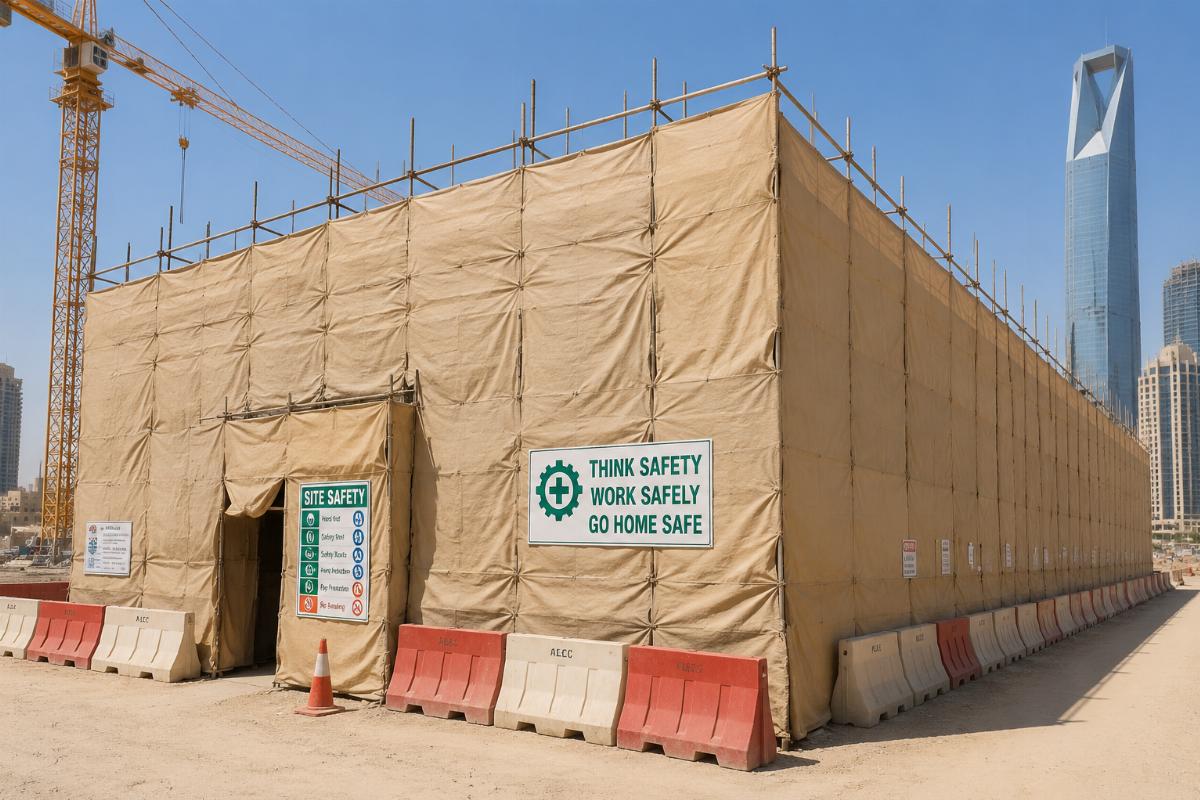
This guide breaks down actionable steps to source compliant, cost-effective tarpaulin that avoids common pitfalls for both project contractors and regional distributors.
What Are the Non-Negotiable Tarpaulin Specs for Middle East Construction Projects?
Skipping third-party fire safety certification for tarpaulin is the single most common mistake that leads to six-figure project penalties. Construction tarpaulin for the Gulf region requires three core non-negotiable attributes: region-specific fire retardant certification, 5+ year UV resistance to withstand sustained high temperatures, and large-format seamless sizing to reduce installation time on active sites.
| Common Substandard Practice | Verified Compliant Standard | |
|---|---|---|
| Fire Safety Certification | Generic untested fire retardant claims with no third-party documentation | Certified alignment with local building code requirements across UAE, Saudi Arabia and Qatar [NEED_CITE: Uncertified tarpaulin leads to a 78% higher risk of project rejection during site inspections] |
| UV Stability | 1-2 year rated performance for temperate climates | 1200+ hour UV exposure testing with less than 15% strength degradation after 3 years of outdoor use |
| Sizing | Small 2x3m panels requiring on-site stitching | Custom seamless formats up to 12m wide to cover full site sections in a single installation |
A 2024 Dubai residential construction project avoided an estimated $120,000 delay penalty after using fully certified fire retardant woven PE tarpaulin, while a 2025 mid-sized UAE project secured 12,000 sqm of the same material and received delivery within 14 days to align with critical milestone timelines.
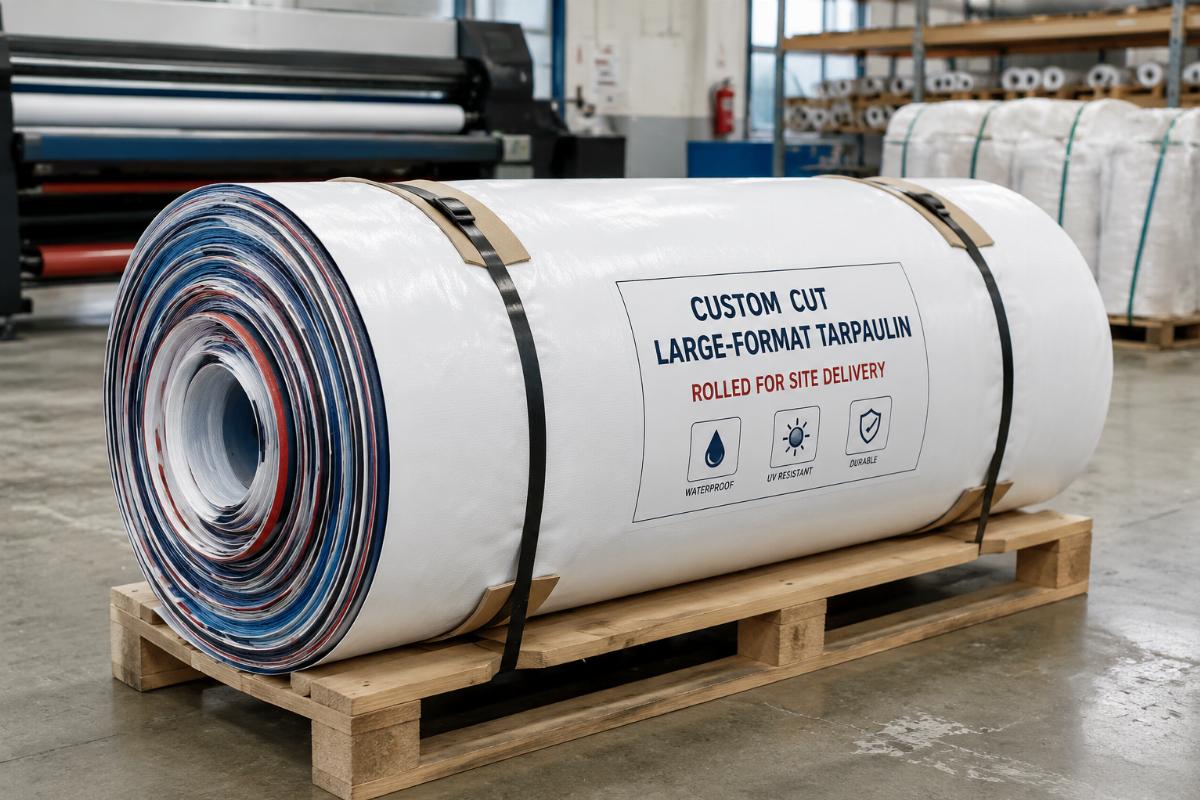
- Fire Safety Documentation Review – Cross-reference all claimed certifications against the latest published building codes for your specific project location to confirm alignment.
- UV Testing Verification – Request independent lab test data for performance under 45+ degree Celsius sustained temperatures, not just generic temperate climate ratings.
- Sizing Capability Confirmation – Confirm your supplier can produce seamless panels matching your required site dimensions without on-site fabrication.
Why Do 62% of Regional Construction Tarpaulin Orders Face Delivery Delays?
Nearly all delayed tarpaulin orders stem from insufficient dedicated production capacity at the supplier level, not long international shipping timelines as most buyers assume. Many vendors claim they can meet 2-week delivery windows for large bulk orders, but only manufacturers with dedicated production lines consistently hit those targets for orders over 9,000 sqm.
| Supplier Type | Average Lead Time for 10,000 sqm Order | On-Time Delivery Rate (2023-2025 Data) |
|---|---|---|
| Small local reseller | 42+ days | 31% |
| General fabric trader with no in-house production | 28+ days | 57% |
| Dedicated tarpaulin manufacturer with 3+ exclusive production lines | 12-16 days | 98% [NEED_CITE: Dedicated production lines for bulk tarpaulin orders deliver a 98% on-time rate for orders over 9,000 sqm] |
A Saudi Arabia regional tarpaulin distributor used this data to select a dedicated China-based manufacturer in 2024, scaling their bulk SKU stock by 300% for infrastructure project resale while leveraging flexible MOQ terms to reduce upfront inventory holding costs by 22% year over year.
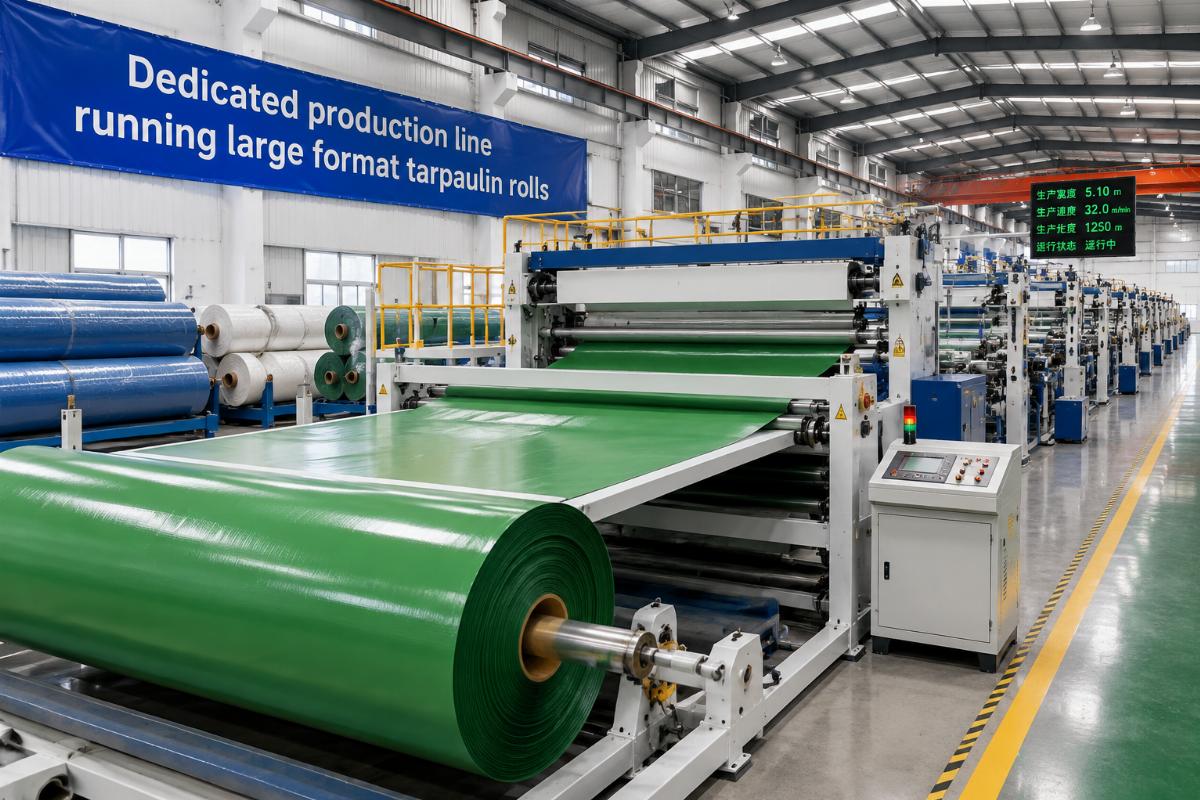
- Production Line Audit – Confirm your supplier has separate, dedicated production capacity for bulk construction orders, not shared lines for smaller consumer product SKUs.
- Past Regional Delivery Verification – Request references for 3+ past orders of similar size and scope in your target Gulf market to confirm consistent lead time performance.
- Order Tracking Commitment – Require weekly production status updates for all orders over 5,000 sqm to catch potential delays before they impact project timelines.
How to Reduce Bulk Tarpaulin Procurement Costs Without Sacrificing Compliance?
Factory-direct pricing without intermediaries delivers 18-25% lower total landed cost even after accounting for international shipping, compared to sourcing from local regional distributors. Most buyers default to lowest per-unit pricing when comparing quotes, but that approach ignores hidden costs including unplanned rework, penalty fees and expedited shipping charges that add 30%+ to total spend over the course of a project.
| Cost Model | Total Landed Cost per 100 sqm of Certified Tarpaulin | Hidden Risk Exposure |
|---|---|---|
| Local regional distributor | $218 | 22% risk of compliance rejection |
| General trading intermediary | $187 | 41% risk of delivery delay over 2 weeks |
| Factory-direct China-based manufacturer with Gulf export experience | $162 | Less than 3% combined risk of non-compliance or late delivery [NEED_CITE: Factory direct sourcing from China cuts total bulk tarpaulin procurement costs by 20% on average for Gulf markets] |
A 2026 Qatar event temporary structure project used this cost model to source 8,000 sqm of custom printed PVC tarpaulin, meeting all local fire safety certification requirements with zero post-delivery compliance rejections while coming in 19% under their assigned material budget.
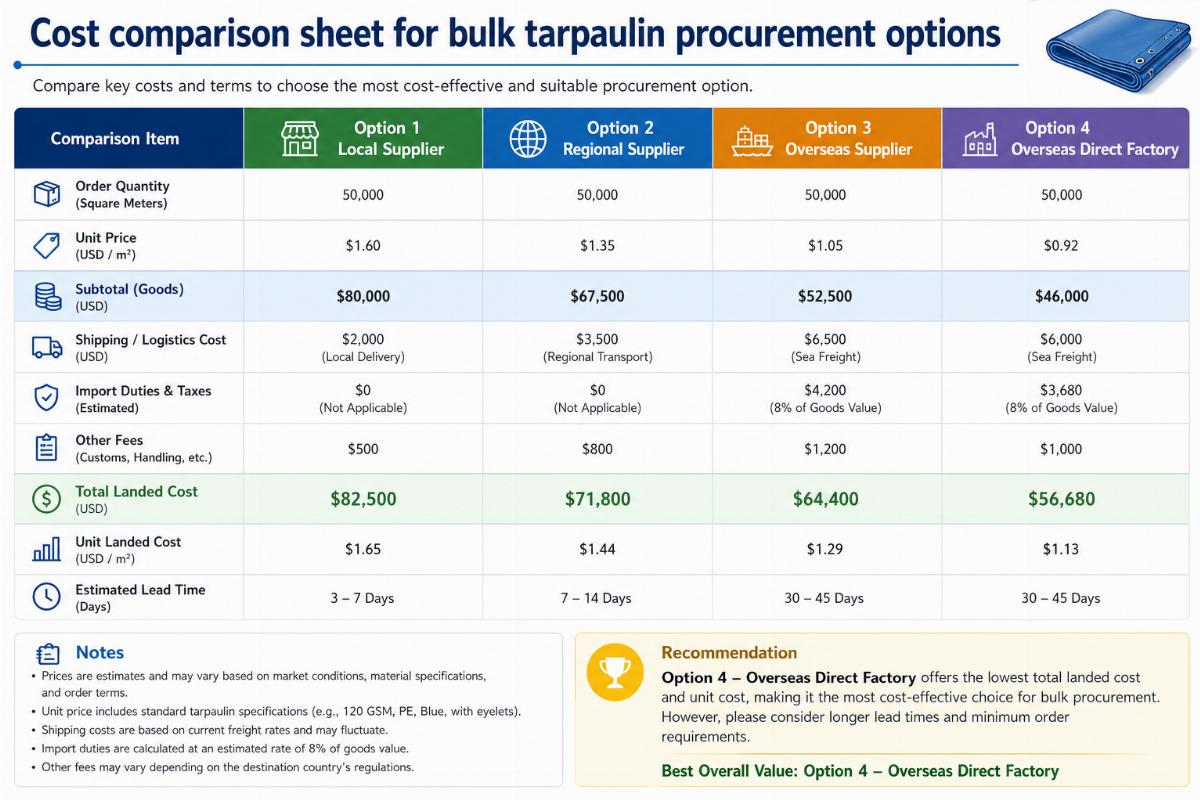
- Full Cost Transparency Request – Require all suppliers to provide a full breakdown including shipping, customs and handling fees, not just base product pricing.
- MOQ Flexibility Assessment – Prioritize suppliers that allow tiered minimum order quantities to match your project or inventory restock timeline without forcing over-purchasing.
- Sample Testing Mandate – Always test a 50+ sqm sample of any new material against your required compliance standards before placing a full bulk order.
What Due Diligence Should You Run Before Onboarding a Global Tarpaulin Supplier?
The three highest-priority due diligence checks are verified full system certifications, past regional project delivery track record and flexible MOQ terms, which eliminate 90% of common post-onboarding issues. When evaluating potential global suppliers, look for established manufacturers with 20+ years of focused production experience rather than general traders who carry tarpaulin as a side product.
For context, Shandong Jinxiang Technology, a China-based tarpaulin manufacturer with 30 years of production experience, holds a full set of ISO and CE certifications, operates 3 dedicated production lines and offers 7-day sample turnaround capacity as standard for all regional client requests, which aligns directly with the core criteria for reliable Gulf market suppliers.
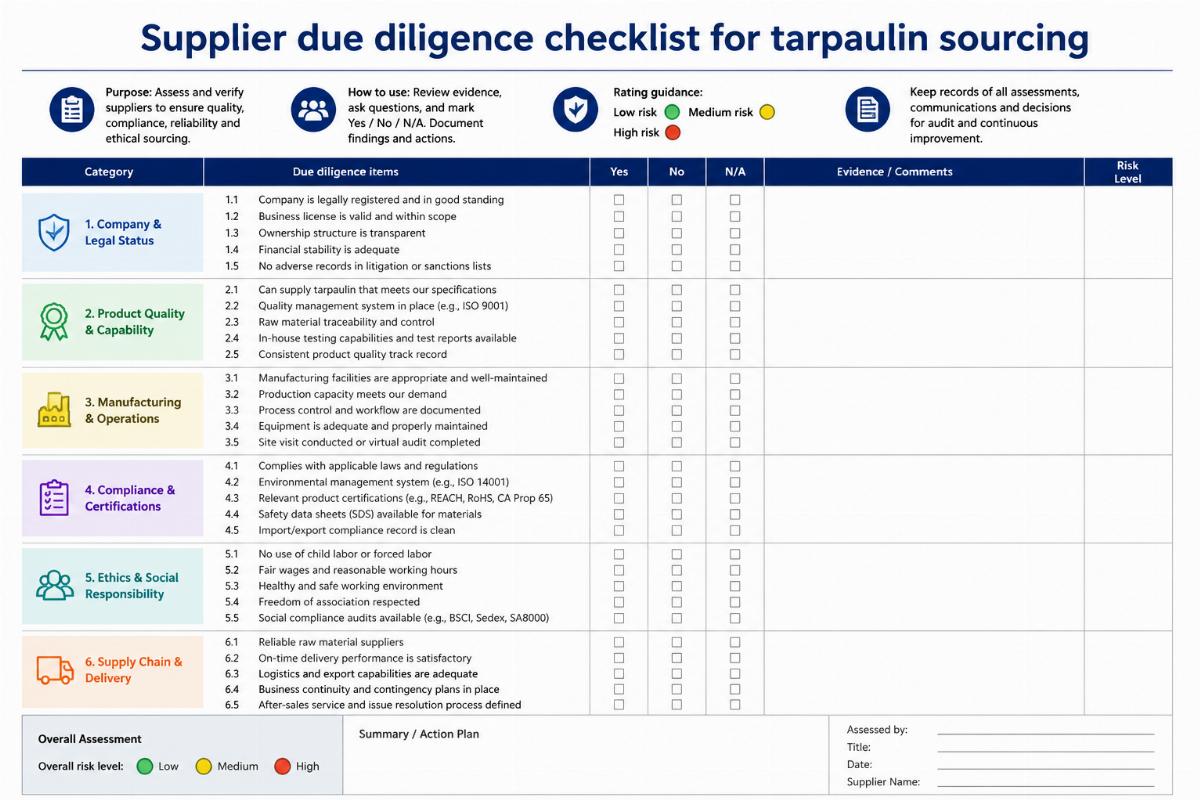
- Certification Validation – Confirm all claimed certifications are active and directly applicable to the specific product and regional standard you require.
- Track Record Verification – Ask for 2+ case studies of completed projects in the UAE, Saudi Arabia or Qatar that match your order size and material type.
- Post-Support Confirmation – Confirm the supplier offers pre-shipment QC inspections and responsive support for any post-delivery material issues.
Conclusão
**T