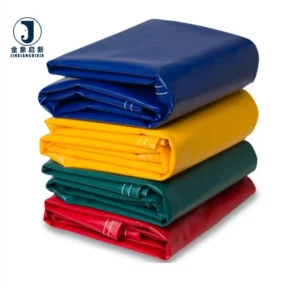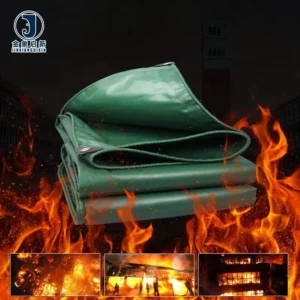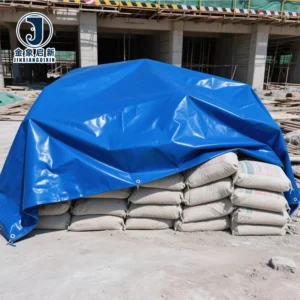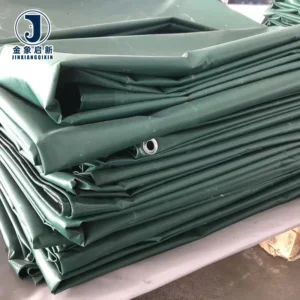
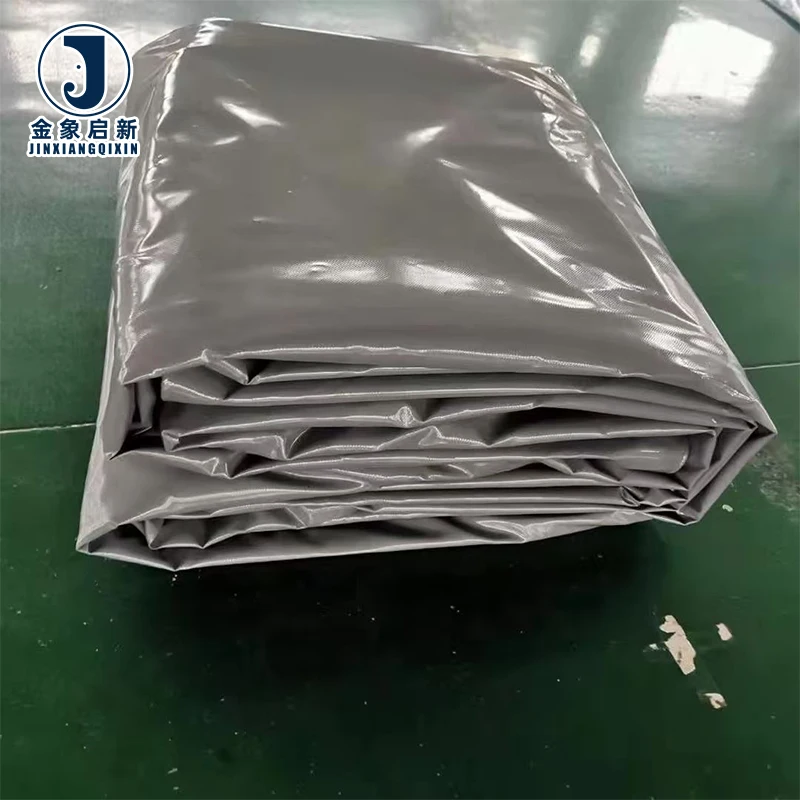
Coating Adhesion Control — PVC paste penetration depth monitored across all three production lines to maintain consistent bond strength at the base fabric interface for every roll shipped.
Technical Specifications
| Parameter | Value |
|---|---|
| Product Type | PVC Coated Tarpaulin |
| Specification | 630 Gsm Blue/Grey/Orange Pvc Tarpaulin Roll Pvc Tarpaulin Truck Tarpaulin Pvc Coated Tarpaulin |
| Weight | 630 GSM |
| Base Fabric Denier Options | 200D×300D, 500D×500D, 840D×840D, 1000D×1000D |
| Coating Material | PVC |
| Surface Finish | Available in glossy or matte |
| Temperature Range | -15°C to 70°C |
| Waterproof | Yes |
| UV Treatment | Customized (test basis not stated) |
| Flame Retardant | Available in flame retardant grades — confirm the grade required for your market |
| Anti-Fungal | Treated (standard not stated) |
| Key Features | Waterproof, eco-friendly coating, rain-resistant, good flexibility and adhesion strength, abrasion resistance |
| Working Life | Suited to extended outdoor exposure depending on environment |
| Certification | ISO, CE |
Application Suitability
| Application | Exposure & Requirement |
|---|---|
| Truck side curtains | Constant flexing at tie-down points, road debris abrasion, prolonged UV and weather exposure |
| Trailer load covers | Wind uplift forces, load shifting friction, water pooling resistance |
| Tent and awning panels | Structural tension, seasonal UV cycles, fold-line creasing during pack-down |
| Equipment protective covers | Dust ingress prevention, moisture barrier, contact with oils and mild solvents |
| Industrial warehouse dividers | Indoor flame retardant requirements, frequent repositioning, forklift contact abrasion |
Why GSM Alone Does Not Tell You How Strong the PVC Coated Tarpaulin 630 GSM Fabric Actually Is
A quoted GSM figure without confirmed base fabric denier and coating weight per side leaves the structural behaviour of the material undefined.
Technical buyers routinely receive rolls that meet the stated 630 GSM weight on paper yet exhibit different tensile and tear responses once fabricated. The discrepancy often traces back to the base weave: a 200D×300D yarn at 630 GSM carries more PVC coating by proportion than a 1000D×1000D yarn at the same total weight, producing a heavier-coated but structurally lighter fabric. Without a specification sheet that breaks out base fabric weight and coating weight separately, two rolls with identical GSM can behave very differently under load [NEED_CITE: tensile and tear test methods for coated fabrics per ISO 1421].
Base Fabric Denier and Tensile Behaviour at 630 GSM
The denier options available for this PVC coated tarpaulin 630 GSM grade — 200D×300D through 1000D×1000D — directly shape how the material handles tensile load. Higher denier yarns in the warp and weft distribute stress across more filament bundles, raising the force required to initiate a tear. For fabricators producing truck side curtains, selecting 840D×840D or 1000D×1000D provides the structural backbone needed at curtain flex zones, while 500D×500D remains sufficient for static covers with minimal movement.
Coating Penetration and Weld Integrity
The knife-coated PVC formulation used on this fabric determines how thoroughly the paste penetrates the base weave. Adequate penetration locks the yarns in place and creates a coating-to-yarn bond that resists delamination during hot-air welding. When coating adhesion is insufficient, the weld line may hold initially but separate under repeated flexing — a failure mode common in side curtain applications where the fabric folds at the same line every journey. Glossy finishes tend to accept heat welds at slightly different temperature windows than matte finishes, and fabricators should confirm their welding parameters against the specific surface option selected [NEED_CITE: DIN 53354 peel adhesion testing for coated textiles].
How Denier, Coating Weight and Finish Interact in Practice
A 630 GSM roll built on a 1000D×1000D base will carry proportionally less PVC coating than one on a 200D×300D base, meaning the heavier denier fabric may show lower surface gloss and a more textured hand feel despite identical total weight. The coating method itself — knife-over-edge versus knife-over-roll — influences how evenly the PVC paste fills the weave interstices, affecting both the visual uniformity and the seam peeling strength. Temperature operating range from -15°C to 70°C means the material retains flexibility in cool conditions but approaches softening thresholds in direct summer sun on dark-coloured truck covers, a factor worth considering when specifying colour for fleet applications. Glossy surfaces shed dirt more readily and accept printed branding more sharply, while matte surfaces reduce glare on construction site enclosures and resist showing scuff marks during handling.
The Hidden Cost of Specifying on Weight Without Verification
When an order arrives and the rolls measure below the quoted 630 GSM, the consequences cascade through the fabrication process. Thinner coating reduces the material available for a strong weld, so seams fail at lower peel forces than expected. A lighter base fabric may pass initial visual inspection but tear prematurely at eyelet or tie-down points once the finished cover enters service. Batch-to-batch weight variation across a single container load also creates inconsistency — panels cut from lighter rolls behave differently from those cut from heavier rolls, producing unpredictable results on the same production line [NEED_CITE: pre-shipment inspection protocols for coated fabric weight consistency].
Why Fabricators Source This Grade From Jinxiang
Three full production lines equipped with 36 sets of professional coating equipment support consistent output volume across repeat orders. A dedicated 10-person R&D team handles denier selection, coating weight adjustment and sample development for custom requirements. Every roll undergoes 100% pre-shipment inspection with weight verification against the stated specification before dispatch. Custom samples are developed within days, allowing fabricators to confirm weld parameters and colour match before committing to full production. ISO and CE certified production ensures the coating process meets recognised quality management frameworks.
Documentation & Verification
- Material specification sheet confirming 630 GSM, selected base fabric denier and coating weight per side
- Test report for UV and flame retardant grades where applicable — claims backed by documented results
- Pre-shipment inspection record with roll-by-roll weight and colour verification
- ISO and CE certificates with scope covering coated fabric manufacturing
- Roll packing list with batch identification for traceability
Fabrication, Handling & Storage
- Set hot-air welder temperature to match glossy or matte surface finish selected for the 630 GSM grade
- Allow 15 mm minimum overlap for wedge welding to ensure full adhesion across the PVC coating layer
- Store rolls upright on pallets to prevent permanent creasing through the coated surface
- Unroll and acclimatise at above 10°C before fabrication to maintain coating flexibility at -15°C lower limit
- Use PVC-compatible solvent cleaners to avoid degrading the coating adhesion on finished covers
What to Include With Your Enquiry
Provide your intended application and the environmental conditions the finished product will face — whether the fabric will flex continuously on a truck curtain or remain static as a warehouse partition. Specify the base fabric denier that matches your strength requirements and confirm whether your market mandates a particular flame retardant grade. Indicate your required roll width, colour preference and whether glossy or matte finish suits your fabrication process, so a matched sample can be prepared.
Frequently Asked Questions
Q: How should I verify the 630 GSM weight when rolls arrive?
A: Cut a measured sample from each roll — a 10 cm × 10 cm square is sufficient — and weigh it on a calibrated scale. Compare the result against the material specification sheet provided with your shipment. Request a pre-shipment inspection record that documents weight per roll, so any discrepancies are identified before the container leaves the factory.
Q: Which base fabric denier should I choose for truck side curtains?
A: Higher denier options such as 840D×840D or 1000D×1000D provide greater tensile strength for side curtain applications where the fabric flexes repeatedly during loading and unloading. Lower denier options like 500D×500D suit static covers with less mechanical stress. Request denier-specific samples to confirm weld behaviour before ordering.
Q: Can UV and flame retardant performance be verified with test reports?
A: UV treatment and flame retardant grades are available as customised options. Specify the test standard required for your market and region when enquiring, and request documented test results rather than relying on generic treatment claims. This ensures compliance evidence is available for your end client or regulatory body.
Q: How is colour consistency maintained across multiple rolls in one order?
A: Each production batch is monitored for colour uniformity before packing. Request a pre-shipment inspection record that includes colour verification across all rolls in your order. If your project involves installing panels side by side, confirm colour matching requirements during the sample approval stage to avoid visible variation.
Q: What welding parameters work best with this PVC coated fabric?
A: Welding temperature and speed depend on whether you select glossy or matte finish and which denier option is specified. Hot-air and wedge welding are both compatible. Request a fabrication sample to establish your machine settings — coating adhesion strength and surface finish both influence the optimal heat and pressure window.