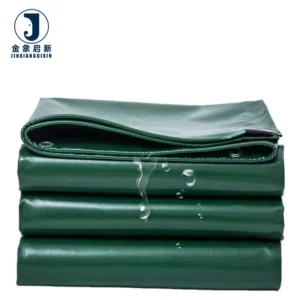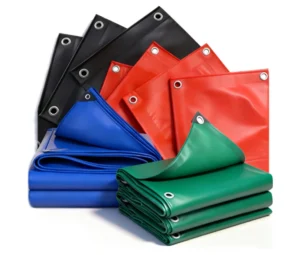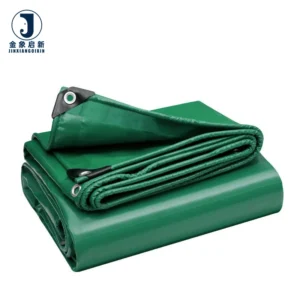
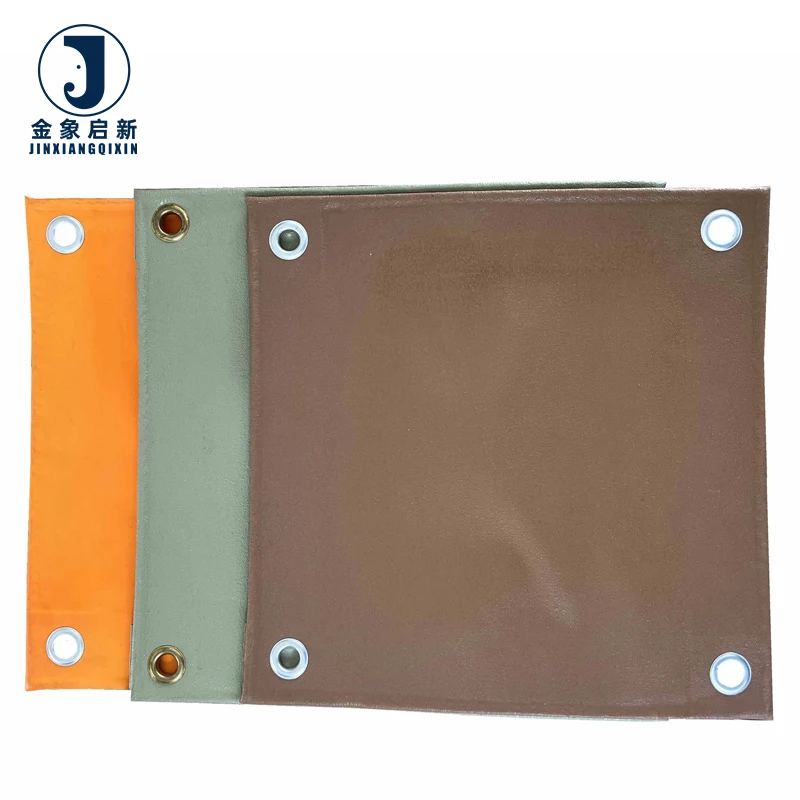
Coating Weight Precision — Every roll of custom PVC coated tarpaulin leaves the facility with a specification sheet stating exact GSM, base fabric construction, and coating data for your incoming inspection.
Technical Specifications
| Parameter | Value |
|---|---|
| Product Type | PVC Coated Tarpaulin |
| Coating Material | PVC |
| Flame Retardant | Available in flame retardant grades — confirm the grade required for your market |
| Anti-Static | Available in anti-static grades — confirm the surface resistance standard required |
| Anti-Cold | Anti-cold treatment available for low-temperature flexibility |
| Anti-Mildew | Anti-mildew treatment available for humid or tropical exposure |
| Weather Resistance | Outdoor life assurance (1-3 years) depending on exposure conditions |
| Waterproof | Fully waterproof coated construction |
| Key Features | Flame retardant, anti-static, anti-cold, and anti-mildew treatment options |
Application Suitability
| Application | Exposure & Requirement |
|---|---|
| Industrial protective covers | Continuous UV and weather exposure, handling abrasion, requirement for verified fire resistance on site |
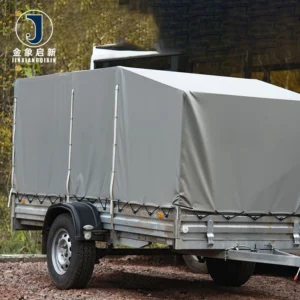
| Truck and trailer tarpaulins | Road debris impact, constant flexing at tie-down points, weather and UV degradation over service life |
| Construction site enclosures | Wind loading, puncture risk from site activity, flame retardant compliance for site safety regulations |
| Tent and awning fabric rolls | Batch colour consistency across multiple rolls, weld integrity at seam intersections, outdoor weathering |
| Inflatable and membrane structures | High air pressure stress, seam adhesion under inflation, material flexibility across temperature ranges |
What Happens When the Stated PVC Coated Tarpaulin GSM Does Not Match the Roll You Receive
GSM verification starts with a material specification sheet that travels with every roll, not a generic catalogue claim.
I have watched fabricators cut, weld, and install a full set of truck side curtains only to find the material feels lighter at the hem. When they weigh a sample, the PVC coated tarpaulin gsm falls short of what the quotation promised. The coating was thinner at the edges, or the base fabric had fewer picks per inch than specified. By that stage, the rolls are already cut and the project timeline does not allow a reorder [NEED_CITE: incoming inspection procedures for coated fabric GSM verification]. The consequence is not just a commercial dispute — it is a structural weakness that shows up months later when the cover flexes under load.
How Coating Method Controls GSM Consistency Across the Roll
Coating weight is the variable that separates a PVC coated tarpaulin that performs as quoted from one that fails early at stress points. Knife coating applies a controlled layer of PVC onto the base fabric, allowing the coating weight to be set and monitored across the full width of the roll. The adhesion between the PVC layer and the base fabric determines whether the material will delaminate when it flexes under load or when welded seams are stressed during fabrication. Our three production lines maintain coating weight control through dedicated process management at each stage, ensuring the PVC coated tarpaulin gsm stated on the specification sheet is what arrives at your workshop.
Base Fabric Construction as the Structural Foundation
The base fabric denier and weave pattern define the tensile and tear performance before any coating is applied. A higher denier yarn resists tear propagation, while the weave density — the number of warp and weft threads per inch — determines how well the fabric holds together when punctured or stressed at a seam. The coating adds waterproofing, UV protection, and surface characteristics, but it cannot compensate for a base fabric that is too light for the intended load. When evaluating PVC coated tarpaulin for cut-and-weld fabrication, the base fabric construction is where the real strength originates [NEED_CITE: tensile and tear test methods for coated fabrics per ISO 1421].
Reading the Specification Sheet Beyond GSM
GSM tells you the total weight of the finished fabric — base fabric plus coating — but it does not tell you how that weight is distributed. Two fabrics with identical GSM can have very different performance profiles: one might carry a heavier base fabric with a thinner coating, offering higher tensile strength but less surface protection; the other might use a lighter base with a thicker coating, providing better waterproofing but lower tear resistance. The adhesion strength between coating and base fabric is equally important. If the bond is weak, the PVC layer will peel away from the base at fold lines and welded seams, regardless of how high the total GSM reads. Surface finish — whether glossy or matte — affects how dirt accumulates and how well printed branding adheres, which matters for fabricators producing finished covers with visible logos or safety markings.
The Hidden Cost of Specifying Without Verification
When a construction contractor installs site enclosures that are supposed to meet flame retardant requirements, and the material arrives without a test report matching the claimed grade, the entire installation can fail site inspection. I have seen projects delayed while replacement fabric is sourced, because the original PVC coated tarpaulin was ordered on a generic "flame retardant" label with no grade behind it [NEED_CITE: fire safety classification standards for temporary site enclosures]. Similarly, when colour varies between rolls in the same shipment, fabricators producing awnings or tent panels end up with visible mismatches once the panels are installed side by side. The cost is not just the replacement material — it is the labour to remove, re-cut, and reinstall.
Why Technical Buyers Source Custom PVC Tarpaulin Here
Process control over coating weight and adhesion is maintained across three full production lines, ensuring every roll of custom PVC tarpaulin meets the GSM stated on the specification sheet. A 10-person R&D team handles material selection, custom sizing, and sample development for projects that require specific treatments or dimensions. Dedicated QA and QC checkpoints at every production stage, with 100% inspection before shipment, catch coating inconsistencies and colour variations before rolls are dispatched. Samples for custom requirements — including specific flame retardant grades or anti-static treatments — are developed within days, allowing you to verify the material before committing to a production run.
Documentation & Verification
- Material specification sheet stating exact PVC coated tarpaulin gsm, base fabric denier and weave, and coating method for every roll
- Test reports for flame retardant grade and anti-static surface resistance where applicable to your market requirements
- Pre-shipment inspection record with roll-by-roll weight and visual verification before dispatch
- ISO and CE certificates available with customs documentation and certificate of origin for export shipments
Fabrication, Handling & Storage
- Set hot-air weld temperature to match the PVC coating thickness — excessive heat degrades adhesion between coating and base fabric
- Allow welded seams on custom PVC tarpaulin covers to cool fully before folding or applying load stress at the joint
- Store rolls vertically on pallets to prevent flat-spotting and permanent creasing across the PVC coating surface
- Use mild detergent for cleaning — aggressive solvents attack the PVC coating and reduce weather resistance over time
- Plan cut patterns to maximise roll width utilisation and minimise welded seam count on large custom PVC tarpaulin covers
What to Include in Your PVC Coated Tarpaulin Enquiry
Provide the intended application, exposure conditions, and any fire safety or anti-static compliance requirements for your target market. Specify the roll width, estimated annual volume, and whether you need raw roll stock or finished cut-and-welded covers. If colour consistency across multiple rolls is critical, request a colour reference sample before production begins.
Frequently Asked Questions
Q: How is the PVC coated tarpaulin gsm verified to match the quotation?
A: Every roll is weighed and checked against the stated specification during pre-shipment inspection. A material specification sheet travels with each roll, documenting the exact GSM, base fabric denier and weave, and coating method. You can perform incoming inspection using the same sheet to verify the roll matches the quotation before cutting.
Q: What flame retardant grades are available, and how do I match them to my market?
A: Flame retardant treatment is available in multiple grades, but the required grade depends on your local fire safety regulations — for example, DIN 4102 classifications for European building sites or NFPA 701 for North American temporary structures. Specify your target market and application in your enquiry so the correct grade and test report can be provided.
Q: Can colour be matched consistently across multiple rolls in the same order?
A: Colour consistency is controlled through batch management during coating production. For orders requiring multiple rolls installed side by side — such as awning panels or tent walls — request a colour reference sample before the production run begins, and specify that all rolls must come from the same coating batch.
Q: How does the PVC coating behave during hot-air welding for fabrication?
A: The PVC coating is formulated for hot-air welding, but the correct temperature and speed depend on the coating thickness and whether the surface is glossy or matte. We provide weld parameter guidance with sample rolls so fabricators can dial in their equipment settings before committing to full production cutting and welding.
Q: What anti-static treatment options exist for mining or tunnel ventilation applications?
A: Anti-static treatment is available for PVC coated tarpaulin used in environments where static discharge is a hazard, such as mining ventilation ducts. The required surface resistance value depends on the specific site regulation. State the standard or resistance range your project requires, and we will provide the treatment specification with supporting test documentation.