Deep Process Control Over Coating — Every roll leaves the line with a specification sheet stating exact GSM, base denier, and coating weight so technical buyers can verify material identity on arrival.
Technical Specifications
| Parameter | Value |
|---|---|
| Product Type | PVC Coated Tarpaulin Fabric |
| Base Fabric Denier | 500D / 1000D / up to 2000D |
| Total Thickness | 0.35–1.5 mm |
| Weight (GSM) | 400–1500 g/m² |
| Tensile Strength (Longitude) | 1500–3000 N/5cm |
| Tensile Strength (Latitude) | 1200–2800 N/5cm |
| Coating Material | PVC |
| Key Features | Waterproof, tear resistant, mildew proof, anti-aging, UV treatment available (confirm grade required for your market) |
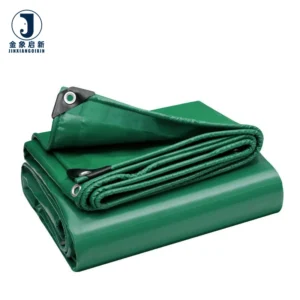
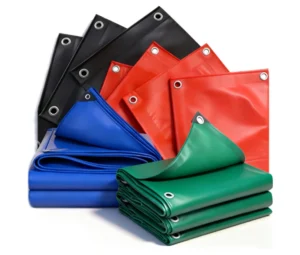
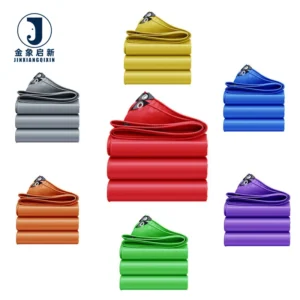
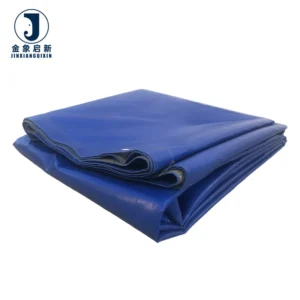
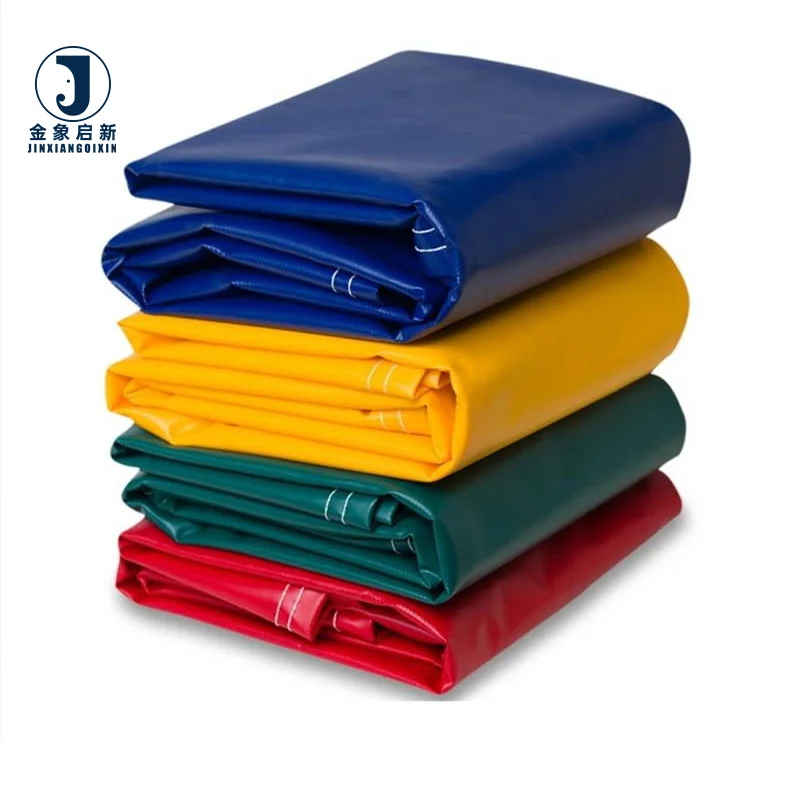
| Color Options | Blue, Blue/Orange, Green, Grey, Black, Clear, Orange, or custom |
| Certifications | ISO, CE |
Application Suitability
| Application | Exposure & Requirement |
|---|---|
| Truck tarpaulin covers | Constant road abrasion, flexing at load points, weather exposure, UV degradation |
| Construction site protection | Impact from debris, prolonged sunlight, wind uplift tension on seams |
| Tent and awning fabric | Repeated folding, tensioned frame stress, outdoor weathering, colour consistency across panels |
| Industrial storage covers | Chemical dust, moisture ingress, mechanical contact with stored equipment |
| Pond liners | Permanent water immersion, soil chemistry interaction, puncture from substrate |
| Farm equipment covers | UV exposure, organic matter contact, frequent handling and repositioning |
Why Denier Alone Cannot Predict Field Performance
A 1000D base fabric with poor coating adhesion will delaminate before a well-coated 500D fabric tears.
Technical buyers reviewing PVC coated tarpaulin fabric specifications often anchor on base denier as the primary strength indicator. In practice, the relationship between denier, coating weight, and tensile performance is not linear. A higher denier base with insufficient PVC penetration between yarns creates weak interlaminar bonds that fail under cyclic flexing — the exact loading condition truck side curtains and tensioned structures experience daily. The PVC coated tarpaulin fabric range addresses this through controlled coating application that ensures full yarn encapsulation, not just surface coverage [NEED_CITE: coating adhesion test methods for PVC fabrics per ISO 2411].
Base Fabric Architecture and Load Distribution
The base fabric denier range from 500D through 1000D to 2000D defines the yarn thickness available for weaving, which directly influences how tensile loads distribute across the fabric plane. Heavier denier yarns carry higher point loads before individual filament failure, but the weave density and PVC coating penetration determine whether the load transfers efficiently between adjacent yarns or concentrates at crossover points. When specifying PVC coated tarpaulin fabric for tensioned membrane structures, both warp and weft tensile values must exceed the design load with margin for seam efficiency loss.
Coating Weight and Its Functional Role Beyond Protection
PVC coating thickness — ranging from 0.35 mm through to 1.5 mm across the available grades — serves structural purposes that extend beyond simple waterproofing. The coating fills interstices in the woven base, locks yarns in position under shear loading, and provides the material that thermal welds actually fuse together. A coating layer that is too thin relative to the base fabric texture leaves exposed yarn crowns vulnerable to abrasion, while excessive coating adds dead weight without proportional strength gain [NEED_CITE: relationship between coating thickness and weld strength in PVC coated fabrics].
Reading the Tensile and Tear Data Correctly
Tensile strength values — longitude 1500–3000 N/5cm and latitude 1200–2800 N/5cm — represent strip test results that must be interpreted alongside the intended fabrication method. Sewn seams typically achieve lower efficiency than the parent fabric, while thermally welded seams in PVC coated fabric can approach full material strength when welding parameters match the coating formulation. The spread between warp and weft values indicates anisotropy; designers of side curtains and inflatable structures should align the stronger axis with the primary stress direction to prevent premature bias distortion.
What Happens When the Specification Does Not Match the Service Environment
Selecting a grade based on price rather than service environment leads to predictable field failures. Fabricators have documented cases where PVC coated tarpaulin fabric specified at the minimum weight class for a truck cover application showed coating cracking at fold lines within the first season, not because the coating chemistry was inadequate but because the base fabric lacked sufficient structural mass to resist repeated bending fatigue. Similarly, material supplied without verified flame retardant grades for mining ventilation applications has caused project delays when site inspectors rejected installations that could not produce compliant test documentation [NEED_CITE: fire classification requirements for ventilation ducting in underground mining].
Why Fabricators Source From This Production Line
Process control over coating weight and base fabric adhesion forms the foundation of this PVC coated tarpaulin fabric supply. Three full production lines equipped with 36 sets of professional coating equipment support consistent GSM delivery across rolls within a single batch. The 10-person R&D team handles material selection and sample development for custom widths, colours, and treatment requirements before bulk production begins. Dedicated quality checkpoints at every production stage ensure that the material specification sheet accompanying each roll reflects measured values, not nominal targets. Samples for custom specifications are developed within days rather than weeks, allowing fabricators to validate weld parameters and colour match before committing to volume orders.
Documentation & Verification
- Material specification sheet stating exact GSM, base fabric denier, and coating weight per roll
- Test report for UV and flame-retardant grades where applicable — confirm availability per SKU
- Pre-shipment inspection record confirming 100% roll inspection before dispatch
- Roll packing list with individual roll weights and dimensions for warehouse intake
- Certificate of origin and customs documentation for international shipments
- ISO and CE certification documentation available for project submission
Fabrication, Handling & Storage
- Thermal welding parameters must match the specific PVC coating thickness — request recommended temperature and dwell time per GSM grade
- Store rolls horizontally on racking to prevent permanent creasing in heavier grades above 1000 g/m²
- Allow cold-stored rolls to reach ambient temperature before unrolling to avoid coating micro-cracking in grades below 0.5 mm thickness
- Use sharp blades for cutting to prevent yarn pull-out at edges, particularly in 2000D base fabrics
- Clean with mild detergent only; solvents may degrade the PVC surface and compromise subsequent weld adhesion
- Reinforce eyelet zones with additional PVC patches in high-tension applications such as truck side curtains
Requesting a Material Recommendation
Provide the intended application, primary stress type (tension, flex, abrasion), and any regulatory requirements for your target market such as flame retardant classification or anti-static standards. Specify whether you require rolls at standard width or custom dimensions, annual volume estimate, and whether colour matching across multiple batches is critical for your end product. Sample development can proceed once the specification parameters are confirmed, allowing you to validate fabrication compatibility before placing production orders.
Frequently Asked Questions
Q: How do I verify that the delivered PVC coated tarpaulin fabric matches the quoted GSM?
A: Each roll ships with a material specification sheet stating the measured GSM, base fabric denier, and coating weight. Upon receipt, you can conduct independent weight verification by cutting a measured sample area and weighing it on a calibrated scale. Any discrepancy beyond normal production tolerance should be reported immediately with the roll identification number for traceability.
Q: What flame retardant and UV treatment certifications are available for this fabric?
A: UV treatment is available across the range, and flame retardant grades can be supplied — however, you must confirm the specific classification required for your market and application before ordering. Test reports documenting performance against the applicable standard are provided for certified grades. Contact the technical team with your regulatory requirements to confirm grade availability per SKU.
Q: Can colour consistency be maintained across multiple rolls in a single order?
A: Batch colour matching is controlled through the coating formulation process, and all rolls within a confirmed order are produced from the same coating batch where possible. For large orders spanning multiple production runs, request that a colour reference sample be retained for comparison. This is particularly important for tent and awning fabricators where adjacent panels must match visually after installation.
Q: How do welded seams perform compared to sewn seams in this PVC coated fabric?
A: Thermal welding creates a molecular bond between PVC coating layers that can approach the parent fabric strength when welding parameters are correctly matched to the material thickness. Sewn seams introduce needle holes that compromise waterproofing and create stress concentrations at thread crossover points. For applications involving water containment or high cyclic flexing, welded construction is the preferred method.