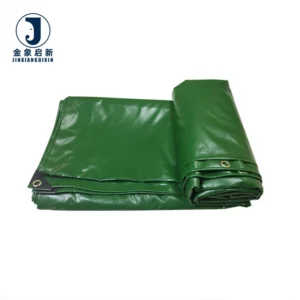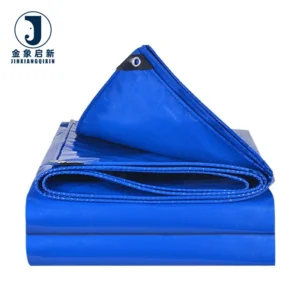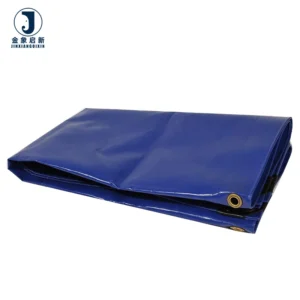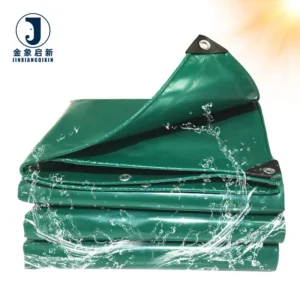
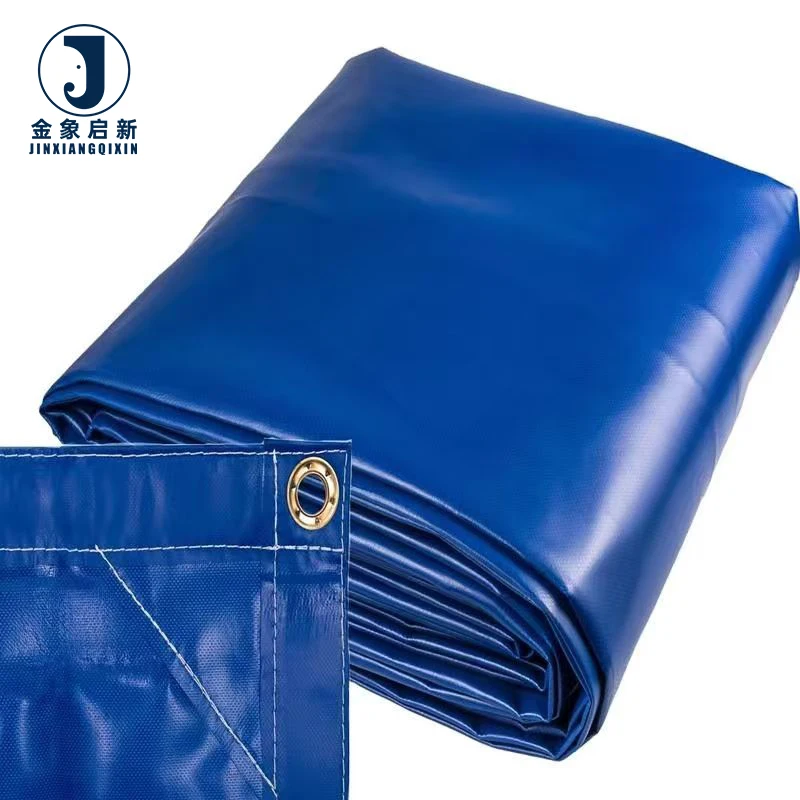
Deep Coating Process Control — three full production lines maintain tight GSM tolerance and coating adhesion across every roll of this PVC coated tarpaulin fabric.
Technical Specifications
| Parameter | Value |
|---|---|
| Product Type | PVC Coated Tarpaulin |
| Base Fabric Denier | 200D×300D, 500D×500D, 840D×840D, 1000D×1000D |
| Weight (GSM) | 250gsm-1500gsm |
| Coating Material | PVC |
| Coating Method | Coated and laminated |
| Width | 3 m |
| Size Options | 3×4m, 6×8m, 8×10m, 10×12m or custom made |
| Surface Finish | Glossy or matte |
| Color Options | Blue, yellow, black, green, white, etc. |
| Temperature Range | -15°C to 70°C |
| Waterproof | Yes |
| UV Treatment | Customized (test basis not stated) |
| Flame Retardant | Treated (grade not stated) |
| Anti-Fungal | Treated |
| Standards | ISO, CE |
Application Suitability
| Application | Exposure & Requirement |
|---|---|
| Truck and trailer tarpaulin | Constant flexing at load points, road debris abrasion, prolonged UV exposure |
| Side curtain fabric for transport | Repeated rolling and tension cycles, wind-driven rain ingress |
| Sunshade and protection awning | Static tensile load from frame, direct solar radiation, thermal cycling |
| Swimming pool cover | Permanent water contact, chlorine vapour, puncture risk from debris |
| Construction site cover | Abrasive contact with scaffolding, dust and chemical splash, weather exposure |
| Top cover materials | Static water pooling, wind uplift force on seams |
Why Coating Weight Alone Fails as a Material Selection Criterion
A heavier PVC coated tarpaulin does not automatically mean a stronger one — base fabric denier and weave density carry the structural load.
Many technical buyers specify material by GSM alone, only to find that a high-weight roll tears along the warp line under tension because the base yarn count was insufficient. The PVC coating adds mass and weather protection, but the polyester skeleton is what resists tensile and tear forces. A 900 GSM fabric woven from 200D×300D yarn will underperform a 650 GSM fabric built on a 1000D×1000D base when subjected to the same dynamic load [NEED_CITE: relationship between base fabric denier and tensile behaviour per ISO 1421]. Selecting by coating weight without verifying the base cloth specification leads to field failures that do not appear until the fabric is cut, welded, and placed under real-world stress.
How Base Fabric Denier Governs Tear Propagation
The polyester yarn denier defines how much energy each individual filament can absorb before rupture. In this PVC coated tarpaulin range, base options span from 200D×300D for lighter covering duties to 1000D×1000D for heavy-transport and structural applications. Higher denier yarns create a denser grid that forces a propagating tear to deflect and dissipate energy across multiple crossover points rather than running straight along one direction.
Coating Method and Its Effect on Seam Integrity
The coated and laminated process path available for this fabric produces different adhesion profiles. Knife-over-roll coating drives PVC paste into the weave interstices, creating mechanical interlock that supports strong thermal welds. Lamination bonds a pre-formed film to the base cloth, which can yield a smoother surface but demands careful weld parameter tuning. For fabricators running high-frequency or hot-air welding, confirming the coating method against the intended joining technique prevents weld-line failures that originate at the coating-to-substrate interface [NEED_CITE: thermal welding parameters for PVC coated fabrics].
Decoding the Specification Sheet: What Each Parameter Controls
The GSM range from 250gsm to 1500gsm covers grades from light-duty temporary covers to heavy-duty transport curtains. However, GSM reflects total areal density — base fabric plus coating — so two rolls at the same weight can have very different structural performance depending on how that mass is distributed. The available base denier options (200D×300D through 1000D×1000D) let you prioritise either coating thickness for chemical and abrasion resistance, or yarn tenacity for mechanical load bearing. The glossy or matte surface finish influences not only appearance but also cleanability and ink adhesion for printed branding. Glossy surfaces shed dirt more readily and suit environments where washdown is routine, while matte finishes reduce glare and provide better grip for screen printing. The stated temperature range of -15°C to 70°C sets the operating envelope; below the lower bound the PVC matrix stiffens and becomes susceptible to crack propagation at fold lines, while approaching the upper limit softens the coating and reduces dimensional stability under load.
The Hidden Cost of Batch Inconsistency Across Rolls
Colour variation between rolls in the same shipment becomes visible the moment panels are welded side by side on a truck curtain or awning frame. This defect is not cosmetic — it signals uneven pigment dispersion that may also correlate with inconsistent coating thickness and plasticiser content. When coating weight drifts below the quoted GSM, the fabric loses UV protection mass and may fail accelerated weathering tests that the specified grade was expected to pass [NEED_CITE: coating weight verification methods for PVC coated fabrics]. For fabricators cutting multiple panels from a single batch, a GSM shortfall on one roll forces either scrap or a visible quality compromise in the finished product.
Why Fabricators Source This PVC Coated Tarpaulin Here
A 10-person R&D team develops custom samples within days, allowing you to validate denier, GSM, and coating method on your welding equipment before committing to production volume. Three full production lines and 36 sets of professional equipment maintain batch-to-batch GSM consistency across roll orders. Dedicated QA/QC inspection at every production stage, with 100% pre-shipment checking, catches colour drift and coating weight deviation before the material leaves the facility. ISO and CE certification supports customs clearance and compliance documentation at your destination port. Full material specification sheets accompany each shipment, listing base fabric, coating material, GSM, and colour reference for traceability.
Documentation & Verification
- Material specification sheet stating GSM, base fabric denier, coating type, and colour reference
- UV test report provided when UV treatment is specified — confirm the test standard required
- Flame retardant documentation available in grades — verify the grade needed for your market
- Pre-shipment inspection record with roll-by-roll GSM verification
- ISO and CE certificates included for customs and regulatory compliance
- Certificate of origin and packing list for container-level traceability
Fabrication, Handling & Storage
- Hot-air welding temperature must match the coating method — confirm parameters for coated versus laminated construction
- Matte finish panels accept screen-printed ink more effectively than glossy surfaces
- Store rolls upright on pallets to prevent permanent creasing across the 3 m width
- Allow cold-stored rolls to acclimatise above -15°C before unrolling to avoid coating crack
- Clean glossy surfaces with mild detergent; avoid solvents that attack the PVC plasticiser layer
- Plan cut layouts to minimise transverse welds, which concentrate stress on the base fabric grid
What We Need to Specify Your Material Correctly
Provide the intended application and the mechanical loads the finished product will face — static tension, dynamic flexing, or abrasion — so we can recommend the correct base denier and GSM combination. Specify whether your market requires a particular flame retardant grade or UV test standard, and we will confirm test report availability against that requirement. Indicate the roll width, colour reference, and annual volume you need, along with whether you require finished cut sizes or roll stock only.
Frequently Asked Questions
Q: How do I confirm the GSM on arrival matches the quotation?
A: Each roll is weighed and recorded during pre-shipment inspection. On receipt, cut a measured sample from the roll edge and weigh it on a calibrated scale. Minor variance within coating tolerance is normal, but significant deviation should be reported immediately with the inspection record for cross-reference.
Q: Which flame retardant grades are available for this fabric?
A: This PVC coated tarpaulin is produced with flame retardant treatment, but the specific grade depends on the formulation selected for your order. Confirm whether your project requires M2, B1 per DIN 4102, NFPA 701, or another standard, and we will match the appropriate test report to your shipment.
Q: Can you match a specific colour across multiple rolls in one order?
A: Yes. Provide a Pantone or RAL reference, and we will develop a lab dip for approval before production. Pigment formulation is locked per batch to maintain colour consistency. Pre-shipment inspection includes visual comparison of all rolls in the order against the approved reference.
Q: What is the minimum order for a custom width or colour?
A: Minimum quantities depend on the specific denier, GSM, and colour combination requested. Custom widths within the 3 m production capability and bespoke colours are available. Share your target specification and volume, and we will confirm the production minimum alongside lead time.
Q: How should rolls be stored before fabrication?
A: Store upright in a dry environment above -15°C, away from direct sunlight and sharp objects. Avoid stacking heavy items on horizontal rolls to prevent permanent creasing that transfers into the finished welded product. Acclimatise cold rolls before unrolling on the fabrication floor.