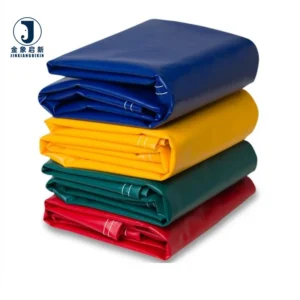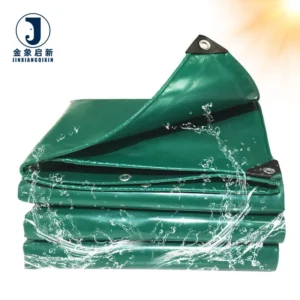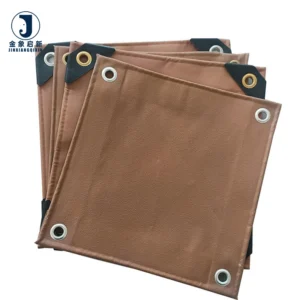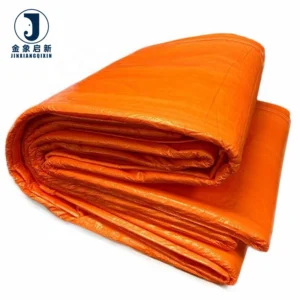
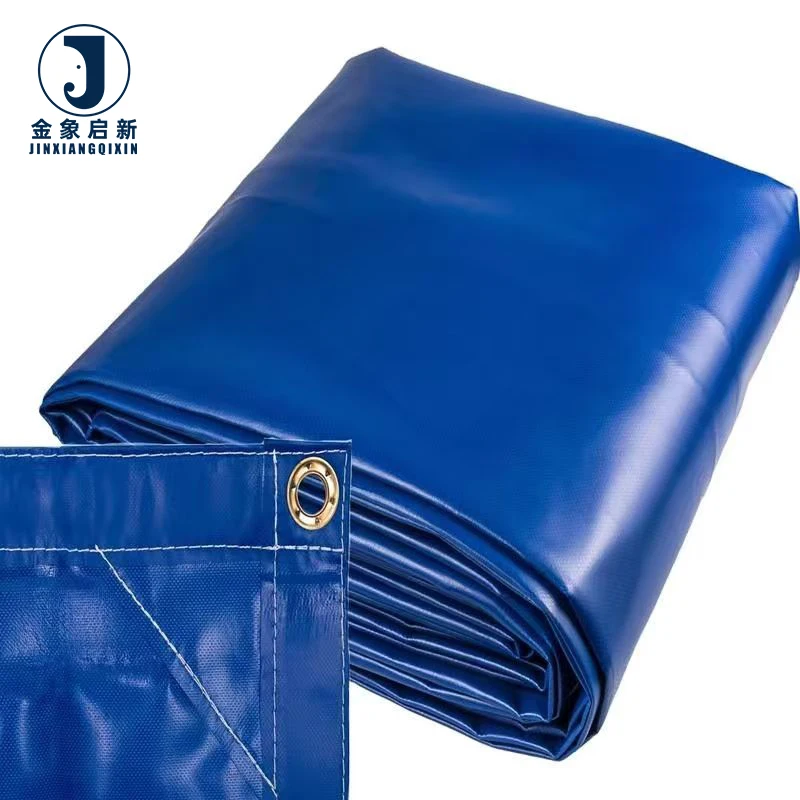
Deep process control over coating weight and adhesion — Three dedicated production lines manage coating application and curing to ensure consistent GSM, denier alignment and surface finish across every roll of this PVC coated tarpaulin base fabric.
Technical Specifications
| Parameter | Value |
|---|---|
| Product Type | PVC Coated Tarpaulin |
| Weight Range | 250gsm-1500gsm (confirm the grade for this item) |
| Base Fabric Denier | 200D×300D, 500D×500D, 840D×840D, 1000D×1000D |
| Coating Material | PVC |
| Coating Method | Coated and laminated |
| Width | Up to 3m |
| Size Options | 3×4m, 6×8m, 8×10m, 10×12m or custom made |
| Colour Options | Blue, yellow, black, green, white, etc. |
| Surface Finish | Available in glossy or matte |
| Temperature Range | -15°C to 70°C |
| UV Treatment | Customized (test basis not stated — confirm standard required) |
| Flame Retardant | Treated (grade not stated — confirm grade required for your market) |
| Anti-Fungal | Treated |
| Waterproof | Yes |
| OEM/ODM | Accepted |
Application Suitability
| Application | Exposure & Requirement |
|---|---|
| Truck and trailer tarpaulin | Road abrasion, wind flex, UV exposure, tie-down tension at eyelets |
| Side curtain fabric | Repeated rolling and folding, weld seam integrity at flex points |
| Sunshade and protection awning | Continuous solar exposure, thermal cycling, wind load on frame |
| Top cover materials | Weather protection, puncture resistance from cargo contact |
| Swimming pool cover | Prolonged water contact, chemical exposure from pool treatment agents |
Why Denier and Coating Weight Matter More Than GSM Alone
Total GSM tells you the weight you are paying for — denier and coating weight tell you what that weight is made of.
A quotation may state a target GSM, but without a breakdown of base fabric denier and coating weight, the number can be achieved in more than one way. A heavier coating on a lighter base fabric reaches the same GSM as a balanced construction, yet the tensile and tear behaviour will differ substantially. Technical buyers evaluating PVC coated tarpaulin base fabric denier GSM coating weight need the full breakdown to confirm the material will perform as expected in service [NEED_CITE: tensile and tear test methods for coated fabrics per ISO 1421].
How Base Fabric Denier Governs Structural Performance
The denier options in this range — from 200D×300D to 1000D×1000D — define the yarn thickness in the warp and weft directions. Heavier denier yarns produce a base fabric with higher inherent tensile strength and greater resistance to tear propagation. When a PVC coated tarpaulin is tensioned across a truck load or an awning frame, the base fabric carries the structural load while the coating provides weather protection. Specifying the correct denier for the mechanical demand of the application is what prevents premature failure at stress points.
Coating Method and Adhesion Behaviour
The coated and laminated construction method used here affects how tightly the PVC layer bonds to the base fabric. Adhesion strength determines whether the coating separates from the yarns when the material flexes repeatedly — a common failure mode in side curtain applications where the PVC coated tarpaulin rolls and unrolls daily. Stronger adhesion also supports cleaner heat-welded seams, because the coating does not delaminate under the thermal and pressure conditions of welding [NEED_CITE: coating adhesion peel test methods for PVC coated fabrics].
Reading the Specification Beyond Total Weight
Selecting the right grade involves matching denier, coating weight and surface finish to the end use. A lighter denier with a thicker coating may suit a swimming pool cover where water resistance is primary and mechanical tension is moderate. A heavier denier with balanced coating weight serves better in truck side curtains where flex fatigue and wind load dominate. The glossy or matte finish choice further affects heat welding parameters — matte surfaces may require adjusted temperature settings to achieve a consistent weld bead. Temperature operating range from -15°C to 70°C defines the boundary for cold-crack resistance and hot-tack stability in field conditions.
What Specification Gaps Cost in the Field
When base fabric denier is not verified before shipment, the material may arrive lighter in yarn construction than specified, even if total GSM appears correct due to heavier coating. This shifts the failure mode from gradual wear to sudden tear propagation under load. Colour variation between rolls in the same order becomes visible the moment panels are installed side by side on a truck or awning structure. Welded seams that fail before the fabric itself does typically point to a mismatch between the heat welding parameters and the actual coating composition or thickness — a problem that surfaces only after installation [NEED_CITE: common failure modes in heat-welded PVC coated fabric seams].
Why Source This PVC Coated Fabric Here
Three full production lines and 36 sets of professional equipment support volume runs with consistent coating application across every roll. The 10-person R&D team handles material selection, custom sizing and sample development, enabling specification confirmation before bulk production begins. Dedicated QA/QC operates at every production stage with 100% inspection before shipment, catching GSM deviation and colour drift before rolls leave the facility. Coating weight and adhesion are controlled through established process parameters refined over nearly 30 years of focused coated fabric production. Samples for custom width, colour or treatment requirements are developed within days, allowing fabricators to validate heat welding behaviour and seam strength before committing to a full order.
Documentation & Verification
- Material specification sheet stating exact GSM, base fabric denier and coating method per roll
- Test reports for UV and flame-retardant treatments with stated grade or standard where applicable
- Pre-shipment inspection record confirming coating weight and colour consistency across the batch
- Roll packing list detailing net weight, roll count and dimensions per shipment
- ISO and CE certificates supporting material and production quality standards
Fabrication, Handling & Storage
- Heat welding temperature should be adjusted for glossy or matte finish to achieve full seam adhesion
- Store rolls horizontally on pallets to prevent permanent creasing in the PVC coated layers
- Allow cold-stored rolls to reach ambient temperature before unrolling to avoid coating crack at -15°C boundary
- Use compatible PVC-based repair tape for field patches on coated and laminated surfaces
- Plan cut patterns to maximise yield from the 3m width and minimise welded seam count
What to Include in Your Enquiry
Provide the intended application and the mechanical or environmental demands the fabric will face — this determines which denier grade and coating weight best suit your requirement. Specify any fire-retardant or UV treatment standards your market or project requires so the correct grade can be quoted. Confirm whether you need roll stock in standard widths or custom-cut panels with finished edges.
Frequently Asked Questions
Q: How is GSM verified against base fabric denier and coating weight?
A: Total GSM is the combined weight of the base fabric and the applied PVC coating. We provide a material specification sheet per roll stating base fabric denier, coating weight and total GSM. This breakdown lets you confirm the construction matches your specification rather than relying on total weight alone. Pre-shipment inspection records document the measured values before dispatch.
Q: What test basis supports the UV and flame-retardant treatment claims?
A: UV and flame-retardant treatments are available in various grades depending on market requirements. We recommend specifying the standard or grade your application demands — such as a particular fire classification — so we supply the correct test report with the fabric. Confirm the standard required for your region at enquiry stage.
Q: How does base fabric denier affect heat welding parameters?
A: Higher denier base fabrics have thicker yarns and greater fabric density, which influence how heat transfers through the coating to the weld interface. Welding temperature, pressure and dwell time may need adjustment depending on the denier grade selected. We recommend running test welds on samples before full production to dial in optimal parameters for your equipment.
Q: What coating method is used and how does it influence peel resistance?
A: This fabric uses a coated and laminated construction that bonds the PVC layer to the base fabric under controlled heat and pressure. This method supports strong adhesion between coating and yarn, which is critical for applications where the material flexes repeatedly. Stronger adhesion also improves heat-welded seam durability by preventing delamination at the weld line.
Q: How is batch-to-batch consistency on GSM and colour controlled?
A: Each production run follows established process parameters for coating application and curing. In-process quality checks monitor coating weight and colour alignment during the run. A 100% pre-shipment inspection verifies GSM and colour consistency across all rolls in the order before they are packed and dispatched.