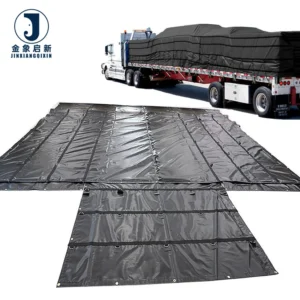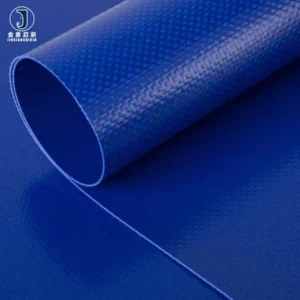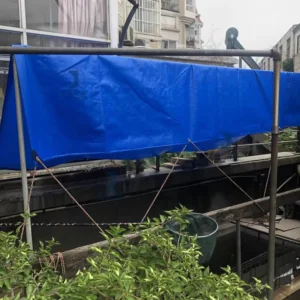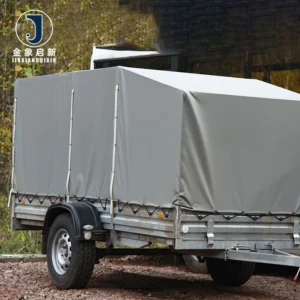
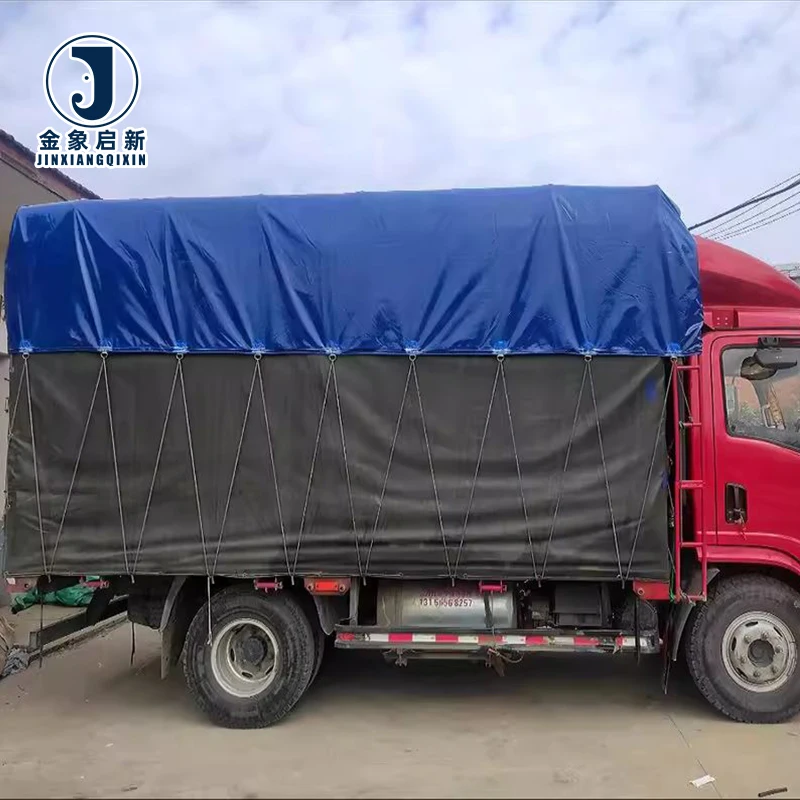
Precision-Coated for Moving Loads — Deep process control over PVC coating weight and base fabric adhesion, ensuring the tensile and tear performance stated on the spec sheet matches what arrives at your dock.
Technical Specifications
| Parameter | Value |
|---|---|
| Product Type | Heavy Duty PVC Truck Cover |
| Coating Material | PVC / Vinyl |
| Surface Finish | Double-faced, uniform strength and resistance on both sides |
| Water Resistance | Water resistant, mildew protected |
| UV Protection | Anti-UV treatment (test basis not stated — confirm rating for your market) |
| Flame Retardant | Flame retardant treatment (grade not stated — confirm classification for your market) |
| Color Options | Multiple colors available |
| Customization | Custom sizing and printing available |
| Certifications | ISO, CE |
Application Suitability
| Application | Exposure & Requirement |
|---|---|
| Truck and trailer side curtain | Constant flexing at tie-down points, road abrasion, lateral wind load, UV exposure |
| Flatbed and tipper roof cover | Direct UV and rain exposure, thermal expansion, water ingress at seam lines |
| Pallet and equipment cover | Repeated deployment and folding, handling abrasion, forklift contact |
| Outdoor event tent and awning | Sun and rain exposure, structural tension, wind uplift |
| Inflatable and membrane structure | Internal air pressure, seam integrity, surface puncture risk |
Why GSM Alone Does Not Tell You How Strong a PVC Coated Truck Tarpaulin Really Is
Stated weight means nothing if the coating-to-yarn adhesion fails under load flex.
A 900 GSM roll can tear at the weld seam while a lighter fabric holds, simply because the base fabric denier and weave density were engineered to resist tear propagation. Buyers who spec on total weight alone end up replacing covers mid-season. The relationship between base yarn count, coating method, and adhesion strength determines whether the fabric survives the vibration and flex cycles of a loaded trailer in transit [NEED_CITE: tensile and tear test methods for coated fabrics per ISO 1421].
Coating Weight Control and the GSM Verification Gap
The PVC coating process must deliver a consistent layer across the full width of every roll. Variations in coating weight from one edge to the other create weak zones that show up only after the PVC coated truck tarpaulin is cut and welded into a finished cover. Our production lines maintain coating uniformity through controlled knife-gap settings, and each roll is verified against the stated GSM before it leaves the facility. This is the difference between a spec sheet claim and a verified material property.
Double-Faced Construction for Weld Integrity on Both Sides
A double-faced PVC coating means both surfaces carry the same protective layer, which directly affects how the fabric behaves during fabrication. When a truck side curtain requires welding at overlap seams, the coating must bond reliably on whichever face meets the hot air or high-frequency electrode. Uniform coating on both sides also means the PVC coated truck tarpaulin resists moisture ingress and UV degradation equally, regardless of which face is oriented outward during installation [NEED_CITE: high frequency welding parameters for PVC coated polyester fabrics].
Reading the Spec Sheet: Denier, Weave Density, and Coating Method
Base fabric denier determines individual yarn strength, while mesh count — the number of yarns per inch in warp and weft — controls how load distributes across the fabric. A high-denier yarn in a loose weave will resist puncture but may allow tears to propagate between yarns. The PVC coating method, whether knife-over-roll, dip, or calender, dictates how deeply the PVC penetrates the weave. Deeper penetration increases adhesion strength and weld performance but adds weight. Understanding this trade-off lets you specify the right balance of tear resistance, flexibility, and total GSM for your application rather than simply requesting "heavy duty."
The Hidden Cost of Specifying on Price Per Square Metre
When a PVC coated truck tarpaulin is supplied below market-expected cost, the shortfall is absorbed somewhere in the material. Thinner coating reduces water resistance and weld seam strength. Lower denier base fabric cuts tear resistance. Missing UV stabilisers lead to colour fading and embrittlement after a single season of sun exposure. These failures do not appear on the pre-shipment sample — they emerge weeks after installation, when the cover is already on a truck crossing motorways [NEED_CITE: common failure modes in PVC coated transport fabrics]. The cost of replacing a failed cover on a fleet vehicle far exceeds the savings on the original fabric purchase.
Why Sourcing This PVC Truck Cover Here Makes Sense
Our three full production lines and 36 sets of professional equipment support bulk roll output with consistent coating control across every production run. The 10-person R&D team develops samples within days when you need a custom colour, width, or print layout validated before committing to volume. Every roll undergoes 100% inspection against the specification sheet before dispatch — coating weight, colour reference, and surface quality are all checked. With ISO and CE certification in place, the documentation required for customs clearance and site compliance ships with your order. This capability has been built over nearly 30 years of focused coated fabric production.
Documentation & Verification
- Material specification sheet listing exact GSM, base fabric denier, coating method, and colour reference for each roll
- Test reports for UV treatment and flame retardant grade provided where applicable to your target market standards
- Pre-shipment inspection record confirming coating weight verification per roll before packing
- ISO and CE certificates included with dispatch documentation
- Roll packing list with individual roll dimensions and net weight for container loading planning
- Certificate of origin and customs support documentation for cross-border shipment
Fabrication, Handling & Storage
- Hot air welding temperature should be matched to the PVC coating thickness to ensure adhesion at flex points without burning through
- High frequency welding works effectively on the double-faced PVC surface for clean, consistent seam bonds
- Store rolls horizontally on a flat surface to prevent permanent creasing in the PVC coating layer
- Avoid dragging cut panels across concrete floors to protect the coated surface from abrasion before installation
- Use mild detergent and soft brush for cleaning — harsh solvents may degrade the PVC coating and anti-UV treatment
- Allow material to acclimatise to ambient temperature before unrolling in cold conditions to prevent surface cracking
What We Need to Move Your Enquiry Forward
Share your trailer model dimensions, annual volume requirement, and whether you need finished covers or roll stock. Confirm the flame retardant classification or UV rating your destination market requires so we can match the PVC formulation. If you need colour consistency across a fleet order, provide your Pantone or RAL reference and we will develop a sample for approval before production.
Frequently Asked Questions
Q: How is the stated GSM verified on arrival?
A: Every roll is weighed and measured during our 100% pre-shipment inspection, and the result is recorded against the specification sheet. You can cross-check by cutting a measured sample from the roll edge on arrival and calculating weight per square metre. Any discrepancy is addressed before the container is sealed.
Q: Are flame retardant and anti-UV claims backed by test certificates?
A: Flame retardant and anti-UV treatments are available in multiple grades. We provide test reports matching the specific grade produced for your order. Confirm the fire classification or UV rating required in your destination market so we select the correct PVC formulation and supply the corresponding documentation.
Q: Can the cover be cut to fit my specific trailer model?
A: Custom sizing is a standard part of our production process. Provide your trailer model, body dimensions, and curtain track configuration, and our R&D team will develop a cutting pattern and sample. Production proceeds only after you approve the fit and finish.
Q: How do you ensure colour consistency across multiple rolls in one order?
A: Each production batch is controlled against a single colour reference. The QA team checks colour at multiple points across the roll width and between successive rolls before packing. Rolls from the same order are grouped to eliminate visible variation when installed side by side on a fleet.
Q: What documentation ships with my PVC truck cover order?
A: Your shipment includes the material specification sheet, pre-shipment inspection record, roll packing list, ISO and CE certificates, certificate of origin, and test reports for any specified UV or flame retardant grades. All documents are prepared to support customs clearance and on-site compliance verification.