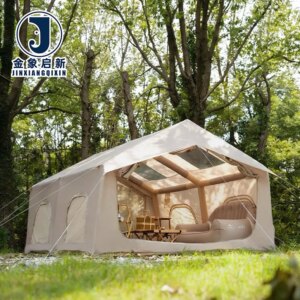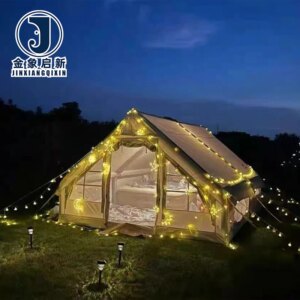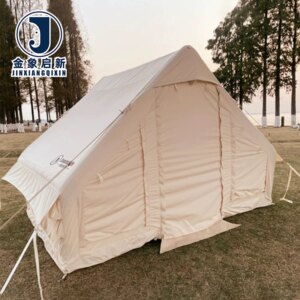
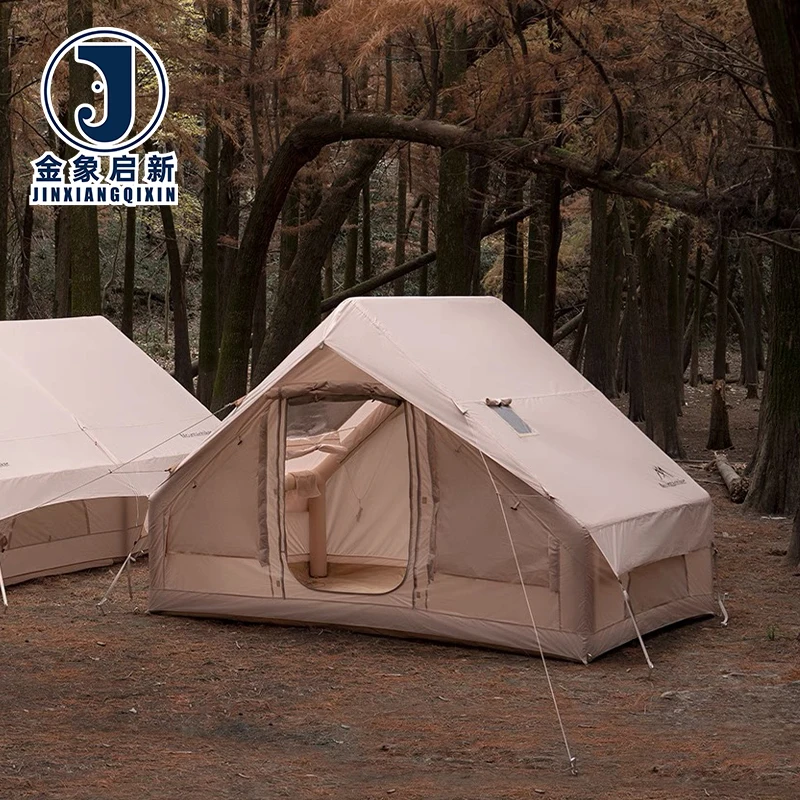
Near-30-year coated fabric process control — every roll of knife-coated PVC inflatable tent fabric is produced under in-process QA with documented coating weight verification before dispatch.
Technical Specifications
| Parameter | Value |
|---|---|
| Product Type | PVC Inflatable Camping Tent Material |
| Core Material | PVC knife-coated fabric |
| Coating Method | Knife coated (PVC刀刮织物) |
| Waterproof Rating | Waterproof (test basis not stated in source) |
| UV Treatment | UV-resistant (test basis not stated in source) |
| Flame Retardant Grade | Fire-retardant (grade not stated in source) |
| Anti-Static | Anti-static (standard not stated in source) |
| Key Features | Waterproof, UV-resistant, tear-resistant, fire-retardant, anti-static |
| Customization Service | OEM & ODM — sample customization, pattern printing, custom dimensions, material thickness adjustment |
| Quality Control System | Full-process inspection with dedicated QA & QC staff |
| Standards | ISO 9001, ISO 14001, ISO 45001, CE |
Application Suitability
| Application | Exposure & Requirement |
|---|---|
| Commercial 4–6 person inflatable camping tent manufacturing | Repeated inflation/deflation cycles, seam weld integrity, prolonged UV and rain exposure |
| Adventure tourism inflatable equipment | High-visibility colour consistency across production batches, fire-retardant compliance for campsite regulations |
| Outdoor gear OEM custom inflatable structures | Pattern printing adhesion on coated surface, custom width and dimension cutting, batch-to-batch GSM consistency |
| Industrial camping operations | Abrasion from ground contact, fold-line stress during transport, low-temperature flexibility |
What "Fire-Retardant" Means Without a Certified Grade Behind It
A fire-retardant claim without a named test standard is a liability, not a specification.
Inflatable tent fabric that arrives labelled "fire-retardant" but ships without a test report tied to a recognised standard leaves the manufacturer exposed. Campsite operators, event organisers and municipal authorities increasingly demand documented compliance — not a supplier declaration. When the PVC inflatable tent fabric material coating technology behind the product cannot be traced to a verifiable grade such as B1 per DIN 4102, M2, or NFPA 701, the tent maker bears the compliance risk at the point of installation. [NEED_CITE: DIN 4102 fire classification for building materials and temporary structures]
We supply fire-retardant grades on request and provide the corresponding test report referenced to your order number — confirm the grade required for your target market before placing a bulk order.
How Knife Coating Builds the Air-Beam Performance Envelope
Knife coating applies a controlled PVC layer directly onto the base fabric, producing a bond that resists delamination under the cyclic pressure loads an inflatable air beam experiences. Unlike laminated constructions where the coating is bonded by heat and pressure, knife-coated PVC inflatable tent fabric achieves adhesion through chemical bonding during the coating process itself. This matters at the weld line: when hot-air or high-frequency welding fuses two panels, the coating must soften and re-bond without separating from the yarn structure underneath.
The uniform coating thickness that knife coating delivers also supports consistent GSM across the roll width, which in turn influences how predictably the fabric behaves during automated cutting and welding in a production line environment.
Coating Weight, Base Fabric and the Weld Integrity Chain
A tent air beam fails most often at the welded seam, not in the body of the fabric. The reason traces back to the relationship between coating weight, base fabric denier and weave density. If the coating is too thin relative to the yarn profile, the weld has insufficient material to fuse and the joint peels under inflation pressure. If the coating is too thick, the heat required to penetrate it risks scorching the base yarn, weakening the very structure the weld is meant to hold. [NEED_CITE: tensile and tear test methods for coated fabrics per ISO 1421]
For inflatable tent manufacturers running high-frequency welding equipment, specifying the correct PVC inflatable tent fabric material coating technology balance between base fabric construction and coating weight is the single most consequential material decision in the bill of materials.
Reading the Specification Sheet Beyond the GSM Number
GSM — grams per square metre — is the most quoted figure in coated fabric procurement, yet it tells only part of the story. Two rolls with identical GSM can perform very differently depending on how that weight is distributed between base fabric and coating. A heavier base fabric with a lighter coating yields higher tensile and tear strength but may compromise weld-ability and surface finish. A heavier coating on a lighter base improves waterproofing and surface smoothness but can reduce tear propagation resistance.
The coating method further shapes performance. Knife coating produces a thicker, more uniform layer compared to dip or spray methods, giving better control over the final GSM and a smoother surface for pattern printing. Base fabric denier and weave density govern how tears propagate: a tighter weave with higher denier yarns resists tear spread but adds weight and stiffness, affecting how the air beam folds and packs. Understanding these trade-offs lets the tent designer specify a fabric that matches the intended inflation pressure, pack size and expected service conditions rather than selecting on GSM alone.
When the Wrong Specification Reaches the Cutting Table
A fabric that looks correct on the quotation can unravel at the production stage. GSM measured at the sample stage may drift across a production run when coating weight control is inconsistent — rolls that come in lighter than specified produce air beams that flex and fatigue faster than designed. Colour variation between rolls in the same shipment forces the tent maker to sort and match panels manually, adding labour and waste. Fire-retardant treatment applied without a documented test basis surfaces as a compliance failure only when the finished tent is inspected on site, at which point the entire batch is at risk. [NEED_CITE: coating weight consistency and its impact on welded seam performance in inflatable structures]
These consequences are avoidable when the PVC inflatable tent fabric material coating technology specification is tied to in-process inspection records rather than relying on a single pre-shipment sample.
Why Source This Fabric Here
Three full production lines and 36 sets of professional processing equipment support the volume and consistency that inflatable tent manufacturers need across repeat orders, reducing the risk of specification drift between batches.
A 10-technician R&D team handles material selection, thickness adjustment and sample development, allowing custom PVC inflatable tent fabric material coating technology configurations to be validated before bulk commitment.
Full-process QA with dedicated staff at each production stage — not just final inspection — catches coating weight deviations and colour shifts before the roll reaches the dispatch area.
Sample turnaround within days for custom thickness, pattern printing and dimension requirements lets tent OEMs confirm weld compatibility and print adhesion without delaying the product development cycle.
ISO 9001, ISO 14001, ISO 45001 and CE certification frameworks underpin the documentation package that accompanies every shipment, supporting market compliance in regions that require traceable quality management systems.
Documentation & Verification
- Material specification sheet stating GSM, base fabric denier, coating method and weight per batch
- Test reports for UV resistance and fire-retardant grades referenced to order number where applicable
- Pre-shipment inspection record with full QA/QC coverage before dispatch
- ISO 9001, ISO 14001, ISO 45001 and CE certificates available for market compliance
- Roll packing list with batch identification for traceability through production
Fabrication, Handling & Storage
- Hot-air welding temperature must match the knife-coated PVC layer thickness to avoid base fabric scorching
- High-frequency welding settings should be validated on sample before running full roll stock
- Store rolls upright on pallets to prevent flat-spot deformation of the coated surface
- Allow cold-stored rolls to reach ambient temperature before unrolling to prevent coating crack at fold lines
- Use PVC-compatible cleaners only — solvent-based products may degrade the knife-coated surface finish
- Plan cutting layout to minimise weld joints across air beam stress points
Specify What You Need — We Will Match the Material
Tell us the inflation pressure your air beam design operates at, the welding method your production line uses and the fire-retardant or anti-static grade your target market requires. Share your required roll width, annual volume and any pattern printing or colour matching specifications so we can confirm feasibility and sample lead time. If you need custom thickness or dimension cutting for prototype runs, include the target dimensions and we will develop a sample for your approval before production.
Frequently Asked Questions
Q: How is GSM verified on arrival and what documentation supports the quoted coating weight?
A: Each roll ships with a material specification sheet stating GSM, base fabric denier and coating weight. Our in-process QA records coating weight at multiple points during production. A pre-shipment inspection report accompanies the dispatch, and you may conduct independent weight verification on receipt against the documented values.
Q: What fire-retardant grades are available and which test standards do they meet?
A: Fire-retardant treatment is available in multiple grades depending on market requirements. The specific test standard — such as DIN 4102, NFPA 701 or M2 — must be confirmed at inquiry stage so the correct formulation is applied and the matching test report is included with your shipment documentation.
Q: How does knife-coated PVC compare to laminated alternatives for inflatable air-beam weld integrity?
A: Knife coating produces a chemically bonded PVC layer with consistent thickness, supporting predictable weld behaviour under hot-air and high-frequency methods. Laminated fabrics can delaminate at the weld line under cyclic inflation loads. We recommend weld testing on samples of both constructions against your specific equipment settings.
Q: What customisation options exist for thickness, pattern printing and dimensions, and what are sample lead times?
A: We offer OEM and ODM customisation including material thickness adjustment, pattern printing, custom roll widths and cut-to-size panels. Samples are developed within days for standard configurations. Confirm your printing artwork, colour references and dimension requirements at inquiry stage so we can scope the sample accurately.
Q: What is the UV treatment test basis and how does it relate to expected outdoor exposure?
A: UV-resistant formulation is available for prolonged sunlight exposure in outdoor camping applications. The specific test basis should be confirmed at inquiry to match your target market’s climate conditions and expected service environment. Test documentation is referenced to the order number where applicable.