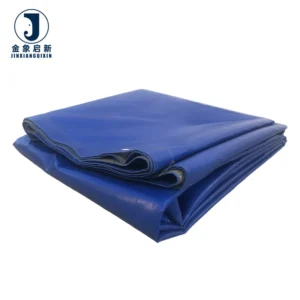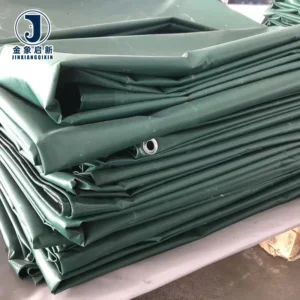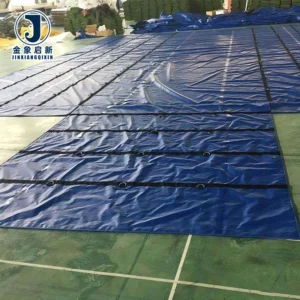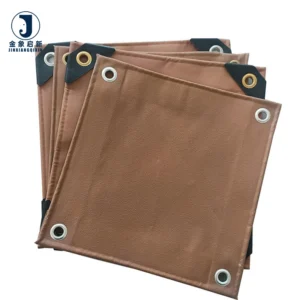
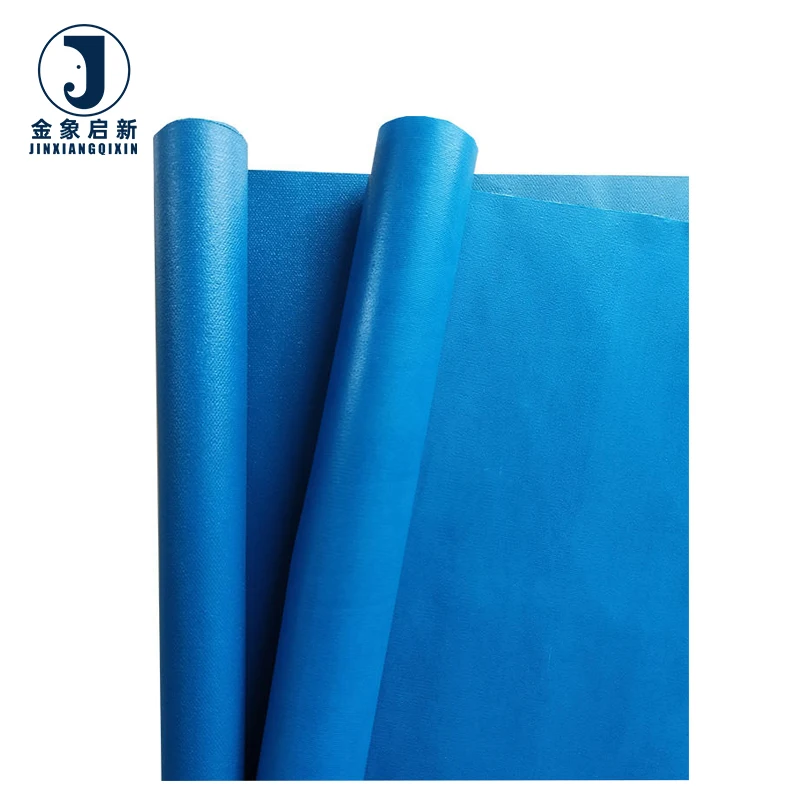
Coating Weight Control — Every roll of this Knife Coated PVC Tarpaulin 500gsm 600gsm for Truck Cargo Cover ships with a material specification sheet stating exact coating weight and base fabric denier, verified at every production stage before dispatch.
Technical Specifications
| Parameter | Value |
|---|---|
| Product Type | PVC Coated Tarpaulin |
| Coating Method | Knife coated |
| Weight Options | 500gsm, 600gsm |
| Coating Material | PVC |
| Flame Retardant | Fireproof grade available — confirm the grade required for your market |
| Anti-Static | Available — confirm the standard required for your application |
| Anti-Mildew | Available |
| Anti-Cold | Available |
| UV Treatment | Anti-UV treatment available — confirm test basis for your exposure conditions |
| Waterproof Rating | Waterproof |
| Finish | Customizable |
| Color | Customizable |
| Certification | ISO, CE |
Application Suitability
| Application | Exposure & Requirement |
|---|---|
| Truck cargo covers | Constant flexing at load points, road abrasion, weather exposure, tie-down stress at seams |
| Transport fleet load protection | Repeated installation and removal, UV exposure during transit, wind flap fatigue |
| Outdoor equipment covers | Prolonged weathering, moisture contact, temperature fluctuation |
| Construction site covers | Debris impact, puncture risk, extended UV and rain exposure |
Why Coating Weight and GSM Together Define Real Fabric Performance
GSM alone does not tell you how a PVC coated tarpaulin 500gsm 600gsm will behave under load.
Technical buyers often receive quotations stating a target GSM, only to find the delivered rolls lighter than agreed once they cut a sample and weigh it. The stated weight on the invoice may reflect an average across the product family rather than the specific grade ordered. When coating weight is not controlled independently from base fabric density, the result is a material that meets the number on paper but lacks the tensile and tear resistance the application demands [NEED_CITE: tensile and tear test methods for coated fabrics per ISO 1421]. For truck cargo covers that flex continuously during transit, the difference between a properly coated 500gsm roll and an underweight one shows up as premature weld line failure or coating delamination at stress points.
Knife Coating and Its Effect on Adhesion Strength
The knife coated process used for this PVC coated tarpaulin 500gsm 600gsm forces the PVC compound directly into the base fabric weave under controlled pressure, creating a mechanical bond between coating and yarn. This method produces higher peel strength compared to lamination, which matters when the fabric flexes repeatedly under cargo loads. The coating penetrates the interstices of the woven polyester, reducing the chance of layer separation at the seam where heat welding concentrates stress.
Flame Retardant and Anti-Static Treatment Chemistry
Fireproof and anti-static treatments are integrated into the PVC compound during coating rather than applied as a surface finish after production. This means the treatment does not wash off or degrade with surface abrasion during repeated cover installation. For transport fleets operating in regulated environments or construction sites with fire safety requirements, the treatment documentation must match the specific standard enforced at the site. Available in flame retardant grades — confirm the grade required for your market, and request the test report that corresponds to your regional compliance framework [NEED_CITE: DIN 4102 fire classification for building materials].
Reading the Specification Sheet Beyond the GSM Number
The weight of a PVC coated fabric results from two components: the base fabric mass and the coating mass. A 500gsm roll with a heavier base fabric and thinner coating will behave very differently from a 500gsm roll with a lighter base and thicker coating layer. The base fabric denier and weave density determine tear propagation resistance — how quickly a small puncture spreads across the material under tension. The coating weight governs abrasion resistance, waterproofing integrity, and weldability. When evaluating this PVC coated tarpaulin 500gsm 600gsm, the material specification sheet breaks down both components so you can verify the balance matches your fabrication method and end-use stress profile. Request the full spec sheet for the specific grade you intend to order, and compare base fabric density alongside total GSM before approving samples.
What Happens When Specifications Are Not Verified Before Shipment
When a batch of PVC coated tarpaulin arrives with coating weight below the quoted value, the consequences compound through the fabrication process. Heat welds that should hold through years of flex cycles fail within months because the coating layer is too thin to maintain bond integrity at the seam. Anti-UV treatment that was claimed on the quotation but not verified by a test report leads to surface chalking and embrittlement sooner than the fleet operator planned for [NEED_CITE: accelerated weathering test standards for PVC coated fabrics]. Colour variation between rolls in the same shipment becomes visible once the covers are installed side by side on adjacent trailers, forcing the buyer to reject an entire order rather than a single roll. These failures trace back to insufficient in-process coating weight verification and absent pre-shipment inspection documentation.
Why Source This Material Through Our Production Lines
Three full production lines and 36 sets of professional equipment support consistent coating weight across every roll in your order, whether you need a single sample or container-load volume. The 10-person R&D team develops material formulations and sample swatches within days when your application requires a specific combination of fireproof, anti-static, or anti-cold treatment. Dedicated QA/QC runs at every production stage — base fabric inspection, coating weight measurement during the knife coating pass, and finished roll verification — so the material specification sheet accompanying your shipment reflects measured values, not nominal targets. ISO and CE certified production ensures the documentation package meets import requirements across North American, European, and Asian markets. Samples are developed in-house with your exact GSM and treatment specification, allowing you to test weld parameters and fabric behaviour before committing to full production.
Documentation & Verification
- Material specification sheet stating exact 500gsm or 600gsm coating weight and base fabric denier per roll
- Test report for fireproof grade where applicable, matched to the standard required at your site
- Anti-UV treatment test documentation available upon confirmation of the grade ordered
- Pre-shipment inspection record with coating weight verification against the quoted specification
- ISO and CE certificates included in the dispatch documentation package
- Certificate of origin and customs support documentation for international shipment
Fabrication, Handling & Storage
- Heat weld parameters must be adjusted to the specific 500gsm or 600gsm grade to avoid burning through thinner coating zones
- Store rolls upright on pallets to prevent permanent creasing in the PVC coating layer
- Allow cold-stored rolls to reach ambient temperature before unrolling to avoid coating crack at low temperature
- Use compatible PVC-based adhesives for patch repairs on the knife coated surface
- Plan cut patterns to minimize cross-grain seams where tear propagation risk is higher
What to Include With Your Enquiry
To receive an accurate specification recommendation, provide the trailer dimensions or cover size you need, the fireproof or anti-static standard enforced at your operating site, and the annual volume you expect to order. If you require custom colour matching or branding print on the PVC coated tarpaulin 500gsm 600gsm surface, include the Pantone reference or colour sample along with the total roll quantity. Specify whether you need finished covers cut and welded to your trailer model, or roll stock for your own fabrication facility.
Frequently Asked Questions
Q: How can I verify the GSM matches the quoted weight when the rolls arrive?
A: Cut a measured sample from each roll and weigh it on a calibrated scale, then compare against the material specification sheet shipped with your order. Our pre-shipment inspection record documents the measured coating weight per roll before dispatch, so you have a baseline to confirm against. Any discrepancy should be flagged before fabrication begins.
Q: What fireproof documentation supports compliance at my operating site?
A: Available in flame retardant grades — confirm the grade required for your market, and we provide the corresponding test report with your shipment. Different regions enforce different standards, so share your local fire classification requirement at enquiry stage to ensure the treatment chemistry matches the certification your site inspector will review.
Q: How is anti-UV treatment verified for long-term outdoor exposure?
A: Anti-UV treatment is available for this PVC coated tarpaulin — confirm the test basis relevant to your climate zone. Request the test report when ordering, and discuss your expected exposure duration with our R&D team so the treatment level can be matched to your operational environment rather than specified generically.
Q: Why do welded seams sometimes fail before the fabric itself on PVC coated tarpaulin?
A: Weld failure typically occurs when heat settings do not match the coating weight, or when the coating layer is too thin to maintain bond strength through repeated flex cycles. Our knife coated process forces PVC into the base fabric weave, creating stronger mechanical adhesion at the weld zone. Verify weld parameters against the specific 500gsm or 600gsm grade before full production.
Q: How do you control colour consistency across multiple rolls in one order?
A: Colour is matched at the compounding stage before coating begins, and every roll passes through inspection under controlled lighting. The pre-shipment inspection record confirms colour consistency across the batch. If your order spans multiple production runs, request a reference swatch from the first run to hold against subsequent deliveries.