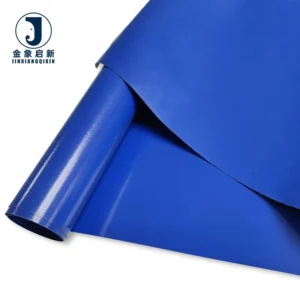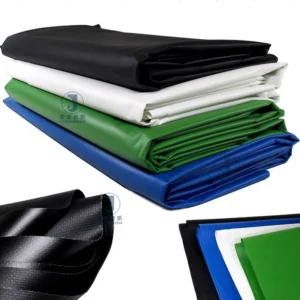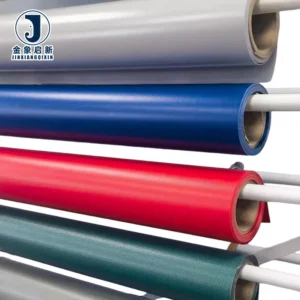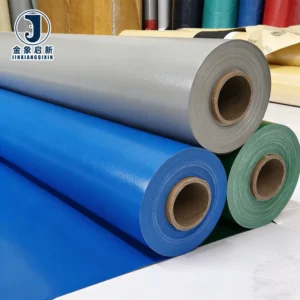
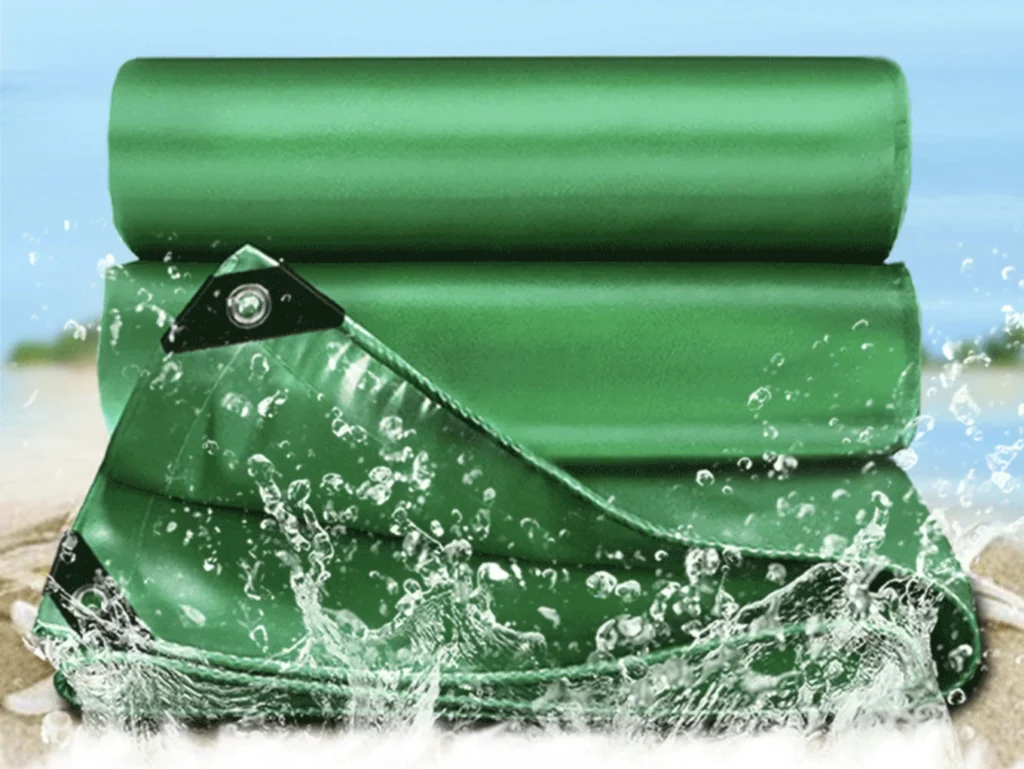
Coating Process Mastery — Knife coated PVC construction with controlled adhesion between coating and base fabric, ensuring consistent seam integrity across every roll.
Technical Specifications
| Parameter | Value |
|---|---|
| Product Type | PVC Coated Tarpaulin |
| Coating Method | Knife coated |
| Coating Material | PVC |
| Welding Options | HF, Hot Air, Sewing |
| Fire Retardant | Available in fire retardant grades — confirm the grade required for your market |
| UV Resistance | Available with UV stabiliser treatment — request test report for your exposure class |
| Antibacterial & Mildew Proof | Yes |
| Oil & Stain Resistance | Yes |
| Acid & Alkali Resistance | Yes |
| Temperature Resistance | High temperature and cold resistant |
| Anti-Oxidation & Weather Resistance | Yes |
| Flexibility | Highly flexible, resistant to cracking |
| Surface | Self-cleaning capability |
| Standards | ISO, CE |
Application Suitability
| Application | Exposure & Requirement |
|---|---|
| Tensile and stadium architectural structures | Sustained tension, wind-induced flexing, long-term UV exposure, seam integrity under dynamic load |
| Airport hangars and portable storage | Temperature cycling, weather exposure, large-span fabric requiring consistent weld performance |
| Large format shade systems and shadings | Continuous UV exposure, dirt accumulation, need for self-cleaning surface to reduce maintenance |
| Truck covers and side curtains | Road abrasion, constant flexing at tie-down points, colour consistency across multiple panels |
| Outdoor tent and inflatable structures | Repeated folding and deployment, waterproof integrity, flame retardant compliance for public venues |
Why Coating Adhesion Matters More Than GSM Alone
A heavier roll does not guarantee a stronger weld if the coating fails to bond uniformly to the base fabric.
Technical buyers specifying PVC knife coated tarpaulin base fabric denier coating weight often focus on GSM as the primary indicator of durability. Yet when welded seams split under load — particularly at the flex points where truck curtains and tensile membranes experience the most stress — the root cause is frequently inconsistent coating adhesion rather than insufficient fabric weight. Knife coating, when executed with proper process control, forces the PVC compound into the base fabric weave under precise blade pressure, creating a mechanical and chemical bond that directly determines peel strength [NEED_CITE: tensile and tear test methods for coated fabrics per ISO 1421]. Without verified adhesion data, a high-GSM roll can still delaminate at the seam during fabrication or in service.
How Knife Coating Builds Uniform Layer Thickness
The knife-over-edge process deposits a measured PVC compound layer onto the moving base fabric web. Blade gap and coating viscosity together control the thickness of each pass, and multiple passes build up the total coating weight. This method produces a denser, more uniform PVC film compared to dip or spray coating, which is why PVC knife coated tarpaulin base fabric denier coating weight specifications are the reference point for structural membrane applications. Uniform layer thickness translates directly into predictable hot-air and HF welding behaviour, because the heat transfer through the coating remains consistent across the entire roll width.
Welding Compatibility and Seam Engineering
Fabricators working with tensile structures and truck side curtains need seams that match the parent fabric in tensile and tear resistance. This material supports high-frequency welding, hot-air welding and traditional sewing, giving fabrication shops flexibility in choosing the method that suits their equipment and production volume [NEED_CITE: HF welding parameters for PVC coated polyester fabrics]. The knife coated construction ensures that the PVC layer has sufficient thickness and adhesion to form a continuous weld bead without burning through or leaving cold spots. Seam strength is only as reliable as the coating bond to the base fabric, which is why peel resistance testing should be part of every incoming material inspection.
Reading the Specification Sheet Beyond GSM
Base fabric denier and weave density work together with coating weight to determine the final mechanical performance. A high-denier yarn in a tight weave provides the tear resistance needed for large-span membranes, while the PVC coating weight adds puncture protection and waterproof integrity. The self-cleaning surface treatment reduces dirt adhesion on shade systems and architectural facades, cutting maintenance frequency in exposed installations. Temperature resistance across both high and cold ranges means the fabric remains pliable during winter installation and does not soften excessively under summer sun load. For specifiers evaluating PVC knife coated tarpaulin base fabric denier coating weight, requesting the full material data sheet — including denier, weave count and coating weight breakdown — is the only way to compare options on equal terms.
The Hidden Cost of Specifying on Price Per Kilogram
When procurement decisions hinge on the lowest cost per kilogram of coated fabric, the inevitable result is a lighter coating or a lower-denier base fabric that passes the initial sample inspection but fails during fabrication or early service life. Rolls that arrive underweight compared to the quoted GSM produce welds that crack at lower peel forces, and fabricators absorb the rework cost. Flame retardant grades claimed without a test report lead to rejected building inspections on architectural membrane projects [NEED_CITE: DIN 4102 fire classification for building materials]. Colour variation between rolls in the same shipment forces installers to sort and match panels on site, adding labour hours and visible inconsistency to the finished structure. These downstream costs routinely exceed the per-metre saving that motivated the cheaper purchase.
Why Technical Buyers Source This Fabric Here
Three full production lines and 36 sets of professional coating equipment give this facility the capacity to hold tight coating-weight tolerances across multi-roll orders. A dedicated 10-person R&D team develops custom samples within days, adjusting base fabric selection, coating formulation and surface finish to match the specifier’s performance and fabrication requirements. Every roll undergoes 100% pre-shipment inspection with documented coating weight verification, so the GSM on the packing list matches the material that arrives at your dock. ISO and CE certified production ensures that process parameters — blade gap, oven temperature, line speed — are recorded and traceable. With nearly 30 years focused exclusively on coated fabric, the production team understands how knife coated PVC behaves under different welding methods and can advise on the optimal specification before you commit to a production run.
Documentation & Verification
- Material specification sheet listing base fabric denier, weave count and PVC coating weight per roll
- Fire retardant test report issued against the grade specified for your target market
- UV resistance test data confirming stabiliser performance for your exposure duration
- Pre-shipment inspection record documenting coating weight and colour check per roll
- ISO and CE certificates, certificate of origin and full customs documentation package
- Roll packing list confirming width, length and roll count against the purchase order
Fabrication, Handling & Storage
- Set hot-air welder temperature to match the knife coated PVC layer thickness for full seam fusion
- HF welding produces the strongest seams on this fabric — calibrate electrode pressure to coating density
- Store rolls upright on padded cradles to prevent permanent creasing in the PVC coating layer
- Allow cold-stored rolls to reach ambient temperature before unrolling to avoid surface cracking
- Use mild pH-neutral cleaners on the self-cleaning surface to preserve the treatment chemistry
- Plan panel cutting layout to minimise off-cut waste given the roll width ordered
What to Include in Your Enquiry
Provide the end-use application and the environmental exposure conditions — sustained tension, wind load, UV hours and temperature range — so the correct base fabric denier and coating weight can be recommended. State the flame retardant grade or fire classification your local building code requires, and whether you need the material in standard roll widths or custom cut-to-size panels. Confirm your preferred welding method so the coating formulation can be adjusted for optimal seam strength.
Frequently Asked Questions
Q: What base fabric denier and coating weight suit tensile structures versus truck covers?
A: Tensile and membrane structures generally require a higher-denier base fabric in a tighter weave to handle sustained biaxial tension, paired with a coating weight that ensures weld integrity under dynamic wind load. Truck covers prioritise flex resistance and abrasion durability, so the denier and coating balance shifts toward flexibility. Request the full material data sheet to compare specific constructions.
Q: Can you supply a fire retardant test report with my shipment?
A: Yes. Fire retardant treatment is available in multiple grades, and the applicable test standard depends on your target market and end-use — for example, building membranes, public tents and transport covers each have different classification requirements. State the standard you need at enquiry stage so the correct formulation is produced and tested before dispatch.
Q: How is colour consistency maintained across multiple rolls in one order?
A: Every roll in a batch is checked under controlled lighting during the pre-shipment inspection, and the inspection record documents the result. Coating formulation and pigment dosing are held to tight tolerances on each production line. For critical architectural applications where panels sit side by side, we recommend ordering the full project quantity in a single production run.
Q: Which welding method should I choose — HF, hot air or sewing?
A: HF welding delivers the strongest and most consistent seam on knife coated PVC, making it the default for tensile structures and inflatables. Hot-air welding works well for field repairs and smaller fabrication shops. Sewing with sealed needle holes is an option where mechanical fastening is preferred. The coating formulation can be adjusted to suit your chosen method.
Q: What custom widths and roll lengths can be produced?
A: Custom widths are available subject to the production line’s maximum coating width. Standard rolls ship in full-roll lengths, and custom cut lengths can be arranged for high-volume orders. Confirm your required width, roll length and annual volume at enquiry stage so lead time and minimum order quantities can be quoted accurately.