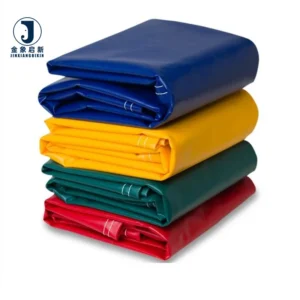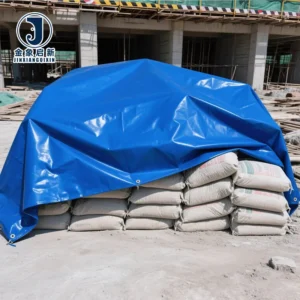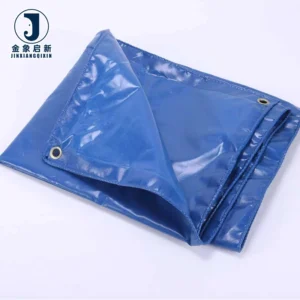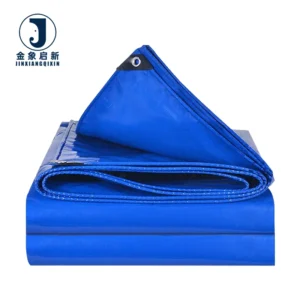
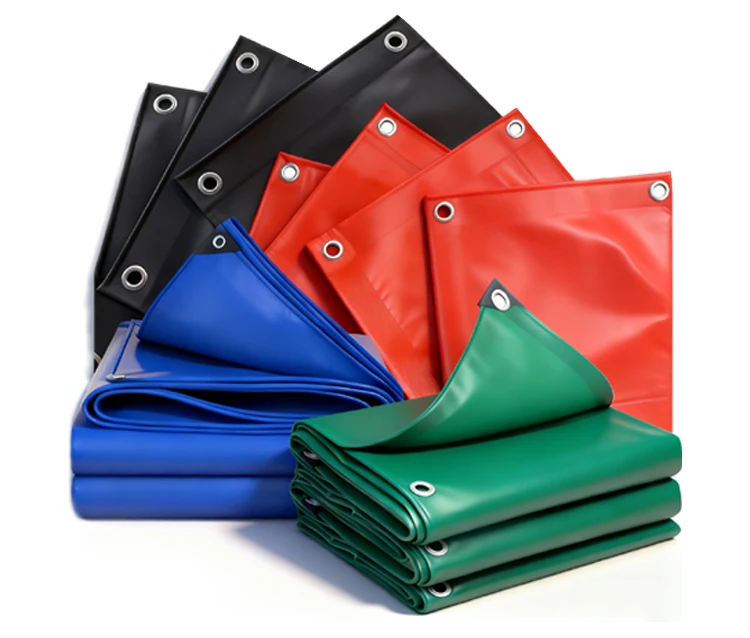
Coating Weight Control — Every roll of laminated PVC coated fabric undergoes in-process GSM verification and 100% pre-shipment inspection, ensuring the material arriving at your dock matches the specification on your purchase order.
Technical Specifications
| Parameter | Value |
|---|---|
| Product Type | PVC Coated Fabric |
| Base Fabric | High tenacity polyester yarn |
| Coating Technology | Lamination technology and hot melt coating technology |
| Yarn Denier (Medium-duty) | 500D |
| Weight (Medium-duty) | 400-500 g/m² |
| Thickness (Medium-duty) | 0.35-0.45 mm |
| Tensile Strength (Medium-duty) | Warp 1500-2000 / Weft 1200-1800 N/5cm |
| Yarn Denier (Heavy-duty) | 1000D |
| Weight (Heavy-duty) | 700-1000 g/m² |
| Thickness (Heavy-duty) | 0.70-1.0 mm |
| Tensile Strength (Heavy-duty) | Warp 2000-2500 / Weft 1800-2200 N/5cm |
| Yarn Denier (Super Heavy-duty) | 500D-2000D |
| Weight (Super Heavy-duty) | 1100-1500 g/m² |
| Thickness (Super Heavy-duty) | 1.2-1.5 mm |
| Tensile Strength (Super Heavy-duty) | Warp 2500-3000 / Weft 2200-2800 N/5cm |
| Flame Retardant | Available (grade not stated — confirm the grade required for your market) |
| Anti-Static | Treatment available (surface resistance or standard not stated — confirm requirements) |
| Anti-Mildew | Mold proof |
| UV Treatment | Weather resistant (test basis not stated — request test report) |
| Cold Resistance | Cold resistant to cracking |
| Waterproof | Fully waterproof coated construction |
| Welding Tear Strength | Rated excellent by manufacturer (test value not stated) |
| Color Fastness | Rated best by manufacturer (grade not stated) |
Application Suitability
| Application | Exposure & Requirement |
|---|---|
| Truck side curtain fabric | Constant flexing at load points, road debris abrasion, UV and rain exposure |
| Tensioned membrane structures | Sustained wind load, biaxial tensile stress, long-term UV exposure |
| Inflatable structure panels | Internal air pressure, cyclic inflation-deflation fatigue, handling abrasion |
| Engineering protective covers | Job site dust and moisture, equipment contact abrasion, repeated folding |
| Industrial pipe canopy | Overhead weather shielding, thermal cycling, chemical splash exposure |
| Heavy-duty transport tarps | Tie-down strap friction, load shift abrasion, highway-speed wind load |
Why Base Fabric Denier Determines Actual PVC Coated Fabric Performance
Coating weight alone does not define the structural capacity of the fabric — base yarn denier and weave density set the floor for tensile and tear behaviour.
Material specifiers frequently select PVC coated fabric gsm tensile strength by focusing on the coating weight shown on the quotation, only to discover that two rolls at the same GSM can behave very differently under load. The reason lies in the base fabric. A 500D yarn woven at standard density and coated to 450 g/m² will deflect and tear at a lower point than a 1000D yarn at the same coating weight, because the load is carried by the yarns, not the coating. [NEED_CITE: relationship between base fabric denier and coated fabric tensile performance per ISO 1421]
How Lamination and Hot Melt Coating Affect Adhesion
Lamination technology bonds the PVC film to the polyester base under heat and pressure, producing a uniform coating layer with consistent thickness across the full roll width. Hot melt coating penetrates the yarn interstices more deeply, creating a mechanical lock that resists delamination when the fabric flexes repeatedly. For technical buyers, the distinction matters: lamination produces a smoother surface suited to printing and membrane fabrication, while hot melt delivers stronger peel resistance at folded edges and welded seams. The PVC coated fabric available here uses both methods depending on grade and end-use specification.
Reading Tensile Values Across Weight Classes
The progression from medium-duty through super heavy-duty shows how warp and weft tensile strength scales with base denier and coating mass. Medium-duty grades at 500D deliver warp tensile figures suited to lighter covers and temporary shelters. Heavy-duty grades at 1000D carry the sustained loads typical of truck side curtains and transport covers. Super heavy-duty grades with deniers up to 2000D serve tensioned structures and industrial containment where biaxial stress is constant. When evaluating PVC coated fabric gsm tensile strength across these grades, the warp-to-weft ratio indicates how the fabric will behave under directional loading. [NEED_CITE: warp and weft tensile testing methods for coated technical textiles]
What GSM, Thickness and Denier Mean Together
Coating weight measured in grams per square metre tells you the mass of material, but not its strength. Thickness in millimetres indicates the total build including coating and base, which relates to abrasion resistance and flex stiffness. Base yarn denier determines the load-bearing skeleton. A thicker coating adds weather protection and abrasion mass but does not raise tear resistance if the base yarn remains unchanged. This is why the specification table lists all three parameters side by side — selecting by any single figure in isolation leads to misapplication. The denier progression from 500D to 2000D across weight classes gives specifiers a clear ladder to match structural demand without over-specifying.
The Hidden Cost of Specifying by Coating Weight Alone
A roll that arrives lighter than the quoted GSM is an immediate problem — the buyer pays for material that was never produced. But the more common failure is subtler: a fabric that meets the GSM target but uses a lighter base yarn compensated by a thicker coating layer. This roll passes the scale check yet tears at the weld line when the fabricated panel flexes under wind load. [NEED_CITE: weld line failure in coated fabrics caused by base fabric substitution] Batch-to-batch inconsistency in coating adhesion compounds the problem when fabricators dial in heat-weld parameters from a sample roll that does not represent production stock. These failures surface only after fabrication, when rework costs have already multiplied.
Process Control That Protects Your Specification
Three full production lines with 36 sets of professional equipment give this facility the capacity to run consistent coating weight across long roll runs without line changeover introducing variation. The ten-person R&D team develops material specifications matched to individual buyer requirements, from base denier selection through treatment options, and produces samples within days for approval before production begins. In-process quality checks monitor coating adhesion and weight at every stage, not only at final inspection. Dedicated QA/QC personnel inspect 100% of rolls before shipment, verifying that the PVC coated fabric dispatched matches the approved sample in GSM, colour and treatment level. This is the depth of process control that nearly 30 years of focused coated fabric production builds.
Documentation & Verification
- Material specification sheet stating exact GSM, base denier and coating method for every roll
- Test reports for flame retardant grades confirming the standard achieved
- UV treatment test documentation available upon request for weather resistance claims
- Pre-shipment inspection record with coating weight verification per roll
- ISO and CE certificates included with customs and compliance documentation
- Roll packing list with individual roll weights for receiving verification
Fabrication, Handling & Storage
- Heat-weld parameters should be adjusted per grade — heavier 1000D and 2000D bases require higher dwell time for full seam fusion
- Store rolls upright on pallets to prevent compression marks that affect coating surface flatness during fabrication
- Cold-resistant grades remain flexible at low temperatures but rolls should be unrolled above freezing to avoid coating micro-cracking
- Cut patterns should account for the 0.35-1.5 mm thickness range — heavier grades consume more blade depth and require adjusted feed rates
- Laminated surfaces accept solvent and UV-cured inks; confirm adhesion on the specific gloss or matte finish before full print runs
- Reinforce tie-down and eyelet zones with additional PVC patches, especially on medium-duty 500D grades where point load concentrates
Requesting a Material Match for Your Application
To specify the right grade from this range, share the end-use application, the directional loads the fabricated panel will carry, and the environmental exposure profile including UV and temperature range. If your market requires a specific flame retardant or anti-static standard, state the target certification so the correct treatment can be applied and documented. Indicate whether you need rolls in stock widths or custom dimensions, and whether colour matching across multiple rolls is critical for your installation. Sample rolls are developed for approval before production runs begin.
Frequently Asked Questions
Q: How is GSM verified per roll and what documentation accompanies shipment?
A: Each roll is weighed and measured during pre-shipment inspection to confirm the actual coating weight matches the specification sheet. A roll-by-roll packing list and inspection record ship with the consignment, providing traceable GSM data. ISO and CE certificates are included for compliance documentation. Buyers can request the inspection record in advance of dispatch.
Q: What flame retardant grades are available and which test standards apply?
A: Flame retardant treatment is available across the range, but the specific grade depends on your market’s regulatory framework. Confirm the standard required — such as DIN 4102, NFPA 701 or a local building code classification — when requesting a quotation. Test reports documenting the achieved grade are provided for the applicable standard upon confirmation.
Q: How does base fabric denier affect tensile and tear strength selection?
A: The base yarn denier sets the structural floor — 500D suits medium-duty covers, 1000D handles heavy transport loads, and grades up to 2000D serve tensioned and industrial structures. Tensile values scale with denier in both warp and weft directions. Selecting the correct denier ensures the fabricated panel carries design loads without relying solely on coating mass for strength.
Q: What coating methods are used and how do they affect weld and seam behaviour?
A: Lamination technology produces a smooth, uniform coating layer suited to printing and membrane work. Hot melt coating penetrates the base fabric more deeply, delivering stronger peel resistance at welded seams and folded edges. Both methods are used depending on grade. Fabricators should adjust heat-weld temperature and dwell time to match the coating method and grade thickness.
Q: What UV treatment test basis supports the stated weather resistance?
A: UV treatment is applied to extend outdoor service life, and the manufacturer rates weather resistance at 3-5 years for outdoor exposure. The specific test basis is not stated in the general specification — request the UV test report when ordering to confirm the exposure standard and duration validated. This documentation supports compliance submissions in regulated applications.