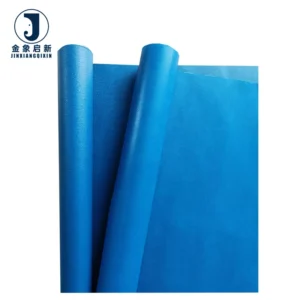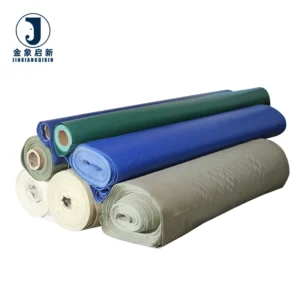
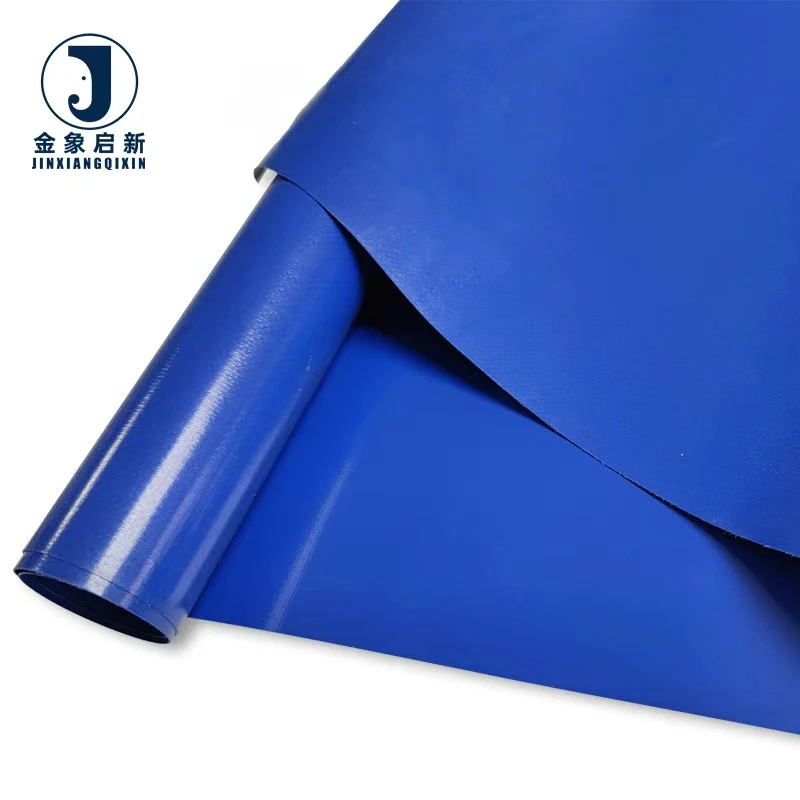
Process-Controlled Coating Weight — every roll of PVC laminated tarpaulin fabric undergoes documented GSM verification before dispatch, ensuring the weight on the quotation matches the material you receive.
Technical Specifications
| Parameter | Value |
|---|---|
| Product Type | PVC Coated Tarpaulin Fabric |
| Base Fabric | High-strength polyester mesh fabric |
| Coating Material | PVC |
| Coating Technology | Laminated technology & Hot-melt coating technology |
| Weight Options | 350gsm / 420gsm / 500gsm / 550gsm / 600gsm / 750gsm |
| Thickness Options | 0.32mm / 0.35mm / 0.4mm / 0.45mm / 0.5mm / 0.65mm |
| Roll Width | 2m / 2.1m |
| Roll Length | 75m (for 2m width) / 50m (for 2.1m width) |
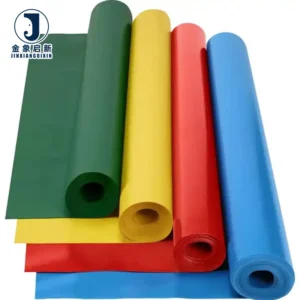
| Colour Options | Blue / Red / Yellow / Light Blue / Grey (Customized) |
| Surface Treatments Available | Anti-UV / Flame Retardant / Anti-Static / Anti-Mildew / Anti-Cold (confirm the grade required for your market) |
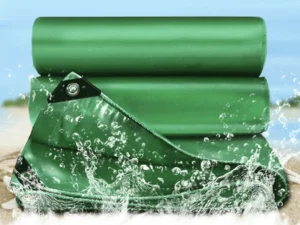
| Key Features | Cold crack resistance, anti-mildew, waterproof, fully coated both sides |
| Standards | ISO, CE |
Application Suitability
| Application | Exposure & Requirement |
|---|---|
| Truck awning and side curtain | Constant flexing at tie-down points, road debris abrasion, prolonged sun exposure, weld seam integrity under tension |
| Construction scaffolding enclosure | Wind loading on large panels, repeated installation and removal, UV and rain exposure across seasons |
| Tent and inflatable structure fabric | Tensile load from frame or air pressure, fold-line stress during pack-down, colour consistency across joined panels |
| Cargo ship and marine cover | Salt spray, standing water, mechanical abrasion from shifting loads, cold crack resistance in northern routes |
| Equipment and plant cover | Chemical splash in refinery settings, puncture risk from sharp edges, long-term outdoor storage without degradation |
| Fish tank and pool liner | Permanent water contact, coating adhesion under hydrostatic pressure, anti-mildew performance in warm climates |
Why the GSM on the Quotation Is Not the Whole Story for Coated Fabric
A roll that meets the stated GSM can still fail at the weld line if coating adhesion is weak or the base fabric construction is inconsistent.
Technical buyers often specify PVC coated tarpaulin fabric by weight alone, assuming that 550gsm from one supplier equals 550gsm from another in terms of tensile strength and tear resistance. In practice, two rolls at the same GSM can behave very differently on the fabrication table. The distribution of weight between base fabric and coating, the denier of the polyester yarns, and the mesh density all determine how the material handles cutting, welding, and long-term load. A roll where most of the weight sits in a thick but poorly bonded coating layer will delaminate at the seam before the fabric body reaches its rated strength. [NEED_CITE: relationship between base fabric denier and coating adhesion strength in laminated PVC textiles]
How Laminated and Hot-Melt Coating Methods Affect Fabrication
The laminated technology used in this PVC coated tarpaulin fabric bonds the PVC film to the polyester mesh under heat and pressure, creating a uniform coating layer with consistent adhesion across the full width. Hot-melt coating technology, available as an alternative process, drives the PVC compound into the mesh interstices at high temperature, producing a different hand feel and weld response. Fabricators running high-frequency or hot-air welding equipment need to match the coating method to their machine parameters — a laminated sheet may require different dwell times and temperature settings compared to a hot-melt coated equivalent at the same GSM. Specifying the coating method at the inquiry stage avoids costly trial-and-error on the production floor.
What Coating Adhesion Means for Weld Seam Performance
When a fabricator heat-welds two panels of PVC coated tarpaulin fabric, the seam strength depends on how well the coating layers fuse together and how firmly the coating is bonded to the base fabric. If adhesion between coating and mesh is low, the weld may hold but the coating peels away from the yarn under load, creating a failure path that bypasses the seam entirely. [NEED_CITE: peel strength test methods for coated fabric laminates per ISO 2411] This is why coating weight distribution matters as much as total GSM — a balanced construction with strong yarn-to-coating bond outperforms a heavier roll where the coating sits on the surface without penetrating the mesh structure.
Reading GSM, Thickness, and Base Fabric Together
The weight range from 350gsm to 750gsm corresponds to thickness options from 0.32mm to 0.65mm, but the relationship is not linear. A 500gsm roll at 0.4mm thickness indicates a denser base fabric with more weight in the polyester yarns, which generally translates to higher tensile and tear values than a 500gsm roll at 0.5mm where the extra thickness comes from a softer, thicker coating layer. For tent and inflatable structure manufacturers, the base fabric denier and mesh count determine how the material behaves under sustained tension — a tighter weave resists tear propagation even if the total GSM is lower. For truck awning applications where abrasion dominates, a heavier coating layer provides more sacrificial material before the base fabric is exposed. Matching the GSM-to-thickness ratio to the specific stress profile of the end use is more useful than selecting on weight alone.
The Cost of Specifying on Weight Without Verification
When PVC coated tarpaulin fabric arrives lighter than the quotation stated, the consequences extend beyond the material shortfall. Fabricators who have already committed to a cutting plan find that the panels do not meet the tensile requirements specified by the end customer, and the entire batch may need to be re-sourced on a compressed timeline. In projects where flame retardant or anti-static certification is contractually required, a roll supplied without the corresponding test report can halt a site installation until documentation is produced. [NEED_CITE: common causes of coated fabric specification disputes in industrial procurement] Colour variation between rolls in the same order becomes visible once panels are welded side by side on a large tent or truck curtain, forcing selective panel matching or outright rejection of the affected rolls.
What This Supply Chain Brings to Material Specification
Three full production lines with dedicated coating equipment allow this PVC coated tarpaulin fabric to be produced with controlled coating weight across the full width, maintaining batch consistency from the first roll to the last in a container load. The 10-person R&D team develops sample swatches within days for custom colour, width, or treatment requirements, letting fabricators confirm weld parameters and visual appearance before committing to a production run. A 10-person QA team conducts inspection at each production stage, including GSM verification and coating adhesion checks, with records available against each roll number. ISO and CE certification supports export documentation for projects with compliance requirements across multiple jurisdictions. Custom widths of 2m and 2.1m, along with roll lengths of 75m and 50m respectively, reduce cutting waste for fabricators working to standard panel dimensions.
Documentation & Verification
- Material specification sheet listing confirmed GSM, base fabric construction, and coating method for each roll
- Weight verification record per roll measured against the stated GSM before dispatch
- UV resistance test report issued for grades where anti-UV treatment is specified and confirmed
- Flame retardant or anti-static test report provided with the applicable grade and standard reference
- Pre-shipment inspection record documenting colour consistency across all rolls in the order
- Certificate of origin and customs documentation prepared per destination country requirements
Fabrication, Handling & Storage
- Set hot-air weld temperature and dwell time based on whether the roll is laminated or hot-melt coated to avoid delamination at seams
- Allow rolls stored below 10°C to acclimatise before unrolling to prevent cold crack damage on the coating surface
- Cut panels with the coating orientation marked to ensure consistent weld face pairing across joined sections
- Store rolls vertically on pallets to prevent flat-spot deformation that shows as visible creases after installation
- Use mild detergent for cleaning — solvent-based agents can soften the PVC coating and reduce surface adhesion over time
- Plan cutting layout around the 2m or 2.1m roll width to minimise off-cuts and reduce the number of weld seams in large covers
Before You Request a Quote
Tell us the end-use application and the primary stress the fabric will face — whether that is sustained tension, abrasion, chemical exposure, or fire safety compliance on site. Specify the GSM and thickness range you need, or describe the performance requirement and we will recommend a grade from the 350gsm to 750gsm range. If your market requires a specific flame retardant or anti-static certification, include the standard reference so we can confirm availability and provide the matching test report with the shipment.
Frequently Asked Questions
Q: How do you verify that the GSM matches the quotation when the rolls arrive?
A: Every roll is weighed and measured during pre-shipment inspection, and a verification record is generated showing the actual GSM against the stated value. You can perform a simple confirmation test on arrival by cutting a measured sample from the roll edge and calculating the weight per square metre. We provide the inspection record with each shipment so your receiving team can cross-reference immediately.
Q: What is the difference between laminated and hot-melt coated PVC tarpaulin?
A: Laminated technology bonds a pre-formed PVC film to the polyester mesh under heat and pressure, producing a smooth surface with uniform thickness. Hot-melt coating drives molten PVC into the mesh structure, creating deeper penetration and a different weld response. The choice depends on your fabrication method and the seam strength requirements of the finished product.
Q: Can you supply flame retardant or anti-static test reports with the shipment?
A: These treatments are available in specific grades, and we issue test reports that reference the applicable standard for each grade. When you specify the fire safety or anti-static requirement for your market at the inquiry stage, we confirm the available grade and include the corresponding documentation with your order.
Q: How is colour consistency maintained across multiple rolls in one order?
A: All rolls in a single production batch are coated from the same compounded PVC mix, and colour is checked against the reference standard during in-process QA. The pre-shipment inspection includes a side-by-side visual comparison of rolls before packing, so any variation is caught before dispatch rather than after installation.
Q: Which GSM and thickness should I choose for welding into finished covers?
A: The right grade depends on the mechanical load and environmental exposure of the finished product. Lighter grades around 350gsm to 420gsm suit temporary covers and light enclosures, while 550gsm to 750gsm grades are specified for truck curtains, permanent structures, and heavy equipment covers. Share your application details and we will recommend the grade with the best balance of weld performance and service strength.