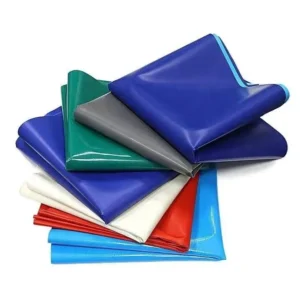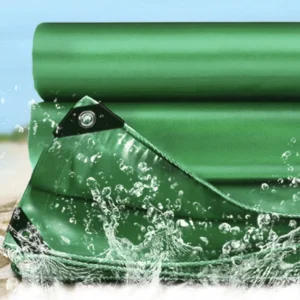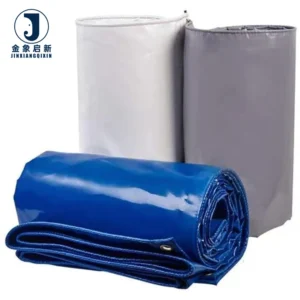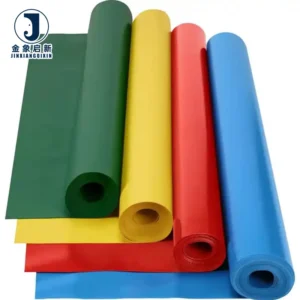
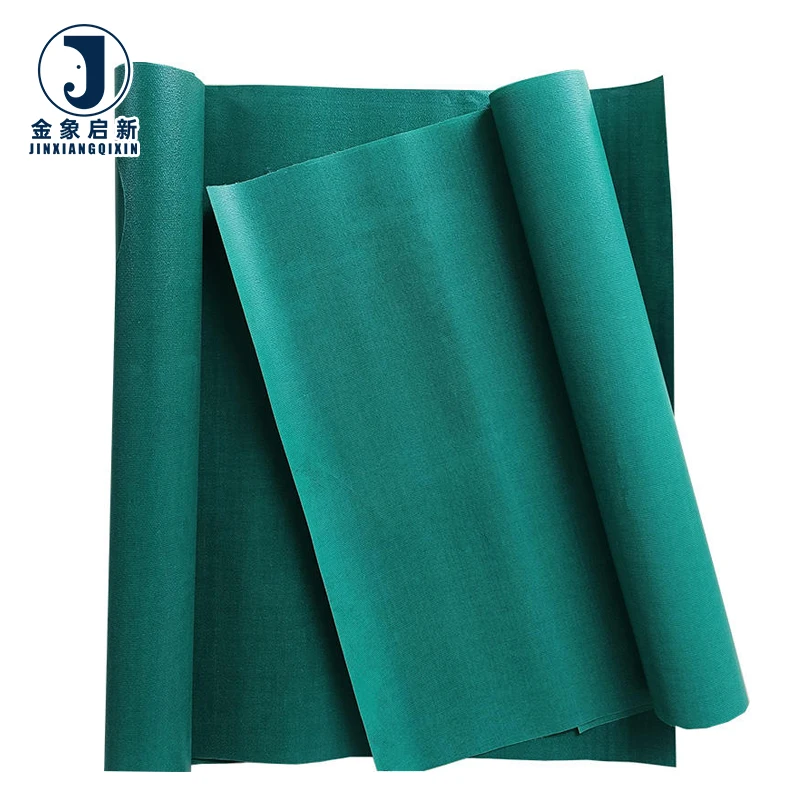
Consistent Coating Adhesion — hot-melt and laminated processes maintain uniform PVC bond strength across every roll in a production run, verified before dispatch.
Technical Specifications
| Parameter | Value |
|---|---|
| Product Type | PVC Coated Tarpaulin Roll |
| Material | PVC + High-strength polyester mesh fabric |
| Coating Technology | Laminated & Hot-melt Coating |
| Weight (GSM) | 350gsm, 420gsm, 500gsm, 550gsm, 600gsm, 750gsm (confirm the grade for this item) |
| Total Thickness | 0.32mm, 0.35mm, 0.4mm, 0.45mm, 0.5mm, 0.65mm |
| Standard Roll Size | 2m × 75m / 2.1m × 50m |
| Color Options | Blue, Red, Yellow, Light Blue, Grey (customizable) |
| Waterproof | Yes |
| Anti-Mildew | Yes |
| Cold Crack Resistance | Yes |
| Flame Retardant | Available in flame retardant grades — confirm the grade required for your market |
| Anti-Static | Available in anti-static grades — confirm the standard required for your site |
| Service Life | 3–7 years under normal conditions (source value — verify against manufacturer catalog) |
| Standards | ISO, CE |
Application Suitability
| Application | Exposure & Requirement |
|---|---|
| Construction enclosure | Wind-driven rain, scaffolding abrasion, repeated handling and tear-out at grommet zones |
| Temporary industrial covers | Dust ingress, chemical splash, frequent removal and refitting over machinery |
| Truck awning and side curtain | Constant flexing at load points, road debris impact, prolonged UV exposure on highways |
| Tent and inflatable structure | Heat-weld seam integrity, sustained tension at anchor points, weather cycling |
| Fish tank and pool liner | Permanent water immersion, hydrostatic pressure, puncture risk from substrate contact |
| Marine and offshore maintenance | Salt spray, deck abrasion, requirement for certified flame retardant grades on vessel sites |
Why PVC Coated Tarpaulin Material and Coating Technology Determines Weld Integrity Before GSM Does
The coating method and its adhesion to the base fabric govern whether a weld seam survives flexing — not the GSM number printed on the label.
Technical buyers often specify a PVC coated tarpaulin roll by GSM alone, assuming a heavier grade automatically means a stronger weld. In practice, a 550gsm roll produced with inconsistent coating adhesion will delaminate at the weld line before a well-coated 500gsm grade fails. When the material arrives lighter than quoted, or when flame retardant claims appear without supporting test documentation, the entire cover system is compromised at the point it is stressed most. [NEED_CITE: tensile and tear test methods for coated fabrics per ISO 1421]
How Hot-Melt and Laminated Coating Affect PVC Tarpaulin GSM Coating Weight Consistency
Hot-melt coating forces liquid PVC into the interstices of the high-strength polyester mesh under heat and pressure, creating a mechanical bond that resists peel forces during heat welding. Laminated technology bonds pre-formed PVC films to each side of the base fabric, offering tighter thickness control across the 0.32mm to 0.65mm range. Each method produces a different surface texture that influences weld temperature settings and dwell time. Fabricators working with PVC coated tarpaulin material and coating technology need to match their welding parameters to the coating method specified, not just the GSM grade.
What Base Fabric Denier and Weave Density Contribute Beyond Coating Weight
The polyester mesh substrate carries the tensile and tear load; the PVC coating protects it from moisture, UV, and mechanical abrasion. A tightly woven base with uniform denier distribution limits tear propagation once a puncture initiates. Coating weight — expressed as PVC tarpaulin GSM coating weight — adds mass and surface protection but cannot compensate for a loosely woven base. Technical specifiers evaluating PVC coated tarpaulin rolls should request the base fabric construction data alongside the total GSM figure to assess the real load-bearing capacity of the material. [NEED_CITE: relationship between base fabric denier and tear strength in coated technical textiles]
Reading GSM, Thickness, and Coating Method Together
Six GSM grades — 350gsm, 420gsm, 500gsm, 550gsm, 600gsm, and 750gsm — map to total thickness values from 0.32mm through 0.65mm, but the ratio between weight and thickness shifts depending on whether the coating is hot-melt or laminated. Hot-melt grades tend to show a denser cross-section at equivalent GSM because the PVC penetrates the weave rather than sitting as a surface film. For tent and awning fabricators who heat-weld seams along the full panel length, this penetration affects how cleanly the weld bead forms and how much peel strength the joint retains after repeated flexing. Anti-mildew and cold crack resistance treatments are integrated during the coating stage and apply across the full GSM range.
The Hidden Cost of Specifying PVC Coated Tarpaulin by GSM Alone
When a roll arrives and the coating weight does not match the quotation, the first sign is often a weld seam that tears away from the fabric during installation. Colour variation between rolls in the same batch becomes visible only after panels are installed side by side on a structure or truck body. If flame retardant or anti-static certification is required on site but the test documentation was never supplied, the cover fails inspection regardless of how well the material performs mechanically. These are not cosmetic issues — they trigger rework, shipment rejection, and compliance delays that cost more than the material itself. [NEED_CITE: coating weight verification and batch consistency protocols for industrial tarpaulin supply]
Why Technical Buyers Source PVC Coated Tarpaulin Rolls from Jinan Jinxiang
Deep process control over coating weight and adhesion is maintained across all six GSM grades through dedicated QA at every production stage. Three full production lines and 36 sets of professional equipment support bulk roll output without sacrificing roll-to-roll colour and weight consistency. A 10-person R&D team develops samples within days for custom width, colour, and treatment requirements, allowing fabricators to validate weld parameters before committing to a full order. Every roll undergoes 100% pre-shipment inspection against the stated specification, and documentation — including material data sheets and test reports where applicable — ships with the order.
Documentation & Verification
- Material specification sheet stating exact GSM, base fabric construction, and coating method per roll
- Test reports for UV resistance and flame retardant grades where applicable — no claim without documented basis
- Pre-shipment inspection record verifying coating weight and colour consistency across the full order
- Roll packing list with batch traceability for arrival verification against the original quotation
- ISO and CE certificates referenced per shipment
- Certificate of origin and customs support documentation included
Fabrication, Handling & Storage
- Set heat-weld temperature and dwell time based on whether the roll uses hot-melt or laminated coating
- Store rolls horizontally on racking to prevent flat-spot deformation on the 2m or 2.1m width
- Allow cold-stored rolls to reach ambient temperature before unrolling to avoid coating crack at low GSM grades
- Use compatible PVC welding tape for seam repairs matching the coating method of the original roll
- Clean surfaces with mild detergent only — solvent-based cleaners may degrade the anti-mildew treatment
- Plan panel cutting layout around the 75m or 50m roll length to minimize off-cuts and weld joints
What to Include in Your Enquiry
Specify the application, exposure conditions, and any fire or anti-static compliance requirements for your target market so the correct treatment grade can be matched. Indicate preferred GSM range, coating method, colour, and whether you need roll stock or finished cut sizes. Provide annual volume estimates and any custom width requirements to confirm minimum order and lead time. Request a sample roll or swatch set to validate weld parameters and colour approval before production.
Frequently Asked Questions
Q: How is GSM verified to match the quoted specification?
A: Each roll is weighed and measured during pre-shipment inspection, and the actual GSM is recorded against the quoted value. A verification document ships with the order so you can cross-check on arrival. If you require third-party testing to a specific standard, this can be arranged before dispatch.
Q: Hot-melt vs laminated coating — which suits welding and high-flex applications?
A: Hot-melt coating penetrates the polyester mesh, producing strong peel resistance at weld seams under repeated flexing. Laminated coating gives tighter thickness control for applications where dimensional consistency matters. The choice depends on your welding method and the flex demands of the final installation.
Q: What test standards apply to flame retardant and anti-static grades?
A: Flame retardant and anti-static treatments are available across the product range, but the applicable test standard depends on your market and site regulations. Confirm the specific standard required — such as a building material fire classification or mining ventilation requirement — so the correct grade and documentation are supplied.
Q: How is colour consistency controlled across multiple rolls in one batch?
A: All rolls in a single order are produced from matched coating batches, and colour is checked during pre-shipment inspection. A roll-by-roll record accompanies the shipment. For large orders installed side by side, we recommend requesting a production sample for visual approval before the full run is completed.
Q: What roll widths and lengths are available, and can custom widths be ordered?
A: Standard rolls are produced at 2m × 75m and 2.1m × 50m. Custom widths and lengths can be manufactured subject to minimum order requirements. Specify your required dimensions, GSM grade, and colour in the enquiry to confirm feasibility and lead time.