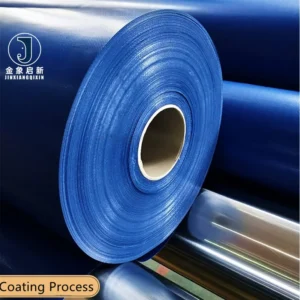
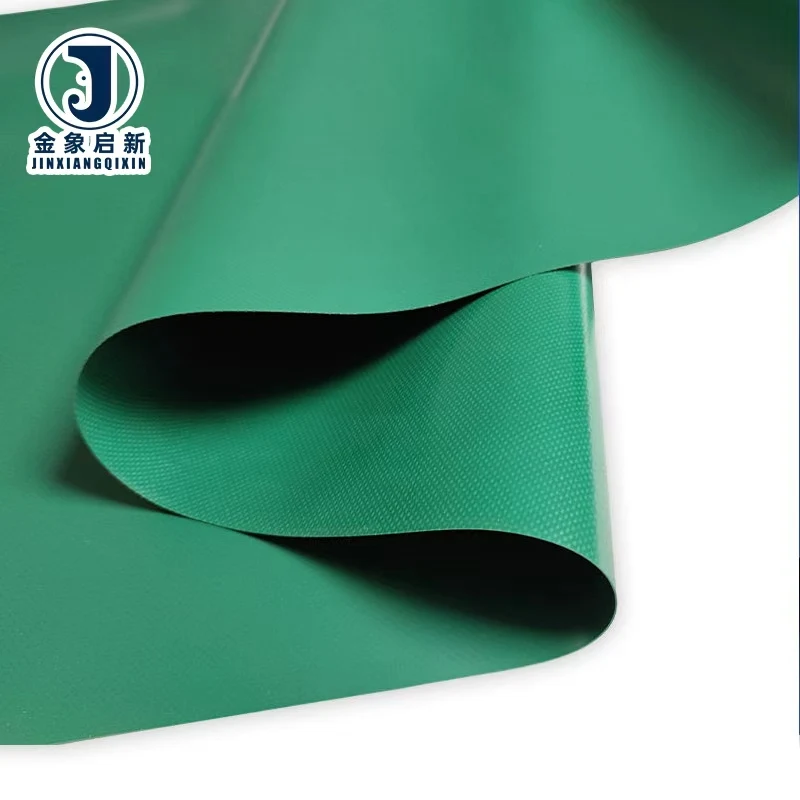
Coating Weight Control — Every roll undergoes in-process verification of coating weight and GSM against the material specification sheet before it leaves the production line.
Technical Specifications
| Parameter | Value |
|---|---|
| Product Type | PVC Coated Tarpaulin Roll |
| Base Fabric | High-strength polyester mesh fabric |
| Coating Material | PVC |
| Coating Method | Laminated technology & Hot-melt coating technology |
| Weight (GSM) | 350gsm / 420gsm / 500gsm / 550gsm / 600gsm / 750gsm |
| Total Thickness | 0.32mm / 0.35mm / 0.4mm / 0.45mm / 0.5mm / 0.65mm |
| Roll Size | 2m × 75m / 2.1m × 50m |
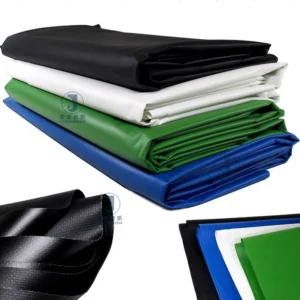
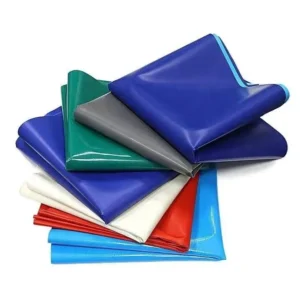
| Color Options | Blue / Red / Yellow / Light Blue / Grey (Customized) |
| Key Features | Waterproof, anti-mildew, cold crack resistance, color fastness |
| Special Treatments Available | Flame retardant / Anti-static / Anti-cold / Anti-mildew / 3P (grade not stated — confirm required standard) |
| Service Life | 3–7 years under normal circumstances |
| Standards | ISO, CE |
Application Suitability
| Application | Exposure & Requirement |
|---|---|
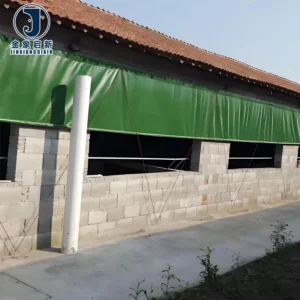
| Truck awning | Continuous road vibration, UV exposure, wind flap fatigue at hem and eyelet zones |
| Tent cover | Sustained weather exposure, repeated assembly and folding, seam stress at ridge lines |
| Cargo ship cover | Salt-laden atmosphere, heavy rain, sustained tension across large unsupported spans |
| Construction scaffolding enclosure | Wind-driven rain, abrasion against steel tube connections, site fire compliance |
| Building enclosure and plant maintenance | Dust containment, temporary weather protection, chemical aerosol contact |
| Fish tank and pool liner | Permanent water immersion, UV at waterline, puncture risk from substrate |
Why GSM Alone Does Not Define Tensile and Tear Performance
GSM tells you how much material is present, but the base fabric denier and weave density determine how that weight translates into usable strength.
Technical buyers frequently receive PVC coated tarpaulin roll stock that matches the quoted GSM yet underperforms on tensile or tear tests. The reason sits below the coating surface: a lighter base yarn or a looser weave can be masked by heavier PVC coating to hit a target weight without delivering the expected mechanical performance. Laminated and hot-melt coating processes interact differently with the polyester mesh base, affecting how load transfers from the coating into the yarn structure. When a PVC coated tarpaulin roll gsm coating technology specification lands on your desk, the number is a starting point — not a guarantee [NEED_CITE: tensile and tear test methods for coated fabrics per ISO 1421].
Laminated and Hot-Melt Coating: What Each Process Delivers
Laminated technology bonds the PVC film to the high-strength polyester mesh fabric under heat and pressure, creating a consistent coating layer with strong adhesion across the full roll width. Hot-melt coating technology applies molten PVC directly into the mesh interstices, allowing deeper penetration around individual yarns. The choice between these methods affects peel strength, weld behaviour during downstream fabrication, and how the PVC coated tarpaulin roll responds to repeated flexing in service.
How the Polyester Mesh Base Influences Downstream Fabrication
The high-strength polyester mesh fabric serves as the structural backbone of every roll in this product family. Its yarn denier and weave density govern how the material behaves when cut, welded or sewn into finished products. Fabricators working across multiple GSM grades — from 350gsm at 0.32mm up to 750gsm at 0.65mm — will find that tear propagation resistance and weld line integrity vary with the base construction, not merely with coating thickness [NEED_CITE: relationship between base fabric construction and tear strength in coated textiles].
Reading the Specification Sheet Beyond the Weight Number
Coating weight, total thickness and base fabric construction together define how a PVC coated tarpaulin roll performs under load. A 550gsm roll at 0.45mm thickness built on a tighter weave will resist tear propagation differently than a 550gsm roll at the same thickness built on a more open mesh with heavier coating fill. For specifying buyers, requesting the base fabric denier alongside the GSM provides a more complete picture of how the material will behave during fabrication and in the field. The laminated and hot-melt coating technologies available here offer options to match adhesion and flexibility requirements across this full specification range.
The Hidden Cost of Specifying on Weight Without Process Context
Rolls that arrive within the quoted GSM range but with inconsistent coating adhesion create problems that surface only during fabrication or in service. Welds that delaminate under flex load, colour shifts between rolls from the same batch, and coating that cracks at fold lines in cold weather all trace back to process variables that weight measurement alone cannot reveal. When anti-UV or flame-retardant treatment is specified without a supporting test report, the material may pass incoming inspection yet fail a site compliance audit weeks later [NEED_CITE: fire classification standards for temporary structures and tarpaulin materials].
Why Source This PVC Coated Tarpaulin Roll Here
Three full production lines and 36 sets of professional equipment allow this facility to run dedicated campaigns for specific GSM grades and colour runs, maintaining batch consistency across rolls in the same shipment. The 10-person R&D team develops samples within days when custom widths, colours or treatment combinations are required before full production commitment. Dedicated QA/QC operates at every production stage, with 100% pre-shipment inspection verifying coating weight, colour reference and treatment specification against the purchase order. Coating process control built over nearly 30 years of focused production ensures that adhesion strength and GSM values hold from the first roll to the last in a container load. Material specification sheets, test documentation and certificates travel with every dispatch so that verification can be completed on arrival.
Documentation & Verification
- Material specification sheet stating GSM, base fabric type and coating method for each roll produced
- Test reports for flame retardant and anti-static grades where applicable, referencing the standard applied
- Pre-shipment inspection record confirming coating weight, colour consistency and roll dimensions
- ISO and CE certificates included in the documentation package with each shipment
- Roll packing list with individual roll identification for traceability through the supply chain
Fabrication, Handling & Storage
- Hot-air welding temperature should be matched to the coating method — laminated and hot-melt surfaces respond differently to heat input
- Store rolls upright on pallets to prevent flat-spot deformation on the outer coating layers
- Allow cold-stored rolls to acclimatise before unrolling to avoid cracking the PVC coating at low temperature
- Cut patterns with the mesh grain direction to maximise tear resistance along stress lines
- Clean finished surfaces with mild detergent only to preserve the anti-mildew treatment integrity
What to Include in Your Specification Enquiry
Provide the target GSM and thickness alongside your end-use application so that the correct coating method and base fabric grade can be matched. If your market requires flame retardant or anti-static compliance, state the specific standard and grade your site or customer demands. Confirm whether you need standard roll widths of 2m or 2.1m, or a custom width, and indicate your colour reference and any printing requirements for brand identification on the roll.
Frequently Asked Questions
Q: How is GSM verified per roll before shipment?
A: Each roll is checked during 100% pre-shipment inspection against the stated GSM on the material specification sheet. Coating weight is verified through in-process QA at the production stage, and the inspection record accompanies the shipment so you can confirm values on arrival.
Q: What flame retardant grades are available and which standards apply?
A: Flame retardant treatment is available as a special option across the product family. The specific grade and test standard — such as M2, B1, NFPA 701 or DIN 4102 — must be confirmed at enquiry stage to match your market requirements and to ensure the correct test report is provided with the shipment.
Q: How do laminated and hot-melt coating methods differ for fabrication?
A: Laminated technology bonds PVC film to the polyester mesh under heat and pressure, delivering consistent peel strength. Hot-melt coating penetrates deeper into the mesh interstices. The method selected affects weld parameters, adhesion behaviour and flexibility during downstream cutting and joining operations.
Q: Can I order a sample in my specified GSM and colour before committing to bulk?
A: The R&D team develops samples within days based on your specified GSM, colour reference and treatment requirements. Sample approval forms part of the standard sales process before full production begins, ensuring the roll stock matches your fabrication and performance expectations.
Q: What UV treatment options are offered for outdoor applications?
A: UV-resistant treatment is available and stated as sunproof across the range. The test basis and exposure rating should be confirmed at enquiry stage to match your application environment and to ensure supporting documentation is included with your order.