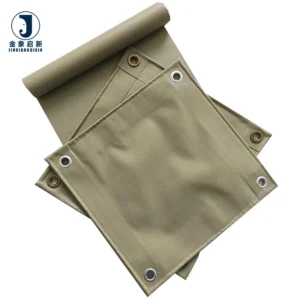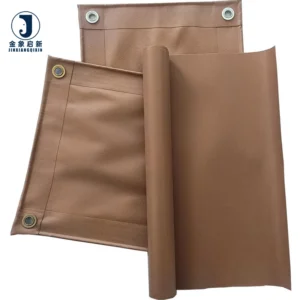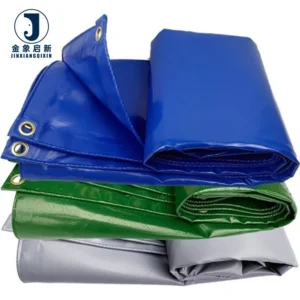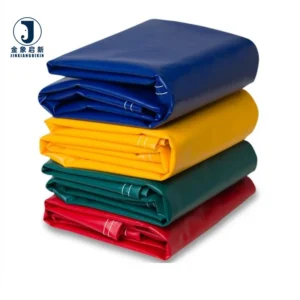
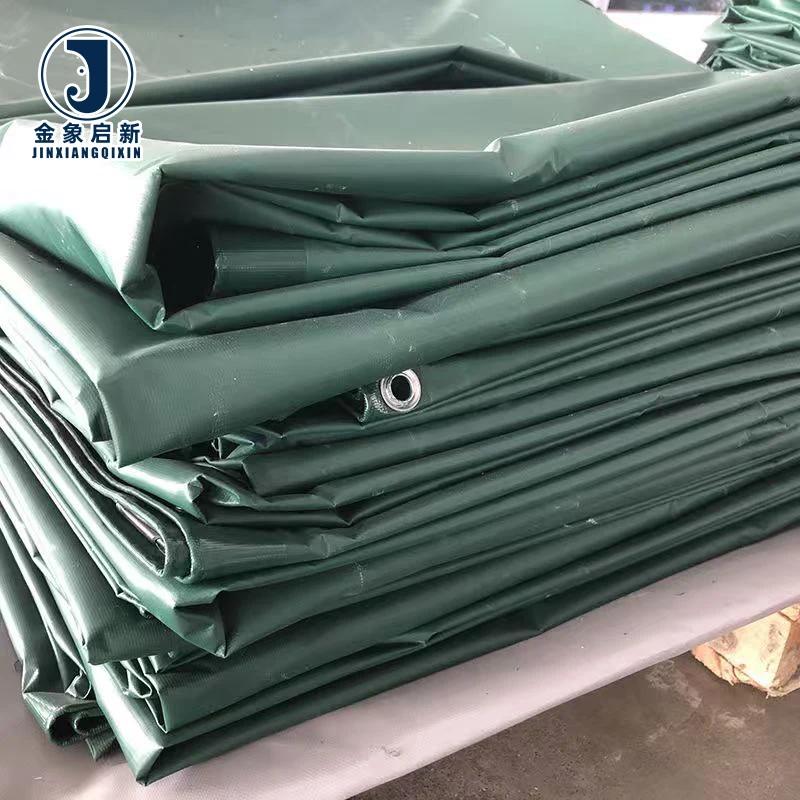
Coating Process Control — Hot melt coating and lamination technology applied to a 100% high toughness polyester yarn base, with dedicated QA/QC verifying coating weight and adhesion at every production stage for consistent PVC Coated Tarpaulin 600gsm performance.
Technical Specifications
| Parameter | Value |
|---|---|
| Product Type | PVC Coated Fabric |
| Base Fabric | 100% high toughness polyester yarn |
| Coating Material | PVC |
| Coating Technology | Lamination technology and hot melt coating technology |
| Weight Range | 400–1500 g/m² (grade-dependent) |
| Thickness Range | 0.35–1.5 mm (grade-dependent) |
| Knitting Density | 500D–2000D (grade-dependent) |
| Tensile Strength (Warp) | 1500–3000 N/5cm (grade-dependent) |
| Tensile Strength (Weft) | 1200–2800 N/5cm (grade-dependent) |
| Key Features | Waterproof, cold resistant, mold proof |
| Flame Retardant | Available in flame retardant grades — confirm the grade required for your market |
| Anti-Static | Available with anti-static treatment — confirm surface resistance or standard at inquiry |
| UV Treatment | Available with anti-UV treatment — confirm test basis at inquiry |
| Color Options | Blue, Blue/Orange, Green, Grey, Black, Clear, Orange, or customized |
| Surface Finish | Best color fastness (grade available on request) |
| Custom Sizes | Available, including cut sizes such as 6m × 15m |
| Certifications | ISO, CE |
Application Suitability
| Application | Exposure & Requirement |
|---|---|
| Truck and trailer tarpaulin fabrication | Constant road vibration, UV exposure, flex stress at tie-down points, and abrasion against cargo edges |
| Full-size pickup truck covers | Outdoor parking exposure, rain and dust ingress prevention, repeated folding and unfolding |
| Industrial pipe canopy and tensioned structures | Sustained tensile load, wind uplift, long-term UV and weather exposure |
| Farm machinery and equipment covers | Soil and moisture contact, seasonal storage, mechanical abrasion during deployment |
| Construction site protective cloth | Debris impact, water exposure, wind loading, and repeated repositioning |
Why GSM Alone Fails to Predict Tarpaulin Lifespan on the Road
A 600gsm PVC coated tarpaulin with weak base fabric and poor coating adhesion will fail faster than a lighter fabric built on a high-denier polyester weave with proper hot melt bonding.
Buyers frequently see quotations stating a target GSM, only to find the delivered roll feels lighter and tests below the agreed weight. Even when the GSM is accurate, the fabric may split at the weld line under load because the coating did not fuse fully to the base yarn. Tensile strength in the warp direction and weld tear resistance are driven as much by knitting density and coating method as by total weight. [NEED_CITE: tensile and tear test methods for coated fabrics per ISO 1421]
Coating Adhesion and Its Effect on Welded Seams
Hot melt coating technology forces liquid PVC into the polyester yarn interstices under heat and pressure, producing a mechanical bond that resists delamination during high-frequency welding. Lamination technology bonds a pre-formed PVC film to the base fabric, offering a different balance of flexibility and peel strength. For truck cover fabricators running automated weld lines, the choice between these two methods affects weld speed, seam peel strength, and the amount of rework needed when seams fail inspection.
Denier Selection and Tear Propagation Resistance
The base fabric knitting density — available from 500D through 2000D — determines how far a puncture or cut will propagate before the surrounding yarns arrest the tear. A 500D fabric suits lightweight covers that fold frequently, while 1000D and above suits heavy truck tarpaulin applications where cargo edges and tie-down hardware create point loads. Selecting denier independently of GSM ensures the fabric resists both static tension and dynamic tear in the field. [NEED_CITE: relationship between base fabric denier and tear propagation in coated technical textiles]
Reading the Specifications Beyond the Weight Number
Total weight in grams per square metre combines base fabric mass and coating mass, and two fabrics at the same GSM can have very different compositions. A PVC coated fabric with a heavier base yarn and thinner coating will show higher tensile and tear values but less surface abrasion resistance. Conversely, a heavier coating on a lighter base improves waterproofing and chemical resistance but may crack at fold lines in cold weather. Cross-referencing the knitting density, coating technology, and tensile data together gives a reliable picture of how the material will behave in a truck cover or tensioned structure.
The Hidden Cost of Specifying on Price Per Kilogram
When procurement decisions rest on cost per kilogram of PVC coated tarpaulin 600gsm, suppliers have an incentive to reduce coating weight and substitute lower-denier yarn while keeping the headline GSM figure within tolerance. The result arrives on time and passes a simple scale check, but fails prematurely at the welded seams or develops micro-cracks after a season of UV exposure. Colour inconsistency between rolls in the same shipment compounds the problem when panels are installed side by side on a trailer. [NEED_CITE: coating weight variation and its effect on long-term weather resistance in PVC tarpaulins]
Process Control That Protects Your Specification
Deep process control over coating weight and adhesion starts with calibrated coating heads and continuous GSM monitoring on the production line. Three full production lines and 36 sets of professional equipment support bulk output while maintaining batch-to-batch consistency across rolls. A 10-person R&D team handles material selection, sample development, and custom sizing, ensuring the PVC coated fabric you approve in the sample stage is the fabric that ships. Dedicated QA/QC at every production stage catches coating weight drift and colour variation before rolls reach the packing area.
Documentation & Verification
- Material specification sheet stating GSM, base fabric denier, coating method, and colour reference for each PVC coated fabric roll
- Test reports for UV stability and flame retardant grades supplied where applicable, matched to the batch produced
- Pre-shipment inspection record confirming weight verification and visual check against the agreed specification
- ISO and CE certificates included in the documentation package for customs and compliance review
- Roll packing list detailing net weight, gross weight, and roll dimensions for container loading planning
Fabrication, Handling & Storage
- Adjust high-frequency welder power and dwell time to the coating thickness of your selected grade for consistent seam peel strength
- Reinforce tie-down and eyelet zones with additional PVC patches where the 600gsm material meets concentrated mechanical load
- Store rolls horizontally on racking to prevent permanent creasing of the hot melt coated surface
- Allow cold-stored rolls to reach ambient temperature before unrolling to avoid coating micro-cracking in winter conditions
- Use mild detergent and soft brush for cleaning; avoid solvents that degrade the PVC coating bond
What to Include in Your Inquiry
Provide the specific application — whether truck side curtain, equipment cover, or tensioned structure — along with the exposure conditions the fabric will face. State your target market so we can match flame retardant and anti-static grades to local compliance requirements. Confirm whether you need full rolls, custom widths, or finished cut sizes such as 6m × 15m, and indicate any colour or printing requirements so we can prepare samples before production.
Frequently Asked Questions
Q: How is the GSM of this PVC coated fabric verified before shipment?
A: Every roll undergoes weight measurement during our pre-shipment inspection, and the results are recorded against the material specification sheet. You receive this inspection record with your documentation package. If your market requires independent laboratory verification, we can arrange third-party testing to confirm the stated GSM and coating weight before the rolls leave the factory.
Q: Which flame retardant grades are available for truck cover applications?
A: Flame retardant treatment is available across our PVC coated fabric range, but the specific grade depends on your market regulations — such as B1 per DIN 4102 for European construction or NFPA 701 for North American transport. Request the applicable test standard at the inquiry stage so we can supply the correct grade with supporting test documentation.
Q: How does the base fabric denier affect tear strength in heavy truck tarpaulin use?
A: Higher denier yarns such as 1000D and above create a denser weave that arrests tear propagation when the fabric is punctured by cargo edges or tie-down hardware. For heavy truck tarpaulin applications subject to dynamic road loads, selecting a higher denier base fabric alongside the appropriate GSM ensures the material resists both static tension and progressive tearing at stress points.
Q: What welding behaviour should I expect from hot melt coated versus laminated PVC fabric?
A: Hot melt coated fabric allows PVC to penetrate the yarn interstices, producing strong mechanical bonds that generally yield higher peel strength at welded seams. Laminated fabric offers excellent surface consistency but may require adjusted welder settings. We recommend running weld trials on sample pieces of your chosen PVC coated fabric grade before committing to full production runs.