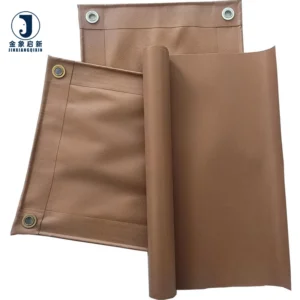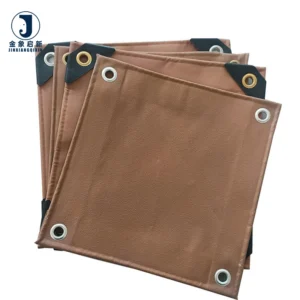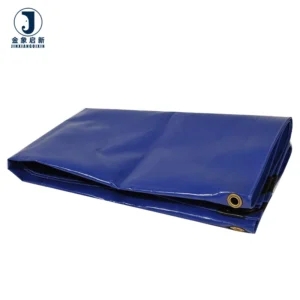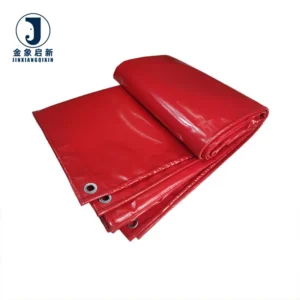
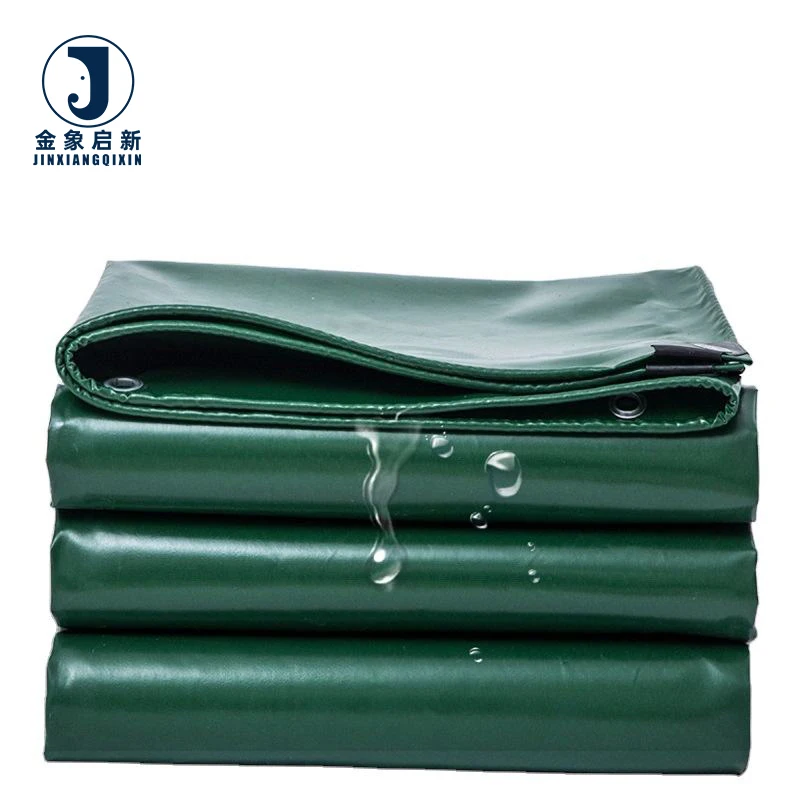
Deep Process Control Over Coating Weight and Adhesion — every roll of PVC coated fabric undergoes in-process QA to verify coating uniformity and base fabric bonding before it leaves the line.
Technical Specifications
| Parameter | Value |
|---|---|
| Product Type | PVC Coated Tarpaulin |
| Coating Construction | Double-Faced |
| Water Resistance | Fully waterproof coated construction |
| UV Protection | Anti-UV treatment available — confirm test basis required for your market |
| Flame Retardant | Available in flame retardant grades — confirm the grade required for your market |
| Color Options | Multiple colors / Black |
| Surface Finish | Available in glossy or matte finish |
| Fabrication Format | Roll stock for cutting and welding |
Application Suitability
| Application | Exposure & Requirement |
|---|---|
| Flatbed trailer load covering | Constant road vibration, wind uplift, UV exposure, rain and debris impact |
| Lumber hauling protection | Heavy point loads from timber edges, moisture ingress, repeated tie-down tension |
| Heavy-duty truck tarpaulin fabrication | Weld seam integrity, double-sided abrasion, long-term outdoor weathering |
| Outdoor freight and equipment covering | Mildew risk in humid climates, thermal cycling, prolonged sun exposure |
Why a Coating Specification Without a Test Report Is a Procurement Risk
Claiming anti-UV or flame retardancy without supplying a verifiable test report shifts the compliance liability entirely onto the buyer.
When a PVC coated fabric flatbed truck tarpaulin arrives at your facility, the visual appearance of the roll tells you almost nothing about what the coating formulation actually contains. UV stabilizers and flame retardant additives are invisible within the PVC matrix. A fabric that looks identical to a specified grade may contain none of the required additives, and you will only discover this after months of outdoor exposure or when a fire inspector asks for documentation [NEED_CITE: flame retardant test methods for PVC coated fabrics in transport applications]. The cost of a failed inspection or an early fabric failure on a loaded flatbed far exceeds the cost of demanding a test report before placing the order.
Double-Faced Coating and What It Means for Flatbed Service Life
A double-faced PVC coated tarpaulin construction ensures that both sides of the base fabric receive a uniform coating layer, eliminating a weak side that would otherwise degrade faster under road exposure. For flatbed trailer applications, the underside of the tarpaulin contacts the load directly — timber edges, steel coils, or palletised freight — and single-sided coatings tend to abrade through at these contact points. Double-faced coating distributes mechanical wear across a consistent thickness on both faces, which is critical when the tarpaulin is dragged across rough cargo surfaces during loading and unloading.
How Coating Adhesion Determines Weld Seam Performance
The point where a flatbed tarpaulin fails most often is not the body of the fabric but the welded seam, where repeated flexing under wind load and road vibration concentrates stress [NEED_CITE: weld seam failure analysis for PVC coated transport fabrics]. Coating adhesion to the base fabric determines whether a thermal weld creates a bond that matches the fabric’s own tear strength or whether the coating delaminates at the joint. The PVC coated fabric flatbed truck tarpaulin produced on this line is built around process-controlled coating application, which maintains consistent adhesion values roll-to-roll so that fabricators can set their hot-air welding parameters once and hold them across the entire production run.
Reading Between the Specs: What GSM, Denier, and Weave Actually Control
GSM alone is a misleading indicator of how a tarpaulin fabric will perform under flatbed transport loads. A heavy GSM achieved primarily through thick coating on a low-density base fabric will resist water but tear easily along the warp or weft when a sharp load edge pushes through. The base fabric denier and weave density — the number of yarns per centimeter in each direction — are what govern tensile and tear strength, while the coating weight on each face governs water resistance, UV shielding, and abrasion durability. A balanced specification matches the yarn weight and weave to the intended load type: higher warp density for applications where tie-down straps create longitudinal tension, and a tighter overall weave to resist puncture from irregular cargo [NEED_CITE: relationship between base fabric denier and tear propagation in coated fabrics]. The double-faced construction adds coating weight to both sides, which means the stated GSM must be evaluated alongside the base fabric specification to understand what proportion of the total weight is structural yarn versus protective coating.
The Hidden Cost of Specifying on Price Per Kilogram Instead of Performance
Purchasing PVC coated fabric by the cheapest cost per kilogram incentivises suppliers to deliver lighter coating or a lower-density base fabric while keeping the headline GSM within tolerance. The consequences show up weeks or months after the tarpaulin enters service: coating that chalks and cracks under UV exposure because stabilizer loading was insufficient, weld seams that peel because coating adhesion was inconsistent, or colour variation between rolls that becomes visible once multiple panels are installed side by side on a fleet of trailers [NEED_CITE: batch-to-batch colour consistency standards for coated fabric rolls]. For a flatbed operator, a single load damaged by water ingress through a failed tarpaulin costs more than the price difference between a verified roll and a cheap one.
Why Fabricators Source PVC Coated Fabric from This Line
Process control over coating weight and adhesion is maintained at every stage, not checked only at final inspection — this means the coating specification you approve on the sample is what runs through the full production order.
Three full production lines and 36 sets of professional equipment provide the capacity to fulfil bulk roll orders without compressing lead times to the point where curing and quality checks are rushed.
A dedicated 10-person R&D team develops custom samples within days, allowing you to verify coating feel, colour match, and weld behaviour before committing to a production run.
Every roll undergoes 100 percent pre-shipment inspection against the agreed specification sheet, with coating weight, colour reference, and adhesion values recorded before packing.
Documentation & Verification
- Material specification sheet stating base fabric denier, coating weight per face, and total GSM
- UV treatment test report where applicable, matched to the exposure duration your application demands
- Flame retardant grade certificate aligned with the fire safety standard required in your market
- Pre-shipment inspection record confirming coating weight, adhesion, and colour per roll
- ISO and CE certificates from a manufacturer with nearly 30 years of coated fabric production
Fabrication, Handling & Storage
- Hot-air welding temperature and speed should be calibrated to the double-faced PVC coating thickness before full production
- Store rolls horizontally on a clean, dry surface to prevent permanent creasing in the PVC coating layer
- Unroll and allow the PVC coated fabric to reach ambient temperature before cutting in cold-weather workshops
- Use PVC-compatible cleaners only — solvent-based products will attack the coating surface and reduce water resistance
- Plan panel cutting layout to minimise transverse welds, as each seam is a potential flex-fatigue point on a flatbed cover
What to Include with Your Inquiry
To provide an accurate specification recommendation and sample, share the flatbed trailer dimensions and load type you need to cover, along with the climate and UV exposure conditions your fleet operates in. If your market or customer requires a specific flame retardant grade, name the standard so the correct additive package can be confirmed. State the roll widths and lengths you need, whether you require multiple colours for fleet branding, and whether you want finished cut-and-welded covers or roll stock only.
Frequently Asked Questions
Q: How is the flame-retardant grade verified, and which standards does it meet?
A: Flame retardant grades are available across different classification systems. The correct grade depends on your market’s fire safety regulations for transport covers. Request the specific standard you need — such as a national or regional fire classification — and a test report will be supplied with the roll documentation to confirm compliance.
Q: What is the basis for the anti-UV treatment claim?
A: Anti-UV stabilizers are compounded into the PVC coating during production to resist degradation from prolonged sun exposure. The appropriate test basis depends on the expected outdoor service duration and the UV intensity in your operating region. Specify the exposure conditions and a suitable test method will be referenced on the documentation.
Q: How do I confirm the actual GSM on arrival matches the quotation?
A: Every roll is inspected before dispatch against the stated specification, with coating weight and total GSM recorded. On arrival, you can verify by cutting a measured sample and weighing it. The pre-shipment inspection record provides a baseline for comparison if any discrepancy arises.
Q: What base fabric denier options are available for heavy-duty flatbed use?
A: The base fabric denier and weave density are selected to match the mechanical demands of your load type. Heavier timber or steel loads require a higher denier and tighter weave to resist puncture and tear propagation. Share your cargo profile and a suitable base fabric construction will be recommended and sampled.
Q: Can I order custom widths and roll lengths for my fabrication setup?
A: Custom widths and roll lengths are available to match your cutting table dimensions and minimise offcut waste. Provide the required width and linear meters per roll, along with colour and finish preferences. Minimum order quantities and lead times will be confirmed in the quotation based on the specification selected.