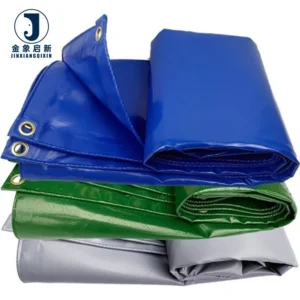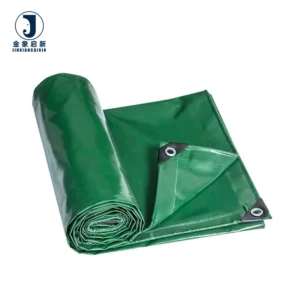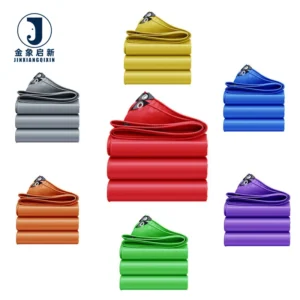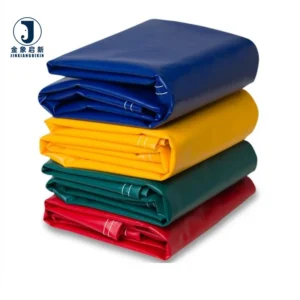
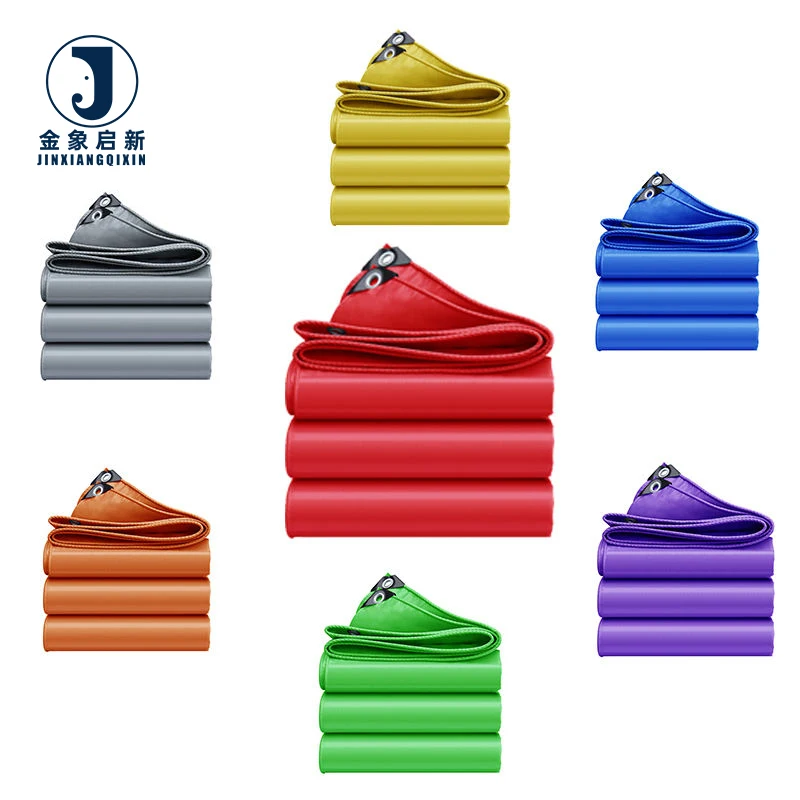
Coating Adhesion Control — nearly 30 years of process refinement ensures consistent bond strength between PVC coating and PES base fabric across every roll produced.
Technical Specifications
| Parameter | Value |
|---|---|
| Product Type | PVC Coated Fabric |
| Coating Material | PVC (dipping coating process for mesh fabric) |
| Base Fabric | PES (knitting and plain weave construction) |
| Base Fabric Denier | 500D – 2000D |
| Total Thickness | 0.35 mm – 1.5 mm |
| Weight Range | 400 g/m² – 1500 g/m² |
| Tensile Strength (Warp) | 1500 – 3000 N/5cm (test basis not stated in source) |
| Tensile Strength (Weft) | 1200 – 2800 N/5cm (test basis not stated in source) |
| Coating Method | 100% PES dipping coating |
| Weave Types | Knitting and plain weave |
| Width Options | 6ft, 8ft, 10ft, 12ft / 2m, 4m, 6m |
| Roll Length | 100 yards, 100 meters, or custom |
| UV Treatment | Available (test basis not stated in source) |
| Flame Retardant Grade | Available — confirm the grade required for your market |
| Waterproof | Yes |
| Mildew Proof | Yes |
| Edge Reinforcement | PP rope reinforced hem on all four edges |
| Eyelets | Galvanized, every 3ft or 1 meter interval |
| Corner Reinforcement | Reinforced plastic corners |
| Standards | ISO, CE |
Application Suitability
| Application | Exposure & Requirement |
|---|---|
| Truck tarpaulin and side curtains | Constant flexing at load points, road debris abrasion, weather and UV exposure |
| Tensioned membrane structures | Sustained tensile load, wind uplift, weld seam integrity under stress |
| Industrial pipe canopy | Continuous outdoor exposure, mechanical impact risk, water ingress prevention |
| Tent and awning fabric | Repeated folding and unfolding, UV exposure, colour fastness requirements |
| Equipment protection covers | Abrasion from contact surfaces, moisture exposure, handling stress at eyelets |
Why Coating Weight Alone Misleads Technical Buyers on PVC Coated Tarpaulin Strength
GSM tells you mass per area — denier and weave density tell you how that mass translates into structural performance.
Technical buyers regularly specify PVC coated tarpaulin by weight, assuming a heavier roll will always outperform a lighter one. That assumption breaks down when a high-GSM fabric uses a loose weave with thick coating to compensate, versus a tighter base fabric with leaner coating that delivers higher tensile values. The bond between coating and yarn matters more than total weight when the fabric flexes under load [NEED_CITE: tensile and tear test methods for coated fabrics per ISO 1421]. Without verified base fabric denier and weave density on the specification sheet, weight alone becomes a procurement gamble.
Base Fabric Denier and Its Direct Link to Tensile Performance
The PES base fabric in this PVC coated tarpaulin range spans 500D to 2000D denier, covering three distinct weight tiers from medium-duty to super-heavy grades. Each denier step corresponds to a measurable increase in warp and weft tensile capacity. A 500D base delivers adequate strength for tensioned covers and temporary structures, while 1000D and above serves applications where the fabric absorbs direct mechanical load. The knitting and plain weave construction options further influence how force distributes across the yarn network before reaching the coating layer.
Dipping Coating Process and What It Means for Fabric Integrity
The dipping coating method fully encapsulates every PES yarn in PVC compound, creating a mechanical bond that follows the yarn profile rather than sitting on top of the weave. This differs from knife coating, where the compound is scraped across the surface and may leave gaps in the weave interstices. For PVC coated tarpaulin used in applications requiring repeated flexing — truck side curtains, folding covers, inflatable structures — the full encapsulation from dipping coating reduces the risk of coating delamination at flex points [NEED_CITE: DIN 53354 coating adhesion test methodology for technical textiles]. The process also ensures waterproof integrity extends through the entire fabric cross-section, not just the visible surface.
Reading GSM, Denier and Tensile Strength as a System
A 400–500 g/m² fabric at 500D denier delivers warp tensile strength in the 1500–2000 N/5cm range — suitable for tent fabric, lightweight covers and pond liners where the primary load is wind or water pressure rather than direct mechanical abrasion. Moving to 700–1000 g/m² at 1000D denier shifts the tensile capacity to 2000–2500 N/5cm warp, matching the demands of heavy truck tarpaulin and industrial pipe canopies that face sustained load and contact wear. The super-heavy tier at 1100–1500 g/m² with up to 2000D denier pushes tensile values toward 3000 N/5cm warp, addressing tensioned membrane structures and engineered protective covers where failure is not an option. Specifying by this three-parameter system — GSM, denier, and verified tensile — prevents the mismatch that occurs when weight is the only selection criterion.
The Hidden Cost of Specifying Coated Fabric by Weight Alone
When a buyer specifies PVC coated fabric by GSM without verifying base fabric denier, the delivered roll may meet the weight requirement through excess coating rather than structural yarn mass. The result is a fabric that feels heavy but tears more easily at cut edges and weld seams because the underlying weave carries insufficient yarn density to arrest tear propagation. Weld seams on such fabric can fail before the body of the material does, particularly at points where the load flexes most during use [NEED_CITE: weld seam failure modes in PVC coated technical fabrics]. Batch-to-batch coating weight variation compounds the problem when verification relies solely on supplier quotation rather than per-roll inspection documentation.
Why Fabricators Source This Range for Technical Applications
Three full production lines with 36 sets of professional equipment maintain batch consistency across the denier and weight tiers in this PVC coated tarpaulin range. A 10-person R&D team handles material selection, custom formulation and sample development, returning samples within days rather than weeks for standard requests. Dedicated QA/QC inspection at every production stage — including 100% pre-shipment checking — catches GSM deviation and coating adhesion faults before rolls leave the facility. The material specification sheet issued per order states exact GSM, base fabric denier and coating type, giving fabricators the data they need to set weld parameters and cutting patterns without guessing. ISO and CE certification supports documentation requirements for regulated markets and contractor submittals.
Documentation & Verification
- Material specification sheet stating exact GSM, base fabric denier and coating method per order
- Test report for UV and flame-retardant grades supplied where applicable with standard referenced
- Pre-shipment inspection record confirming roll weight and coating against quotation values
- Roll packing list showing batch identity for traceability across the shipment
- ISO and CE certificates included in the dispatch documentation package
- Certificate of origin and customs documentation for international PVC coated fabric shipments
Fabrication, Handling & Storage
- Heat welding parameters must be adjusted for each GSM tier — the 400 g/m² grade requires lower temperature and dwell time than the 1500 g/m² super-heavy grade
- Store rolls upright or on wide cradles to prevent permanent creasing in the PVC coating layer, especially on heavier grades above 700 g/m²
- Eyelet placement at 1-meter intervals distributes tie-down load across the PP rope reinforced hem on all four edges
- Cold-weather handling requires gradual unrolling to avoid coating crack risk on grades below 0.35 mm thickness
- Cutting layout should account for the available 2m to 6m widths to minimize weld seams in large-format covers
- Surface cleaning with mild detergent preserves the coating finish — solvent-based cleaners may soften the PVC layer
What We Need to Specify Your PVC Coated Fabric Order
Provide your end-use application, the mechanical and environmental exposure conditions the fabric will face, and the tensile strength or denier requirement if already established in your engineering specification. Confirm whether you need roll stock at a specific width and length, or finished tarps with eyelets and hem reinforcement. If your market requires flame-retardant or UV-treated grades, state the standard or classification your project demands so we can match the formulation and supply supporting test documentation.
Frequently Asked Questions
Q: How is GSM verified and what documentation supports the stated coating weight on arrival?
A: Every roll undergoes 100% pre-shipment inspection against the quoted specification. A material specification sheet accompanies each order, stating exact GSM, base fabric denier and coating type. The pre-shipment inspection record is included in the dispatch documentation, giving you verified weight data before the fabric arrives at your facility.
Q: What is the relationship between base fabric denier and tensile strength in your PVC coated range?
A: The range covers 500D through 2000D denier, with tensile strength progressing from 1500 N/5cm at 500D to 3000 N/5cm at 2000D in the warp direction. Higher denier means thicker individual yarns in the PES base fabric, which directly increases the force required to break the woven structure under load.
Q: Which coating method is used for this PVC coated tarpaulin range and why does it matter?
A: This range uses dipping coating on PES mesh fabric, which fully encapsulates each yarn in PVC compound. This creates a stronger mechanical bond than surface-applied coating methods and maintains waterproof integrity through the entire fabric cross-section, particularly important at flex points and weld seams.
Q: Are UV and flame-retardant treatments supported by test reports?
A: UV treatment and flame-retardant grades are available across this PVC coated fabric range. Test reports are supplied where applicable, with the specific grade and standard referenced on the documentation. Confirm the classification required for your market and application so we can match the correct formulation.
Q: How does weld and seam behaviour differ across the PVC coated fabric weight grades?
A: Lighter grades in the 400–500 g/m² range weld at lower temperatures and shorter dwell times. Heavier grades at 700 g/m² and above require higher heat input and longer pressure time to achieve full coating fusion at the seam. The dipping coating process supports consistent weld performance because the PVC compound fully penetrates the base fabric weave.