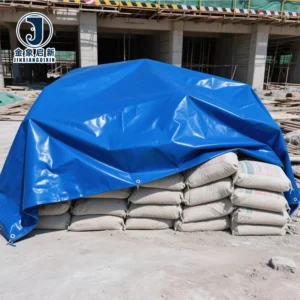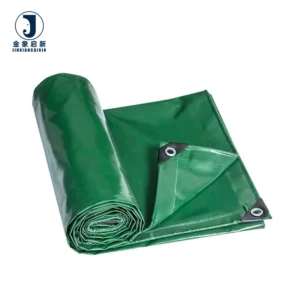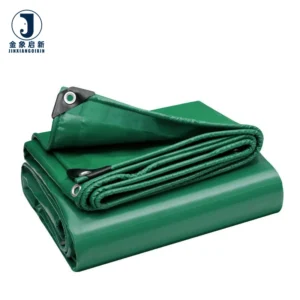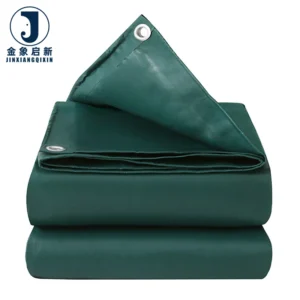
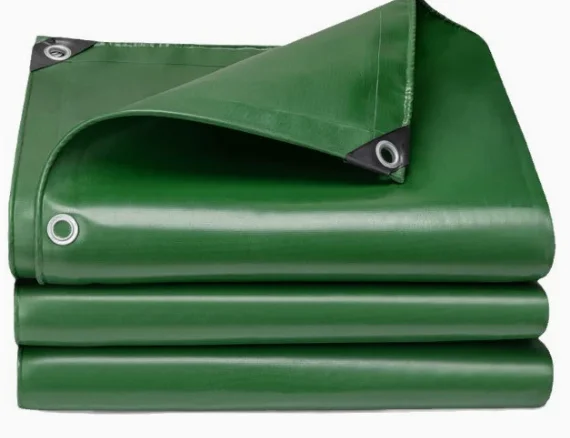
Coating Weight Verification — dedicated QA/QC inspects PVC coating adhesion and GSM at every production stage with 100% pre-shipment roll verification for this waterproof fabric grade.
Technical Specifications
| Parameter | Value |
|---|---|
| Product Type | PVC Coated Fabric |
| Material Composition | PVC coated woven fabric |
| Weight | At least 450 gsm |
| Base Fabric | Woven construction |
| Waterproof Performance | Yes — fully coated barrier |
| Finish | High-strength sheeting |
| Flame Retardant | Available in flame retardant grades — confirm the grade required for your market (grade not stated) |
| UV Treatment | Available with anti-UV treatment — request test report for your climate zone (test basis not stated) |
| Custom Width & Length | Available on request |
| Colour Options | Single and double side colour available |
Application Suitability
| Application | Exposure & Requirement |
|---|---|
| Vehicle and equipment covers | Rain, snow, road spray, wind loading, and repeated handling abrasion |
| Industrial structure protection | Prolonged weather exposure, mechanical stress from wind, and puncture risk from contact with stored materials |
| Outdoor storage and temporary shelters | Sustained UV exposure, water pooling on flat sections, and thermal cycling across seasons |
| Truck and trailer side curtains | Constant flexing at folds, road debris impact, and tie-down strap abrasion at contact points |
| Tent and awning roll stock | Repeated deployment and packing, tension at frame contact points, and colour consistency across panels |
Why Stated GSM Does Not Guarantee On-Site Fabric Performance
Many buyers have received PVC coated fabric rolls where the quoted 450 gsm material arrived lighter than specified, with coating weight falling short of what the quotation promised. Verified coating weight at every production stage is the only reliable safeguard against underweight delivery.
The disconnect between a quotation and a delivered roll typically surfaces during fabrication or first deployment. A fabric that tests light on a scale may also show weak coating adhesion, meaning the PVC layer can delaminate under tension or at heat-welded seams. For waterproof industrial coverings, this failure is not cosmetic — it lets water through at the exact points where the load flexes most [NEED_CITE: tensile and tear test methods for coated fabrics per ISO 1421].
Coating Adhesion and Long-Term Waterproof Integrity
The waterproof performance of PVC coated fabric depends as much on how the coating bonds to the woven base as on the coating thickness itself. At 450 gsm, this material carries a PVC layer engineered for controlled adhesion to the underlying woven fabric, which prevents the coating from peeling away under repeated flexing or thermal expansion. When adhesion is inconsistent, waterproofing fails first at fold lines and welded seams — the points that experience the highest mechanical stress in field use.
Base Fabric Construction and Tear Propagation
The woven base fabric within this 450 gsm PVC coated fabric determines how the material resists tear propagation once a puncture or cut occurs. Woven construction distributes load across intersecting yarns, limiting the spread of damage compared to non-woven alternatives. For vehicle covers and industrial shelter applications, this structural behaviour matters most at tie-down points and wherever the fabric wraps around a rigid frame or edge.
How GSM, Weave Density, and Coating Weight Interact to Define Strength
A 450 gsm reading on a scale tells you the combined weight of base fabric and PVC coating but not how that weight is distributed. A heavier coating with a lighter base fabric may waterproof well but tear easily; a heavier base with a thin coat may resist tearing but allow water penetration at pinholes. The ratio between base fabric denier, weave density, and coating weight defines the real-world balance between tensile strength, tear resistance, and waterproof barrier performance [NEED_CITE: relationship between GSM distribution and coated fabric mechanical performance]. Coating method — whether knife-over-roll, lamination, or calendering — further influences peel strength and heat-weld behaviour during fabrication. Surface finish, whether glossy or matte, affects dirt adhesion, cleaning effort, and suitability for printed branding if required. Available in custom widths and roll lengths, the material allows fabricators to plan cutting layouts that minimise offcut waste and reduce the number of welded seams in a finished cover.
The Cost of Specifying on Quotation Weight Alone
When a buyer accepts a PVC coated fabric order based solely on quoted GSM without requiring pre-shipment weight verification, the consequences accumulate downstream. Underweight rolls show up as premature seam failure, reduced waterproof life, and covers that need replacing well before the expected service interval. Colour variation between rolls in the same batch becomes visible once panels are installed side by side on a structure or vehicle, forcing rework or rejection [NEED_CITE: batch colour consistency standards for coated fabric orders]. Welded seams on underweight fabric tend to fail before the body of the material does, because there is insufficient coating mass to form a proper heat-weld bond at the seam overlap.
Why Procurement Teams Source This Fabric Here
Deep process control over coating weight and adhesion comes from nearly 30 years of focused production on coated fabric, giving buyers confidence that the 450 gsm stated on paper matches what arrives on the dock.
Three full production lines and 36 sets of professional equipment support bulk roll orders with consistent output quality and reliable dispatch schedules.
A 10-person R&D team handles custom width, colour matching, pattern printing, and sample development — with samples turned around within days for specification confirmation before full production runs.
Dedicated QA/QC inspection at every production stage ensures that each roll of PVC coated fabric is checked for weight, coating adhesion, and surface quality, with 100% pre-shipment inspection recorded before dispatch.
ISO and CE certified production provides the documentation framework that procurement teams in regulated markets require for compliance and audit trails.
Documentation & Verification
- Material specification sheet stating GSM, base fabric type, and PVC coating composition per roll
- Pre-shipment inspection record confirming verified weight and coating adhesion per roll before dispatch
- UV and flame retardant test reports supplied where applicable grades are specified at inquiry
- ISO and CE certificates included in the shipping documentation package
- Certificate of origin and customs support documentation for international roll shipments
Fabrication, Handling & Storage
- Heat-weld parameters must match the 450 gsm coating weight to ensure seam strength equals the fabric body strength
- Cut edges on this PVC coated woven fabric should be sealed or hemmed to prevent yarn fraying at stress points
- Store rolls horizontally on a flat surface to avoid permanent creasing or coating deformation at contact points
- Allow cold-stored rolls to reach ambient temperature before unrolling to prevent cracking of the PVC coating layer
- Use only PVC-compatible cleaners; solvent-based products may degrade the coating surface and compromise waterproofing
- Plan cutting layouts around the available custom width to minimise welded seams in finished vehicle or structure covers
What to Include in Your Enquiry
Provide the specific application, expected environmental exposure, and any fire safety or compliance grades required by your market so the correct treatment can be specified from the outset. Confirm the roll width, roll length, and annual volume you need, along with any colour or printing requirements for your end use. State whether you require rolls only or finished cut-to-size covers, and indicate if a production sample is needed for approval before the full order runs.
Frequently Asked Questions
Q: How is the 450 gsm weight verified before shipment?
A: Each roll undergoes weight inspection at the production stage and again during pre-shipment QC. A verification record is generated per roll confirming the actual measured GSM against the stated specification, and this documentation ships with the order so buyers can reconcile received material against their purchase order.
Q: What is the relationship between woven base fabric denier and tear strength?
A: Higher denier yarns in the woven base fabric increase resistance to tear propagation, but the weave density and PVC coating adhesion also contribute. A balanced specification considers all three factors together rather than denier alone, and samples can be produced for your lab to test tear performance under your own methods.
Q: Are flame retardant and anti-UV grades available with test reports?
A: Yes, both flame retardant and anti-UV treatments are available in specific grades. The exact grade and corresponding test standard must be confirmed at enquiry stage based on your market requirements, and the applicable test report is included with shipment documentation once the grade is specified.
Q: What custom widths and roll lengths can be ordered?
A: Custom widths and roll lengths are available to suit your fabrication cutting layout and minimise waste. The R&D team develops samples within days to confirm dimensions, colour, and coating weight before full production, ensuring the roll stock matches your processing equipment and cover design.
Q: How is colour consistency controlled across multiple rolls in one order?
A: Colour consistency is managed through controlled PVC compounding and coating parameters across the production run. A pre-shipment inspection checks colour uniformity roll to roll, and inspection records document this verification so that panels installed side by side on a vehicle or structure show no visible variation.