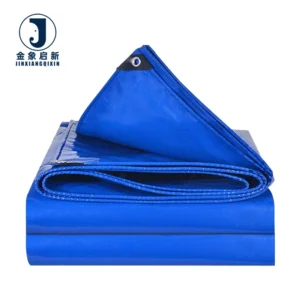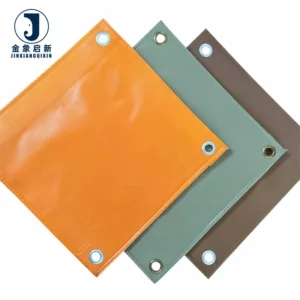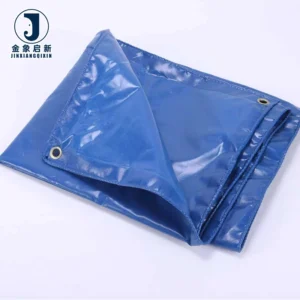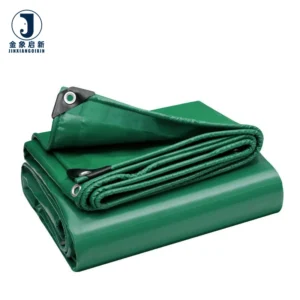
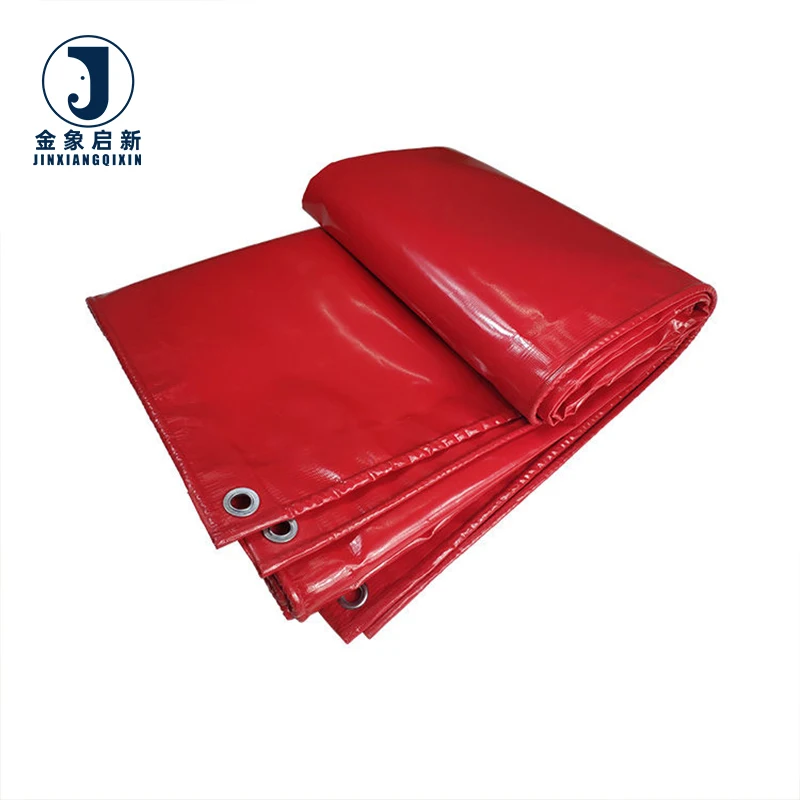
Coating Weight Verification — Every roll of PVC coated tarpaulin is checked against the stated GSM before dispatch, ensuring the material you receive matches the specification you approved.
Technical Specifications
| Parameter | Value |
|---|---|
| Product Type | PVC Coated Tarpaulin |
| Base Fabric | Polyester |
| Coating Material | PVC (double-sided coating) |
| Weight Range | 500gsm – 1000gsm |
| Base Fabric Denier Options | 500D×840D / 500D×1000D / 1000D×1000D / 1000D×1300D / 1300D×1300D / 1000D×2000D |
| Mesh Count Options | 30×19 / 20×20 / 30×15 |
| Total Thickness Range | 0.29mm – 0.65mm |
| Tensile Strength Warp | 1650N – 3900N (varies by grade, test standard not stated) |
| Tensile Strength Weft | 1600N – 3500N (varies by grade, test standard not stated) |
| Treatment Options | High frequency hot melt, hot air, sewing |
| Flame Retardant | Available in flame retardant grades — confirm the grade required for your market |
| UV Treatment | Anti UV treatment available — request test basis for your specification |
| Anti-Mildew | Included as standard feature |
| Finish | Self-clean surface |
| Printing Option | Printable, customized |
| Color | Customized |
| Brittle Temperature | ≤ -50°C to -60°C |
| Softening Temperature | ≥ 80°C |
| Melting Point | 212°C |
| Density | 1.15–2.00 g/cm³ |
| Edge Finishing | 5mm rope without splicing, high temperature heat sealed seamless edge wrapping |
| Eyelets | 3cm enlarged aluminum alloy buttonhole (brass eyelets every 1 meter optional) |
| Corner Reinforcement | Reinforced corners on all sides |
Application Suitability
| Application | Exposure & Requirement |
|---|---|
| Farming pond liner and reservoir cover | Permanent water immersion, soil chemistry contact, puncture risk from substrate irregularities |
| Stockpile and equipment cover on farm | Wind loading, UV exposure, repeated handling and repositioning, abrasion from aggregate surfaces |
| Truck and trailer side curtain | Constant flexing at load points, road debris impact, fuel and chemical splash exposure |
| Construction site temporary roofing | Tensioned installation, wind uplift, UV and thermal cycling, scaffolding contact abrasion |
| Greenhouse and polytunnel blackout cover | Light exclusion requirement, condensation, seasonal dismantling and storage, UV degradation |
| Grain and feed stockpile enclosure | Moisture ingress prevention, rodent resistance requirement, UV exposure, repeated seasonal deployment |
Why GSM Alone Does Not Determine the Real Strength of Your Tarpaulin
Base fabric denier and mesh construction work together with coating weight to define the true mechanical performance of PVC coated tarpaulin.
A buyer receives a roll labelled 650gsm, cuts it into a tensioned truck side curtain, and watches it tear at the first flex point. The coating weight was honest — but the underlying polyester weave was a lighter denier than the application demanded. GSM tells you what the fabric weighs, not how the load distributes across the warp and weft threads when the material bends under stress [NEED_CITE: relationship between base fabric denier and tear propagation in coated fabrics]. Technical buyers specifying material for structural or tensioned applications need the complete picture: denier, mesh count, and measured tensile values in both directions.
How Denier Construction Drives Tensile and Tear Behaviour
The polyester base fabric in this PVC coated tarpaulin range spans denier options from 500D×840D through to 1000D×2000D, each matched to a specific GSM grade. A 1000D×2000D base at 900gsm delivers warp tensile values reaching 3900N, while a 500D×840D base at 350gsm sits at 1650N warp. The jump is not simply about thicker yarn — it changes how tear forces propagate through the weave intersection points. Higher denier yarns bridge more weft crossings, distributing puncture and tear energy across a wider area before thread failure occurs.
Coating Weight, Thickness, and What They Mean for Fabrication
Total thickness across this PVC coated tarpaulin range moves from 0.29mm at the lighter grades to 0.65mm at the heavy end. This measurement reflects the combined PVC coating build on both faces of the polyester scrim. Thicker coating deposits improve abrasion resistance at contact surfaces — critical for trailer curtains that rub against load securing straps and construction covers dragged across scaffolding tubes. For fabricators running high-frequency or hot air welding equipment, coating thickness directly influences the dwell time and pressure settings needed to achieve full polymer fusion at the seam.
Reading the Specification Sheet Beyond the Weight Number
When evaluating PVC coated tarpaulin for a demanding application, the material specification should show denier, mesh count, thickness, and directional tensile values as a connected data set. A 650gsm fabric at 1000D×1300D with 20×20 mesh behaves differently under load than a 650gsm fabric built on a lighter scrim with tighter mesh. The first will resist tear propagation better; the second may offer smoother surface finish for printing. Fabricators designing tensioned membrane panels or side curtains that flex continuously need to specify on the full data set, not the weight figure alone [NEED_CITE: tensile and tear test methods for coated fabrics per ISO 1421].
The Cost of Specifying on Weight Without Checking Construction
A cover specified purely on GSM may pass the incoming weight check and still fail in service. The base fabric denier was too low for the flex cycles the application demands, and the seams open at the weld line before the fabric body shows any wear. In farming applications, a pond liner that punctures at the substrate contact point because the coating was adequate but the scrim was under-specified leads to stock loss and emergency replacement. Fabricators who receive roll stock without full construction data risk building products that fail at the exact points where their customers rely on them most [NEED_CITE: seam failure versus fabric body failure in tensioned PVC coated structures].
Why Procurement Verification Matters at Every Stage
Sourcing PVC coated tarpaulin for volume fabrication requires documentation that goes beyond a quotation line. A material specification sheet stating the exact denier, mesh count, GSM, and measured thickness per roll gives the fabricator a baseline to verify against. When flame retardant or anti-UV treatments are specified, the supporting test report must reference the grade and standard applicable to the destination market. Without this paper trail, the fabricator carries the liability if the finished product fails a site inspection or a regulatory audit.
What This Range Offers the Technical Buyer
The PVC coated tarpaulin range covers base fabric options from 500D×840D to 1000D×2000D, each grade documented with directional tensile values so fabricators can match material to structural load calculations. Coating formulation supports both high-frequency hot melt and hot air welding, giving fabrication shops flexibility in their joining method. Custom colour matching is handled with batch inspection records to maintain roll-to-roll consistency within a single order. A dedicated QA/QC process inspects every roll before dispatch, with GSM verification checked against the stated specification. Flame retardant and anti-UV treatments are available in grades matched to specific market requirements — confirm the standard your application demands. Sample development runs in days when a custom width, colour, or print is needed before committing to full production volume.
Documentation & Verification
- Material specification sheet listing exact GSM, base fabric denier, mesh count, and coating weight per roll shipped
- Test report for flame retardant grades stating the specific classification standard applicable to your market
- Anti-UV treatment documentation with test basis and exposure classification referenced to grade supplied
- Pre-shipment inspection record confirming GSM verification and colour consistency check across all rolls in the order
- ISO and CE certificates provided alongside certificate of origin and customs documentation for export shipment
Fabrication, Handling & Storage
- High-frequency hot melt welding parameters must be adjusted to the specific coating thickness, ranging from 0.29mm to 0.65mm across grades in this PVC coated tarpaulin range.
- Brass eyelets spaced every 1 meter distribute tie-down loads effectively; specify placement pattern based on the tensile strength of the selected denier grade.
- Store rolls horizontally on a flat pallet to prevent permanent creasing in the PVC coating, particularly at heavier grades above 650gsm.
- Cold-weather deployment below the brittle temperature threshold of -50°C to -60°C risks coating crack — allow material to warm before unrolling on site.
- Self-clean surface finish tolerates mild detergent cleaning; avoid solvent-based cleaners that can degrade the PVC coating bond to the polyester scrim.
- When cutting panels from roll stock, plan the lay-up to minimise waste and ensure weld seams fall on flat sections rather than at fold or flex points.
What to Include in Your Enquiry
Specify the application environment, including UV exposure level, temperature range, and any chemical or abrasion contact the finished cover will face. State the flame retardant classification or fire safety standard required in your destination market so the correct treatment grade is selected. Confirm whether you need roll stock in standard widths or finished panels cut to size with eyelets and reinforced edges.
Frequently Asked Questions
Q: How is GSM verified on each roll and what tolerances apply?
A: Every roll undergoes GSM measurement during the pre-shipment inspection stage. The result is recorded on the material specification sheet shipped with the order, showing the tested weight against the quoted grade. This gives fabricators a verifiable baseline before the material enters production. If your application demands tight weight tolerances, state this requirement at enquiry stage so the production parameters are adjusted accordingly.
Q: What is the relationship between denier, mesh count and tensile strength?
A: Higher denier yarns in the polyester base fabric carry more load per thread, while mesh count determines how many threads share that load across a given width. A 1000D×2000D construction at 30×15 mesh delivers substantially higher warp tensile than a 500D×840D at 30×19 mesh. The combination of denier and mesh defines how the PVC coated tarpaulin responds to tension and tear forces in service.
Q: Which flame retardant grades are available and can test reports be provided?
A: Flame retardant treatment is available in multiple grades depending on the fire safety standard required in your market. When placing an enquiry, specify the classification your end use demands — such as B1, M2, or NFPA 701 — so the correct formulation is applied. Test reports referencing the applicable standard are provided with the shipment documentation.
Q: How does PVC coating formulation affect hot air and high-frequency weld seam strength?
A: The PVC coating on this tarpaulin is formulated to support both high-frequency hot melt and hot air welding methods. Coating thickness, which ranges from 0.29mm to 0.65mm across grades, determines the energy input and dwell time needed for full polymer fusion. A properly welded seam should match or exceed the tensile strength of the fabric body at the join point.
Q: What UV treatment options are available and what test basis supports the claim?
A: Anti-UV treatment is incorporated into the PVC coating formulation to extend service life under direct sunlight exposure. The specific treatment level and test basis vary by grade. Request the UV test documentation matched to the grade you are specifying so you can verify the treatment meets the exposure conditions of your application environment.