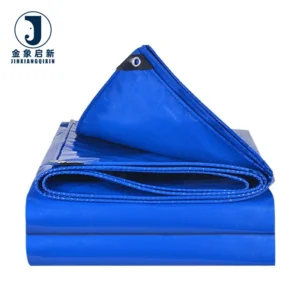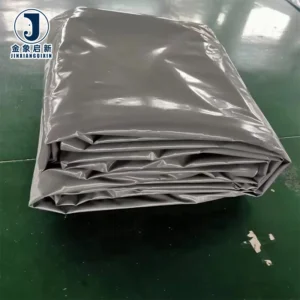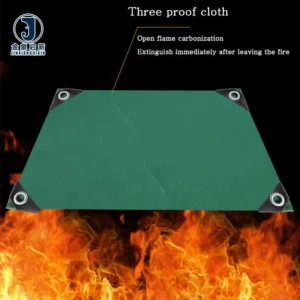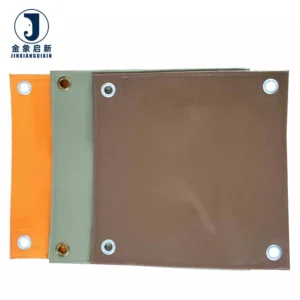
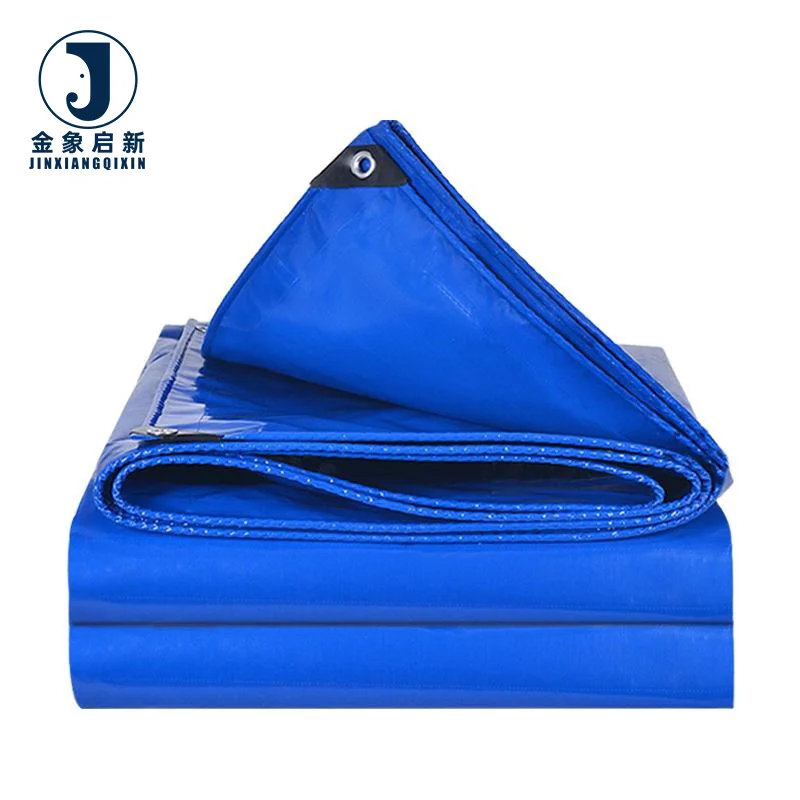
Precision Coating Control — Every roll of PVC coated tarpaulin material is produced under in-process QA with coating weight verified at each stage, ensuring the GSM stated on the specification sheet matches what arrives at your fabrication floor.
Technical Specifications
| Parameter | Value |
|---|---|
| Product Type | PVC Coated Tarpaulin |
| Base Fabric | High-strength polyester mesh fabric |
| Coating Technology | Laminated & Hot-melt Coating |
| Weight Options | 350gsm / 420gsm / 500gsm / 550gsm / 600gsm / 750gsm |
| Thickness Options | 0.32mm / 0.35mm / 0.4mm / 0.45mm / 0.5mm / 0.65mm |
| Surface Finish | Glossy or Matt |
| Roll Size | 2m × 75m / 2.1m × 50m |
| Waterproof | Double-sided 100% waterproof (hydrostatic rating not stated) |
| Anti-Static | Stated in product designation (surface resistance value not stated) |
| Anti-Mildew | Stated in features (test basis not stated) |
| Cold Crack Resistance | Stated in features (test basis not stated) |
| Flame Retardant | Available in flame retardant grades — confirm the grade required for your market |
| UV Treatment | Available with UV treatment — confirm test standard required for your application |
| Color Options | Blue / Red / Yellow / Light Blue / Grey (customizable) |
| Standards | ISO, CE |
Application Suitability
| Application | Exposure & Requirement |
|---|---|
| Poultry and livestock curtain covers | Constant humidity, ammonia exposure, frequent wash-down, light control, anti-static behavior |
| Truck side curtain fabric | Road abrasion, continuous flexing at tie-down points, UV and weather exposure |
| Construction and scaffolding enclosure | Wind load, debris impact, site water exposure, batch color consistency across large façade areas |
| Agricultural and aquaculture covers | Prolonged water contact, biological growth resistance, cold crack resistance in seasonal climates |
| Temporary industrial tarp covers | Equipment protection during plant shutdowns, chemical splash exposure, handling abrasion |
| Tent and inflatable structure fabric | Weld seam integrity under tension, surface finish for printing adhesion, color fastness outdoors |
Why the Coating Method Matters More Than GSM Alone
Hot-melt coating and laminated construction together determine whether the PVC coating stays bonded to the polyester mesh through years of flexing and thermal cycling.
Technical buyers often focus on GSM as the primary material indicator, but a heavy PVC coated tarpaulin material with poor coating adhesion will delaminate at stress points long before the base fabric reaches its tensile limit. I have seen coated rolls where the PVC layer separated cleanly from the mesh at the weld line — the fabric itself was intact, but the coating bond failed under repeated flex. [NEED_CITE: tensile and tear test methods for coated fabrics per ISO 1421] The coating technology and process control behind the lamination are what actually govern long-term field performance, not the weight number printed on the label.
Hot-Melt Versus Laminated Coating: What Each Delivers
Hot-melt coating forces liquid PVC into the polyester mesh under heat and pressure, creating a mechanical lock between the coating and individual yarns. This produces strong adhesion at flex points, which is critical when the PVC coated tarpaulin material is heat-welded into panels for curtains or truck covers. Laminated technology bonds a pre-formed PVC film to the base fabric, offering uniform surface thickness and consistent GSM across the roll width. Both methods are available across the full weight range, and the choice depends on whether your fabrication process prioritizes weld seam strength or surface uniformity.
How Coating Weight Governs Fabrication Behaviour
The relationship between GSM and total thickness is not linear — a 750gsm grade at 0.65mm thickness behaves fundamentally differently under a heat weld bar than a 350gsm grade at 0.32mm. Heavier grades absorb more thermal energy before the PVC reaches welding temperature, requiring adjusted dwell times and pressure settings on high-frequency or hot-air welders. Fabricators working with multiple GSM grades in the same production run must recalibrate equipment between rolls. [NEED_CITE: PVC coating thermal behaviour during high-frequency welding] The hot-melt coated grades generally show higher peel strength at the weld interface, while laminated grades produce cleaner visual weld lines on glossy finishes.
Reading the Specification Sheet Beyond the Weight Number
Base fabric denier and weave density determine the tensile and tear strength envelope before any PVC coating is applied. A 500gsm fabric built on a dense 1000-denier polyester mesh will outperform a 500gsm fabric on a lighter base, even though both read the same on the scale. Coating weight adds waterproofing, surface durability, and UV protection, but it does not compensate for a weak substrate. The glossy and matte finish options affect more than appearance — glossy surfaces accept screen printing and digital ink adhesion more readily, while matte finishes reduce surface glare and show fewer handling marks during installation. Anti-mildew and cold crack resistance treatments extend service range into humid livestock environments and cold-climate outdoor applications respectively, but these claims should be verified against test reports specific to the grade ordered.
The Hidden Cost of Specifying on Weight Alone
When a buyer selects PVC coated fabric based solely on GSM, the material may pass incoming inspection but fail at the fabrication stage. Rolls with inconsistent coating adhesion produce weld seams that peel apart during installation — the fabric is within spec, but the bond between coating and mesh was not verified before dispatch. Color variation between rolls in the same order becomes visible only after panels are installed side by side on a poultry house curtain or a scaffolding wrap, forcing partial teardown and replacement. [NEED_CITE: batch colour consistency standards for coated technical fabrics] These failures are not caught by a simple weight check; they require in-process QA at coating, pre-shipment color comparison, and adhesion testing at the roll level.
Why This Material Is Sourced Here
Deep process control over coating weight and adhesion on high-strength polyester mesh means the PVC coated tarpaulin material coating technology gsm values stated on the quotation are verified through production, not just at final inspection. Three full production lines and 36 sets of professional equipment support bulk roll output with consistent lead times for standard and custom widths. The 10-person R&D team develops samples within days for custom GSM, color, and width requirements, allowing fabricators to test weld parameters before committing to production volume. Dedicated QA/QC runs at every production stage, with 100% inspection before shipment and a pre-shipment inspection record included in the dispatch documentation.
Documentation & Verification
- Material specification sheet confirming GSM, base fabric construction, and coating type per roll
- Pre-shipment inspection record verifying coating adhesion and color consistency before dispatch
- Roll packing list with actual weight and dimensions for container loading calculation
- UV and flame retardant test reports supplied for the specific grade ordered — request the standard required by your market
- Certificate of origin and customs documentation for international shipment
Fabrication, Handling & Storage
- Hot-air weld temperature and dwell time must be adjusted between the 350gsm and 750gsm grades to avoid coating burn-through
- Glossy surface rolls accept screen printing ink more consistently than matte; confirm finish before ordering printed panels
- Store rolls upright on pallets to prevent flat-spot creasing that becomes permanent on heavier GSM grades
- Cold crack resistant grades should still be unrolled above the stated minimum temperature to avoid coating micro-cracking
- Cut panels with a minimum overlap margin at weld seams to account for material draw during high-frequency welding
What to Include in Your Inquiry
To receive a specification recommendation and quotation, provide the intended application and environmental exposure conditions, the GSM range or end-use performance requirement, and whether you need roll stock or finished cut sizes. Specify your target market’s fire classification or anti-static compliance requirements if applicable. Confirm whether color matching against a Pantone or RAL reference is needed, and whether you require printed branding or solid color only. Request a sample roll or swatch for weld parameter testing before bulk production.
Frequently Asked Questions
Q: How is GSM verified on arrival and what documentation accompanies each roll?
A: Every roll ships with a material specification sheet stating the exact GSM, base fabric construction, coating type, and color reference. Coating weight is checked at each production stage under in-process QA, and a pre-shipment inspection record is included in the dispatch documentation. This allows your incoming quality team to cross-reference the stated values against physical measurements on receipt.
Q: What is the difference between laminated and hot-melt coating for PVC tarpaulin?
A: Hot-melt coating forces liquid PVC into the polyester mesh under heat, creating a mechanical bond that delivers strong peel resistance at weld seams. Laminated technology bonds a pre-formed PVC film to the base fabric, producing uniform surface thickness. Both methods are available across all GSM grades, and the selection depends on whether your fabrication process prioritizes weld integrity or surface consistency.
Q: How does GSM relate to tensile strength and weld seam performance?
A: GSM reflects the combined weight of base fabric and coating, but tensile and tear strength depend primarily on the polyester mesh denier and weave density. Heavier GSM grades require adjusted weld parameters because more thermal energy is needed to reach coating melt temperature. A material specification sheet with base fabric details is essential for setting fabrication parameters correctly.
Q: What UV and flame retardant test standards are available on request?
A: UV and flame retardant treatments are available on selected grades, and test reports are supplied for the specific treatment and standard applicable to the grade ordered. Request the fire classification or UV stability standard required by your end market — such as building code or transport regulation — and the corresponding test report will be included with your shipment documentation.
Q: How is color consistency maintained across multiple rolls in one order?
A: Color consistency is controlled through pigment batching at the coating stage and verified by visual comparison against the approved reference before dispatch. The pre-shipment inspection record documents this check. For large orders spanning multiple production runs, request a master color sample to be retained and matched against subsequent batches.