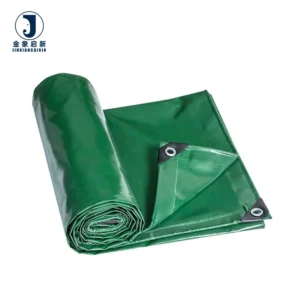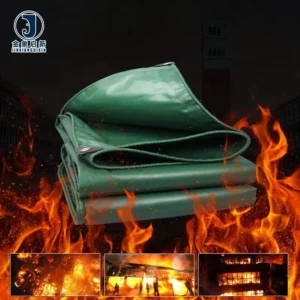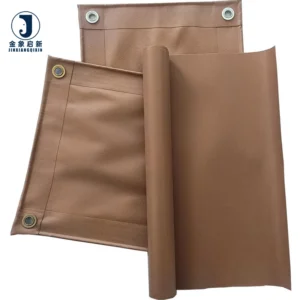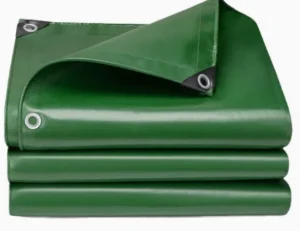
Specialty Treatment Verification — Each roll of flame retardant or anti-static PVC coated tarpaulin ships with a test report matching the specific grade claimed, so you know what the material actually passed before it reaches your fabrication floor.
Technical Specifications
| Parameter | Value |
|---|---|
| Product Type | PVC Coated Tarpaulin |
| Coating Material | PVC |
| Flame Retardant | Available (grade to be confirmed against target market fire code) |
| Anti-Static Treatment | Available (surface resistance and test standard to be confirmed) |
| Anti-Cold Treatment | Available |
| Anti-Mildew Treatment | Available |
| Weather Resistance | Good weather resistance for outdoor exposure |
| Waterproof | Yes |
| Tensile / Tear Strength | High strength construction (specific values and test standards to be provided with material data sheet) |
Application Suitability
| Application | Exposure & Requirement |
|---|---|
| Industrial equipment covers | Permanent outdoor storage, wind load on seams, abrasion at contact points, potential fire code compliance |
| Mining and tunnel ventilation enclosures | Flame retardant and anti-static certification required by site safety regulation, high mechanical stress |
| Temporary structure and event covers | UV and weather exposure, need for reliable waterproofing, flame retardant grade matching venue fire codes |
| Agricultural stockpile covers | Moisture ingress, mildew risk from humidity, mechanical damage during handling and tie-down |
Why a Test Report Matters More Than a Label on PVC Coated Tarpaulin
A material is only as flame retardant as the test standard it actually passed, not the word printed on the quotation.
Technical buyers reviewing PVC coated tarpaulin for projects with fire code requirements frequently encounter a gap between what is claimed on paper and what can be demonstrated on site. A fabric described as "flame retardant" without a cited standard — such as DIN 4102 B1, NFPA 701, or M2 — leaves the buyer carrying the compliance risk. When an inspector requests documentation, a generic claim provides no defence. The same applies to anti-static specifications in environments where surface resistance thresholds are mandated by safety regulation. [NEED_CITE: site fire safety compliance requirements for temporary and permanent membrane structures]
How Coating Weight and Adhesion Define Fabric Behaviour
The performance of a PVC coated tarpaulin in fabrication and end use depends on the relationship between the base fabric construction and the coating applied to it. Coating weight, typically expressed as part of the total GSM, influences flexibility, weld behaviour and the load the material can carry before deformation. A heavier coating layer generally improves waterproofing and chemical resistance at the seam, but adds stiffness that affects how the fabric drapes over a load or holds a folded shape. Adhesion between the PVC layer and the polyester or other base yarn determines whether the coating delaminates under flex or peel stress during service.
Understanding GSM in Relation to Tensile and Tear Strength
Total weight per square metre tells you how much material is present, but not how that weight is distributed between base yarn and coating. A PVC coated tarpaulin with a dense, high-denier base fabric and moderate coating weight can deliver higher tensile and tear resistance than a heavier fabric where most of the GSM comes from coating alone. Technical buyers specifying by material property should request the base fabric denier, weave density and coating weight separately, rather than relying on GSM as a single indicator. [NEED_CITE: relationship between base fabric construction and tensile tear performance in coated fabrics per ISO 1421]
What Flame Retardant and Anti-Static Grades Actually Mean for Your Project
Flame retardant classifications vary by market and application. DIN 4102 B1 is widely specified in European construction, NFPA 701 is common in North American temporary structures and event venues, and M2 appears in French-regulated projects. Anti-static requirements are defined by surface resistance ranges relevant to the specific hazard environment, such as mining or fuel handling areas. When specifying a treated PVC coated tarpaulin, the grade must match the regulation enforced at the installation site, not merely a general category. Available in flame retardant grades — confirm the grade required for your market before placing a bulk order.
Specification Reading: What Each Parameter Controls in Use
Base fabric denier and weave density govern how the material resists tearing once a puncture or cut initiates — a high-denier yarn in a tight weave slows tear propagation across the sheet. Coating method, whether knife-over-roll, calendering or lamination, determines the bond strength between the PVC and the base, which directly affects how well welded seams hold under repeated flex. The anti-cold treatment option extends the lower temperature boundary at which the PVC remains flexible rather than cracking when folded or impacted in cold climates. Anti-mildew treatment addresses biological growth on the coating surface in high-humidity environments, preventing staining and material degradation that compromises appearance and waterproofing over time.
The Hidden Cost of Specifying on Claimed Rather than Verified Properties
A flame retardant grade that does not match the site regulation leads to failed inspection, project delay and potential material replacement at the buyer’s cost. Anti-static material supplied without a surface resistance test report cannot be accepted in regulated environments, leaving the buyer sourcing an alternative under time pressure. PVC coated tarpaulin ordered on a generic weather resistance claim, without understanding the UV stabiliser package, may show surface chalking and strength loss earlier than the project timeline allows. Welded seams on a fabric where coating adhesion is weak relative to the base strength fail before the body of the material does, concentrating repair costs at the highest-stress locations. [NEED_CITE: common failure modes in coated fabric installations related to specification gaps]
Why Procurement Here Reduces Specification Risk
Three full production lines and dedicated coating process control ensure that the coating weight and adhesion stated on the material specification sheet are consistent from the first roll to the last in a bulk order. The R&D team handles material selection and sample development, producing test pieces within days so buyers can confirm coating weight, colour and treatment response before committing to production volume. A 100% pre-shipment inspection checks each roll against the stated specification, catching GSM variation or treatment inconsistency before dispatch rather than at the buyer’s receiving dock. Nearly 30 years of focused coated fabric production means the process parameters for different PVC formulations and treatment combinations are established, not experimental.
Documentation & Verification
- Material specification sheet listing GSM, base fabric denier and weave, coating weight, and colour reference
- Test report for flame retardant grade or anti-static surface resistance matched to the specific standard cited
- Pre-shipment inspection record with roll-level weight and visual consistency verification
- Certificate of origin and customs documentation supporting international shipment
Fabrication, Handling & Storage
- High-frequency or hot-air welding parameters should be set to match the PVC coating weight and method for consistent seam strength
- Roll stock should be stored upright and rotated periodically to prevent flat spots or permanent creasing on the coating surface
- Anti-cold treated rolls require acclimatisation before fabrication in cold-weather workshops to avoid coating crack during handling
- Anti-mildew treated fabric should be cleaned with non-chlorine agents to preserve the treatment on the coating surface
- Custom width rolls reduce cross-seam joints on large covers, lowering the number of weld lines exposed to mechanical stress
What We Need From Your Inquiry
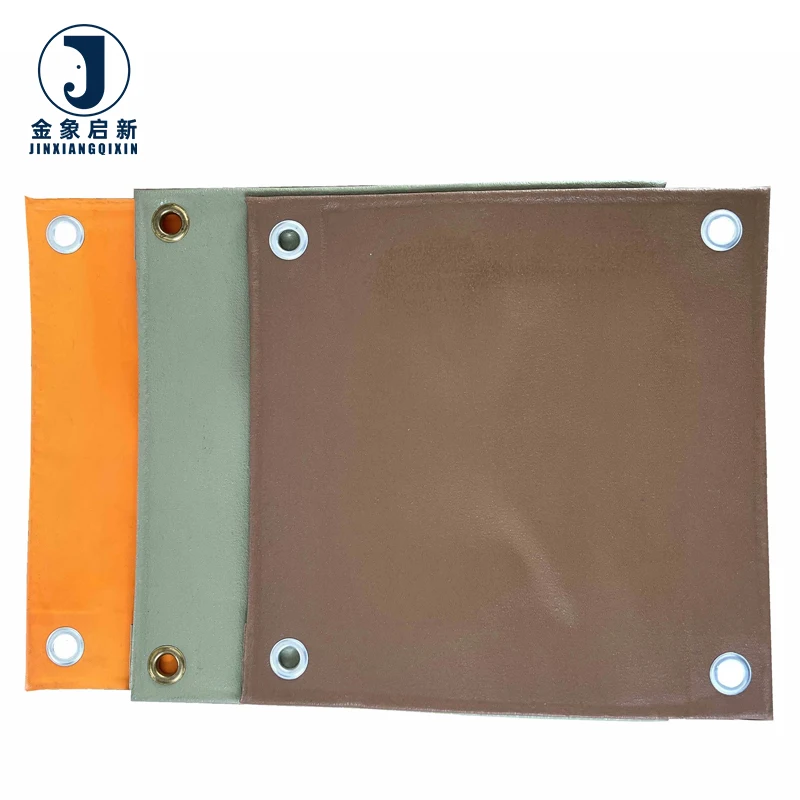
Provide the specific flame retardant or anti-static standard your target market or installation site enforces, along with the application and expected environmental exposure. Specify whether you require roll stock or fabricated covers, and the target widths and annual volume to allow accurate lead time and production scheduling. Colour references, surface finish preference and any pattern printing requirements help the R&D team prepare a representative sample for your approval.
Frequently Asked Questions
Q: How is GSM verified on arrival and what tolerance should a technical buyer expect?
A: Each roll is weighed during pre-shipment inspection and the result recorded on the dispatch documentation. Buyers can verify by sampling rolls on receipt using a calibrated scale and comparing against the stated GSM on the material specification sheet. Minor roll-to-roll variation within industry norms is typical; significant deviation below the quoted weight should be flagged immediately.
Q: Which flame retardant standards are available and how do I match them to my market?
A: Flame retardant treatment is available in grades aligned to common international classifications such as DIN 4102, NFPA 701 and M2. The correct grade depends on the fire code enforced at your installation site or by your project specification. State the required standard at inquiry stage so the appropriate formulation is applied and a matching test report is issued.
Q: What test basis supports the weather resistance and anti-UV claim?
A: Weather resistance is achieved through UV stabilisers integrated into the PVC coating formulation, targeting extended outdoor exposure. The specific test method and exposure duration depend on the stabiliser package selected. Request the test basis applicable to your product grade to confirm it aligns with the service life expectation for your application.
Q: How does coating method and weight influence weld and seam performance?
A: Heavier PVC coatings generally provide a wider welding parameter window and stronger peel resistance at the seam, provided adhesion to the base fabric is adequate. Coating method affects how the material responds to high-frequency versus hot-air welding. Sample welding before bulk fabrication is recommended to dial in temperature and dwell time for the specific material.
Q: What documentation accompanies each roll shipment?
A: Each shipment includes a material specification sheet, a packing list with roll-level detail, test reports for any claimed flame retardant or anti-static treatment, a pre-shipment inspection record, and a certificate of origin. This documentation package supports receiving inspection, project compliance filing and customs clearance.