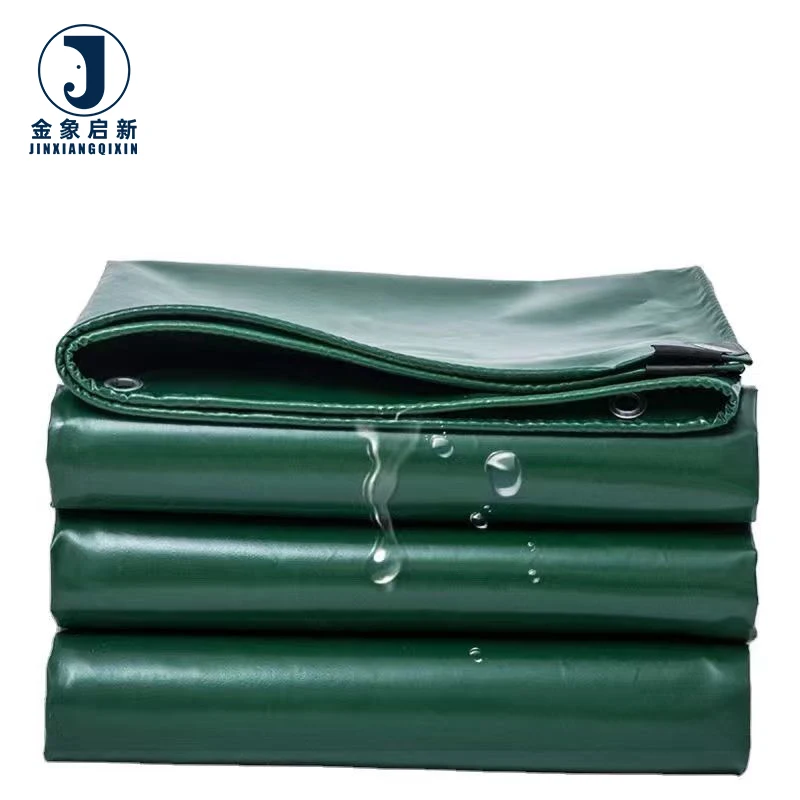
Precision coating control — verified GSM and denier matching across every roll, ensuring batch-to-batch consistency for technical buyers sourcing by material property.
Technical Specifications
| Parameter | Value |
|---|---|
| Product Type | PVC Coated Tarpaulin |
| Weight (GSM) | 250gsm-1500gsm (range covers product family — confirm the grade for your project) |
| Base Fabric Denier | 200DX300D, 500DX500D, 840DX840D, 1000DX1000D |
| Coating Method | Knife coated |
| Surface Finish | Glossy or matte (available per order) |
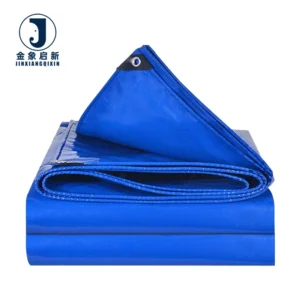
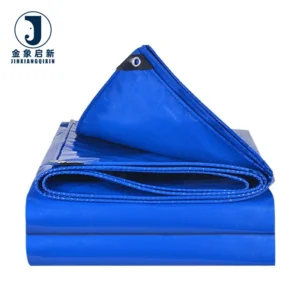
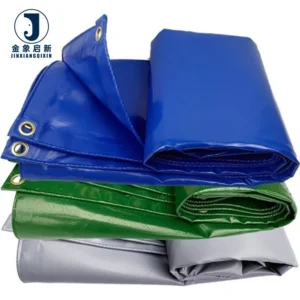
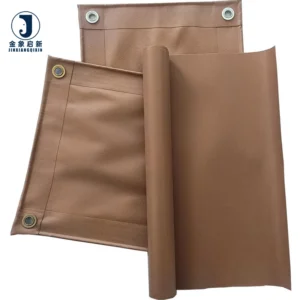
| Color Options | Blue, yellow, black, green, white, or custom matched |
| Temperature Range | -15ºC to 70ºC |
| UV Treatment | Customized — confirm test basis required for your market |
| Flame Retardant | Treated — available in flame retardant grades, confirm the grade required for your market |
| Anti-Fungal | Treated |
| Waterproof | Fully coated waterproof construction |
| Key Features | Rain-resistant, tear-resistant, good flexibility, adhesion strength, abrasion resistance |
| Size Options | 3x4m, 6x8m, 8x10m, 10x12m or custom made |
| OEM/ODM | Accepted |
| Standards | ISO, CE |
Application Suitability
| Application | Exposure & Requirement |
|---|---|
| Tent and awning roof | Sustained UV exposure, wind load tension, rain pooling, thermal cycling across seasons |
| Truck and trailer side covers | Constant flexing at load points, road debris abrasion, weather and road salt exposure |
| Lumber and steel covering | Heavy static loads, sharp edge puncture risk, prolonged outdoor stacking |
| Construction site covers | Dust and water ingress prevention, wind uplift on large spans, daily handling and repositioning |
| Agricultural stock covers | Moisture barrier for feed or fertilizer, UV degradation from continuous outdoor placement |
Why the GSM on Your Quotation May Not Match the Roll You Receive
A stated GSM means nothing without roll-level weight verification before the fabric leaves the factory.
Technical buyers frequently specify PVC coated tarpaulin by weight, expecting the material to arrive at the agreed coating density. In practice, some suppliers quote a target GSM but ship rolls that fall short on coating weight, substituting a lighter base fabric or reducing the PVC layer thickness to cut cost. The shortfall is rarely visible until the fabric is in use — when a truck cover tears at a tie-down point or a tent roof develops pinholes after one season. Material property sourcing demands transparent weight data, not just a number on a proforma invoice [NEED_CITE: tensile and tear test methods for coated fabrics per ISO 1421].
Base Fabric Denier and Its Role in Structural Performance
The denier of the polyester base fabric determines how the PVC coated tarpaulin handles tensile and tear loads in the field. A 200DX300D weave suits lighter applications such as short-term stock covers or temporary enclosures, while 1000DX1000D provides the structural backbone needed for tensioned tent roofs or heavy-duty truck curtains. The weave density — threads per centimetre in both warp and weft — controls how a tear propagates once initiated. Selecting the correct denier prevents premature failure at stress concentration points.
Coating Weight, Adhesion and Long-Term Durability
Coating weight directly influences how well the PVC layer resists abrasion, water penetration and mechanical damage. Within the 250gsm-1500gsm range, lighter grades serve cost-sensitive or short-duration projects, while heavier grades sustain repeated handling, wind loading and environmental exposure. Equally important is the bond between the PVC coating and the base fabric — poor adhesion leads to delamination at welded seams, especially where the material flexes under load. Knife coating delivers controlled layer thickness and strong mechanical bonding to the yarn structure [NEED_CITE: coating adhesion and peel strength standards for PVC fabrics].
Reading the Specification Sheet Beyond the GSM Number
GSM alone does not define how a PVC coated tarpaulin will perform under real-world loads. The base fabric denier and weave density contribute the tensile and tear resistance, while the coating weight adds abrasion protection and waterproofing. A 650 GSM fabric built on a 1000DX1000D base will outperform a 650 GSM fabric on a 500DX500D base in tear resistance, even at identical weight. Surface finish also matters: a glossy surface sheds dirt and resists mould growth in humid environments, while a matte finish reduces glare and improves ink adhesion for printed branding. The operating temperature range of -15ºC to 70ºC defines the boundaries within which the coating remains flexible without softening or embrittlement. Specifying denier, coating weight and finish together ensures the material meets the mechanical demands of the end application [NEED_CITE: relationship between denier, GSM and tensile performance in coated textiles].
What Happens When Material Properties Are Not Verified Before Shipment
Receiving a roll that does not match the quoted specification triggers a chain of costly consequences. A lighter-than-specified coating may pass initial visual inspection but fails under sustained UV exposure or repeated flexing at weld seams. Colour variation between rolls in the same shipment becomes visible only after panels are installed side by side on a tent or truck body, forcing rework or replacement. Flame retardant treatment claimed without supporting test documentation can result in failed site inspections and project delays, particularly on construction or mining sites where compliance audits are mandatory. These are not material defects — they are specification enforcement failures that originate at the point of manufacture [NEED_CITE: DIN 4102 fire classification for building materials].
Why Technical Buyers Source This PVC Coated Fabric Here
Deep process control over coating weight and adhesion ensures the GSM on the specification sheet matches the roll you receive. Three full production lines with 36 sets of professional equipment support consistent output across large-volume orders without batch-to-batch drift. A 10-person R&D team handles denier selection, coating formulation and sample development, producing material samples within days for custom requirements. Dedicated quality inspection at every production stage, with 100% pre-shipment roll checks, catches weight deviations and colour inconsistencies before dispatch. ISO and CE certified processes provide the documentation trail that procurement and compliance teams require for international shipments.
Documentation & Verification
- Material specification sheet stating GSM, base fabric denier and coating method for each roll
- Weight verification record per roll measured against the stated GSM before dispatch
- Test report for UV and flame retardant grades where applicable to the ordered specification
- ISO and CE certificates confirming certified production processes
- Pre-shipment inspection record documenting roll-by-roll quality checks
- Certificate of origin and customs documentation for international freight
Fabrication, Handling & Storage
- Set hot air welding temperature to match the specific coating weight and surface finish ordered
- Reinforce tie-down and eyelet zones based on the base fabric denier to prevent pull-through under load
- Store rolls upright on pallets to avoid flat-spot deformation of the PVC coating layer
- Allow material to acclimate above 10ºC before unrolling to prevent coating crease damage
- Use non-solvent cleaners on glossy surfaces to preserve coating integrity and colour consistency
- Plan panel cutting layout around standard roll widths to minimize welded seam count
Request a Material Quote With Your Specifications
To receive a targeted recommendation, share the denier and GSM grade your project requires along with the intended application and exposure conditions. Specify whether you need rolls or finished cut sizes, and confirm any fire safety or UV performance grades your market mandates. Colour references, surface finish preference and estimated annual volume help us align production scheduling to your timeline.
Frequently Asked Questions
Q: How do I verify the GSM matches what was quoted?
A: Each roll undergoes weight measurement during pre-shipment inspection, and the verification record is included with your documentation. You can also request a sample swatch of the exact production batch before full shipment, allowing independent GSM testing at your facility.
Q: Can you provide test reports for flame retardant or UV treatment?
A: Test reports are available for the specific grades ordered. Since flame retardant classifications vary by market — such as B1, M2 or NFPA 701 — confirm the standard your project requires so we can supply the matching documentation with your shipment.
Q: How does base fabric denier affect welding and fabrication?
A: Higher denier base fabrics like 840DX840D or 1000DX1000D require adjusted welding temperature and dwell time to achieve full seam penetration. We provide recommended hot air welding parameters matched to the denier and coating weight of the material you order.
Q: How is colour consistency maintained across multiple rolls?
A: Colour matching is controlled at the coating stage with reference standards checked against each production batch. Rolls within a single order are produced in sequence to minimize shade variation, and pre-shipment inspection flags any deviation before dispatch.
Q: What environmental compliance documentation is available?
A: ISO and CE certificates accompany every shipment. For markets requiring REACH or RoHS compliance, confirm the specific regulatory framework at the inquiry stage so the correct material formulation and documentation are prepared for your order.