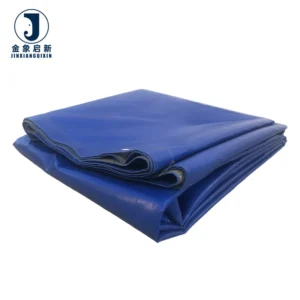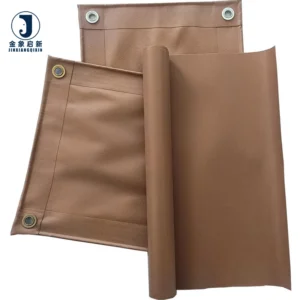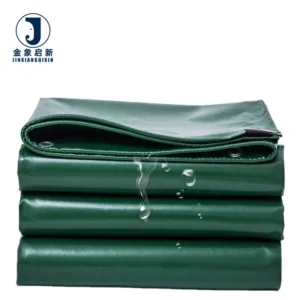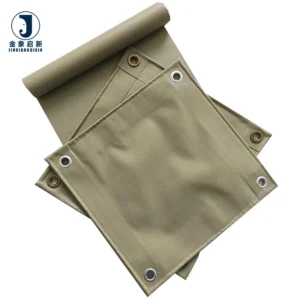
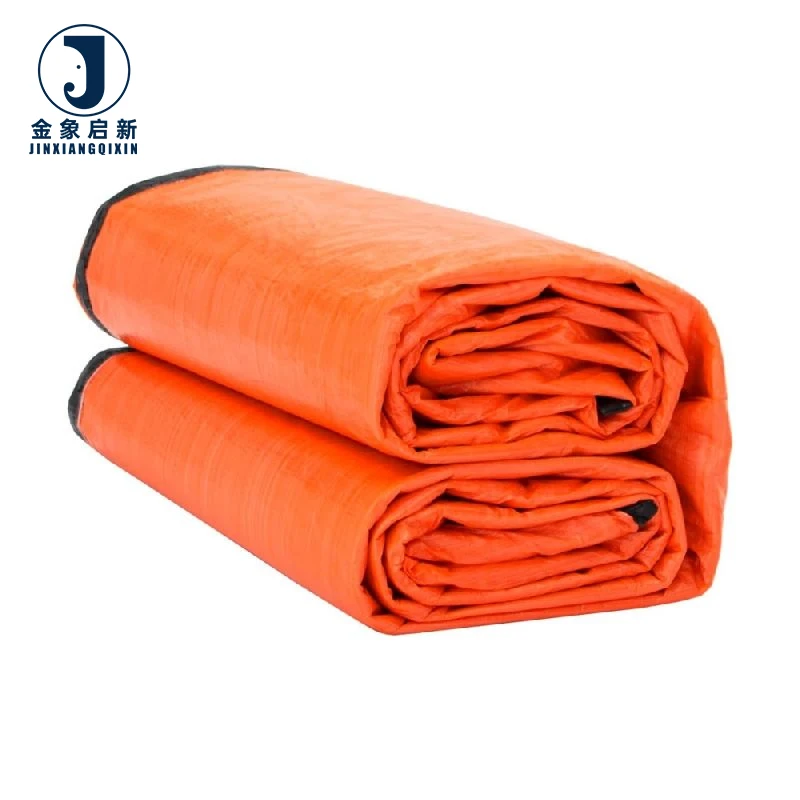
Multi-layer foam core engineering — each insulated PE tarpaulin roll is verified for closed-cell core thickness and surface fabric integrity before dispatch, matching the thermal retention demands of cold weather construction.
Technical Specifications
| Parameter | Value |
|---|---|
| Product Type | Insulated PE Tarpaulin |
| Structure | PE cloth + closed cell PE foam core + PE cloth |
| Total Thickness Options | 2x2mm, 3×1.5mm, 1x4mm, 5mm, 6mm, 8mm, 12mm |
| Available Colors | Orange, Black, White, Silver, Customized color |
| Grommet Configuration | Aluminum grommets, hole distance 61cm and 91.5cm |
| Waterproof | Yes (surface fabric) |
| UV Treatment | UV treatment built into tarp base fabric (test basis not stated in source) |
| Surface Treatment | Mildew resistant |
| Edge Finish | Reinforced stitch with grommets on stitched edges |
Application Suitability
| Application | Exposure & Requirement |
|---|---|
| Concrete curing blanket | Direct ground contact, moisture retention, heat trapping during cold weather pours |
| Heated enclosure insulation | Vertical hang under wind load, thermal barrier around temporary structures |
| Building enclosure | Continuous weather exposure, wind-driven rain, temperature differential across membrane |
| Cold weather construction site protection | Freezing temperatures, snow load, repeated deployment and folding |
| Vertical wind block | High wind pressure on large surface area, tension at grommet tie-down points |
Why Insulated Tarpaulin Thickness Claims Fail on Arrival
Specifying an insulated PE tarpaulin material coating technology grade without verifying the foam core on delivery is the fastest route to thermal failure on site.
I have seen contractors order what they believed was a multi-layer insulated blanket, only to receive a single-layer PE sheet with no closed-cell foam core and no measurable thermal retention. The product description stated one thing; the roll that arrived contained another. On a cold weather pour, that gap between expectation and reality means the concrete loses heat before the curing cycle completes, and the crew spends the next morning chipping out failed sections instead of stripping forms. [NEED_CITE: thermal performance verification methods for insulated construction fabrics]
The problem is rarely the surface fabric itself. The PE cloth outer layers typically perform as expected for waterproofing and abrasion resistance. What varies is the middle layer — the closed-cell PE foam that does the actual insulating work. If the foam density or thickness falls short of what the specification sheet stated, the tarp hangs on the enclosure frame and looks correct, but the temperature differential across it tells a different story once the heaters run overnight.
Three-Layer Construction and What Each Layer Actually Does
The insulated PE tarpaulin material coating technology in this product follows a three-layer laminate: PE cloth outer, closed-cell PE foam core, and PE cloth inner. The outer and inner PE cloth layers handle waterproofing, mildew resistance, and the mechanical abuse of site handling — folding, dragging, and tie-down tension at the grommets. The closed-cell foam core trapped between them is what separates an insulated curing blanket from a standard weather cover.
Without that foam core, a PE tarp blocks wind and rain but transfers heat almost directly through its thin film structure. The closed-cell construction traps air within the foam matrix, slowing thermal transfer and holding the temperature differential needed for concrete curing or heated enclosure environments.
Foam Core Thickness and the Insulation Gradient
The available thickness range — from 2x2mm through 3×1.5mm, 1x4mm, 5mm, 6mm, 8mm, and up to 12mm — reflects the range of insulation requirements across different site conditions. A 2x2mm core suits moderate cold weather protection where the primary goal is wind blocking with light thermal retention. Moving to 8mm or 12mm addresses applications where the enclosure must maintain a significant temperature differential against freezing ambient conditions overnight. [NEED_CITE: thermal resistance ratings for closed-cell PE foam in construction insulation]
Selecting the right thickness is not about choosing the heaviest option by default. A 12mm blanket is substantially heavier and bulkier to deploy, which matters when crews are pulling covers on and off forms daily. The specification should match the lowest expected ambient temperature, the duration of the curing cycle, and whether supplementary heat is applied inside the enclosure.
Reading the Specification Sheet Beyond Surface Claims
GSM alone does not define an insulated tarpaulin’s performance. The base PE cloth weight, the foam core density, and the total composite thickness all interact to determine how the blanket behaves under site conditions. A product listing a high total GSM might achieve that number through heavy outer fabric while using a thin, low-density foam core — delivering weight without the corresponding thermal resistance.
The grommet spacing at 61cm and 91.5cm intervals directly addresses the tie-down load distribution across the blanket surface. When a vertical wind block catches gust loads, the force concentrates at each grommet point. Aluminum grommets set at these intervals reduce the unsupported span of fabric between tie-down points, limiting the stretch and tear risk at the edges. The reinforced stitch along the edges further contains the load path so that tension does not propagate into the foam core layer, which has lower tear resistance than the woven PE cloth.
The UV treatment is integrated into the base fabric rather than applied as a surface coating, which means the protection does not wear off with abrasion or cleaning. However, the specific test basis for the anti-UV claim should be confirmed with the test report before specifying this material for projects where long-term continuous sun exposure is expected.
What Happens When the Wrong Insulation Grade Gets Installed
When a contractor installs an insulated tarpaulin that lacks the specified foam core thickness, the first sign of trouble is not visible — it shows up on the temperature log. The heated enclosure runs through more fuel overnight trying to maintain the set point, and the concrete surface temperature drops below the minimum curing threshold before the critical strength gain window closes. The formwork comes off, and the surface shows the telltale signs of cold-weather damage: scaling, dusting, or reduced compressive strength test results.
On vertical building enclosures, an underspecified blanket flexes more under wind load because the thinner foam core provides less structural rigidity to the composite panel. That extra flexing works the grommet points repeatedly, and the edge stitching starts to pull away from the PE cloth. Once the edge opens, moisture gets into the foam core, and the insulation value degrades further in a cycle that compounds every time the weather worsens. [NEED_CITE: common failure modes in temporary construction enclosures]
Batch-to-batch inconsistency creates another layer of risk. If two rolls ordered for the same enclosure arrive with different foam core densities or surface fabric colors, the panels hang side by side with visible and thermal discontinuities. The color mismatch is cosmetic but immediately obvious once installed; the density variation means one section of the enclosure insulates differently from the section next to it.
What This Production Process Delivers to the Buyer
Three full production lines with 36 sets of professional equipment support consistent output across bulk orders, meaning the insulated PE tarpaulin rolls arriving in the same container match each other in core thickness and surface quality.
The 10-person R&D team handles custom thickness grades, color matching, and sizing beyond the standard dimensions, developing samples within days so the buyer can verify the foam core and edge finish before committing to a production run.
Dedicated QA/QC at every production stage includes peeling back the edge of sample cuts to confirm the three-layer structure and measuring the foam core against the stated thickness before the roll proceeds to packing.
The 100% pre-shipment inspection covers grommet spacing verification, edge stitch integrity, and surface fabric consistency across the roll batch, documented in the inspection record that ships with the order.
ISO and CE certified production processes govern the coating and lamination parameters, ensuring the bond between the PE cloth layers and the foam core meets adhesion standards that prevent delamination under field conditions.
Documentation & Verification
- Material specification sheet stating PE base fabric type, foam core density, and total composite thickness
- UV test report documenting the anti-UV treatment basis for the surface fabric
- Pre-shipment inspection record verifying foam core thickness, grommet spacing, and edge stitch quality
- Roll packing list with individual roll dimensions, color code, and thickness grade identification
- Certificate of origin and customs documentation for international shipment clearance
Fabrication, Handling & Storage
- Heat-weld seams at temperatures matched to the PE cloth melting point, avoiding direct heat on the closed-cell foam core which compresses under excessive temperature
- Store rolls flat or on wide-diameter cores to prevent permanent creasing in the foam layer that reduces insulation value at the fold line
- Deploy grommet tie-downs using the 61cm and 91.5cm spacing as designed, avoiding skipping intervals which concentrates wind load on fewer points
- Clean surface PE cloth with mild detergent only; solvent-based cleaners may degrade the UV treatment built into the base fabric
- Repair minor edge tears by heat-sealing PE patch material over the reinforced stitch zone before moisture reaches the foam core
How to Structure Your Inquiry
Provide the application type — whether the insulated PE tarpaulin will serve as a horizontal concrete curing blanket, a vertical enclosure wall, or a combined wind block and thermal barrier — along with the lowest expected ambient temperature on site. Specify the required thickness grade from the available range and whether standard or custom dimensions are needed for your formwork or enclosure frame layout.
If your project requires a specific UV or fire compliance standard for the installed material, state the test method and grade your local authority requires so the correct test report accompanies the shipment. Confirm whether you need sample rolls for on-site verification before the bulk order ships.
Frequently Asked Questions
Q: How is the closed-cell PE foam core thickness verified on arrival?
A: Peel back the edge binding at any corner to expose the foam cross-section. Measure the core layer directly with calipers against the stated thickness on the specification sheet. The pre-shipment inspection record included with each order documents the measured foam core thickness per roll before dispatch. If the measurement does not match, flag the discrepancy against the inspection record for resolution.
Q: What UV test basis supports the anti-UV claim on this insulated tarpaulin?
A: The UV treatment is built into the PE base fabric rather than surface-applied, but the specific test method and exposure duration should be confirmed before specifying for long-term sun exposure. Request the UV test report with your sample so you can verify the test standard and results match your project requirements. Test basis documentation is available upon request from the R&D team.
Q: Can custom widths and thickness grades be ordered, and what are the minimums?
A: Custom widths, lengths, and thickness grades outside the standard range are available through the R&D team, with samples developed within days for approval before production. Minimums depend on the specific thickness grade and color requested. Provide your required dimensions, color reference, and estimated volume so the quotation can include accurate lead time and minimum order details.
Q: How is batch-to-batch colour consistency controlled across rolls?
A: Each production run uses matched colorant batches for the PE cloth surface layers, and the pre-shipment inspection includes visual comparison of rolls within the same order. If your project requires multiple rolls installed side by side where color variation would be visible, note this requirement in your inquiry so additional color matching controls are applied during production and inspection.
Q: What documentation accompanies shipment for site compliance verification?
A: Each shipment includes a material specification sheet, pre-shipment inspection record, roll packing list, certificate of origin, and available test reports for UV treatment. For projects requiring specific compliance documentation for building authority approval, request the relevant certificates and test reports during the inquiry stage so they are prepared and included with the dispatch documentation package.