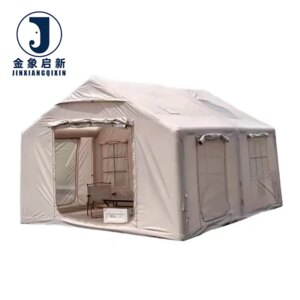
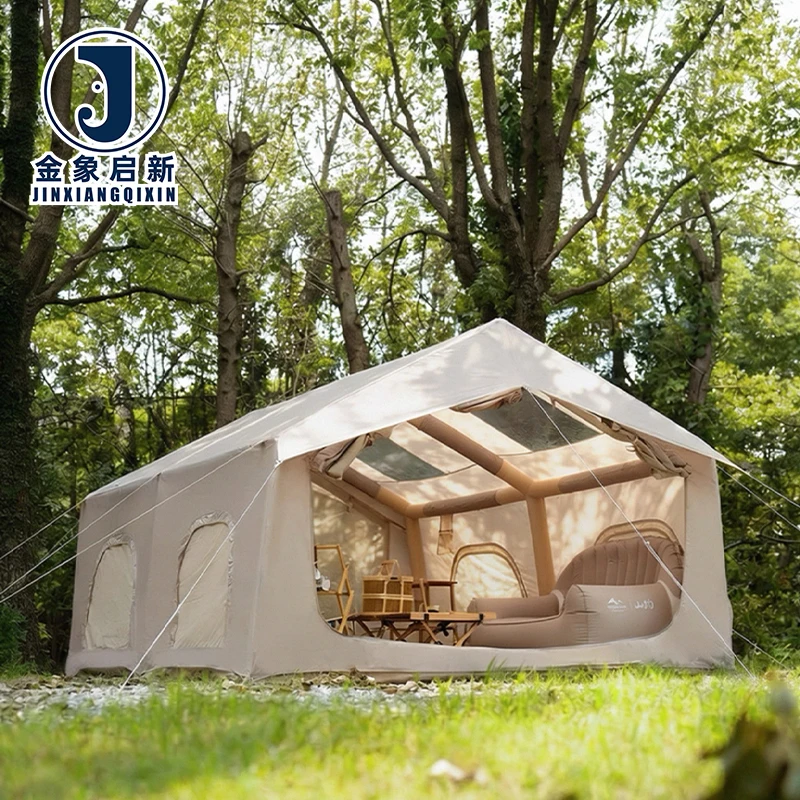
Coating Process Mastery — Nearly 30 years of focused PVC coating development ensures controlled adhesion and consistent weight distribution across every roll of inflatable tent fabric produced.
Technical Specifications
| Parameter | Value |
|---|---|
| Product Type | Inflatable Tent Fabric |
| Core Material | PVC Tarpaulin |
| Coating Method | Knife Coated |
| Key Features | Waterproof, Tear-resistant |
| UV Resistance | Available in UV-resistant grades — confirm the grade required for your market (test basis not stated in source) |
| Fire Retardancy | Available in fire-retardant grades — confirm the grade required for your market (grade not stated in source) |
| Anti-static | Available in anti-static grades — confirm the surface resistance or standard required (standard not stated in source) |
| Certifications | ISO 9001, ISO 14001, ISO 45001, CE |
| Customization | OEM & ODM, sample customization, pattern printing |
Application Suitability
| Application | Exposure & Requirement |
|---|---|
| Temporary site accommodation for infrastructure projects | Continuous weather exposure, wind loading on inflated structure, requirement for documented material compliance |
| Emergency response shelters in disaster relief | Rapid deployment under pressure, variable climate conditions, structural integrity under repeated inflation cycles |
| Mobile storage for outdoor events | UV and rain exposure during multi-day use, abrasion from ground contact during setup and teardown |
| Construction site shelters | Dust, mechanical impact risk, prolonged outdoor standing in seasonal weather shifts |
| Temporary storage requiring weather protection | Waterproof integrity under hydrostatic pressure, resistance to temperature-driven condensation cycles |
Why Stated Fire Retardancy Without a Grade Leaves Your Project Exposed
A fire-retardant claim means nothing on a job site until the inspector asks for the test report.
Technical buyers sourcing Inflatable Tent Fabric for commercial or regulated environments frequently receive material described as fire-retardant, only to discover at the compliance review stage that no specific grade was tested. The site safety officer requires documentation referencing a recognised standard — DIN 4102, NFPA 701, or the local building code — not a generic descriptor on a quotation. [NEED_CITE: fire classification standards for temporary structures and tensioned membrane buildings] When the documentation gap surfaces after the fabric has already been cut and welded, the cost of replacement extends well beyond material.
Precision Coating Weight and Adhesion Control
The waterproof performance of this Inflatable Tent Fabric depends directly on coating uniformity across the base fabric. Knife coating technology applies a controlled layer of PVC compound onto the woven substrate, filling interstices between yarns to eliminate pathways for moisture ingress. Consistent coating weight from edge to edge and from roll to roll prevents thin spots that become failure points under hydrostatic pressure during sustained rainfall.
Base Fabric Weave and Structural Behaviour Under Inflation
The tear resistance of the fabric originates in the woven base layer, where yarn denier and weave density determine how effectively a puncture or cut is contained before it propagates. In an inflatable structure, the membrane carries biaxial tension once pressurised, meaning a small tear can extend rapidly if the base fabric lacks sufficient rip-stop capacity. Selecting the correct base fabric construction is therefore as critical as the coating specification itself. [NEED_CITE: tensile and tear test methods for coated fabrics per ISO 1421]
How GSM, Coating Method and Surface Finish Interact in Practice
Grams per square metre alone tells an incomplete story. Two fabrics rated at the same GSM can perform very differently if one uses a heavier base fabric with less coating and the other reverses that ratio. The base fabric carries tensile and tear loads, while the coating provides waterproofing, UV shielding and the surface characteristics that determine weld behaviour. Surface finish — glossy or matte — further influences cleaning ease, print adhesion for branded panels, and how the fabric handles dirt accumulation over a season of outdoor deployment. Understanding these interactions allows technical buyers to specify by performance outcome rather than by a single number.
The Hidden Cost of Specifying Without Verification
When Inflatable Tent Fabric arrives on site with a GSM lighter than quoted, the membrane may still hold air initially, but the margin against wind gust loading and puncture is reduced. Similarly, colour variation between rolls becomes visible once multiple sections are welded into a single structure, forcing either acceptance of an inconsistent appearance or costly panel replacement. Weld seam failure before the fabric itself degrades is another consequence of material inconsistency, as the thermal behaviour at the joint depends on coating composition remaining within expected parameters. [NEED_CITE: common failure modes in welded PVC membrane structures]
Why Procurement Teams Source This Fabric Here
Three full production lines and 36 sets of professional processing equipment provide the capacity to maintain batch consistency across large-volume orders of Inflatable Tent Fabric. A 10-person R&D team handles material selection, custom sizing and sample development, shortening the gap between initial enquiry and approved sample. Dedicated QA and QC staff conduct inspection at every production stage, with 100% pre-shipment inspection ensuring that rolls leaving the facility match the agreed specification. The coating process is controlled in-house, giving direct command over adhesion strength and coating weight distribution rather than relying on third-party converters. Documentation including material specification sheets, test reports and certificates ships with each order.
Documentation & Verification
- Material specification sheet stating GSM, base fabric denier and coating compound for each roll
- UV and fire-retardant test reports supplied where the applicable grade has been confirmed at order
- Pre-shipment inspection record documenting roll-by-roll weight and visual checks before dispatch
- ISO 9001, ISO 14001, ISO 45001 and CE certificates available per order with certificate of origin
Fabrication, Handling & Storage
- Heat welding parameters must be calibrated to the specific coating compound and GSM of this knife-coated fabric
- Store rolls upright on pallets to prevent flat-spot deformation of the PVC coating surface under sustained pressure
- Allow cold-stored rolls to acclimatise before unrolling to avoid coating stiffness and surface cracking during handling
- Use compatible PVC solvent cleaners that do not degrade the coating surface or affect fire-retardant treatment where applied
- Plan panel cutting layout to minimise off-cuts and reduce the number of welded seams in high-stress zones of the inflatable structure
What to Include in Your Enquiry
Provide the intended application and the environmental conditions the inflatable structure will face, including expected wind loads and duration of outdoor exposure. Specify any fire-retardant or anti-static grades required by the project’s local regulations or the end client’s site safety policy. Confirm whether you need fabric by the roll or finished cut panels, along with colour references, printing requirements and estimated annual volume so that production can be planned accordingly.
Frequently Asked Questions
Q: How do I confirm the fire-retardant grade meets my project’s local fire code?
A: State the specific standard your project requires — such as DIN 4102 B1, NFPA 701, or a national building code — when placing the enquiry. The R&D team will confirm whether the available fire-retardant treatment meets that standard and supply the corresponding test report with the shipment.
Q: What test basis supports the UV-resistant claim for this fabric?
A: UV resistance depends on the specific additive package used in the coating compound. Request the test method and exposure duration applicable to your market when specifying the order. Test reports are provided where the grade has been confirmed and produced.
Q: How can I verify the GSM of received rolls matches the quotation?
A: Each roll undergoes weight verification during the pre-shipment inspection, and the inspection record ships with the order. On receipt, you can conduct a cut-sample weigh check against the stated GSM on the material specification sheet to confirm consistency.
Q: What are the key considerations when heat welding this knife-coated PVC fabric?
A: Welding temperature, pressure and dwell time must match the coating compound and GSM. Request the recommended thermal parameters from the technical team before production. Consistent coating weight across the roll supports uniform weld behaviour and seam strength.
Q: What is the sample development process before committing to a bulk order?
A: Submit your required GSM, colour, finish and any functional treatment specifications. The R&D team develops a sample for your approval covering material hand feel, weld compatibility and visual appearance before mass production begins.