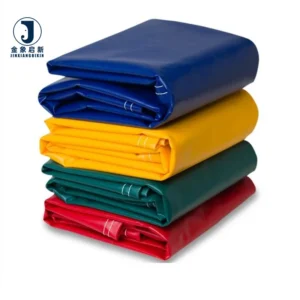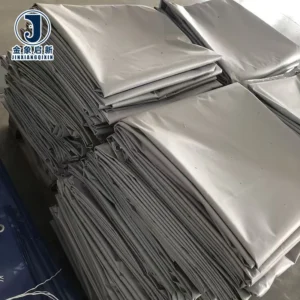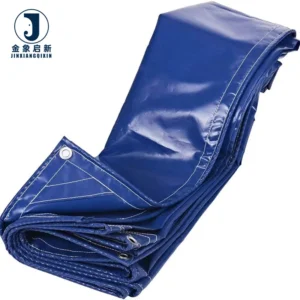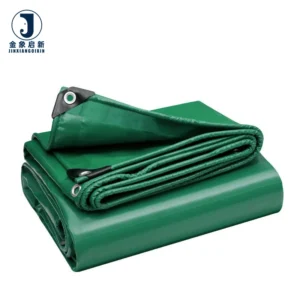
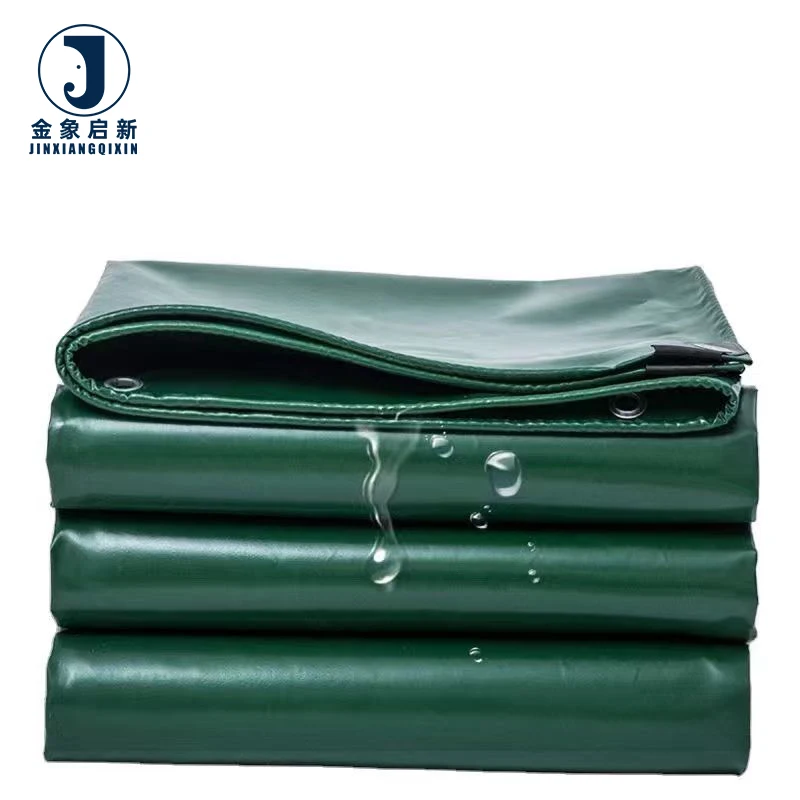
Specification Integrity — Nearly 30 years of coated fabric production with deep process control over coating weight and adhesion, ensuring every roll of this knife coated PVC coated tarpaulin meets the stated base fabric denier and GSM upon delivery.
Technical Specifications
| Parameter | Value |
|---|---|
| Product Type | PVC Coated Tarpaulin |
| Specification | 200DX300D.500DX500D.840DX840D.1000DX1000D |
| Base Fabric Denier | 200DX300D, 500DX500D, 840DX840D, 1000DX1000D |
| Coating Method | Knife Coated |
| Coating Material | PVC |
| Weight (GSM) | 250gsm–1500gsm (confirm grade for this item) |
| Surface Finish | Glossy or matte |
| Color Options | Blue, yellow, black, green, white, etc. |
| Size Options | 3x4m, 6x8m, 8x10m, 10x12m or custom made |
| Temperature Range | -15°C to 70°C |
| UV Treatment | Customized (test basis not stated — request report) |
| Flame Retardant | FR treated (grade not stated — confirm required grade) |
| Anti-Fungal | Yes |
| Waterproof | Yes |
| Key Features | Water-proof, rain-resistant, tear-resistant, good flexibility, adhesion strength, abrasion resistance |
| Certifications | ISO, CE |
Application Suitability
| Application | Exposure & Requirement |
|---|---|
| Tent roof and membrane structure | Sustained UV exposure, wind load tension, thermal cycling — demands verified tensile strength and coating adhesion |
| Lumber and building material covering | Prolonged weather contact, stacking pressure, forklift abrasion — requires balanced GSM and tear resistance |
| Equipment and stockpile cover | Outdoor storage, dust ingress prevention, repeated draping — benefits from anti-fungal treatment and surface durability |
| Truck and trailer load protection | Road debris impact, flexing at tie-down points, weather exposure — relies on seam weld strength matching fabric strength |
| Agricultural and aquaculture pond lining | Permanent water contact, soil chemistry, puncture risk — depends on coating continuity and base fabric integrity |
Why PVC Coated Tarpaulin Coating Technology Matters More Than GSM Alone
The GSM printed on a quotation tells you nothing about what the fabric will actually do under load — base fabric denier and coating adhesion are what determine real-world performance.
I have seen rolls arrive at the fabricator’s bench that matched the quoted weight on the scale but tore along the warp when tensioned across a tent frame. The coating weight was there, but the base fabric denier was substituted for a lighter yarn. Without a material specification sheet that ties denier, weave density, and coating weight together, you have no basis to reject the delivery. A PVC coated tarpaulin base fabric denier selection of 200DX300D behaves fundamentally differently from 1000DX1000D under tensile stress, yet both can be coated to the same GSM. [NEED_CITE: tensile and tear test methods for coated fabrics per ISO 1421]
Denier Selection and What It Means at the Molecular Level
The base fabric is the load-bearing skeleton of any PVC coated tarpaulin. A 200DX300D weave provides adequate strength for short-term covers and light-duty wrapping, while 1000DX1000D delivers the tear propagation resistance that heavy-duty applications demand. The coating chemistry — specifically the PVC plastisol formulation and plasticiser ratio — determines how well that coating bonds to the yarn surface. When adhesion fails, the coating delaminates at stress points and the base fabric is left exposed to moisture and abrasion.
Coating Weight Control and Roll-to-Roll Consistency
Knife coating applies a measured layer of PVC compound onto the moving base fabric, and the gap between the knife edge and the fabric surface determines the wet coating thickness. After curing in the oven, that thickness translates to a specific coating weight. Maintaining this gap across a full production run is what separates consistent rolls from those where the first metres meet spec and the last metres fall short. For technical buyers ordering multiple rolls of PVC coated tarpaulin coating technology grades, batch consistency across the entire container load is non-negotiable. [NEED_CITE: knife coating process parameters for PVC plastisol on polyester base fabric]
How Denier, Coating Weight, and Surface Finish Interact in Practice
GSM alone is a misleading number because it conflates the weight of the base fabric with the weight of the coating. A 650 GSM fabric built on 1000DX1000D yarn will have a thinner coating layer than a 650 GSM fabric on 200DX300D yarn, and the mechanical behaviour is entirely different. The heavier denier resists tear propagation through the woven structure, while the heavier coating resists puncture and surface abrasion. Surface finish — glossy or matte — also plays a functional role beyond aesthetics. Glossy finishes shed water and dirt more readily but can present challenges for ink adhesion during printing. Matte finishes provide better grip for heat welding and accept certain adhesive systems more effectively. The temperature range of -15°C to 70°C defines the operational boundary: below the lower limit the PVC compound stiffens and risks cracking during folding, while above the upper limit the plasticiser migration accelerates and the surface becomes tacky. Anti-fungal treatment prevents microbial growth in humid or permanently damp environments, protecting both the coating surface and the stored goods beneath.
The Hidden Cost of Choosing the Wrong PVC Coated Tarpaulin Grade
When a fabricator selects a grade based on price per square metre rather than verified denier and coating weight, the failure rarely appears on day one. It shows up months later — at the welded seam where the coating delaminated because the adhesion strength was never tested to match the welding parameters. Or in the field, when a tent membrane sags under snow load because the base fabric was a lighter denier than the structural engineer specified. I have seen entire container loads of cover material rejected at the port of entry because the flame retardant grade was claimed but not documented to the standard the local authority required. [NEED_CITE: fire classification standards for temporary structures and membrane buildings] Colour variation between rolls from the same order becomes visible only after installation, when panels are mounted side by side on a façade or roof structure. These are not cosmetic complaints — they are contract disputes that delay projects and erode margins.
Why Technical Buyers Source This PVC Coated Tarpaulin Here
Three full production lines and 36 sets of professional equipment mean that coating weight is controlled at every stage, not sampled at the end. The 10-person R&D team develops samples within days when a fabricator needs to test weld parameters against a specific denier and surface finish combination. Dedicated QA and QC inspection runs at every production stage, with 100 percent pre-shipment inspection verifying that the delivered rolls match the material specification sheet. Custom widths, colours, and surface finishes are produced in-house rather than outsourced, keeping lead times predictable for repeat orders. The coating formulation and base fabric sourcing are managed under one roof, so the adhesion strength between coating and yarn is a controlled variable, not a lottery.
Documentation & Verification
- Material specification sheet stating GSM, base fabric denier, and coating type for each roll
- Test reports for UV resistance and flame retardant grades with traceable references
- Pre-shipment inspection record confirming coating weight and colour consistency
- Certificate of origin and customs documentation for international dispatch
- ISO and CE certificates covering the specific PVC coated tarpaulin product category
Fabrication, Handling & Storage
- Heat welding parameters must be adjusted for glossy versus matte surface finish on this knife coated material
- Store rolls upright on pallets to prevent flat-spotting and permanent creasing of the PVC coating
- Allow material to acclimatise before unfolding in temperatures near the -15°C lower limit
- Reinforce tie-down and eyelet zones with additional PVC patches to distribute point loads
- Use compatible PVC adhesives for field repairs to maintain coating adhesion integrity
- Plan cutting layouts to minimise offcut waste when working with custom widths
What to Include in Your Enquiry
When requesting a quotation for PVC coated tarpaulin coating technology grades, specify the base fabric denier you require, the target GSM, and whether the application demands glossy or matte surface finish. If your project requires flame retardant or UV stabilised fabric, state the test standard or classification your local authority or end client requires so the correct grade can be matched. Confirm whether you need roll stock by the container or finished cut sizes with reinforcement and edging, and indicate your annual volume so production scheduling can be planned accordingly.
Frequently Asked Questions
Q: How is the GSM of PVC coated tarpaulin verified on arrival?
A: Cut sample discs of known area from multiple points across the roll width, weigh them on a calibrated scale, and calculate grams per square metre. Compare results against the material specification sheet supplied with the shipment. Discrepancies beyond the stated tolerance should be flagged before fabrication begins.
Q: What difference does base fabric denier make to tear and tensile performance?
A: Higher denier yarns like 1000DX1000D resist tear propagation through the woven structure more effectively than lighter deniers such as 200DX300D. Tensile strength depends on yarn count and weave density combined with coating adhesion. Select denier based on the structural load and exposure conditions of your specific application.
Q: Can UV and flame retardant treatments be combined in one fabric?
A: Yes, both treatments can be incorporated into the PVC compound during coating. However, the specific flame retardant grade and UV stabiliser concentration must be confirmed with test reports. State the classification required by your market — such as M2, B1, or NFPA 701 — when placing your enquiry.
Q: Why do welded seams sometimes fail before the fabric itself?
A: Weld strength depends on coating adhesion to the base fabric and the heat welding parameters used. If the welding temperature or dwell time does not match the coating formulation and surface finish, the bond at the seam will be weaker than the surrounding fabric. Request welding guidelines matched to your specified grade.
Q: How is colour consistency maintained across multiple rolls?
A: Colour is controlled through pigment batching and monitored during coating production. For large orders, request roll-to-roll colour comparison under standardised lighting before dispatch. If panels will be installed side by side, specify tighter colour tolerance in your purchase agreement.