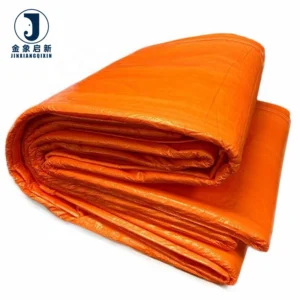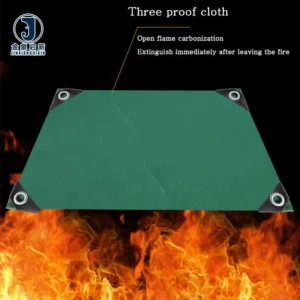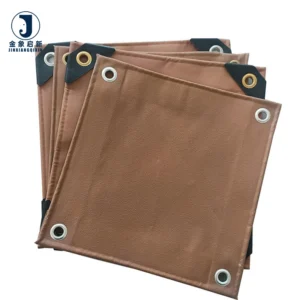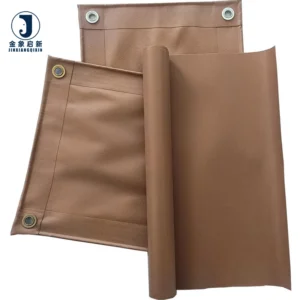
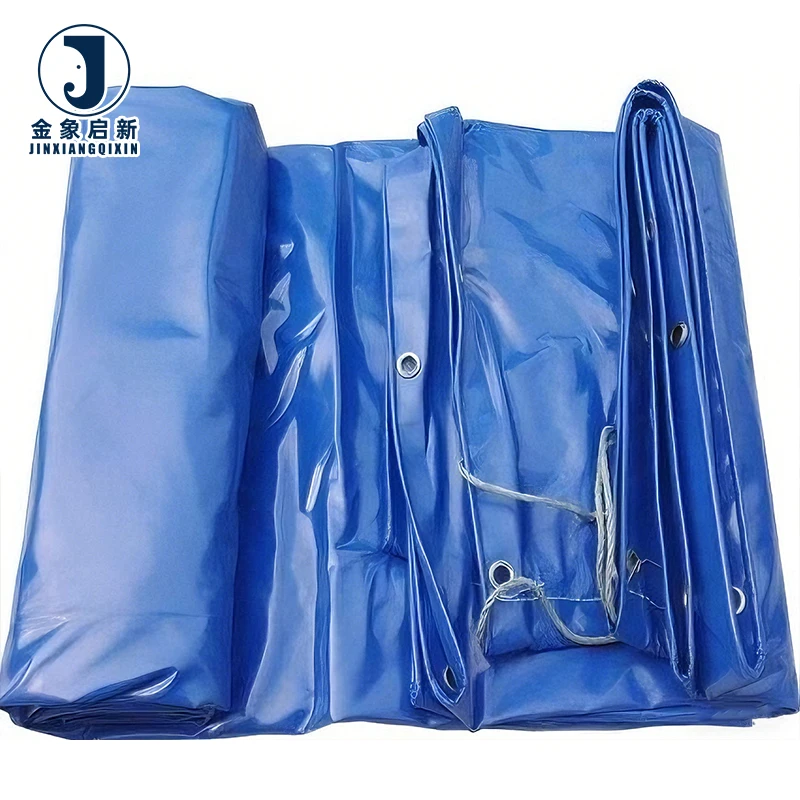
Process-Controlled Coating Adhesion — every roll of PVC coated tarpaulin fabric is produced under dedicated QA/QC with coating weight verified per roll and 100% inspection before shipment, ensuring the GSM you order is the GSM you receive.
Technical Specifications
| Parameter | Value |
|---|---|
| Product Type | PVC Coated Tarpaulin |
| Weight (GSM) | 250gsm-1500gsm (range covers product family — confirm the grade for this item) |
| Base Fabric Denier | 200DX300D / 500DX500D / 840DX840D / 1000DX1000D |
| Colour Options | Blue, yellow, black, green, white, etc. |
| Surface Finish | Glossy or matte |
| Temperature Range | -15ºC to 70ºC |
| Treatment Options | Waterproof, UV (test basis not stated in source), FR (grade not stated in source), anti-fungal treated |
| Size Options | 3x4m, 6x8m, 8x10m, 10x12m or custom made |
| Working Life | 3-10 years depending on usage environment |
| Standards | ISO, CE |
Application Suitability
| Application | Exposure & Requirement |
|---|---|
| Truck and trailer load covering | Constant flexing at tie-down points, road abrasion, UV exposure, wind load on seams |
| Construction site and equipment covers | Debris impact, prolonged sun exposure, repeated handling and folding |
| Agricultural and aquaculture pond lining | Permanent water contact, soil chemistry, puncture risk from substrate |
| Tent and awning fabrication | Tension stress at frame contact points, weather cycling, colour consistency across panels |
| General outdoor weather protection | Seasonal temperature swings, moisture ingress at fold lines, UV degradation over time |
Why GSM Alone Does Not Define PVC Coated Tarpaulin Fabric Performance
Coating weight without base fabric denier is an incomplete specification.
Buyers frequently compare quotes by GSM alone, only to find that a roll at the same stated weight performs differently once fabricated into a truck cover or welded into a pond liner. The reason is that tensile and tear behaviour depends on the base fabric construction — denier, weave density, and yarn orientation — as much as it does on the PVC coating weight. [NEED_CITE: tensile and tear test methods for coated fabrics per ISO 1421]. When the base weave is lighter but the coating is heavier, you get a stiff material that cracks at fold lines rather than one that flexes with the load. Technical buyers specifying PVC coated tarpaulin fabric need both numbers on the specification sheet before they can predict how the material will behave downstream.
Base Fabric Denier and the Tensile-Tear Relationship
The denier options available — 200DX300D through 1000DX1000D — define the yarn thickness in both warp and weft directions. Higher denier yarns carry greater tensile load before breaking, but they also influence how a tear propagates once initiated. A PVC coated tarpaulin fabric with a tighter weave in 840DX840D may resist tear spread better than a looser 1000DX1000D construction, even though the individual yarns are thinner. Specifying denier without understanding the weave density leaves a gap in predicting real-world failure modes.
Coating Weight Control and Adhesion Integrity
The coating process must bond the PVC layer to the polyester base fabric uniformly across the full width of the roll. When adhesion is inconsistent, the coating delaminates at stress points — typically where the fabric flexes repeatedly, such as at truck curtain hem lines or tent ridge poles. Process-controlled coating ensures the stated GSM is achieved consistently and that the bond between layers survives thermal welding. [NEED_CITE: peel strength test methods for PVC coated polyester fabrics]. The temperature operating range of -15ºC to 70ºC defines the boundary within which the coating maintains flexibility without softening or embrittlement.
How Surface Finish and Treatment Affect Downstream Use
Glossy and matte finish options serve different fabrication needs. Glossy surfaces shed dirt and water more effectively, making them suited to applications where cleaning frequency matters. Matte surfaces reduce glare and may provide better adhesion for printed branding or applied graphics. Anti-fungal treatment is available for environments where moisture and organic matter combine to promote biological growth, such as agricultural covers and aquaculture liners. UV and flame retardant treatments are available in various grades — confirm the grade required for your market and request the relevant test report before committing to production.
The Cost of Specifying PVC Coated Tarpaulin Fabric on Weight Alone
Selecting material based on GSM without cross-referencing denier, coating method, and treatment grade creates downstream failures that are expensive to remedy. A truck cover fabricated from a high-GSM roll with a low-denier base may pass the initial weight inspection but fail at the welded seams within months of road use. A batch ordered without colour reference documentation may arrive with visible variation between rolls, forcing a fabricator to reject material after cutting has already begun. [NEED_CITE: common failure modes in PVC coated fabric end-use applications]. These are not manufacturing defects — they are specification gaps that could have been closed with a complete material data sheet and pre-production samples.
What Happens When Material Specification Is Incomplete
Flame retardant claims without a stated grade leave fabricators exposed when end-use inspection requires documented compliance. A tent manufacturer supplying to a market that mandates B1 per DIN 4102 cannot demonstrate compliance from a datasheet that simply states "FR treated." Similarly, UV treatment claimed without a test standard provides no basis for predicting outdoor service life in high-solar environments. Colour drift between rolls in the same order forces rework or visible panel mismatch once the material is installed side by side. [NEED_CITE: colour fastness testing standards for coated technical textiles]. Welded seams that fail before the fabric itself are almost always traceable to a mismatch between the heat sealing parameters and the specific coating weight and base fabric combination being joined.
Why Technical Buyers Source This PVC Coated Fabric Here
Nearly 30 years focused on coated fabric production means process control over coating weight and adhesion is embedded in every production run, not treated as a final inspection checkpoint. Three full production lines and 36 sets of professional equipment support bulk roll output with consistent on-time delivery, reducing the risk of project delays from supply interruption. A 10-person R&D team handles material selection, custom sizing, and sample development, enabling technical buyers to evaluate denier and coating combinations before committing to a full order. Dedicated QA/QC at every production stage with 100% pre-shipment inspection ensures that the roll arriving at your facility matches the specification sheet agreed at the inquiry stage. Custom samples are developed within days, allowing fabricators to test weld parameters and seam integrity on the actual material before bulk production begins.
Documentation & Verification
- Material specification sheet stating exact GSM, base fabric denier, coating material, and colour reference per roll
- Test reports for UV stability and flame retardant grades where applicable, with stated standard and test method
- ISO and CE certificates available with pre-shipment inspection record documenting weight and colour verification
- Roll-level packing list identifying each roll by weight, width, and colour for traceability
- Certificate of origin and customs documentation supporting international shipment requirements
Fabrication, Handling & Storage
- Heat welding parameters must be matched to the specific coating weight and surface finish — glossy and matte surfaces respond differently to thermal input
- Rolls should be stored upright on end cores to prevent flat spots and permanent creasing in the PVC coating layer
- When cutting panels from rolls in the 250gsm-1500gsm range, allow for material relaxation after unrolling before final dimension marking
- Cold-weather handling below -15ºC risks coating embrittlement — allow rolls to acclimatise to workshop temperature before unrolling or folding
- Anti-fungal treated surfaces should be cleaned with neutral pH agents to preserve the treatment layer without degrading the PVC coating
What We Need to Quote Accurately
Provide the intended application and the environmental conditions the fabric will face — including UV exposure intensity, temperature extremes, and any chemical or biological contact. Specify the denier and GSM combination you require, or describe the performance requirements so we can recommend a grade. If your market mandates a specific flame retardant or UV standard, state the grade and test method so we can supply the matching test report. Confirm whether you need rolls in stock widths or custom sizing, and indicate annual volume to allow accurate lead time and production scheduling.
Frequently Asked Questions
Q: How is GSM verified per roll and what documentation comes with shipment?
A: Each roll is weighed and measured to confirm the stated GSM before dispatch. A pre-shipment inspection record documents the actual weight, base fabric denier, colour reference, and surface finish for every roll in the order. This record accompanies the material specification sheet and packing list, giving you full traceability from inquiry to delivery.
Q: Can I get a test report for UV or flame retardant treatment before ordering?
A: Test reports are available for UV and flame retardant grades where applicable, and we provide them during the specification stage before you commit to production. State the standard and grade your market requires so we can supply the correct documentation. Not all grades are tested to the same standard, so confirming your requirement early avoids delays.
Q: How do you control colour consistency across multiple rolls in one order?
A: Colour is controlled using a reference standard agreed at the sample approval stage, and every roll is inspected against that reference during the 100% pre-shipment inspection. The inspection record notes the colour verification result for each roll. If absolute panel-to-panel consistency is critical for your application, request sequential roll numbering so you can plan your cutting layout accordingly.
Q: What denier and GSM combination suits truck covers versus pond liners?
A: Truck covers require high tensile and tear performance at flex points, typically calling for higher denier base fabric such as 840DX840D or 1000DX1000D with a mid-range coating weight. Pond liners prioritise puncture resistance and long-term water immersion stability, where coating weight and adhesion integrity matter more than tear propagation resistance. Share your specific application so we can recommend the appropriate grade from the available range.
Q: Can I order custom width, colour, or surface finish and what are the minimums?
A: Custom width, colour, and surface finish — glossy or matte — are available, with minimums and lead times depending on the specific combination requested. Our 10-person R&D team develops samples within days so you can evaluate the material before committing to bulk production. Provide your target dimensions, colour reference, and treatment requirements to receive a quotation with confirmed lead time and minimum order quantity.