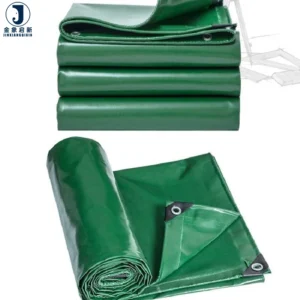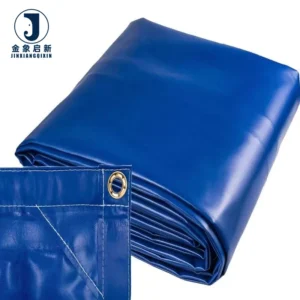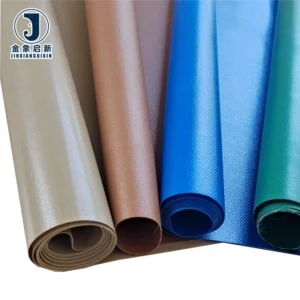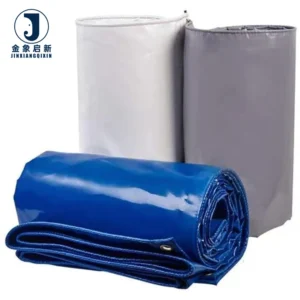
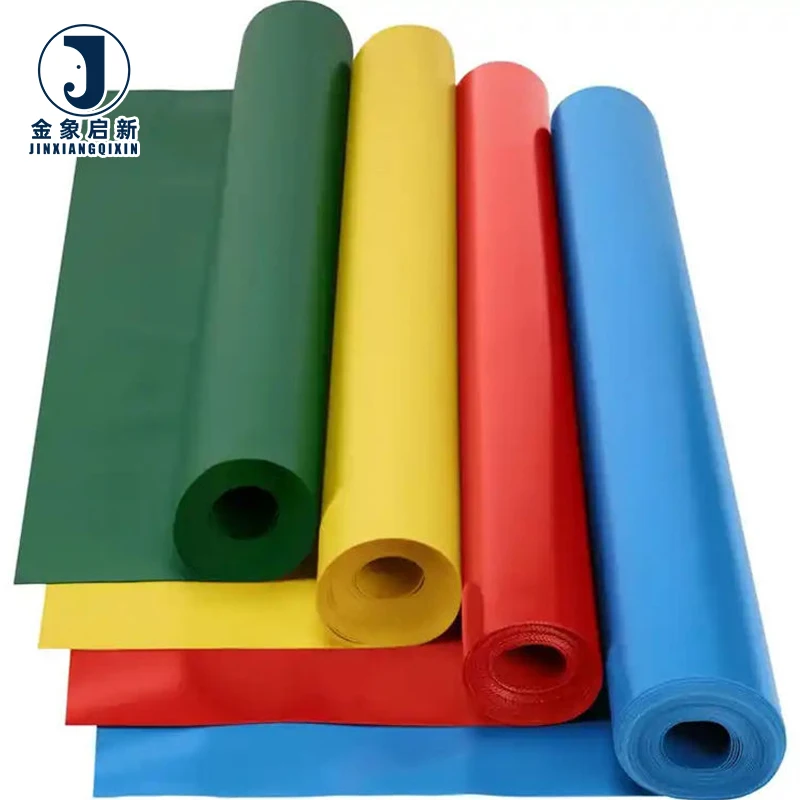
Coating Weight Verification — every 500D×500D 18×17 roll is checked against the specification sheet before dispatch, ensuring the PVC coating weight matches the quoted GSM without exception.
Technical Specifications
| Parameter | Value |
|---|---|
| Product Type | PVC Tarpaulin Fabric Roll |
| Base Fabric Denier | 500D×500D |
| Mesh Count | 18×17 |
| Coating Material | PVC |
| Fire Retardant | Available in flame retardant grades — confirm the grade required for your market |
| UV Resistance | Anti-UV treatment available — test basis to be confirmed per order |
| Anti-Mildew | Treated |
| Antibacterial | Treated |
| Oil and Stain Resistance | Yes |
| Acid and Alkali Resistance | Yes |
| Temperature Resistance | High temperature and cold resistance |
| Anti-Oxidation | Yes |
| Weather Resistance | Yes |
| Flexibility | Highly flexible, resistant to cracking |
| Self-Cleaning | Yes |
| Welding Options | HF, Hot Air, Sewing |
| Certifications | ISO, CE |
Application Suitability
| Application | Exposure & Requirement |
|---|---|
| Tensile and architectural membrane structures | Sustained tension loads, wind uplift, prolonged UV exposure, seam integrity under flex |
| Stadium and airport hangar roofs | Large unsupported spans, thermal cycling, fire code compliance, long-term weathering |
| Shade systems and shading installations | Direct solar exposure, colour consistency across adjacent panels, resistance to staining |
| Portable storage structures | Repeated assembly and disassembly, abrasion at frame contact points, moisture exposure |
| Large format technical textile fabrication | Roll-to-roll batch consistency, welding compatibility, dimensional stability during cutting |
Why Coating Adhesion Matters More Than GSM on PVC Tarpaulin Fabric Rolls
A heavy roll that delaminates at the weld line is lighter than useless — it is a liability on a tensile structure.
When sourcing PVC tarpaulin fabric roll for membrane or shade structures, buyers often fixate on GSM as the single measure of quality. Yet two rolls with identical GSM can perform very differently depending on how the PVC coating bonds to the 500D×500D base fabric. A coating that sits on the surface rather than penetrating the weave will pass a weight check but fail at the seam when tension is applied. I have seen coated fabric fail on shade installations not because the material was too thin, but because the coating separated from the polyester scrim under sustained load. The PVC coated tarpaulin roll 500D 500D fabric specification addresses this through controlled coating adhesion tied to the 18×17 mesh count, which provides a consistent substrate for the PVC to bond into rather than onto. [NEED_CITE: coating adhesion test methods for PVC-coated polyester fabrics per ISO 2411]
Base Fabric Construction and Tension Performance
The 500D×500D denier paired with an 18×17 mesh count establishes the tensile baseline before any coating is applied. In tensile structures where fabric is stretched across frames or cable systems, the warp and weft yarns carry the primary load while the PVC coating protects against environmental degradation. A tighter weave density means more yarn intersections per square inch, distributing stress across a wider area and slowing tear propagation. This PVC coated tarpaulin roll is engineered for fabricators who understand that the base scrim determines how the material behaves under sustained structural load, not the coating alone.
Welding Compatibility Across Fabrication Methods
Fabricators working on membrane structures, airport hangars, and stadium roofs need seams that match the strength of the parent fabric. This PVC tarpaulin fabric roll supports high-frequency welding, hot air welding, and conventional sewing — giving production teams the flexibility to select the join method that aligns with the structural demands of each project. [NEED_CITE: high-frequency welding parameters for PVC-coated polyester technical textiles] Hot air welding is often preferred for long continuous seams on shade canopies, while HF welding suits smaller, high-stress panels on portable storage structures. Sewing remains relevant for applications requiring mechanical fastening or where thermal welding equipment is not available on site.
Understanding the 500D×500D 18×17 Construction for Structural Applications
The denier figure — 500D in both warp and weft — indicates the linear mass density of the polyester yarns used in the base fabric. Heavier denier yarns provide greater individual strand strength, which directly influences tear resistance once a cut or puncture initiates. The 18×17 mesh count describes how many yarns run per inch in each direction; this density determines how effectively the load transfers from one yarn to its neighbours when the fabric is tensioned. A lower mesh count on the same denier would leave larger gaps between yarns, requiring more PVC to fill the interstices and increasing weight without adding tensile benefit. Conversely, a very high mesh count on lighter denier yarns would produce a stiff, board-like fabric that resists draping around curved frames. The 500D×500D 18×17 balance sits in a range that fabricators of tensile and shade structures find practical — flexible enough to form around architectural curves, yet strong enough to handle the sustained tension of large-span membrane roofs. The self-cleaning surface treatment further supports these applications by reducing the accumulation of airborne dirt and biological growth, which cuts maintenance frequency on installed structures. Oil, stain, acid, and alkali resistance add a layer of chemical durability that extends service life in industrial and agricultural settings where the fabric may contact fertiliser runoff, machinery exhaust, or cleaning agents.
The Cost of Undocumented Treatment Claims
Specifying a flame retardant PVC tarpaulin for a stadium roof or airport hangar without a verified grade creates a compliance gap that only surfaces during inspection. Building codes in most markets require specific fire classifications — B1, M2, NFPA 701, or DIN 4102 depending on jurisdiction — and a generic "flame retardant" label on a data sheet does not satisfy the approving authority. Similarly, anti-UV claims without a documented test basis leave fabricators unable to warrant the installed structure’s colour stability or tensile retention over time. Batch colour variation across rolls in a single shade installation is another source of costly rework; when panels installed side by side show visible differences, the entire section may need to be replaced. [NEED_CITE: colour consistency standards for architectural membrane fabrics] These are not theoretical risks — they are recurring issues in coated fabric procurement that turn a material decision into a project delay.
Why Fabricators Source This PVC Tarpaulin Fabric Roll Here
Nearly three decades of focus on PVC coated fabric means the coating weight and adhesion process is controlled at every stage, not adjusted at the end to hit a target GSM. Three full production lines with 36 sets of professional equipment provide the capacity to deliver roll stock on schedule, even when custom widths or colours are involved. A 10-person R&D team handles material selection, sample development, and specification matching — typically producing samples within days rather than weeks. Dedicated quality inspection at every production stage and 100% pre-shipment checking ensure that the 500D×500D fabric arriving at your facility matches the specification sheet issued at order confirmation. ISO and CE certification underpins the documentation trail, and export experience across more than 20 countries means customs paperwork and certificates of origin are handled without back-and-forth delays.
Documentation & Verification
- Material specification sheet stating base fabric denier, mesh count, coating type, and colour reference for each roll
- UV and flame retardant test reports provided where applicable to the grade ordered
- Pre-shipment inspection record confirming GSM, colour consistency, and coating integrity across the batch
- Certificate of origin and full customs support documentation included with every shipment
- ISO and CE certificates available to support project compliance submissions
Fabrication, Handling & Storage
- HF and hot air welding both compatible — adjust temperature and dwell time to the 500D×500D PVC coating thickness
- Sewn seams should use UV-stable polyester thread matching the 18×17 mesh density for consistent stitch hold
- Store rolls upright on pallets in a dry, shaded area to prevent surface creasing and coating adhesion loss
- Allow cold-transported rolls to reach ambient temperature before unrolling to avoid cracking the PVC surface
- Use mild detergent and soft brush for cleaning — the self-cleaning treatment reduces but does not eliminate maintenance
- Plan cut layouts to minimise transverse seams on tensile panels, aligning warp direction with the primary load axis
Requesting a Specification Match for Your Project
To move forward, share the application type and structural load requirements so the correct treatment grade can be confirmed. Specify any fire classification or building code your target market requires, along with preferred roll width and annual volume. If colour consistency across multiple rolls is critical for a shade or membrane installation, include the RAL or Pantone reference and request a pre-production sample for approval.
Frequently Asked Questions
Q: How is GSM verified on 500D×500D PVC tarpaulin rolls before shipment?
A: Each roll is sampled and weighed against the material specification sheet during pre-shipment inspection. The GSM recorded is documented on the inspection record that ships with your order. We do not round figures or apply a tolerance band — the value stated on your quote is the value verified at dispatch. If your receiving protocol requires arrival re-inspection, we support third-party testing at the port of loading.
Q: What flame retardant grades are available and how do I confirm compliance?
A: Flame retardant treatment is available in grades aligned with common building codes — specify the standard required for your project such as M2, B1, NFPA 701, or DIN 4102. A test report is provided for the grade ordered so you can submit it to the approving authority. Confirm the exact classification early in the inquiry stage to ensure the coating formulation matches your market’s fire safety requirements.
Q: What test basis supports the anti-UV claim for membrane structure applications?
A: Anti-UV treatment is available and the test basis depends on the grade selected for your order. Request the specific test report when placing your inquiry so you can review the exposure duration and performance criteria. For architectural membrane structures with long service life expectations, we recommend discussing the required UV stability level with our R&D team during sample development.
Q: Which welding method suits tensile structure seams under sustained load?
A: HF welding produces a homogeneous bond suitable for high-stress panels on stadium and hangar roofs. Hot air welding works well for long continuous seams on shade canopies where flexibility at the join is important. Sewing is an option where thermal equipment is unavailable. The 500D×500D PVC coating is compatible with all three methods — the choice depends on your fabrication setup and the structural load profile of the installation.
Q: How is roll-to-roll colour consistency controlled across a multi-roll order?
A: Every production batch is checked against the approved colour reference during in-process quality control and again at pre-shipment inspection. The inspection record documents colour verification per roll. For shade installations where adjacent panels must match, request a physical sample from the production batch before the full order ships so you can confirm consistency under your installation lighting conditions.